Tuotekuvaus
| Data(HS-820-K600)Straight Running Plastic Chain | |||||||
| Belt Material | Width W | Työkuorma | Reverse Radius | Weight | |||
| mm | inch | N(21°C) | lbs(21°C) | mm | inch | kg/m² | |
| POM | 152.4 | 6.00 | 1230 | 276 | 50 | 1.97 | 1.25 |
Avantages of the CHINAMFG products
1.CHINAMFG modular conveyor belt has more than 10 times service life,long life time and reducing replacement cost than traditional conveyor belt.
2.CHINAMFG modular conveyor belt is easy to assemble, allowing only the replacement of damaged parts, easy to replace, saving maintenance time and costs.
3.CHINAMFG modular conveyor belt has strong wear resistance, high temperature resistance, cold resistance and oil resistance.
4.CHINAMFG modular conveyor belt is easy to clean, farewell to the propagation of bacteria, especially suitable for application in food industry.
5.CHINAMFG modular conveyor belt in food and non-food industry, it plays an important role in the character of durability,low maintenance cost and easy to clean.
6.CHINAMFG has agents in many countries and can provide good after-sales service.
7.CHINAMFG not only has a complete production line to meet different application needs, but also can provide comprehensive product knowledge and experience. After 20 years of innovative research and development, we can provide more than 5000 kinds of solutions to provide perfect support for you in the field of transportation.
Hakemus
Beverage plant,Beverage filling application,Dairy production plant,Aerosol filling,Glass ware handling
Thermoplastic table top and plate top chains with straight running.
HONGSBELT Plastic chain could install and run on most current chain system and sprocket as well as compatible different industrial standard completely. It makes table top chain be maintained. HONGBELT new chain series has many tip top performances. Such as low friction coefficient, anti-chemical, anti-static, flame-proof and so on.
It could be used for different industries & environment.
Cooperation Case
We Cooperated with DHL & Amazon to Help Them Solve Multi-scenario Application Parcel Sorting
Global cooperation broke through 50+ agent service providers
and signed strategic cooperation agreements with “Safari Belting Systems” in the United States
“HONG’S BELT Branches” in Europe, and “HONG’S BELT Branches” in India
Exhibitions around the world
Every year CHINAMFG will go to all over the world to participate in exhibitions
We have served projects in more than 120 regions and countries with global delivery capabilities
Hong’s Belt team can provide customers with more than 5,000 solutions
Factory
HONG’S BELT
Xihu (West Lake) Dis. Xinhai (HangZhou) Technology Co., Ltd is a leading high-tech company providing intelligent conveyor solutions. We have a modern industrialized manufacturing area of 100,000 square CHINAMFG for the production of modular plastic belts and conveying systems solutions.
Hong’sbelt Group currently has more than 1,000 employees, including more than 100 R&D teams, more than 500 production and functional departments, and about 300 sales and sales support departments. The sales points are distributed on all continents of the world.Realize Automatic and Intelligent.
We developed a fully integrated industrial chain with independent core technology, key components, leading products and conveyor systems solutions.
Todistus
We hold more than 400 national authorized patents and software certifications
Allseries of products have obtained the US “FDA” food grade certification And “EU” certification in Europe
Obtained “ISO9001-2008” quality management system certification
Usein kysytyt kysymykset
Q: Are you a trading company or manufacturer?
A: We are a manufacturer of modular belt, chains belt and conveyor components, with head office in HangZhou, China, and 2 big factories located in HangZhou and HangZhou.
Q: Are HONGSBELT products in accordance with FDA regulations and EU Directives?
A: Our standard materials (PP, POM, PE, PA) comply with the FDA regulations and EU Directives. A letter of assurance can be made available on demand.
Q: Can we use HONGSBELT Modular Conveyor Belt in corrosive environment?
A: HONGSBELT belts can be used in medium to severe CHINAMFG applications, however, special product recommendations and conveyor design guidelines must be followed. More information, pls contact our online Customer Service or email to HONGSBELT Team.
Q: What is the temperature range for the belt material?
A: HONGSBELT belts offers various materials suitable for operation in temperatures ranging from -60 °C to 260 °C. Specific material should be chosen based on your operating temperature.
Q: What is the real meaning of the belt strength?
A: The belt strength is the maximum tension (per foot or meter of width) the belt can continuously run at.
Q: How long will it take me to get quotation?
A: You will always receive any requested quote by the end of the next working day at the latest, but often quotes are emailed to you before you hang up the phone.
/* 22. tammikuuta 2571 19:08:37 */!function(){function s(e,r){var a,o={};try{e&&e.split(“,”).forEach(function(e,t){e&&(a=e.match(/(.*?):(.*))&TP6T/)
| Materiaali: | POM–Dp,POM-Lf |
|---|---|
| Rakenne: | Huippuketju |
| Pintakäsittely: | Muovi |
| Ketjun koko: | 3.048m/Box |
| Ominaisuus: | Fire Resistant, Oil Resistant, Heat Resistant |
| Pin Material: | Cold Rolled Austenitic Stainless Steel |
| Näytteet: | US$ 17.5/Meter 1 metri (vähimmäistilaus) | |
|---|

How do you calculate the maximum allowable tension in a conveyor chain?
The maximum allowable tension in a conveyor chain can be calculated using the following steps:
1. Determine the Chain Pitch:
– Measure the distance between the centers of two consecutive chain pins. This measurement is known as the chain pitch and is typically expressed in inches or millimeters.
2. Determine the Chain Speed:
– Determine the speed at which the conveyor chain will be operating. The chain speed is typically expressed in feet per minute or meters per second.
3. Calculate the Chain Pull:
– Determine the total weight or force that needs to be moved by the conveyor chain. This includes the weight of the conveyed material and any additional loads or forces acting on the chain.
4. Calculate the Required Tension:
– Use the following formula to calculate the required tension:
Tension = (Chain Pull × Chain Speed) / (Chain Pitch × Efficiency)
– The efficiency factor accounts for losses due to friction and other factors and is typically expressed as a decimal between 0 and 1.
5. Determine the Maximum Allowable Tension:
– The maximum allowable tension is determined by the manufacturer’s specifications for the conveyor chain. It is important to consult the manufacturer’s documentation or contact them directly to obtain the maximum allowable tension value.
6. Compare the Required Tension and Maximum Allowable Tension:
– Compare the calculated required tension with the maximum allowable tension. The required tension should be less than or equal to the maximum allowable tension to ensure safe and reliable operation of the conveyor chain.
By following these steps and considering the manufacturer’s specifications, you can accurately calculate the maximum allowable tension in a conveyor chain and ensure that it is within the safe operating limits.
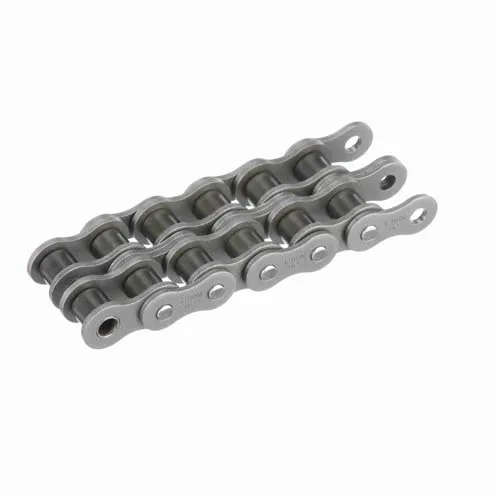
Mitä etuja on ruostumattomasta teräksestä valmistettujen kuljetinketjujen käytössä?
Ruostumattomasta teräksestä valmistetuilla kuljetinketjuilla on useita etuja muihin ketjutyyppeihin verrattuna. Tässä on joitakin tärkeimmistä eduista:
1. Korroosionkestävyys: Ruostumaton teräs on erittäin korroosionkestävä, joten se sopii käytettäväksi vaativissa ympäristöissä tai teollisuudenaloissa, joissa vaaditaan usein pesuja tai altistumista kosteudelle. Se ei ruostu tai syövy kuten muut metallit, mikä varmistaa pidemmän käyttöiän ja luotettavan suorituskyvyn.
2. Lujuus ja kestävyys: Ruostumattomasta teräksestä valmistetut ketjut tunnetaan suuresta lujuudestaan ja kestävyydestään. Ne kestävät raskaita kuormia, korkeita lämpötiloja ja hankaavia materiaaleja ilman muodonmuutoksia tai murtumia. Tämä tekee niistä ihanteellisia raskaisiin sovelluksiin, joissa luotettavuus ja pitkäikäisyys ovat ratkaisevan tärkeitä.
3. Hygieeninen ja saniteettinen: Ruostumaton teräs on huokoseton materiaali, joka on helppo puhdistaa ja huoltaa. Se kestää bakteereja, hometta ja muita epäpuhtauksia, joten se sopii tiukkoja hygieniavaatimuksia noudattaville teollisuudenaloille, kuten elintarvikkeiden jalostukseen, lääketeollisuuteen ja lääkinnällisten laitteiden valmistukseen. Ruostumattomasta teräksestä valmistetut ketjut voidaan puhdistaa ja desinfioida perusteellisesti, mikä vähentää tuotteiden saastumisriskiä.
4. Lämmönkestävyys: Ruostumattomasta teräksestä valmistetut ketjut kestävät laajan lämpötila-alueen, sekä korkeita että matalia. Niillä on erinomainen lämmönkestävyys, minkä ansiosta ne säilyttävät lujuutensa ja suorituskykynsä myös äärimmäisissä lämpötiloissa.
5. Esteettinen vetovoima: Ruostumattomasta teräksestä valmistetuilla ketjuilla on tyylikäs ja viimeistelty ulkonäkö, joka lisää kuljetinjärjestelmään ammattimaisen ja esteettisen ilmeen. Niitä käytetään yleisesti toimialoilla, joilla visuaalinen vetovoima ja brändin edustus ovat tärkeitä, kuten vähittäiskaupassa tai luksustuotteissa.
6. Kemiallinen kestävyys: Ruostumaton teräs kestää useita kemikaaleja, kuten happoja, emäksiä ja liuottimia. Tämän vuoksi se sopii käyttökohteisiin, joissa kosketus syövyttävien aineiden kanssa on todennäköistä.
7. Yhteensopivuus suurnopeussovellusten kanssa: Ruostumattomasta teräksestä valmistetut ketjut kestävät suurnopeuskäyttöjä vaarantamatta rakenteellista eheyttä tai suorituskykyä. Ne säilyttävät vakauden ja tarkkuuden myös suurilla nopeuksilla.
Kaiken kaikkiaan ruostumattomasta teräksestä valmistetut kuljetinketjut tarjoavat korroosionkestävyyttä, lujuutta, kestävyyttä, hygieenisiä ominaisuuksia, lämmönkestoa, esteettistä vetovoimaa, kemikaalien kestävyyttä ja yhteensopivuutta suurnopeussovellusten kanssa. Nämä edut tekevät niistä ensisijaisen valinnan esimerkiksi elintarvike- ja juomateollisuudessa, lääketeollisuudessa, autoteollisuudessa ja valmistusteollisuudessa, joissa luotettavuus, puhtaus ja suorituskyky ovat olennaisia.
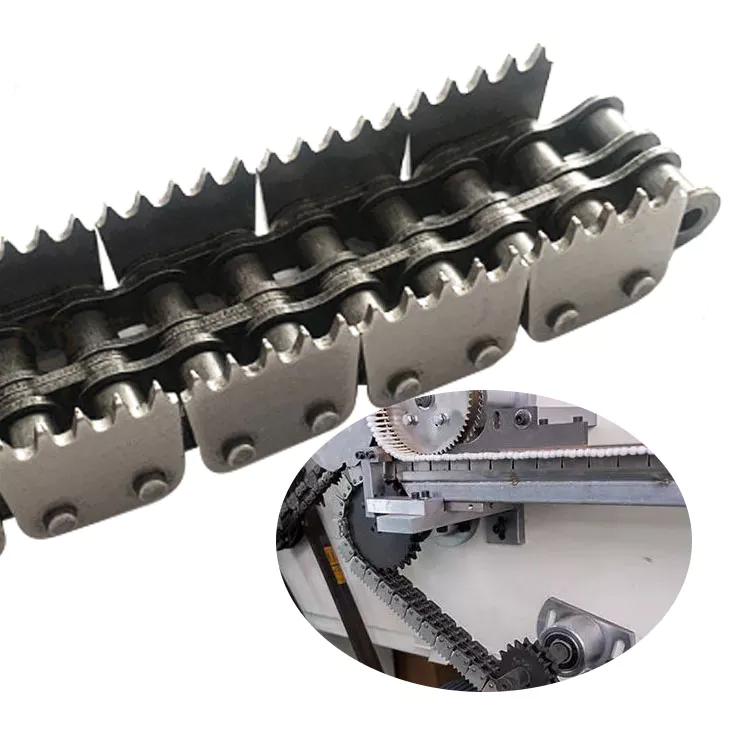
How do you properly tension a conveyor chain?
Properly tensioning a conveyor chain is crucial for its smooth operation and to prevent issues like chain slipping or excessive wear. Here are the steps to properly tension a conveyor chain:
- Identify the Tensioning Points: Determine the locations where the conveyor chain can be tensioned. These are typically at the ends of the chain or at specific tensioning devices.
- Loosen the Tensioning Devices: If there are tensioning devices in place, such as adjustable bolts or tensioning screws, loosen them to allow for adjustment.
- Apply Tension: Apply tension to the conveyor chain by either manually pulling the chain or using a tensioning tool. The amount of tension required depends on the chain type and the manufacturer’s recommendations.
- Check the Tension: Use a tension gauge or other suitable method to measure the tension of the conveyor chain. The tension should fall within the specified range provided by the chain manufacturer.
- Adjust the Tension: If the tension is too loose or too tight, make adjustments accordingly. Tighten or loosen the tensioning devices until the desired tension is achieved.
- Secure the Tensioning Devices: Once the proper tension is achieved, securely tighten the tensioning devices to hold the chain in place.
- Verify the Tension: After tensioning the chain, perform a visual inspection and run the conveyor to ensure the chain runs smoothly without excessive slack or tightness. Make any further adjustments if necessary.
It’s important to refer to the specific guidelines provided by the conveyor chain manufacturer for proper tensioning instructions, as the exact method may vary depending on the chain type and design. Regularly check the tension of the conveyor chain and make adjustments as needed to maintain optimal performance.


editor by CX 2024-04-08