Descripción del Producto
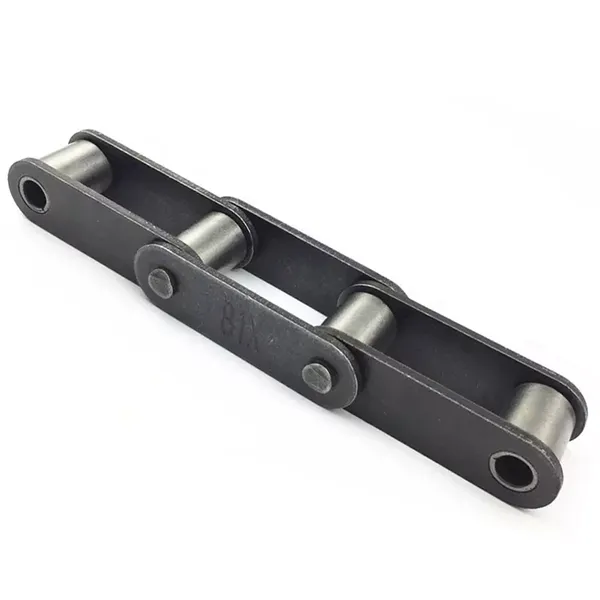
These chains used in a variety of industries including manufacturing, assembly, and packaging, for example, cosmetics, foodstuffs, paper, eletrical and Electronic sectors, mechanical, chemical and automotive industry.
Max conveyor length per drive until 25m
Operating temperature -20¯ +60º C
Allowed max speed ca 50m/min
Packing: 1M 26PCS
Min curve radius: 150mm
Chain Width:83mm
Chain Pitch:38mm
| Chain Type | Plate Width | Working Load(max) | Sideflex Radius(min) | Backflex Radius(min) | Peso | ||||
| mm | pulgada | N(21ºC) | IBF(21ºC) | mm | pulgada | mm | pulgada | kg/m | |
| 83-1 | 83 | 3.25 | 2100 | 472 | 150 | 5.90 | 40 | 1.57 | 1.35 |
HangZhou CZPT Conveyor Equipment Co.,Ltd. is specialized in manufacturing all kinds of Plastic Tabletop Chains, Modular Plastic Belts and Conveyor Components and our products have been applied in many industries. With professional engineers, we can meet your demand with specific solutions.
With the idea of innovation, CZPT has been developing a variety of new products. Our aim is to meet your various requirement with leading solutions. The range of our products as well as production scale are leading the industry. As the professional manufacturer, our products are applied in a variety of industries, such as the food processing of meat, seafood, bakery, fruit and vegetable as well as beverage and dairy products. They also play an important role in the industry of pharmacy, chemistry, battery, paper and tire production etc.
Since CZPT was established, we are trying our best to satisfy every customer’s requirement. We have been supplying some CZPT companies such as ZheJiang ASG group, Wahaha, Mengniu, Yurun, Coca Cola, Tsingtao beer, Hayao Group etc.
The company has been qualified with ISO 9001 quality system. The production strictly complies with the standard and procedures of ISO 9001, which ensures good product quality. An increasing number of customers start to use our products because of Tuoxin’s advanced facilities, rich experience, efficient management and excellent sales team. CZPT has not only gained good reputation in domestic market, but also exported products to Southeast Asia, Japan, Russia, Australia, Newzealand, Germany and other countries.
CZPT has been always keeping our vision in mind, which is “Satisfy customer with reasonable price, reliable quality and timely delivery.
We believe that satisfying our customer is the basis of the company’s sustainable development. CZPT is willing to cooperate with you and achieve mutual benefits.
Any enquiries from customers are welcome.
| Uso: | Transportation Chain |
|---|---|
| Material: | Plástico |
| Tratamiento de superficie: | Pulido |
| Característica: | Resistente al calor |
| Tamaño de la cadena: | 1/2"*3/32" |
| Estructura: | Cadena superior |
| Personalización: | Disponible | Solicitud personalizada |
|---|
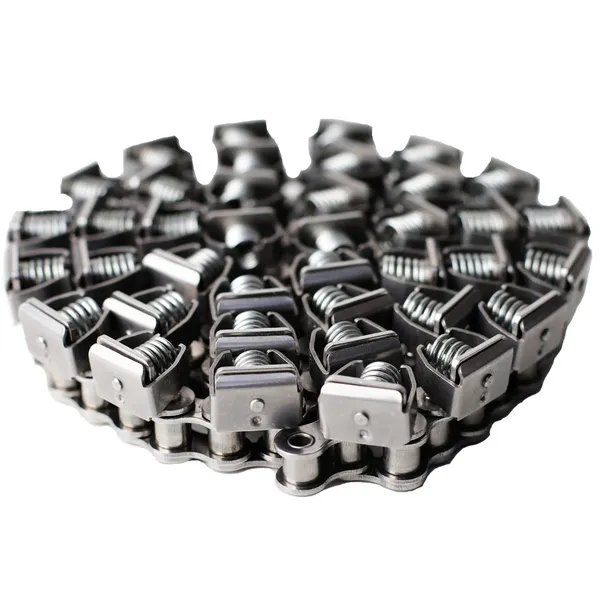
How do you calculate the maximum allowable tension in a conveyor chain?
The maximum allowable tension in a conveyor chain can be calculated using the following steps:
1. Determine the Chain Pitch:
– Measure the distance between the centers of two consecutive chain pins. This measurement is known as the chain pitch and is typically expressed in inches or millimeters.
2. Determine the Chain Speed:
– Determine the speed at which the conveyor chain will be operating. The chain speed is typically expressed in feet per minute or meters per second.
3. Calculate the Chain Pull:
– Determine the total weight or force that needs to be moved by the conveyor chain. This includes the weight of the conveyed material and any additional loads or forces acting on the chain.
4. Calculate the Required Tension:
– Use the following formula to calculate the required tension:
Tension = (Chain Pull × Chain Speed) / (Chain Pitch × Efficiency)
– The efficiency factor accounts for losses due to friction and other factors and is typically expressed as a decimal between 0 and 1.
5. Determine the Maximum Allowable Tension:
– The maximum allowable tension is determined by the manufacturer’s specifications for the conveyor chain. It is important to consult the manufacturer’s documentation or contact them directly to obtain the maximum allowable tension value.
6. Compare the Required Tension and Maximum Allowable Tension:
– Compare the calculated required tension with the maximum allowable tension. The required tension should be less than or equal to the maximum allowable tension to ensure safe and reliable operation of the conveyor chain.
By following these steps and considering the manufacturer’s specifications, you can accurately calculate the maximum allowable tension in a conveyor chain and ensure that it is within the safe operating limits.
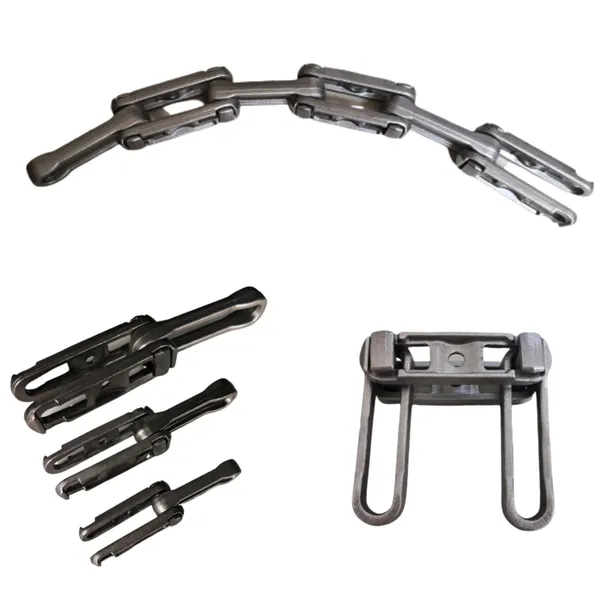
¿Cómo afecta la lubricación al rendimiento de una cadena transportadora?
La lubricación desempeña un papel crucial en el rendimiento y la vida útil de una cadena transportadora. Una lubricación adecuada ayuda a reducir la fricción, el desgaste y la generación de calor, lo que garantiza un funcionamiento fluido y minimiza el riesgo de fallas prematuras. A continuación, se explica cómo la lubricación afecta el rendimiento de una cadena transportadora:
1. Reducción de la fricción: La lubricación forma una fina película entre los componentes de la cadena, reduciendo la fricción entre las superficies metálicas. Esto disminuye la energía necesaria para el funcionamiento, minimiza la generación de calor y previene el desgaste excesivo.
2. Prevención del desgaste: La lubricación forma una capa protectora sobre los componentes de la cadena, evitando el contacto directo metal con metal. Esto ayuda a reducir el desgaste y prolongar la vida útil de la cadena.
3. Protección contra la corrosión: Los lubricantes suelen contener aditivos anticorrosivos que protegen la cadena contra el óxido y la oxidación. Esto es especialmente importante en entornos con alta humedad o exposición a sustancias corrosivas.
4. Reducción de ruido: Una lubricación adecuada reduce el ruido generado durante el funcionamiento de la cadena al minimizar la fricción y el contacto metal con metal. Esto contribuye a un entorno de trabajo más silencioso y confortable.
5. Control de temperatura: La lubricación ayuda a disipar el calor generado durante el funcionamiento de la cadena, evitando un aumento excesivo de la temperatura. Esto es fundamental en aplicaciones de alta velocidad o de trabajo pesado, donde el calor puede acelerar el desgaste y reducir el rendimiento de la cadena.
6. Mantenimiento y vida útil: La lubricación regular y la selección adecuada del lubricante son esenciales para mantener el rendimiento de la cadena y prolongar su vida útil. Una lubricación adecuada reduce la necesidad de mantenimiento frecuente, minimiza el tiempo de inactividad y disminuye los costos operativos generales.
Es importante seguir las recomendaciones del fabricante sobre la frecuencia de lubricación y utilizar el lubricante adecuado para la cadena transportadora. Asimismo, se deben realizar inspecciones y revisiones de mantenimiento periódicas para garantizar los niveles de lubricación correctos y solucionar cualquier problema con prontitud. Una lubricación adecuada mejorará el rendimiento, la fiabilidad y la durabilidad del sistema de cadena transportadora.
What are the common causes of conveyor chain failures?
Conveyor chain failures can occur due to various reasons, and identifying the root cause is crucial for preventing future issues. Here are some common causes of conveyor chain failures:
- Lack of Lubrication: Insufficient or improper lubrication can lead to increased friction and wear on the chain components, resulting in premature failure.
- Excessive Load: Overloading the conveyor chain beyond its rated capacity can cause excessive stress and strain, leading to chain elongation, deformation, or link breakage.
- Misalignment: Improper alignment of the conveyor chain can cause uneven loading and excessive wear on specific areas, leading to chain failure.
- Environmental Factors: Harsh operating environments, such as high temperatures, corrosive substances, or abrasive materials, can accelerate chain wear and corrosion, leading to failure.
- Foreign Objects: The presence of foreign objects or debris on the conveyor system can interfere with the movement of the chain, causing jamming, binding, or chain damage.
- Poor Maintenance: Inadequate maintenance practices, such as irregular inspections, failure to address minor issues promptly, or neglecting to replace worn components, can contribute to chain failures.
- Incorrect Installation: Improper installation, including incorrect tensioning, misalignment, or using incompatible components, can result in premature chain failure.
- Fatigue and Wear: Continuous operation over time can lead to fatigue and wear in the chain, especially in high-speed or heavy-duty applications, resulting in eventual failure.
Regular maintenance, proper lubrication, adequate training for operators, and adherence to manufacturer guidelines can help mitigate these common causes of conveyor chain failures. Conducting routine inspections, promptly addressing issues, and replacing worn components can also significantly extend the life of the conveyor chain.


editor by CX 2023-09-12