Descrição do produto
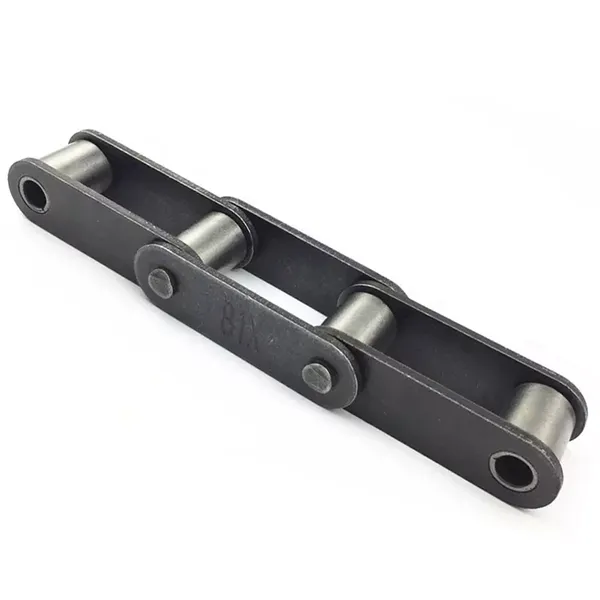
These chains used in a variety of industries including manufacturing, assembly, and packaging, for example, cosmetics, foodstuffs, paper, eletrical and Electronic sectors, mechanical, chemical and automotive industry.
Max conveyor length per drive until 25m
Operating temperature -20¯ +60º C
Allowed max speed ca 50m/min
Packing: 1M 26PCS
Min curve radius: 150mm
Chain Width:83mm
Chain Pitch:38mm
| Chain Type | Plate Width | Working Load(max) | Sideflex Radius(min) | Backflex Radius(min) | Peso | ||||
| mm | polegada | N(21ºC) | IBF(21ºC) | mm | polegada | mm | polegada | kg/m | |
| 83-1 | 83 | 3.25 | 2100 | 472 | 150 | 5.90 | 40 | 1.57 | 1.35 |
HangZhou CZPT Conveyor Equipment Co.,Ltd. is specialized in manufacturing all kinds of Plastic Tabletop Chains, Modular Plastic Belts and Conveyor Components and our products have been applied in many industries. With professional engineers, we can meet your demand with specific solutions.
With the idea of innovation, CZPT has been developing a variety of new products. Our aim is to meet your various requirement with leading solutions. The range of our products as well as production scale are leading the industry. As the professional manufacturer, our products are applied in a variety of industries, such as the food processing of meat, seafood, bakery, fruit and vegetable as well as beverage and dairy products. They also play an important role in the industry of pharmacy, chemistry, battery, paper and tire production etc.
Since CZPT was established, we are trying our best to satisfy every customer’s requirement. We have been supplying some CZPT companies such as ZheJiang ASG group, Wahaha, Mengniu, Yurun, Coca Cola, Tsingtao beer, Hayao Group etc.
The company has been qualified with ISO 9001 quality system. The production strictly complies with the standard and procedures of ISO 9001, which ensures good product quality. An increasing number of customers start to use our products because of Tuoxin’s advanced facilities, rich experience, efficient management and excellent sales team. CZPT has not only gained good reputation in domestic market, but also exported products to Southeast Asia, Japan, Russia, Australia, Newzealand, Germany and other countries.
CZPT has been always keeping our vision in mind, which is “Satisfy customer with reasonable price, reliable quality and timely delivery.
We believe that satisfying our customer is the basis of the company’s sustainable development. CZPT is willing to cooperate with you and achieve mutual benefits.
Any enquiries from customers are welcome.
| Uso: | Transportation Chain |
|---|---|
| Material: | Plástico |
| Tratamento de superfície: | Polimento |
| Recurso: | Resistente ao calor |
| Tamanho da corrente: | 1/2"*3/32" |
| Estrutura: | Corrente superior |
| Personalização: | Disponível | Solicitação personalizada |
|---|
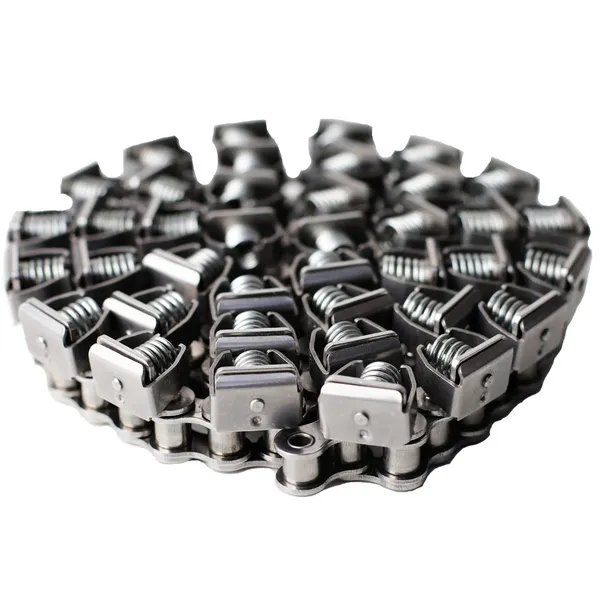
How do you calculate the maximum allowable tension in a conveyor chain?
The maximum allowable tension in a conveyor chain can be calculated using the following steps:
1. Determine the Chain Pitch:
– Measure the distance between the centers of two consecutive chain pins. This measurement is known as the chain pitch and is typically expressed in inches or millimeters.
2. Determine the Chain Speed:
– Determine the speed at which the conveyor chain will be operating. The chain speed is typically expressed in feet per minute or meters per second.
3. Calculate the Chain Pull:
– Determine the total weight or force that needs to be moved by the conveyor chain. This includes the weight of the conveyed material and any additional loads or forces acting on the chain.
4. Calculate the Required Tension:
– Use the following formula to calculate the required tension:
Tension = (Chain Pull × Chain Speed) / (Chain Pitch × Efficiency)
– The efficiency factor accounts for losses due to friction and other factors and is typically expressed as a decimal between 0 and 1.
5. Determine the Maximum Allowable Tension:
– The maximum allowable tension is determined by the manufacturer’s specifications for the conveyor chain. It is important to consult the manufacturer’s documentation or contact them directly to obtain the maximum allowable tension value.
6. Compare the Required Tension and Maximum Allowable Tension:
– Compare the calculated required tension with the maximum allowable tension. The required tension should be less than or equal to the maximum allowable tension to ensure safe and reliable operation of the conveyor chain.
By following these steps and considering the manufacturer’s specifications, you can accurately calculate the maximum allowable tension in a conveyor chain and ensure that it is within the safe operating limits.
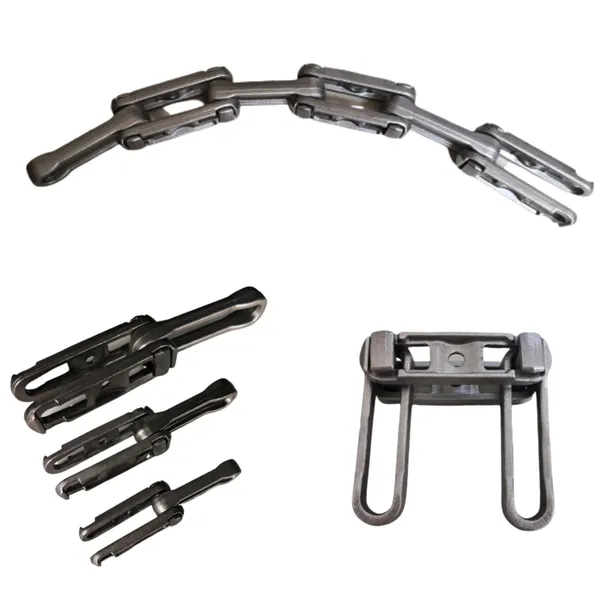
Como a lubrificação afeta o desempenho de uma corrente transportadora?
A lubrificação desempenha um papel crucial no desempenho e na vida útil de uma corrente transportadora. Uma lubrificação adequada ajuda a reduzir o atrito, o desgaste e a geração de calor, garantindo uma operação suave e minimizando o risco de falhas prematuras. Veja como a lubrificação afeta o desempenho de uma corrente transportadora:
1. Redução do Atrito: A lubrificação forma uma película fina entre os componentes da corrente, reduzindo o atrito entre as superfícies metálicas. Isso reduz a energia necessária para a operação, minimiza a geração de calor e evita o desgaste excessivo.
2. Prevenção do desgaste: A lubrificação forma uma camada protetora nos componentes da corrente, impedindo o contato direto metal com metal. Isso ajuda a reduzir o desgaste e prolongar a vida útil da corrente.
3. Proteção contra corrosão: Os lubrificantes geralmente contêm aditivos anticorrosivos que protegem a corrente contra ferrugem e oxidação. Isso é particularmente importante em ambientes com alta umidade ou exposição a substâncias corrosivas.
4. Redução de ruído: A lubrificação adequada reduz o ruído gerado durante a operação da corrente, minimizando o atrito e o contato metal-metal. Isso pode contribuir para um ambiente de trabalho mais silencioso e confortável.
5. Controle de temperatura: A lubrificação ajuda a dissipar o calor gerado durante a operação da corrente, evitando o aumento excessivo da temperatura. Isso é crucial em aplicações de alta velocidade ou serviço pesado, onde o calor pode levar ao desgaste acelerado e à redução do desempenho da corrente.
6. Manutenção e Vida Útil: A lubrificação regular e a seleção adequada do lubrificante são essenciais para manter o desempenho da corrente e prolongar sua vida útil. Uma lubrificação adequada reduz a necessidade de manutenção frequente, minimiza o tempo de inatividade e diminui os custos operacionais gerais.
É importante seguir as recomendações do fabricante quanto à frequência de lubrificação e usar o lubrificante apropriado para a corrente transportadora. Inspeções e verificações de manutenção regulares também devem ser realizadas para garantir os níveis adequados de lubrificação e solucionar quaisquer problemas prontamente. Práticas adequadas de lubrificação irão melhorar o desempenho, a confiabilidade e a durabilidade do sistema de corrente transportadora.
What are the common causes of conveyor chain failures?
Conveyor chain failures can occur due to various reasons, and identifying the root cause is crucial for preventing future issues. Here are some common causes of conveyor chain failures:
- Lack of Lubrication: Insufficient or improper lubrication can lead to increased friction and wear on the chain components, resulting in premature failure.
- Excessive Load: Overloading the conveyor chain beyond its rated capacity can cause excessive stress and strain, leading to chain elongation, deformation, or link breakage.
- Misalignment: Improper alignment of the conveyor chain can cause uneven loading and excessive wear on specific areas, leading to chain failure.
- Environmental Factors: Harsh operating environments, such as high temperatures, corrosive substances, or abrasive materials, can accelerate chain wear and corrosion, leading to failure.
- Foreign Objects: The presence of foreign objects or debris on the conveyor system can interfere with the movement of the chain, causing jamming, binding, or chain damage.
- Poor Maintenance: Inadequate maintenance practices, such as irregular inspections, failure to address minor issues promptly, or neglecting to replace worn components, can contribute to chain failures.
- Incorrect Installation: Improper installation, including incorrect tensioning, misalignment, or using incompatible components, can result in premature chain failure.
- Fatigue and Wear: Continuous operation over time can lead to fatigue and wear in the chain, especially in high-speed or heavy-duty applications, resulting in eventual failure.
Regular maintenance, proper lubrication, adequate training for operators, and adherence to manufacturer guidelines can help mitigate these common causes of conveyor chain failures. Conducting routine inspections, promptly addressing issues, and replacing worn components can also significantly extend the life of the conveyor chain.


editor by CX 2023-09-12