Descrizione del prodotto
Descrizione del prodotto
Palm oil chain, a kind of conveyor chain, is a kind of conveyor equipment that conveys the palm fruits from the oil palm tree to the pressing machine for pressing by using palm oil chain.
Palm oil chain is divided into:
1, Straight type palm oil chain
2, Bent plate type palm oil chain
3, Hollow pin type palm oil chain
4, Palm Oil Chain-Accessories
Sugar mill chain refers to the chain used in the production equipment of sugar (the main raw materials are sugar cane and sugar beet), and the products cover the manufacturing process of transmission, lifting and conveying in sugar industry.
According to the different processes in the sugar production process, different materials and the same heat treatment process can be selected to ensure that the chains have better quality characteristics such as toughness, abrasion resistance and corrosion resistance.
Product Attribute
| Product Name | Conveyor Chians |
| Available materials | carbon steel, alloy steel,stainless steel |
| OEM customisation according to your requirements | |
| Trattamento superficiale | Shot peening, Zinc-plated, Nickel-plated, Anodized, etc. |
| Prestazione | High temperature resistant Abrasion resistant |
| Reference standards | ISO,DIN,ANSL |
| Customised drawings | YES |
| Certificates | ISO9001:2008 SGS brand TV |
| Tempi di consegna | 20 days for samples. 45 days for official order. |
| Confezione | Plastic Bag + Cardboard Box + Wooden |
Detailed Photos
Product Parameters
Our Advantages
Company Advantages:
Own Import & Export License, The TV trade mark registered successfully in many countries, Sales network spread all over China, Products export to 65 countries in 5 continents.
Membership:
1. The member of China General Machine Components Industry Association.
2. The member of China Chain Transmission Association.
3. The member of China Chain Standardization Association.
4. The member of China Agricultural Association Machinery Manufacturers.
With our excellent trained staffs and workers, advanced and efficient equipments, completely sales network, strict QA systems. You are confidence that our premium qualified chain can meet all customers’ specification and strictest quality standards.
Please do not hesitate to contact us for more information on how TransVision products can meet your industries demands at highly competitive pricing.
Quality First, Clients Uppermost.
Product Categories
WHY CHOOSE US
Comprehensive Product Portfolio We produce and supply a wide range of power transmission
products including drive chains, leaf chains, conveyor chains, agricultural chains, sprockets, and
couplings. This one-store-for-all shopping experience will significantly reduce your searching costs while
guarantee youfind what you want at 1 click.
Value Choice Products Our products are the best combination of quality and price, and you get what
you want within your budgets
Seasoned Sales Associates and Engineers We have 15 seasoned sales associates and 5 engineers;
on our team at your disposal any time when you need a helping hand. They are well trained with industry
know-now and will always respond to your requests within 24 hours.
100% Customer Retention Rate Our regular customers from overseas come back not just for our
premium quality products, but for the superior services that we’ve provided over the years.
FAQ
Q1: What’s your average lead time?
A: It varies. Our regular end-to-end lead time is 1-2 months.. We also provide express shipments for rush orders. For details,please consult our sales associate.
Q2: Is your price better than your competitors given the same quality?
A: Definitely YES. We provide the most competitive price in the power transmission industry. If price disparity exists, we’ll be more than happy to do a price match.
Q3: Can you make chains according to my CAD drawings?
A: Yes. Besides the regular standard chains, we produce non-standard and custom-design products to meet the specific technical requirements. In reality, a sizable portion of our production capacity is assigned to make non-standard products.
Q4: Can we inspect the goods before shipment?
A: Yes. You or your representative or any third-party inspection party assigned is allowed access to our facility and do the inspection.
Q5: What kind of payment method is acceptable for your mill?
A: We’re flexible. We take T/T, L/C, or any other online payment methods so long as it’s applicable for you.
Q6: What if I have any other questions?
A: Whenever in doubt, you’re always encouraged to consult our sales associate any time – They will help you to your satisfaction.
| Materiale: | Acciaio legato/al carbonio |
|---|---|
| Struttura: | Catena a rulli |
| Trattamento superficiale: | Lucidatura |
| Personalizzazione: | Disponibile | Richiesta personalizzata |
|---|
.shipping-cost-tm .tm-status-off{background: none;padding:0;color: #1470cc}
| Costo di spedizione: Costo stimato per unità. | Informazioni sui costi di spedizione e sui tempi di consegna stimati. |
|---|
| Metodo di pagamento: |
|
|---|---|
| Pagamento iniziale Pagamento completo |
| Valuta: | US$ |
|---|
| Resi e rimborsi: | È possibile richiedere un rimborso entro 30 giorni dalla ricezione dei prodotti. |
|---|
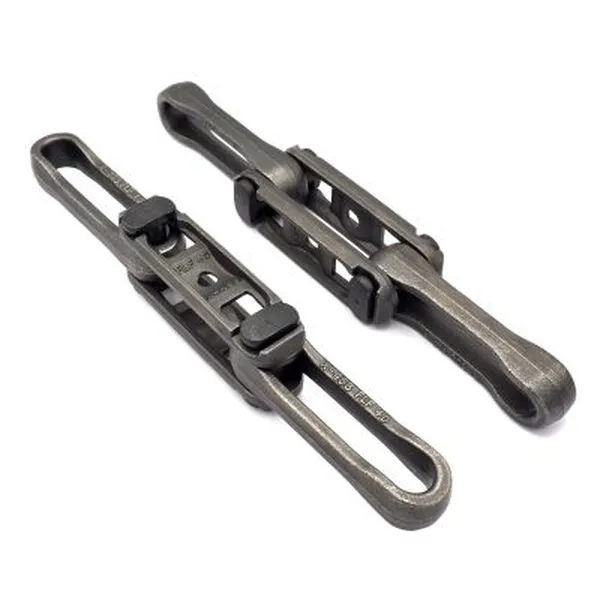
What are the advantages of using a slat conveyor chain?
A slat conveyor chain offers several advantages in material handling and conveying applications. Here are some key benefits:
1. Heavy-Duty Capacity:
– Slat conveyor chains are designed to handle heavy loads and can withstand rigorous industrial environments.
– They are commonly used in applications that require transporting large, bulky, or irregularly shaped items, such as automotive parts, pallets, or containers.
2. Flexibility:
– Slat chains can be customized and configured to suit specific conveying requirements. They are available in various widths, lengths, and chain configurations to accommodate different product sizes and shapes.
– The modular design of slat chains allows for easy modification or expansion of the conveyor system as production needs change.
3. Versatility:
– Slat chains can be used in both horizontal and inclined conveying applications. They are capable of moving products up or down slopes, making them suitable for production lines with varying elevations.
– These chains can be integrated with curves, turns, merges, and diverters to create complex conveying systems that optimize space utilization and product flow.
4. Durability and Longevity:
– Slat chains are typically made from robust materials such as steel or plastic, providing excellent durability and resistance to wear and tear.
– They can withstand demanding operating conditions, including high temperatures, corrosive environments, or exposure to chemicals.
5. Low Maintenance:
– Slat conveyor chains require minimal maintenance compared to other types of conveyor systems. They have fewer moving parts and typically operate with reduced friction.
– With proper lubrication and periodic inspection, slat chains can maintain their performance and reliability over an extended service life.
6. Easy Cleaning:
– The open design of slat chains allows for easy cleaning and debris removal. They are suitable for applications that require frequent sanitation or hygiene maintenance, such as in food processing or pharmaceutical industries.
Overall, using a slat conveyor chain offers the advantages of high load capacity, flexibility in design, versatility in conveying applications, durability, low maintenance requirements, and ease of cleaning. These features make slat chains an effective solution for various industries requiring efficient and reliable material handling.
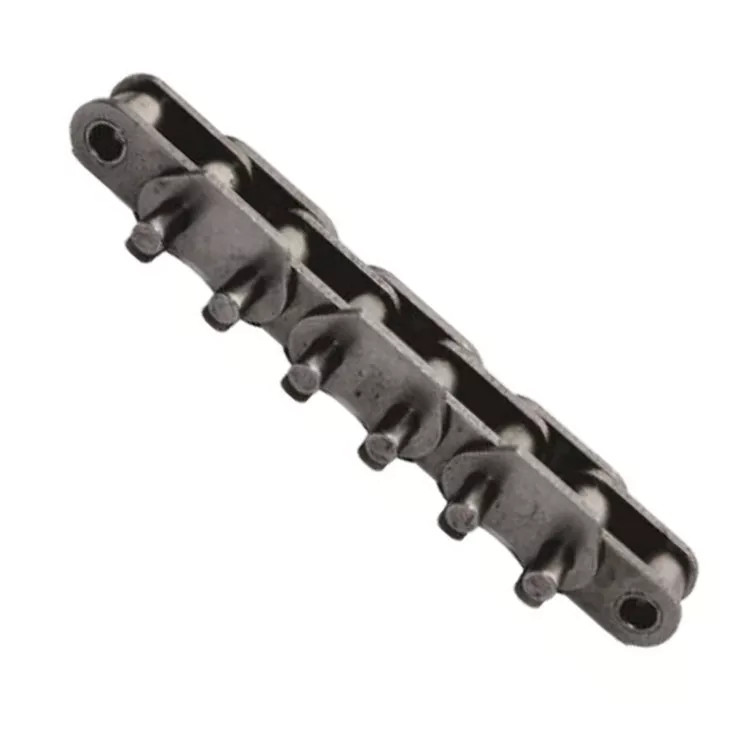
How does a conveyor chain handle different types of materials?
A conveyor chain is designed to handle a wide variety of materials in diverse industrial applications. It is capable of efficiently transporting different types of materials, including:
1. Bulk Materials: Conveyor chains are commonly used to handle bulk materials such as grains, coal, ores, aggregates, and powders. The design of the chain, including the spacing and shape of the links, helps prevent material spillage and ensures smooth and consistent flow.
2. Packaged Goods: Conveyor chains are also used for conveying packaged goods such as boxes, cartons, crates, and pallets. They provide a stable and reliable method of transporting these items along the production line, reducing manual handling and increasing productivity.
3. Small Parts: Conveyor chains with specialized attachments or small-pitch configurations are suitable for handling small parts or components. These chains ensure precise positioning and gentle transport of delicate or intricate items.
4. Heavy-Duty Loads: Industrial conveyor chains are capable of handling heavy-duty loads, such as automotive parts, machinery components, and large equipment. They are engineered to withstand the weight and stress of these objects, providing reliable and efficient material handling in demanding environments.
5. Food and Beverage Products: Conveyor chains used in the food and beverage industry are designed to meet strict hygiene and safety standards. They are constructed from materials that are resistant to corrosion, easy to clean, and compliant with food-grade regulations. These chains ensure the safe and contamination-free handling of food products.
6. Hazardous Materials: Conveyor chains can be used to safely transport hazardous materials, such as chemicals or waste products. Specialized chains with additional safety features, such as sealed housings or containment systems, are utilized to minimize the risk of spills or leaks.
Conveyor chains can be customized with different chain configurations, attachments, and accessories to accommodate specific material characteristics and handling requirements. The selection of the appropriate chain type, material, and design parameters ensures optimal performance and efficient material handling for a wide range of materials.

Quali sono i costi da considerare quando si acquista una catena di trasporto?
Quando si acquista una catena di trasporto, è necessario tenere conto di diversi fattori relativi ai costi per garantire un investimento ottimale e un'efficienza operativa elevata.
1. Costo iniziale: Il costo iniziale della catena di trasporto comprende il costo della catena stessa, nonché di eventuali componenti aggiuntivi come pignoni, accessori e maglie di collegamento. È importante confrontare i prezzi di diversi fornitori e valutare il rapporto qualità-prezzo complessivo.
2. Costi di manutenzione e riparazione: Considerate i costi di manutenzione e riparazione a lungo termine associati alla catena di trasporto. Alcune catene potrebbero richiedere una lubrificazione più frequente o la sostituzione di componenti, il che può aumentare le spese operative complessive.
3. Durata di servizio: La durata di servizio della catena di trasporto è un fattore essenziale per determinarne la convenienza economica. Le catene con una durata di servizio più lunga possono avere un costo iniziale più elevato, ma possono comportare minori costi di sostituzione e di fermo macchina nel lungo periodo.
4. Efficienza energetica: il consumo di energia è un costo continuo da considerare. Le catene di trasporto che offrono un attrito inferiore e una trasmissione di potenza efficiente possono contribuire al risparmio energetico e alla riduzione delle spese operative.
5. Facilità di manutenzione: Quando si sceglie una catena di trasporto, è importante considerare la facilità di manutenzione. Le catene più facili da pulire, ispezionare e manutenere possono ridurre i costi di manodopera e aumentare l'efficienza operativa.
6. Compatibilità e integrazione: Assicurarsi che la catena di trasporto selezionata sia compatibile con il sistema o l'attrezzatura di trasporto esistente. L'adattamento o la modifica del sistema per ospitare una catena specifica potrebbe comportare costi aggiuntivi.
7. Assistenza e garanzia del fornitore: Valutate il livello di supporto tecnico fornito dal fornitore e la copertura di garanzia offerta per la catena di trasporto. Questo può influire sul costo totale di proprietà e offrire tranquillità in caso di problemi imprevisti.
È importante valutare questi fattori in modo olistico ed effettuare un'analisi costi-benefici basata sui requisiti specifici dell'applicazione. La scelta di una catena di trasporto in linea con il budget, le esigenze di prestazioni e le considerazioni sui costi a lungo termine contribuirà a ottimizzare l'investimento e a garantire operazioni di movimentazione dei materiali efficienti.


editor by CX 2023-10-21