Descrizione del prodotto
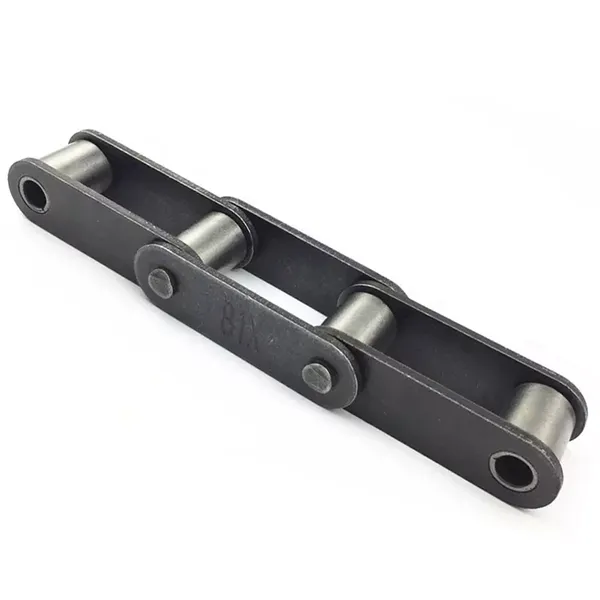
We are Double Pitch Conveyor Chain Manufacturer and always supplying Conveyor chains with competitive price,high quality and regular basis.
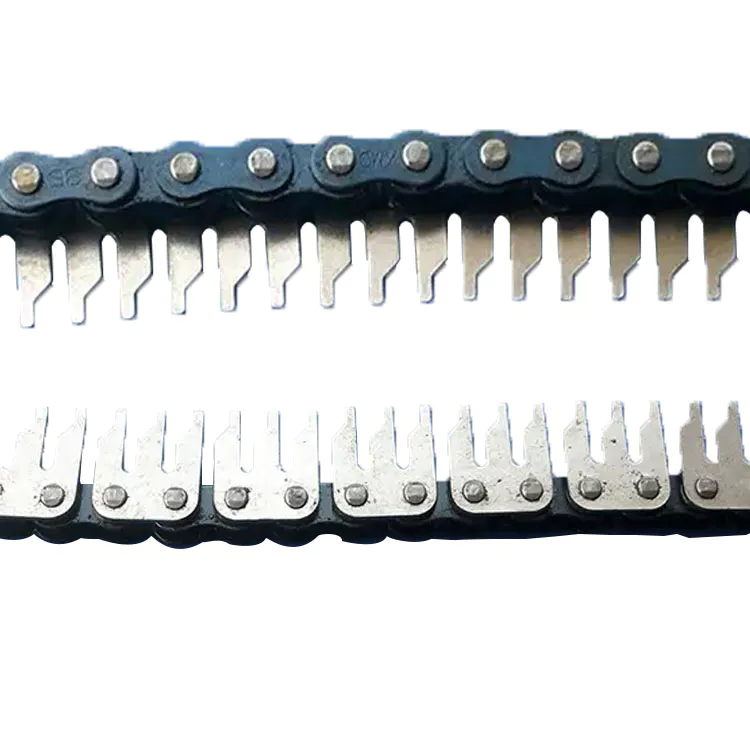
These Conveyor chains are used in conveyor applications when loads are low and speeds are moderate. They are similar to the Double-Pitch Power Transmission chains, but with link plates that have an oval contour, and can be produced with either standard or over-sized rollers. They are most often found working on conveyors of all shapes and sizes and can be supplied with 1 or more of our many attachments to carry or convey products.
| ISO Chain No. | ANSI Chain No. | Pece | Roller diameter | Width between innerplates | Diametro del perno | Lunghezza del perno | Inner plate depth | Spessore della piastra | Ultimate tensile strength | resistenza alla trazione media | |
| p | d1 max | b1 min | d2 max | L max | Lc max | h2 max | T max | Q min | Qo | ||
| m m | m m | m m | m m | m m | m m | m m | m m | kN/bf | kN | ||
| C208A C208AL | C2040 C2042 | 25.40 | 7.95 15.88 | 7.85 | 3.96 | 16.6 | 17.8 | 12.0 | 1.50 | 14.1/3205 | 16.7 |
| C208AH | C2040H | 25.40 | 7.95 | 7.85 | 3.96 | 18.8 | 19.9 | 12.0 | 2.03 | 14.1/3205 | 17.2 |
| C208B C208BL | 25.40 | 8.51 15.88 | 7.75 | 4.45 | 16.7 | 18.2 | 11.8 | 1.60 | 18.0/4091 | 19.4 | |
| C210A C210AL | C2050 C2052 | 31.75 | 10.16 19.05 | 9.40 | 5.08 | 20.7 | 22.2 | 15.0 | 2.03 | 22.2/5045 | 28.1 |
| C212A C212AL | C2060 C2062 | 38.10 | 11.91 22.23 | 12.57 | 5.94 | 25.9 | 27.7 | 18.0 | 2.42 | 31.8/7227 | 36.8 |
| C212AH C212AHL | C2060H C2062H | 38.10 | 11.91 22.23 | 12.57 | 5.94 | 29.2 | 31.6 | 18.0 | 3.25 | 31.8/7227 | 41.6 |
| C216A C216AL | C2080 C2082 | 50.80 | 15.88 28.58 | 15.75 | 7.92 | 32.7 | 36.5 | 24.0| | 3.25 | 56.7/12886 | 65.7 |
| C216AH C216AHL | C2080H C2082H | 50.80 | 15.88 28.58 | 15.75 | 7.92 | 36.2 | 39.4 | 24.0 | 4.00 | 56.7/12886 | 70.0 |
| C220A C220AL | C2100 C2102 | 63.50 | 19.05 39.67 | 18.90 | 9.53 | 40.4 | 44.7 | 30.0 | 4.00 | 88.5/20114 | 102.6 |
| C220AH C220AHL | C2100H C2102H | 63.50 | 19.05 39.67 | 18.90 | 9.53 | 43.6 | 46.9 | 30.0 | 4.80 | 88.5/20114 | 112.4 |
| C224A C224AL | C2120 C2122 | 76.20 | 22.23 44.45 | 25.22 | 11.10 | 50.3 | 54.3 | 35.7 | 4.80 | 127.0/28864 | 147.3 |
| C224AH C224AHL | C2120H C2122H | 76.20 | 22.23 44.45 | 25.22 | 11.10 | 53.5 | 57.5 | 35.7 | 5.60 | 127.0/28864 | 160.9 |
| C232A C232AL | C2160 C2162 | 101.60 | 28.58 57.15 | 31.75 | 14.27 | 64.8 | 69.6 | 47.8 | 6.40 | 226.8/51545 | 278.9 |
| C232AH C232AHL | C2160H C2162H | 101.60 | 28.58 57.15 | 31.75 | 14.27 | 68.2 | 73.0 | 47.8 | 7.20 | 226.8/51545 | 285.8 |
/* May 10, 2571 16:49:51 */!function(){function d(e,r){var a,o={};try{e&&e.split(“,”).forEach(function(e,t){e&&(a=e.match(/(.*?):(.*)$/))&&1

È possibile utilizzare una catena di trasporto in ambienti con temperature estreme?
Sì, le catene di trasporto possono essere progettate e realizzate per resistere ad ambienti con temperature estreme. L'idoneità di una catena di trasporto per applicazioni ad alta o bassa temperatura dipende dalla composizione del materiale e dalla sua costruzione.
1. Ambienti ad alta temperatura: Per applicazioni che prevedono temperature elevate, si utilizzano comunemente catene di trasporto realizzate con materiali resistenti al calore come l'acciaio inossidabile o leghe speciali. Queste catene possono sopportare temperature elevate senza deformazioni significative o perdita di resistenza. Sono progettate per resistere all'ossidazione, alla corrosione e alla dilatazione termica, garantendo prestazioni affidabili in ambienti caldi.
2. Ambienti a bassa temperatura: Allo stesso modo, le catene di trasporto possono essere progettate anche per applicazioni a bassa temperatura. Negli ambienti freddi, si utilizzano catene realizzate con materiali che rimangono duttili e resistenti alle basse temperature. Queste catene sono progettate per resistere agli effetti delle basse temperature senza diventare fragili o perdere le proprie proprietà meccaniche.
È importante consultare i produttori di catene per nastri trasportatori o esperti specializzati in applicazioni a temperature estreme per selezionare il materiale e il design più adatti. Essi possono fornire indicazioni su fattori quali la scelta del materiale, la lubrificazione e le considerazioni operative per garantire che la catena del nastro trasportatore funzioni in modo efficace e affidabile in ambienti con temperature estreme.
Quali sono le tendenze e i progressi futuri nella tecnologia delle catene di trasporto?
Il settore della tecnologia delle catene di trasporto è in continua evoluzione, spinto dalla necessità di migliorare l'efficienza, la produttività e la sostenibilità. Ecco alcune delle tendenze e dei progressi futuri nella tecnologia delle catene di trasporto:
1. Automazione e robotica: L'integrazione delle catene di trasporto con sistemi di automazione e robotica è una tendenza in crescita. Ciò include l'utilizzo di sensori avanzati, visione artificiale e intelligenza artificiale per consentire il funzionamento autonomo, il posizionamento preciso e la movimentazione efficiente dei materiali.
2. Sistemi intelligenti e connessi: le catene di trasporto sono sempre più connesse grazie alla tecnologia dell'Internet delle cose (IoT). Ciò consente il monitoraggio in tempo reale, la raccolta dati e l'analisi di vari parametri prestazionali come l'usura della catena, la tensione, la temperatura e il consumo energetico. I sistemi intelligenti possono ottimizzare i programmi di manutenzione, rilevare potenziali guasti e migliorare l'efficienza complessiva del sistema.
3. Materiali leggeri e ad alta resistenza: Lo sviluppo di materiali leggeri ma ad alta resistenza è un obiettivo costante nella tecnologia delle catene di trasporto. Leghe avanzate, compositi e plastiche ingegnerizzate offrono migliori rapporti resistenza-peso, riducendo il consumo energetico e aumentando la capacità di carico dei sistemi di trasporto.
4. Efficienza energetica: L'efficienza energetica è un fattore chiave nella progettazione delle catene portacavi. I futuri sviluppi mirano a minimizzare il consumo energetico attraverso l'utilizzo di sistemi di azionamento efficienti, frenatura rigenerativa e algoritmi di controllo intelligenti che ottimizzano i profili di velocità e accelerazione. Le tecnologie di recupero energetico, come gli azionamenti rigenerativi, possono anche catturare e riutilizzare l'energia durante la decelerazione o la frenata.
5. Sostenibilità e rispetto dell'ambiente: la tecnologia delle catene di trasporto si sta evolvendo verso soluzioni più sostenibili ed ecocompatibili. Ciò include l'utilizzo di materiali ecocompatibili, tecniche di lubrificazione migliorate per ridurre al minimo l'impatto ambientale e l'adozione di componenti e sistemi a basso consumo energetico. Anche i concetti di riciclo ed economia circolare stanno acquisendo importanza nella progettazione e produzione delle catene di trasporto.
6. Monitoraggio avanzato dell'usura e manutenzione predittiva: Il futuro della tecnologia delle catene di trasporto prevede sistemi avanzati di monitoraggio dell'usura in grado di prevedere con precisione la vita utile residua di catene e componenti. Ciò consente una pianificazione proattiva della manutenzione e riduce i tempi di fermo non programmati. Gli algoritmi di manutenzione predittiva analizzano i dati raccolti dai sensori e forniscono avvisi tempestivi per la sostituzione o la riparazione della catena.
Questi sono solo alcuni esempi delle tendenze future e dei progressi nella tecnologia delle catene di trasporto. Con il continuo progresso tecnologico, possiamo aspettarci ulteriori innovazioni che miglioreranno le prestazioni, l'efficienza, l'affidabilità e la sostenibilità dei sistemi di trasporto.
Come si risolvono i problemi più comuni delle catene di trasporto?
La risoluzione dei problemi più comuni delle catene portacavi prevede l'identificazione del problema e l'adozione delle misure appropriate per risolverlo. Ecco alcuni problemi comuni e le relative procedure di risoluzione:
- Slittamento della catena: Se la catena slitta o non si innesta correttamente sui pignoni, verificare la tensione, l'allineamento e la lubrificazione. Regolare la tensione se necessario e assicurarsi che la catena sia correttamente allineata con i pignoni.
- Inceppamento della catena: Se la catena si inceppa o si blocca frequentemente, ispeziona il nastro trasportatore per individuare eventuali ostruzioni o corpi estranei che potrebbero causare il problema. Rimuovi eventuali detriti o blocchi e assicurati che il percorso della catena sia libero.
- Rumore eccessivo: Se la catena emette rumori forti o insoliti, verificare che la lubrificazione sia adeguata. Una lubrificazione insufficiente può causare un aumento dell'attrito e della rumorosità. Applicare il lubrificante appropriato secondo le raccomandazioni del produttore.
- Rottura della catena: Se la catena si rompe frequentemente, controlla la presenza di componenti danneggiati o usurati. Sostituisci eventuali maglie, perni o attacchi rotti o usurati. Verifica inoltre la corretta tensione e l'allineamento, poiché una tensione eccessiva o un disallineamento possono causare la rottura della catena.
- Usura della catena: Se la catena presenta segni di usura, come allungamento o corrosione, è consigliabile sostituirla. Un'usura eccessiva può compromettere le prestazioni e la durata della catena. Ispezionare e misurare regolarmente la catena per verificarne l'usura e sostituirla quando necessario.
È importante seguire le corrette procedure di manutenzione, tra cui ispezioni, lubrificazione e tensionamento regolari, per prevenire e risolvere i problemi più comuni delle catene dei trasportatori. Consultare le linee guida del produttore e, se necessario, rivolgersi a un professionista.
<img src="https://img.hzpt.com/img/chain/chain-l1.webp" alt="China high quality China Chain Manufacturer Double Pitch Conveyor Chain “><img src="https://img.hzpt.com/img/chain/chain-l2.webp" alt="China high quality China Chain Manufacturer Double Pitch Conveyor Chain “>
editor by lmc 2024-10-22