Produktbeschreibung
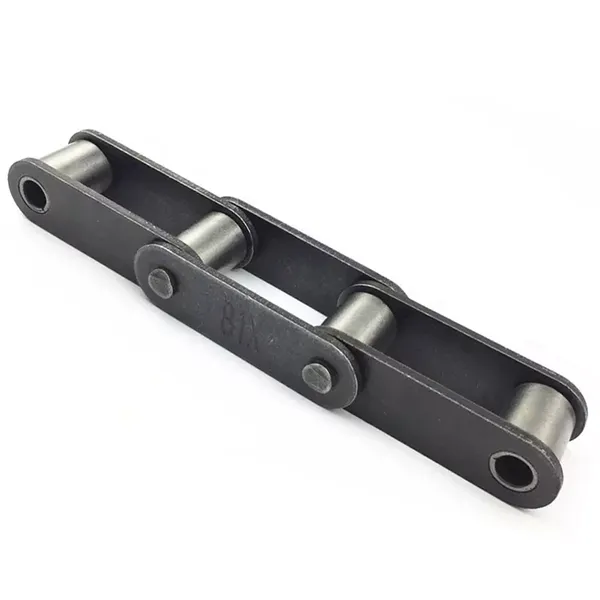
We are Double Pitch Conveyor Chain Manufacturer and always supplying Conveyor chains with competitive price,high quality and regular basis.
These Conveyor chains are used in conveyor applications when loads are low and speeds are moderate. They are similar to the Double-Pitch Power Transmission chains, but with link plates that have an oval contour, and can be produced with either standard or over-sized rollers. They are most often found working on conveyors of all shapes and sizes and can be supplied with 1 or more of our many attachments to carry or convey products.
| ISO Chain No. | ANSI Chain No. | Tonhöhe | Roller diameter | Width between innerplates | Stiftdurchmesser | Stiftlänge | Inner plate depth | Plattendicke | Ultimate tensile strength | Durchschnittliche Zugfestigkeit | |
| p | d1 max | b1 min | d2 max | L max | Lc max | h2 max | T max | Q min | Qo | ||
| m m | m m | m m | m m | m m | m m | m m | m m | kN/bf | kN | ||
| C208A C208AL | C2040 C2042 | 25.40 | 7.95 15.88 | 7.85 | 3.96 | 16.6 | 17.8 | 12.0 | 1.50 | 14.1/3205 | 16.7 |
| C208AH | C2040H | 25.40 | 7.95 | 7.85 | 3.96 | 18.8 | 19.9 | 12.0 | 2.03 | 14.1/3205 | 17.2 |
| C208B C208BL | 25.40 | 8.51 15.88 | 7.75 | 4.45 | 16.7 | 18.2 | 11.8 | 1.60 | 18.0/4091 | 19.4 | |
| C210A C210AL | C2050 C2052 | 31.75 | 10.16 19.05 | 9.40 | 5.08 | 20.7 | 22.2 | 15.0 | 2.03 | 22.2/5045 | 28.1 |
| C212A C212AL | C2060 C2062 | 38.10 | 11.91 22.23 | 12.57 | 5.94 | 25.9 | 27.7 | 18.0 | 2.42 | 31.8/7227 | 36.8 |
| C212AH C212AHL | C2060H C2062H | 38.10 | 11.91 22.23 | 12.57 | 5.94 | 29.2 | 31.6 | 18.0 | 3.25 | 31.8/7227 | 41.6 |
| C216A C216AL | C2080 C2082 | 50.80 | 15.88 28.58 | 15.75 | 7.92 | 32.7 | 36.5 | 24.0| | 3.25 | 56.7/12886 | 65.7 |
| C216AH C216AHL | C2080H C2082H | 50.80 | 15.88 28.58 | 15.75 | 7.92 | 36.2 | 39.4 | 24.0 | 4.00 | 56.7/12886 | 70.0 |
| C220A C220AL | C2100 C2102 | 63.50 | 19.05 39.67 | 18.90 | 9.53 | 40.4 | 44.7 | 30.0 | 4.00 | 88.5/20114 | 102.6 |
| C220AH C220AHL | C2100H C2102H | 63.50 | 19.05 39.67 | 18.90 | 9.53 | 43.6 | 46.9 | 30.0 | 4.80 | 88.5/20114 | 112.4 |
| C224A C224AL | C2120 C2122 | 76.20 | 22.23 44.45 | 25.22 | 11.10 | 50.3 | 54.3 | 35.7 | 4.80 | 127.0/28864 | 147.3 |
| C224AH C224AHL | C2120H C2122H | 76.20 | 22.23 44.45 | 25.22 | 11.10 | 53.5 | 57.5 | 35.7 | 5.60 | 127.0/28864 | 160.9 |
| C232A C232AL | C2160 C2162 | 101.60 | 28.58 57.15 | 31.75 | 14.27 | 64.8 | 69.6 | 47.8 | 6.40 | 226.8/51545 | 278.9 |
| C232AH C232AHL | C2160H C2162H | 101.60 | 28.58 57.15 | 31.75 | 14.27 | 68.2 | 73.0 | 47.8 | 7.20 | 226.8/51545 | 285.8 |
/* May 10, 2571 16:49:51 */!function(){function d(e,r){var a,o={};try{e&&e.split(“,”).forEach(function(e,t){e&&(a=e.match(/(.*?):(.*)$/))&&1

Kann eine Förderkette auch in Umgebungen mit extremen Temperaturen eingesetzt werden?
Ja, Förderketten können so konstruiert und gefertigt werden, dass sie extremen Temperaturbedingungen standhalten. Die Eignung einer Förderkette für Hoch- oder Tieftemperaturanwendungen hängt von ihrer Materialzusammensetzung und Konstruktion ab.
1. Hochtemperaturumgebungen: Für Anwendungen mit hohen Temperaturen werden üblicherweise Förderketten aus hitzebeständigen Materialien wie Edelstahl oder Speziallegierungen eingesetzt. Diese Ketten halten hohen Temperaturen ohne nennenswerte Verformung oder Festigkeitsverlust stand. Sie sind so konstruiert, dass sie Oxidation, Korrosion und Wärmeausdehnung widerstehen und somit einen zuverlässigen Betrieb in heißen Umgebungen gewährleisten.
2. Niedrigtemperaturumgebungen: Förderketten können auch für Anwendungen in niedrigen Temperaturen entwickelt werden. In kalten Umgebungen kommen Ketten aus Materialien zum Einsatz, die auch bei niedrigen Temperaturen duktil und fest bleiben. Diese Ketten sind so konstruiert, dass sie den Einflüssen niedriger Temperaturen standhalten, ohne spröde zu werden oder ihre mechanischen Eigenschaften zu verlieren.
Es ist wichtig, sich mit Herstellern von Förderketten oder Experten für Anwendungen bei extremen Temperaturen zu beraten, um das am besten geeignete Kettenmaterial und -design auszuwählen. Diese können hinsichtlich Faktoren wie Materialauswahl, Schmierung und Betriebsanforderungen beraten, um einen effektiven und zuverlässigen Betrieb der Förderkette auch unter extremen Temperaturbedingungen zu gewährleisten.
What are the future trends and advancements in conveyor chain technology?
The field of conveyor chain technology is constantly evolving, driven by the need for improved efficiency, productivity, and sustainability. Here are some of the future trends and advancements in conveyor chain technology:
1. Automation and robotics: The integration of conveyor chains with automation and robotics systems is a growing trend. This includes the use of advanced sensors, machine vision, and artificial intelligence to enable autonomous operation, precise positioning, and efficient material handling.
2. Smart and connected systems: Conveyor chains are becoming increasingly connected through the Internet of Things (IoT) technology. This allows for real-time monitoring, data collection, and analysis of various performance parameters such as chain wear, tension, temperature, and energy consumption. Smart systems can optimize maintenance schedules, detect potential failures, and improve overall system efficiency.
3. Lightweight and high-strength materials: The development of lightweight yet high-strength materials is an ongoing focus in conveyor chain technology. Advanced alloys, composites, and engineered plastics offer improved strength-to-weight ratios, reducing energy consumption and increasing the load capacity of conveyor systems.
4. Energy efficiency: Energy efficiency is a key consideration in conveyor chain design. Future advancements aim to minimize power consumption through the use of efficient drive systems, regenerative braking, and smart control algorithms that optimize speed and acceleration profiles. Energy recovery technologies, such as regenerative drives, can also capture and reuse energy during deceleration or braking.
5. Sustainability and environmental friendliness: Conveyor chain technology is moving towards more sustainable and environmentally friendly solutions. This includes the use of eco-friendly materials, improved lubrication techniques to minimize environmental impact, and the adoption of energy-efficient components and systems. Recycling and circular economy concepts are also gaining prominence in the design and manufacturing of conveyor chains.
6. Advanced wear monitoring and predictive maintenance: The future of conveyor chain technology involves advanced wear monitoring systems that can accurately predict the remaining useful life of chains and components. This enables proactive maintenance planning and reduces unplanned downtime. Predictive maintenance algorithms analyze data collected from sensors and provide timely alerts for chain replacement or repair.
These are just a few examples of the future trends and advancements in conveyor chain technology. As technology continues to advance, we can expect further innovations that enhance performance, efficiency, reliability, and sustainability in conveyor systems.
How do you troubleshoot common issues with conveyor chains?
Troubleshooting common issues with conveyor chains involves identifying the problem and taking appropriate steps to resolve it. Here are some common issues and troubleshooting approaches:
- Chain Slippage: If the chain is slipping or not engaging properly with the sprockets, check for proper tensioning, alignment, and lubrication. Adjust the tension if necessary and ensure the chain is properly aligned with the sprockets.
- Chain Jamming: If the chain is frequently jamming or getting stuck, inspect the conveyor for any obstructions or foreign objects that may be causing the issue. Clear any debris or blockages and ensure the chain’s path is clear.
- Excessive Noise: If the chain is making loud or unusual noises, check for proper lubrication. Insufficient lubrication can cause increased friction and noise. Apply the appropriate lubricant according to the manufacturer’s recommendations.
- Chain Breakage: If the chain is breaking frequently, inspect for any damaged or worn-out components. Replace any broken or worn links, pins, or attachments. Also, check for proper tensioning and alignment, as excessive tension or misalignment can lead to chain breakage.
- Chain Wear: If the chain shows signs of wear, such as elongation or corrosion, consider replacing it. Excessive wear can affect the performance and lifespan of the chain. Regularly inspect and measure the chain for wear and replace it when necessary.
It’s important to follow proper maintenance practices, including regular inspection, lubrication, and tensioning, to prevent and address common issues with conveyor chains. Consult the manufacturer’s guidelines and seek professional assistance if needed.
<img src="https://img.hzpt.com/img/chain/chain-l1.webp" alt="China high quality China Chain Manufacturer Double Pitch Conveyor Chain “><img src="https://img.hzpt.com/img/chain/chain-l2.webp" alt="China high quality China Chain Manufacturer Double Pitch Conveyor Chain “>
editor by lmc 2024-10-22