Productbeschrijving
We are Double Pitch Conveyor Chain Manufacturer and always supplying Conveyor chains with competitive price,high quality and regular basis.
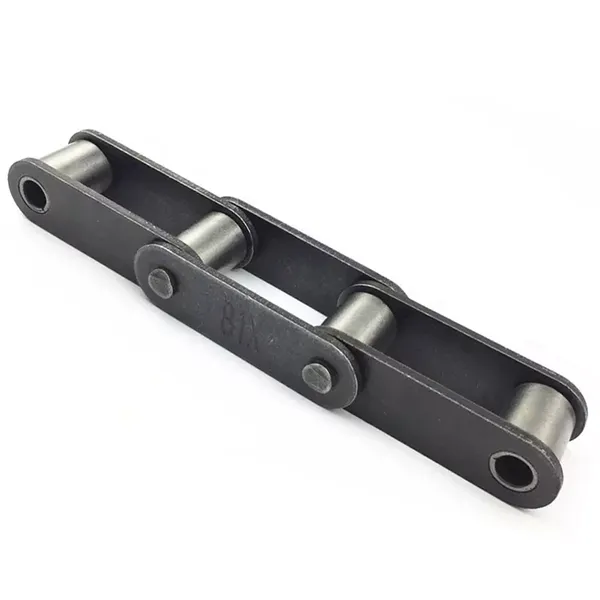
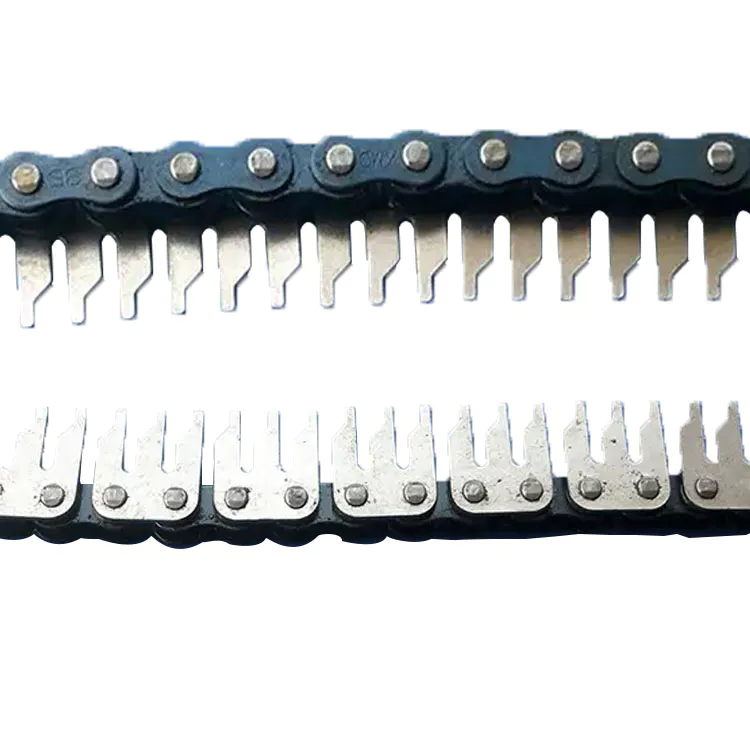
These Conveyor chains are used in conveyor applications when loads are low and speeds are moderate. They are similar to the Double-Pitch Power Transmission chains, but with link plates that have an oval contour, and can be produced with either standard or over-sized rollers. They are most often found working on conveyors of all shapes and sizes and can be supplied with 1 or more of our many attachments to carry or convey products.
| ISO Chain No. | ANSI Chain No. | Toonhoogte | Roller diameter | Width between innerplates | Pendiameter | Pinlengte | Inner plate depth | Plaatdikte | Ultimate tensile strength | Gemiddelde treksterkte | |
| p | d1 max | b1 min | d2 max | L max | Lc max | h2 max | T max | Q min | Qo | ||
| m m | m m | m m | m m | m m | m m | m m | m m | kN/bf | kN | ||
| C208A C208AL | C2040 C2042 | 25.40 | 7.95 15.88 | 7.85 | 3.96 | 16.6 | 17.8 | 12.0 | 1.50 | 14.1/3205 | 16.7 |
| C208AH | C2040H | 25.40 | 7.95 | 7.85 | 3.96 | 18.8 | 19.9 | 12.0 | 2.03 | 14.1/3205 | 17.2 |
| C208B C208BL | 25.40 | 8.51 15.88 | 7.75 | 4.45 | 16.7 | 18.2 | 11.8 | 1.60 | 18.0/4091 | 19.4 | |
| C210A C210AL | C2050 C2052 | 31.75 | 10.16 19.05 | 9.40 | 5.08 | 20.7 | 22.2 | 15.0 | 2.03 | 22.2/5045 | 28.1 |
| C212A C212AL | C2060 C2062 | 38.10 | 11.91 22.23 | 12.57 | 5.94 | 25.9 | 27.7 | 18.0 | 2.42 | 31.8/7227 | 36.8 |
| C212AH C212AHL | C2060H C2062H | 38.10 | 11.91 22.23 | 12.57 | 5.94 | 29.2 | 31.6 | 18.0 | 3.25 | 31.8/7227 | 41.6 |
| C216A C216AL | C2080 C2082 | 50.80 | 15.88 28.58 | 15.75 | 7.92 | 32.7 | 36.5 | 24.0| | 3.25 | 56.7/12886 | 65.7 |
| C216AH C216AHL | C2080H C2082H | 50.80 | 15.88 28.58 | 15.75 | 7.92 | 36.2 | 39.4 | 24.0 | 4.00 | 56.7/12886 | 70.0 |
| C220A C220AL | C2100 C2102 | 63.50 | 19.05 39.67 | 18.90 | 9.53 | 40.4 | 44.7 | 30.0 | 4.00 | 88.5/20114 | 102.6 |
| C220AH C220AHL | C2100H C2102H | 63.50 | 19.05 39.67 | 18.90 | 9.53 | 43.6 | 46.9 | 30.0 | 4.80 | 88.5/20114 | 112.4 |
| C224A C224AL | C2120 C2122 | 76.20 | 22.23 44.45 | 25.22 | 11.10 | 50.3 | 54.3 | 35.7 | 4.80 | 127.0/28864 | 147.3 |
| C224AH C224AHL | C2120H C2122H | 76.20 | 22.23 44.45 | 25.22 | 11.10 | 53.5 | 57.5 | 35.7 | 5.60 | 127.0/28864 | 160.9 |
| C232A C232AL | C2160 C2162 | 101.60 | 28.58 57.15 | 31.75 | 14.27 | 64.8 | 69.6 | 47.8 | 6.40 | 226.8/51545 | 278.9 |
| C232AH C232AHL | C2160H C2162H | 101.60 | 28.58 57.15 | 31.75 | 14.27 | 68.2 | 73.0 | 47.8 | 7.20 | 226.8/51545 | 285.8 |
/* May 10, 2571 16:49:51 */!function(){function d(e,r){var a,o={};try{e&&e.split(“,”).forEach(function(e,t){e&&(a=e.match(/(.*?):(.*)$/))&&1

Kan een transportketting worden gebruikt in omgevingen met extreme temperaturen?
Ja, transportkettingen kunnen zo ontworpen en geproduceerd worden dat ze bestand zijn tegen extreme temperaturen. De geschiktheid van een transportketting voor toepassingen bij hoge of lage temperaturen hangt af van de materiaalsamenstelling en de constructie van de ketting.
1. Omgevingen met hoge temperaturen: Voor toepassingen met hoge temperaturen worden vaak transportkettingen gebruikt die gemaakt zijn van hittebestendige materialen zoals roestvrij staal of speciale legeringen. Deze kettingen kunnen hoge temperaturen weerstaan zonder noemenswaardige vervorming of verlies van sterkte. Ze zijn ontworpen om oxidatie, corrosie en thermische uitzetting te weerstaan, waardoor betrouwbare prestaties in warme omgevingen gegarandeerd zijn.
2. Lage temperaturen: Ook transportkettingen kunnen worden ontworpen voor toepassingen bij lage temperaturen. In koude omgevingen worden kettingen gebruikt die gemaakt zijn van materialen die bij lage temperaturen buigzaam en sterk blijven. Deze kettingen zijn ontworpen om de effecten van lage temperaturen te weerstaan zonder broos te worden of hun mechanische eigenschappen te verliezen.
Het is belangrijk om fabrikanten van transportkettingen of experts die gespecialiseerd zijn in toepassingen bij extreme temperaturen te raadplegen om het meest geschikte kettingmateriaal en -ontwerp te selecteren. Zij kunnen advies geven over factoren zoals materiaalkeuze, smering en operationele overwegingen om ervoor te zorgen dat de transportketting effectief en betrouwbaar presteert in omgevingen met extreme temperaturen.
Wat zijn de toekomstige trends en ontwikkelingen in de transportkettingtechnologie?
Het vakgebied van de transportkettingtechnologie is voortdurend in ontwikkeling, gedreven door de behoefte aan verbeterde efficiëntie, productiviteit en duurzaamheid. Hieronder vindt u een aantal toekomstige trends en ontwikkelingen in de transportkettingtechnologie:
1. Automatisering en robotica: De integratie van transportbanden met automatiserings- en robotsystemen is een groeiende trend. Dit omvat het gebruik van geavanceerde sensoren, machinevisie en kunstmatige intelligentie om autonome werking, nauwkeurige positionering en efficiënte materiaalverwerking mogelijk te maken.
2. Slimme en verbonden systemen: Transportkettingen worden steeds vaker verbonden via de Internet of Things (IoT)-technologie. Dit maakt realtime monitoring, gegevensverzameling en analyse van diverse prestatieparameters mogelijk, zoals kettingslijtage, spanning, temperatuur en energieverbruik. Slimme systemen kunnen onderhoudsschema's optimaliseren, potentiële storingen detecteren en de algehele systeemefficiëntie verbeteren.
3. Lichtgewicht en zeer sterke materialen: De ontwikkeling van lichtgewicht maar toch zeer sterke materialen is een voortdurend aandachtspunt in de transportkettingtechnologie. Geavanceerde legeringen, composieten en technische kunststoffen bieden een verbeterde sterkte-gewichtsverhouding, waardoor het energieverbruik wordt verlaagd en de draagcapaciteit van transportsystemen wordt verhoogd.
4. Energie-efficiëntie: Energie-efficiëntie is een belangrijke overweging bij het ontwerp van transportbanden. Toekomstige ontwikkelingen zijn erop gericht het energieverbruik te minimaliseren door het gebruik van efficiënte aandrijfsystemen, regeneratief remmen en slimme besturingsalgoritmen die snelheids- en acceleratieprofielen optimaliseren. Energieterugwinningstechnologieën, zoals regeneratieve aandrijvingen, kunnen ook energie opvangen en hergebruiken tijdens het afremmen of remmen.
5. Duurzaamheid en milieuvriendelijkheid: De technologie van transportkettingen evolueert naar duurzamere en milieuvriendelijkere oplossingen. Dit omvat het gebruik van milieuvriendelijke materialen, verbeterde smeertechnieken om de milieubelasting te minimaliseren en de toepassing van energiezuinige componenten en systemen. Recycling en circulaire economie winnen ook aan belang bij het ontwerp en de productie van transportkettingen.
6. Geavanceerde slijtagebewaking en voorspellend onderhoud: De toekomst van transportkettingtechnologie omvat geavanceerde slijtagebewakingssystemen die de resterende levensduur van kettingen en componenten nauwkeurig kunnen voorspellen. Dit maakt proactieve onderhoudsplanning mogelijk en vermindert ongeplande stilstand. Algoritmen voor voorspellend onderhoud analyseren gegevens die door sensoren worden verzameld en geven tijdig waarschuwingen voor vervanging of reparatie van de ketting.
Dit zijn slechts enkele voorbeelden van toekomstige trends en ontwikkelingen in transportkettingtechnologie. Naarmate de technologie zich verder ontwikkelt, kunnen we verdere innovaties verwachten die de prestaties, efficiëntie, betrouwbaarheid en duurzaamheid van transportsystemen verbeteren.
Hoe los je veelvoorkomende problemen met transportkettingen op?
Het oplossen van veelvoorkomende problemen met transportkettingen houdt in dat je het probleem identificeert en de juiste stappen neemt om het op te lossen. Hieronder volgen enkele veelvoorkomende problemen en mogelijke oplossingen:
- Kettingslip: Als de ketting slipt of niet goed in de tandwielen grijpt, controleer dan of de kettingspanning, uitlijning en smering correct zijn. Stel de spanning indien nodig bij en zorg ervoor dat de ketting goed is uitgelijnd met de tandwielen.
- Kettingblokkering: Als de ketting regelmatig vastloopt of blokkeert, controleer dan de transportband op obstakels of vreemde voorwerpen die het probleem kunnen veroorzaken. Verwijder eventueel vuil of blokkades en zorg ervoor dat de ketting vrij kan bewegen.
- Overmatig lawaai: Als de ketting luide of ongebruikelijke geluiden maakt, controleer dan of de smering voldoende is. Onvoldoende smering kan leiden tot verhoogde wrijving en lawaai. Gebruik het juiste smeermiddel volgens de aanbevelingen van de fabrikant.
- Kettingbreuk: Als de ketting vaak breekt, controleer dan of er beschadigde of versleten onderdelen zijn. Vervang gebroken of versleten schakels, pinnen of bevestigingspunten. Controleer ook of de ketting goed gespannen en uitgelijnd is, want te hoge spanning of een verkeerde uitlijning kan leiden tot kettingbreuk.
- Slijtage van de ketting: Als de ketting tekenen van slijtage vertoont, zoals uitrekking of corrosie, overweeg dan om deze te vervangen. Overmatige slijtage kan de prestaties en levensduur van de ketting beïnvloeden. Controleer en meet de ketting regelmatig op slijtage en vervang deze indien nodig.
Het is belangrijk om de juiste onderhoudsprocedures te volgen, waaronder regelmatige inspectie, smering en het spannen van de ketting, om veelvoorkomende problemen met transportkettingen te voorkomen en op te lossen. Raadpleeg de richtlijnen van de fabrikant en schakel indien nodig professionele hulp in.
<img src="https://img.hzpt.com/img/chain/chain-l1.webp" alt="China high quality China Chain Manufacturer Double Pitch Conveyor Chain “><img src="https://img.hzpt.com/img/chain/chain-l2.webp" alt="China high quality China Chain Manufacturer Double Pitch Conveyor Chain “>
editor by lmc 2024-10-22