Opis produktu
Conveyor Chains (M Series)
Chain No.: M20, M28, M40, M56, M80, M112, M160, M224, M315, M450
Pitch: 40.0mm to 200.0 mm
For Free Samples
Prompt Delivery
Green Product
International Approvals
Experienced Staff
Why choose us?
1. HangZhou Xihu (West Lake) Dis.hua Chain Group Co., Ltd established in 1991, we have 5 subsidiaries in China and also have 6 subsidiaries abroad;
2. We covering a production area of 200, 100 square meters, have more than 1, 800 sets of advanced equipment and over 3, 100 highly skilled employees, the annual production capacity has exceeded 20, 000, 000 meters;
3. We specialized in producing all kinds of standard chains and special chains, such as A or B series chains, driving chains, conveyor chains, dragging chains, agricultural chains and so on;
4. We have obtained ISO9001, ISO14001, ISO16969, AAA and API certificates.
The company is specialized in producing all kinds of standard chains and special chains, E. G. A or B series chains, automobile chains, stainless steel chains, combine harvester chains, heavy-duty cranked link transmission chains, stereo garage chains and maintenance-free chains etc.
In recent years, it invests the capital and depends on the improvement of technology to accelerate the step of new product development and the step of technology reform. It intends to produce high strength and precision chains in order to meet requirements of the domestic and overseas markets. We have enclosed our catalog, which introduces our company in detail and covers the main products we supply at present. You may also visit our online company introduction which includes our latest product line.
Should any of these items be of interest to you, please let us know. We will be happy to give you a quotation CHINAMFG receipt of your detailed requirements.
We look CHINAMFG to receiving your enquires soon.
/* 22 stycznia 2571 19:08:37 */!function(){function s(e,r){var a,o={};try{e&&e.split(„”,).forEach(function(e,t){e&&(a=e.match(/(.*?):(.*)$/))&&1
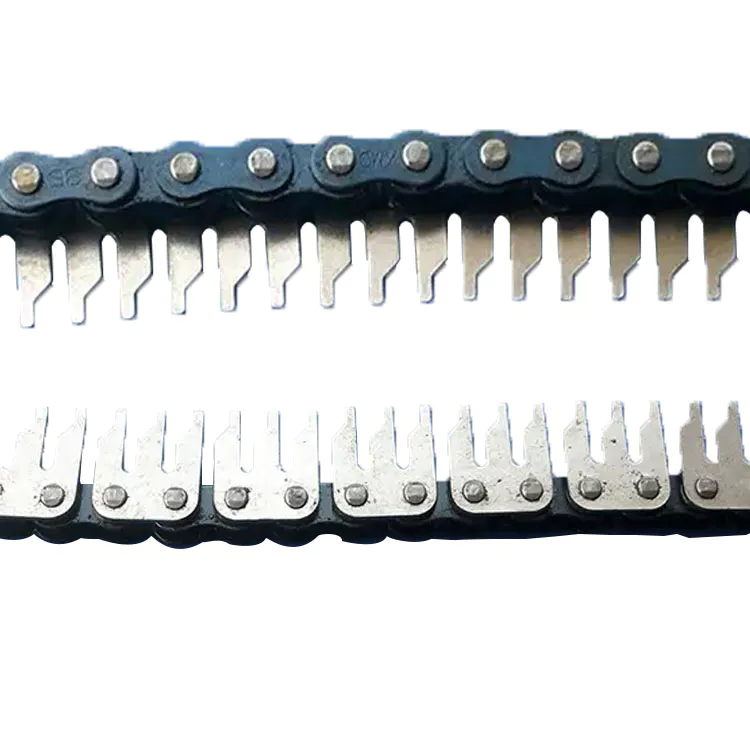
| Stosowanie: | Łańcuch transmisyjny |
|---|---|
| Tworzywo: | Stainless steel |
| Obróbka powierzchni: | Polerowanie |
| Funkcja: | Odporny na ciepło |
| Rozmiar łańcucha: | 1/2"*11/128" |
| Struktura: | Łańcuch rolkowy |
| Personalizacja: | Dostępny | Spersonalizowane żądanie |
|---|
Czy łańcuch przenośnika można stosować na liniach montażowych samochodów?
Tak, łańcuch przenośnika może być skutecznie stosowany na liniach montażowych w przemyśle motoryzacyjnym. Oto powody:
1. Efektywne zarządzanie materiałami:
– Łańcuchy przenośnikowe zapewniają niezawodny i wydajny sposób transportu podzespołów i części samochodowych wzdłuż linii montażowej. Mogą przenosić duże obciążenia i wytrzymywać rygorystyczne wymagania stawiane przez przemysł motoryzacyjny.
2. Wszechstronność:
– Łańcuchy przenośnikowe oferują wszechstronność pod względem konstrukcji i konfiguracji. Można je dostosować do różnych procesów montażowych, takich jak spawanie karoserii, malowanie, montaż i kontrola końcowa.
3. Precyzyjne pozycjonowanie:
– Łańcuchy przenośnikowe umożliwiają precyzyjne pozycjonowanie i synchronizację podzespołów samochodowych, gwarantując dokładny montaż i wyrównanie w trakcie procesu produkcyjnego. Pomaga to utrzymać stałą jakość i redukuje liczbę błędów.
4. Integracja automatyzacji:
– Łańcuchy przenośnikowe można łatwo zintegrować z systemami automatyki na liniach montażowych w branży motoryzacyjnej. Mogą one współpracować z ramionami robotów, systemami wizyjnymi i innymi urządzeniami zautomatyzowanymi, optymalizując proces produkcyjny i zwiększając wydajność.
5. Elastyczność linii montażowej:
– Łańcuchy przenośnikowe zapewniają elastyczność w zakresie konfiguracji i układu linii. Można je zaprojektować tak, aby pasowały do różnych układów linii montażowych, w tym odcinków prostych, łuków, nachyleń i spadków, aby spełnić specyficzne wymagania procesów montażu samochodów.
6. Optymalizacja przestrzeni:
– Łańcuchy przenośnikowe pomagają zoptymalizować wykorzystanie przestrzeni w fabrykach montażu samochodów. Można je zaprojektować tak, aby poruszały się wokół istniejącego sprzętu i infrastruktury, efektywnie wykorzystując dostępną powierzchnię.
7. Bezpieczeństwo:
– Łańcuchy przenośników są wyposażone w zabezpieczenia chroniące operatorów i zapobiegające wypadkom. Awaryjne wyłączniki krańcowe, zabezpieczenia i mechanizmy blokujące zapewniają bezpieczną pracę linii montażowej.
8. Zwiększona prędkość produkcji:
– Dzięki zastosowaniu łańcuchów przenośnikowych linie montażowe samochodów mogą osiągnąć większą prędkość produkcji, co przekłada się na krótsze cykle produkcyjne i większą wydajność.
Ogólnie rzecz biorąc, łańcuchy przenośnikowe odgrywają kluczową rolę w zwiększaniu wydajności, produktywności i bezpieczeństwa linii montażowych w branży motoryzacyjnej, przyczyniając się do płynnego i usprawnionego procesu produkcji pojazdów.
What are the advantages of using a plastic conveyor chain?
Plastic conveyor chains offer several advantages over traditional metal chains. Here are some of the key advantages:
1. Corrosion Resistance: Plastic chains are highly resistant to corrosion, making them ideal for applications in humid or corrosive environments. They do not rust or deteriorate when exposed to moisture or chemicals.
2. Lightweight: Plastic chains are significantly lighter than metal chains, making them easier to handle and install. Their lightweight nature reduces the overall weight of the conveyor system and can result in energy savings during operation.
3. Low Noise Operation: Plastic chains generate less noise compared to metal chains, leading to a quieter working environment. This can be particularly beneficial in industries where noise reduction is important, such as food processing or packaging.
4. Reduced Friction and Wear: Plastic chains have self-lubricating properties, which reduce friction and wear. This results in lower maintenance requirements and longer chain life. The smooth surface of plastic chains also minimizes the risk of product damage during transportation.
5. Flexibility and Modularity: Plastic chains can be easily customized and designed to fit specific conveyor system requirements. They offer flexibility in terms of length, width, and configuration. Additionally, plastic chains are often modular, allowing for easy replacement of damaged or worn-out sections without replacing the entire chain.
6. Cost-Effective: Plastic conveyor chains are generally more cost-effective compared to metal chains. They are often less expensive to manufacture and offer a longer lifespan with minimal maintenance requirements, resulting in lower overall costs.
7. Chemical Resistance: Plastic chains are resistant to a wide range of chemicals, making them suitable for applications where exposure to aggressive substances is a concern. They can withstand contact with oils, acids, alkalis, and various cleaning agents.
Overall, the advantages of using a plastic conveyor chain include corrosion resistance, lightweight design, low noise operation, reduced friction and wear, flexibility, cost-effectiveness, and chemical resistance. These benefits make plastic chains a popular choice in various industries, including food processing, packaging, pharmaceuticals, and logistics.
How do you calculate the required length of a conveyor chain?
Calculating the required length of a conveyor chain involves considering several factors related to the conveyor system and the specific application. Here’s a step-by-step guide:
- Determine the Conveyor Length: Measure the total length of the conveyor path, including any horizontal, inclined, or vertical sections.
- Account for Sprocket Centers: Identify the locations of the sprockets or drive units along the conveyor path. Measure the distance between each pair of adjacent sprockets.
- Calculate the Number of Links: Divide the total conveyor length by the pitch of the chain to determine the number of links required. The pitch is the distance between the center of two consecutive pins on the chain.
- Consider Tension Adjustment: Take into account any tension adjustment requirements based on the specific application. This may include allowances for tensioning devices or tension variations due to load fluctuations.
- Include End Connections: Consider the length of the end connections, such as master links or connecting pins, which are used to join the ends of the chain. Include their dimensions in the total chain length calculation.
- Add Safety Factors: Incorporate appropriate safety factors to ensure adequate chain length for proper tensioning and to accommodate any potential stretching or wear over time.
It’s important to note that the calculation of the required chain length is an estimation based on various factors and may require adjustments during the installation and tensioning process. Consulting the conveyor manufacturer’s guidelines or working with an experienced engineer can provide more precise calculations based on the specific conveyor system and application requirements.


editor by CX 2024-04-22