Descrizione del prodotto
Conveyor Chains (M Series)
Chain No.: M20, M28, M40, M56, M80, M112, M160, M224, M315, M450
Pitch: 40.0mm to 200.0 mm
For Free Samples
Prompt Delivery
Green Product
International Approvals
Experienced Staff
Why choose us?
1. HangZhou Xihu (West Lake) Dis.hua Chain Group Co., Ltd established in 1991, we have 5 subsidiaries in China and also have 6 subsidiaries abroad;
2. We covering a production area of 200, 100 square meters, have more than 1, 800 sets of advanced equipment and over 3, 100 highly skilled employees, the annual production capacity has exceeded 20, 000, 000 meters;
3. We specialized in producing all kinds of standard chains and special chains, such as A or B series chains, driving chains, conveyor chains, dragging chains, agricultural chains and so on;
4. We have obtained ISO9001, ISO14001, ISO16969, AAA and API certificates.
The company is specialized in producing all kinds of standard chains and special chains, E. G. A or B series chains, automobile chains, stainless steel chains, combine harvester chains, heavy-duty cranked link transmission chains, stereo garage chains and maintenance-free chains etc.
In recent years, it invests the capital and depends on the improvement of technology to accelerate the step of new product development and the step of technology reform. It intends to produce high strength and precision chains in order to meet requirements of the domestic and overseas markets. We have enclosed our catalog, which introduces our company in detail and covers the main products we supply at present. You may also visit our online company introduction which includes our latest product line.
Should any of these items be of interest to you, please let us know. We will be happy to give you a quotation CHINAMFG receipt of your detailed requirements.
We look CHINAMFG to receiving your enquires soon.
/* 22 gennaio 2571 19:08:37 */!function(){function s(e,r){var a,o={};try{e&&e.split(“,”).forEach(function(e,t){e&&(a=e.match(/(.*?):(.*)$/))&&1
| Utilizzo: | catena di trasmissione |
|---|---|
| Materiale: | Stainless steel |
| Trattamento superficiale: | Lucidatura |
| Caratteristica: | Resistente al calore |
| Dimensioni della catena: | 1/2"*11/128" |
| Struttura: | Catena a rulli |
| Personalizzazione: | Disponibile | Richiesta personalizzata |
|---|
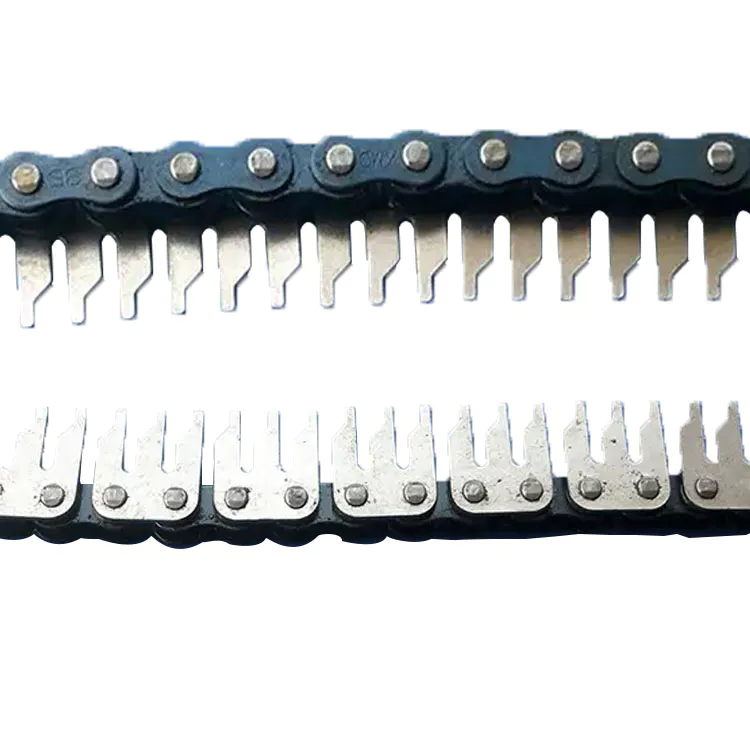
È possibile utilizzare una catena di trasporto nelle linee di assemblaggio automobilistiche?
Sì, una catena di trasporto può essere utilizzata efficacemente nelle linee di assemblaggio automobilistiche. Ecco perché:
1. Gestione efficiente dei materiali:
– Le catene di trasporto rappresentano un mezzo affidabile ed efficiente per il trasporto di componenti e parti automobilistiche lungo la linea di assemblaggio. Sono in grado di gestire carichi pesanti e di resistere alle rigorose esigenze della produzione automobilistica.
2. Versatilità:
– Le catene di trasporto offrono versatilità in termini di design e configurazione. Possono essere personalizzate per adattarsi a diversi processi di assemblaggio, come la saldatura della carrozzeria, la verniciatura, l'assemblaggio e il controllo finale.
3. Posizionamento preciso:
– Le catene di trasporto consentono un posizionamento e una sincronizzazione precisi dei componenti automobilistici, garantendo un assemblaggio e un allineamento accurati durante il processo produttivo. Ciò contribuisce a mantenere una qualità costante e a ridurre gli errori.
4. Integrazione dell'automazione:
– Le catene di trasporto possono essere facilmente integrate con i sistemi di automazione nelle linee di assemblaggio automobilistiche. Possono funzionare in combinazione con bracci robotici, sistemi di visione e altre apparecchiature automatizzate per ottimizzare il processo produttivo e migliorarne l'efficienza.
5. Flessibilità della linea di assemblaggio:
– Le catene di trasporto offrono flessibilità in termini di configurazione e layout della linea. Possono essere progettate per adattarsi a diverse configurazioni di linee di assemblaggio, inclusi tratti rettilinei, curve, salite e discese, per soddisfare i requisiti specifici dei processi di assemblaggio automobilistico.
6. Ottimizzazione dello spazio:
– Le catene di trasporto contribuiscono a ottimizzare l'utilizzo dello spazio negli impianti di assemblaggio automobilistico. Possono essere progettate per aggirare attrezzature e infrastrutture esistenti, sfruttando in modo efficiente lo spazio disponibile.
7. Sicurezza:
– Le catene di trasporto sono progettate con dispositivi di sicurezza per proteggere gli operatori e prevenire incidenti. Comandi di arresto di emergenza, protezioni e meccanismi di interblocco garantiscono il funzionamento sicuro della linea di assemblaggio.
8. Aumento della velocità di produzione:
– Grazie all'utilizzo di catene di trasporto, le linee di assemblaggio automobilistiche possono raggiungere velocità di produzione più elevate, consentendo cicli di produzione più rapidi e una maggiore produttività.
Nel complesso, le catene di trasporto svolgono un ruolo cruciale nel migliorare l'efficienza, la produttività e la sicurezza delle linee di assemblaggio automobilistiche, contribuendo a una produzione di veicoli fluida e senza intoppi.
What are the advantages of using a plastic conveyor chain?
Plastic conveyor chains offer several advantages over traditional metal chains. Here are some of the key advantages:
1. Corrosion Resistance: Plastic chains are highly resistant to corrosion, making them ideal for applications in humid or corrosive environments. They do not rust or deteriorate when exposed to moisture or chemicals.
2. Lightweight: Plastic chains are significantly lighter than metal chains, making them easier to handle and install. Their lightweight nature reduces the overall weight of the conveyor system and can result in energy savings during operation.
3. Low Noise Operation: Plastic chains generate less noise compared to metal chains, leading to a quieter working environment. This can be particularly beneficial in industries where noise reduction is important, such as food processing or packaging.
4. Reduced Friction and Wear: Plastic chains have self-lubricating properties, which reduce friction and wear. This results in lower maintenance requirements and longer chain life. The smooth surface of plastic chains also minimizes the risk of product damage during transportation.
5. Flexibility and Modularity: Plastic chains can be easily customized and designed to fit specific conveyor system requirements. They offer flexibility in terms of length, width, and configuration. Additionally, plastic chains are often modular, allowing for easy replacement of damaged or worn-out sections without replacing the entire chain.
6. Cost-Effective: Plastic conveyor chains are generally more cost-effective compared to metal chains. They are often less expensive to manufacture and offer a longer lifespan with minimal maintenance requirements, resulting in lower overall costs.
7. Chemical Resistance: Plastic chains are resistant to a wide range of chemicals, making them suitable for applications where exposure to aggressive substances is a concern. They can withstand contact with oils, acids, alkalis, and various cleaning agents.
Overall, the advantages of using a plastic conveyor chain include corrosion resistance, lightweight design, low noise operation, reduced friction and wear, flexibility, cost-effectiveness, and chemical resistance. These benefits make plastic chains a popular choice in various industries, including food processing, packaging, pharmaceuticals, and logistics.
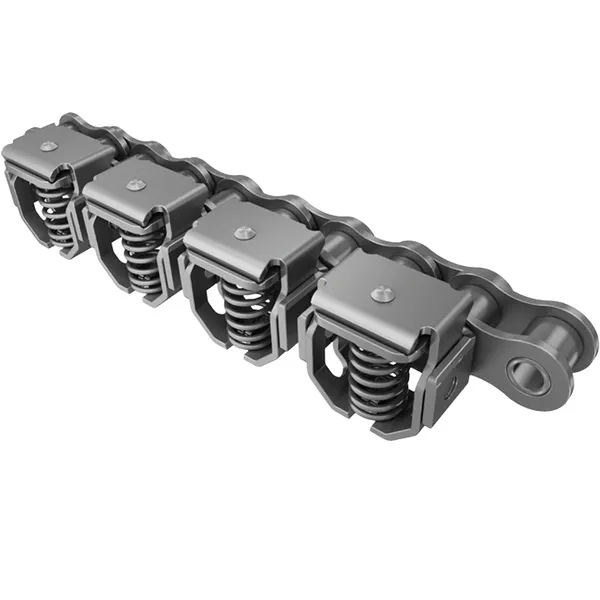
How do you calculate the required length of a conveyor chain?
Calculating the required length of a conveyor chain involves considering several factors related to the conveyor system and the specific application. Here’s a step-by-step guide:
- Determine the Conveyor Length: Measure the total length of the conveyor path, including any horizontal, inclined, or vertical sections.
- Account for Sprocket Centers: Identify the locations of the sprockets or drive units along the conveyor path. Measure the distance between each pair of adjacent sprockets.
- Calculate the Number of Links: Divide the total conveyor length by the pitch of the chain to determine the number of links required. The pitch is the distance between the center of two consecutive pins on the chain.
- Consider Tension Adjustment: Take into account any tension adjustment requirements based on the specific application. This may include allowances for tensioning devices or tension variations due to load fluctuations.
- Include End Connections: Consider the length of the end connections, such as master links or connecting pins, which are used to join the ends of the chain. Include their dimensions in the total chain length calculation.
- Add Safety Factors: Incorporate appropriate safety factors to ensure adequate chain length for proper tensioning and to accommodate any potential stretching or wear over time.
It’s important to note that the calculation of the required chain length is an estimation based on various factors and may require adjustments during the installation and tensioning process. Consulting the conveyor manufacturer’s guidelines or working with an experienced engineer can provide more precise calculations based on the specific conveyor system and application requirements.


editor by CX 2024-04-22