Produktbeskrivelse
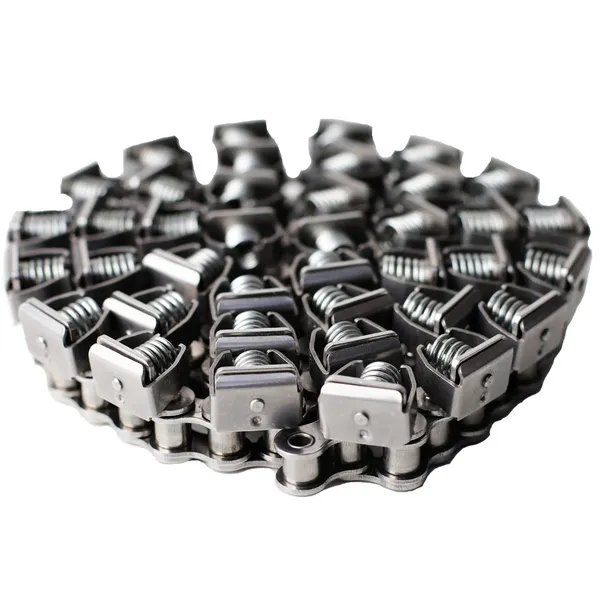
Professional Standard C216ALSS-I Type Conveyor Chain For Ice Cream
C216ALSS-I type chain is a transmission chain for ice cream production and conveying machinery. The pitch is 50.8mm. The roller material is made of reinforced nylon and machined. It is not injection molded and it is wear-resistant, low-temperature resistant, and not easy to break. The chain piece is made of stainless steel 304, with high hardness, low temperature resistance and not easy to break. The main parameters of the product comply with ISO, ANSI, DIN, BS, JIS standards
HangZhou CHINAMFG Industry Co., Ltd. is a specialized supplier of a full range of chains.
Due to our CHINAMFG in offering best service to our clients, understanding of your needs and overriding sense of responsibility toward filling ordering requirements, we have obtained the trust of buyers worldwide. Having accumulated precious experience in cooperating with foreign customers, our products are selling well in the American, European, South American and Asian markets.Our products are manufactured by modern computerized machinery and equipment. Meanwhile, our products are manufactured according to high quality standards, and complying with the international advanced standard criteria.
With many years’ experience in this line, we will be trusted by our advantages in competitive price, one-time delivery, prompt response, on-hand engineering support and good after-sales services.
Additionally, all our production procedures are in compliance with ISO9001 standards. We also can design and make non-standard products to meet customers’ special requirements. Quality and credit are the bases that make a corporation alive. We will provide best services and high quality products with all sincerity. If you need any information or samples, please contact us and you will have our soon reply.
Ofte stillede spørgsmål:
Q1: Are you trading company or manufacturer ?
A: We are factory.
Q2: How long is your delivery time and shipment?
1.Sample Lead-times: generally 30 workdays.
2.Production Lead-times: 60 workdays after getting your deposit.
Q3. What is your terms of payment?
A: T/T 30% as deposit, and 70% before delivery.
We’ll show you the photos of the products and packages before you pay the balance.
Q4: What is your advantages?
1. Manufacturer,the most competitive price and good quality.
2. Perfect technical engineers give you the best support.
3. OEM is available.
4. Rich stock and quick delivery.
Q5. If you can’t find the product on our website,what do you next?
Please send us inquiry with product pictures and drawings by email or other ways and we’ll check
| Standard eller ikke-standard: | Standard |
|---|---|
| Anvendelse: | Textile Machinery, Garment Machinery, Conveyer Equipment, Food Machinery |
| Overfladebehandling: | Polering |
| Prøver: | US$ 50/Meter 1 meter (min. ordre) | Bestil prøve |
|---|
| Tilpasning: | Tilgængelig | Tilpasset anmodning |
|---|
.shipping-cost-tm .tm-status-off{baggrund: ingen;marvning: 0;farve: #1470cc}
| Forsendelsesomkostninger: Estimeret fragt pr. enhed. | om forsendelsesomkostninger og forventet leveringstid. |
|---|
| Betalingsmetode: |
|
|---|---|
| Første betaling Fuld betaling |
| Valuta: | US$ |
|---|
| Returnering og refusion: | Du kan ansøge om refusion i op til 30 dage efter modtagelse af produkterne. |
|---|
How do you calculate the maximum allowable tension in a conveyor chain?
The maximum allowable tension in a conveyor chain can be calculated using the following steps:
1. Determine the Chain Pitch:
– Measure the distance between the centers of two consecutive chain pins. This measurement is known as the chain pitch and is typically expressed in inches or millimeters.
2. Determine the Chain Speed:
– Determine the speed at which the conveyor chain will be operating. The chain speed is typically expressed in feet per minute or meters per second.
3. Calculate the Chain Pull:
– Determine the total weight or force that needs to be moved by the conveyor chain. This includes the weight of the conveyed material and any additional loads or forces acting on the chain.
4. Calculate the Required Tension:
– Use the following formula to calculate the required tension:
Tension = (Chain Pull × Chain Speed) / (Chain Pitch × Efficiency)
– The efficiency factor accounts for losses due to friction and other factors and is typically expressed as a decimal between 0 and 1.
5. Determine the Maximum Allowable Tension:
– The maximum allowable tension is determined by the manufacturer’s specifications for the conveyor chain. It is important to consult the manufacturer’s documentation or contact them directly to obtain the maximum allowable tension value.
6. Compare the Required Tension and Maximum Allowable Tension:
– Compare the calculated required tension with the maximum allowable tension. The required tension should be less than or equal to the maximum allowable tension to ensure safe and reliable operation of the conveyor chain.
By following these steps and considering the manufacturer’s specifications, you can accurately calculate the maximum allowable tension in a conveyor chain and ensure that it is within the safe operating limits.
Hvad er fordelene ved at bruge transportkæder i rustfrit stål?
Transportkæder i rustfrit stål tilbyder adskillige fordele i forhold til andre typer kæder. Her er nogle af de vigtigste fordele:
1. Korrosionsbestandighed: Rustfrit stål er meget korrosionsbestandigt, hvilket gør det velegnet til anvendelser i barske miljøer eller industrier, hvor hyppig afvaskning eller udsættelse for fugt er påkrævet. Det ruster eller korroderer ikke som andre metaller, hvilket sikrer en længere levetid og pålidelig ydeevne.
2. Styrke og holdbarhed: Kæder i rustfrit stål er kendt for deres høje styrke og holdbarhed. De kan modstå tunge belastninger, høje temperaturer og slibende materialer uden deformation eller brud. Dette gør dem ideelle til krævende applikationer, hvor pålidelighed og levetid er afgørende.
3. Hygiejnisk og sanitært: Rustfrit stål er et ikke-porøst materiale, der er let at rengøre og vedligeholde. Det er modstandsdygtigt over for bakterier, skimmelsvamp og andre forurenende stoffer, hvilket gør det velegnet til industrier med strenge hygiejnekrav såsom fødevareforarbejdning, lægemidler og medicinsk udstyr. Kæder i rustfrit stål kan rengøres og desinficeres grundigt, hvilket reducerer risikoen for produktkontaminering.
4. Temperaturbestandighed: Kæder i rustfrit stål kan modstå en bred vifte af temperaturer, både høje og lave. De udviser fremragende varmebestandighed, hvilket gør det muligt for dem at bevare deres styrke og ydeevne selv under ekstreme temperaturforhold.
5. Æstetisk appel: Kæder i rustfrit stål har et elegant og poleret udseende, hvilket tilføjer et professionelt og æstetisk præg til transportbåndssystemet. De bruges ofte i brancher, hvor visuel appel og brandrepræsentation er vigtig, såsom detailhandel eller luksusvarer.
6. Kemisk resistens: Rustfrit stål er modstandsdygtigt over for forskellige kemikalier, herunder syrer, alkalier og opløsningsmidler. Dette gør det velegnet til anvendelser, hvor kontakt med ætsende stoffer er sandsynlig.
7. Kompatibilitet med højhastighedsapplikationer: Rustfri stålkæder kan modstå højhastighedsoperationer uden at gå på kompromis med deres strukturelle integritet eller ydeevne. De bevarer deres stabilitet og nøjagtighed selv ved høje hastigheder.
Samlet set tilbyder transportkæder i rustfrit stål korrosionsbestandighed, styrke, holdbarhed, hygiejniske egenskaber, temperaturbestandighed, æstetisk appel, kemisk resistens og kompatibilitet med højhastighedsapplikationer. Disse fordele gør dem til et foretrukket valg i industrier som fødevarer og drikkevarer, lægemidler, bilindustrien og produktion, hvor pålidelighed, renlighed og ydeevne er afgørende.
What are the industry standards and regulations for conveyor chains?
In the field of conveyor chains, there are several industry standards and regulations that help ensure safety, performance, and quality. Some of the commonly recognized standards include:
1. ISO 1977:2013 – Conveyor chains, attachments, and sprockets: This International Organization for Standardization (ISO) standard specifies the requirements and dimensions for various types of conveyor chains, attachments, and sprockets used in general industrial applications.
2. ANSI/ASME B29.1 – Precision Power Transmission Roller Chains, Attachments, and Sprockets: This American National Standard Institute (ANSI) standard provides guidelines for the design, dimensions, and performance of roller chains, attachments, and sprockets used in power transmission systems, including conveyor chains.
3. CEMA – Conveyor Equipment Manufacturers Association: CEMA publishes various standards and technical documents related to conveyor systems, including conveyor chains. These standards cover topics such as safety, design, installation, maintenance, and operation of conveyor equipment.
4. OSHA – Occupational Safety and Health Administration: OSHA is a regulatory agency in the United States that sets and enforces safety standards for workplaces. They have specific regulations related to conveyor systems, including requirements for guarding, maintenance, and employee safety.
5. Local and National Building Codes: Depending on the location and application, there may be specific building codes or regulations that dictate the design, installation, and operation of conveyor chains. These codes ensure compliance with safety and structural requirements.
It’s important for conveyor chain manufacturers, system integrators, and end-users to adhere to these industry standards and regulations to ensure the safe and reliable operation of conveyor systems. Compliance with these standards helps to maintain worker safety, promote system performance, and ensure compatibility and interchangeability of conveyor chain components.


editor by CX 2023-11-02