Περιγραφή προϊόντος
About Factory
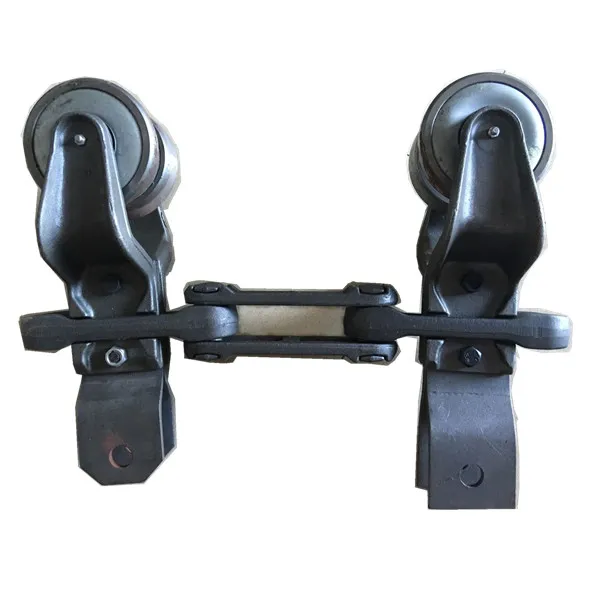
With more than 18 years’ histiory, we are a professinal manufacturer for drop forged products such as forged chain (X348 X458 X658 X678 X698 F100 F160), scraper chain (10160, 14218, 14226, 142N), conveyor trolley (X348, X458, X678, XT160), and drive chain (X348, X458, X678), and so forth standard moulds of chain.
Besides, we can also produce as per your drawing or sample, special link chain, pusher, pin and plate, according to customers’ unique requirements.
Περιγραφή προϊόντος
1) Material: Alloy steel, 40Cr, 42CrMo and so on.
2) Types: Standard types, X348 X458 X678, and so on. (Or as per your drawing)
3) Process: Moulding→Forging→Polishing & Blasting→Fine machining→Heat treatment→Blasting→Inspecting & testing→Packing
Product Show
Technical Data
| Model | Dimension | Weight (Kg) | Υλικό | Hardness | Working Load (KN) | Limit Load (KN) | ||||||
| Π | Τ | ντο | μικρό | F | R | D | ||||||
| 10160B | 101.6 | 24 | 36 | 13 | 14 | 6 | 14 | 0.32 | 20CrMnTi | Surface HRC56-64° Depth 0.6-1.2mm | 18 | 100 |
| 10160 | 101.6 | 30 | 36 | 13 | 14.5 | 9 | 14 | 0.36 | 20CrMnTi | Surface HRC56-64° Depth 0.6-1.2mm | 21.6 | 120 |
| 14218 | 142 | 42 | 50 | 19 | 20.5 | 11 | 25 | 1.15 | 20CrMnTi | Surface HRC56-64° Depth 0.6-1.2mm | 48.6 | 270 |
| 14226 | 142 | 62 | 50 | 28 | 30 | 15 | 25 | 1.75 | 20CrMnTi | Surface HRC56-64° Depth 0.6-1.2mm | 61.2 | 340 |
| 2571 | 200 | 66 | 60 | 30 | 32 | 18 | 30 | 2.8 | 20CrMnTi | Surface HRC56-64° Depth 0.6-1.2mm | 72 | 400 |
| 26014 | 260 | 70 | 75 | 31 | 33 | 20 | 34 | 5.2 | 20CrMnTi | Surface HRC56-64° Depth 0.6-1.2mm | 135 | 750 |
| 142N | 142 | 43 | 50 | 19 | 22 | 12.5 | 25 | 1.2 | 40Cr | Quench HRC36-44° | 75.6 | 420 |
| 150D | 142 | 42 | 50 | 19 | 20.5 | 11 | 25 | 1.15 | 40Cr | Quench HRC36-44° | 75.6 | 420 |
| MG20 | 200 | 70 | 50 | 27 | 29 | 17 | 35 | 3.78 | 40Cr | Quench HRC36-44° | 144 | 800 |
| MG20B | 200 | 70 | 50 | 27 | 29 | 17 | 30 | 3.82 | 40Cr | Quench HRC36-44° | 140.4 | 780 |
| MG20C | 200 | 70 | 50 | 27 | 29 | 17 | 28 | 3.85 | 40Cr | Quench HRC36-44° | 122.4 | 680 |
| MS32 | 200 | 42 | 50 | 20 | 22 | 12 | 25 | 1.4 | 40Cr | Quench HRC36-44° | 75.6 | 420 |
| MS55 | 200 | 80 | 70 | 35 | 38 | 25 | 28 | 4.36 | 40Cr | Quench HRC36-44° | 138.6 | 770 |
| 3006 | 200 | 65 | 70 | 30 | 33 | 24 | 32 | 3.6 | 40Cr | Quench HRC36-44° | 160.2 | 890 |
| MS63 | 250 | 70 | 80 | 30 | 33 | 20 | 32 | 4.93 | 40Cr | Quench HRC36-44° | 147.6 | 820 |
| S16 | 100 | 30 | 27 | 15 | 16 | 8 | 14 | 0.3 | 40Cr | Quench HRC36-44° | 16 | 88 |
| S20 | 125 | 34 | 33 | 17 | 18 | 8 | 17 | 0.37 | 40Cr | Quench HRC36-44° | 19.4 | 108 |
| S25 | 160 | 48 | 39 | 23 | 25 | 13 | 20 | 1.28 | 40Cr | Quench HRC36-44° | 55.8 | 310 |
| S30 | 142 | 46 | 49 | 22 | 23.5 | 14 | 25 | 1.3 | 40Cr | Quench HRC36-44° | 91.8 | 510 |
| Z16 | 100 | 40 | 35 | 18 | 20 | 12 | 17 | 0.4 | 40Cr | Quench HRC36-44° | 32.4 | 180 |
| Z20 | 125 | 50 | 46 | 24 | 26 | 15 | 20 | 0.67 | 40Cr | Quench HRC36-44° | 59.4 | 330 |
| Z20D | 125 | 52 | 60 | 24 | 26 | 16 | 26 | 1.15 | 40Cr | Quench HRC36-44° | 82.8 | 460 |
| Z25 | 160 | 58 | 55 | 28 | 30 | 18 | 25 | 2.25 | 40Cr | Quench HRC36-44° | 82.8 | 460 |
| Z25D | 160 | 66 | 64 | 29 | 31 | 22 | 28 | 2.6 | 40Cr | Quench HRC36-44° | 120.6 | 670 |
| Z30 | 142 | 64 | 50 | 29 | 30.5 | 18 | 25 | 1.8 | 40Cr | Quench HRC36-44° | 111.6 | 620 |
Products & Testing Equipments
Products Application
Packing & Delivery
Γιατί να μας επιλέξετε;
1. We are engaged in chain industry over 15 years with rich market experience. We keep improving production techniques. All the products have longer working life and have passed the market test.
2. We can design the correct chains with high quality material, good abrasion resistance, good corrosion, high strengthen and etc as per your request or the chain application.
3. We are the chain manufacturer; you can directly purchase the product from us with low price and high quality.
4. We have a professional team for international trade, they have abundant experiences and are always ready to solve problems for customers. So you have nothing to worry about.
5. We have the long-term cooperative forwarder who can give us the lowest freight. And it can help you to save the freight. What’s more, for the FCL, we will design the packages as per the container sizes with the largest capacity to save the shipping cost for both of us.
| Κόστος αποστολής: Εκτιμώμενο φορτίο ανά μονάδα. | To be negotiated |
|---|
| Standard or Nonstandard: | Standard |
|---|---|
| Application: | Textile Machinery, Garment Machinery, Conveyer Equipment, Packaging Machinery, Electric Cars, Motorcycle, Food Machinery, Mining Equipment, Agricultural Machinery, Coating, Spraying, Mining, Slaughtering, Assembly |
| Επιφανειακή επεξεργασία: | Στίλβωμα |
| Δείγματα: | US$ 5/Piece 1 τεμάχιο (ελάχιστη παραγγελία) | Order Sample |
|---|
| Προσαρμογή: | Διαθέσιμος | Προσαρμοσμένο Αίτημα |
|---|
Πώς υπολογίζεται η απαιτούμενη ιπποδύναμη για μια αλυσίδα μετάδοσης κίνησης;
Ο υπολογισμός της απαιτούμενης ιπποδύναμης για μια αλυσίδα μετάδοσης κίνησης με μεταφορικό ιμάντα περιλαμβάνει την εξέταση διαφόρων παραγόντων που σχετίζονται με το σύστημα μεταφοράς και την συγκεκριμένη εφαρμογή. Ακολουθεί μια βήμα προς βήμα διαδικασία:
1. Προσδιορίστε τη συνολική αντίσταση:
– Υπολογίστε τη συνολική αντίσταση που πρέπει να ξεπεράσει η αλυσίδα μεταφοράς κατά τη λειτουργία. Αυτή περιλαμβάνει την αντίσταση που οφείλεται στο μεταφερόμενο φορτίο, τις απώλειες τριβής, τις αλλαγές υψομέτρου και τυχόν άλλες αντιστάσεις στο σύστημα.
2. Μετατρέψτε την Αντίσταση σε Ισοδύναμη Αδράνεια:
– Μετατρέψτε τη συνολική αντίσταση σε ισοδύναμη αδράνεια πολλαπλασιάζοντάς την με το τετράγωνο της ταχύτητας της αλυσίδας.
3. Υπολογίστε την Ολική Αδράνεια:
– Προσδιορίστε τη συνολική αδράνεια του συστήματος λαμβάνοντας υπόψη την αδράνεια όλων των περιστρεφόμενων εξαρτημάτων, όπως η αλυσίδα μεταφοράς, οι οδοντωτοί τροχοί και τυχόν άλλα κινούμενα στοιχεία.
4. Προσδιορίστε την απαιτούμενη ροπή:
– Υπολογίστε την απαιτούμενη ροπή πολλαπλασιάζοντας τη συνολική αδράνεια με τον επιθυμητό ρυθμό επιτάχυνσης ή επιβράδυνσης.
5. Μετατροπή Ροπής σε Ιπποδύναμη:
– Μετατρέψτε την απαιτούμενη ροπή σε ιπποδύναμη διαιρώντας την με την ταχύτητα του κινητήρα (σε σ.α.λ.) και πολλαπλασιάζοντάς την με έναν συντελεστή μετατροπής.
6. Λάβετε υπόψη τους παράγοντες ασφάλειας και την αποδοτικότητα:
– Εφαρμόστε συντελεστές ασφαλείας στην υπολογισμένη ιπποδύναμη για να λάβετε υπόψη τις διακυμάνσεις, τις απρόβλεπτες καταστάσεις και τη μελλοντική ανάπτυξη.
– Λάβετε υπόψη την απόδοση του συστήματος κίνησης, συμπεριλαμβανομένου του κινητήρα, του κιβωτίου ταχυτήτων και άλλων εξαρτημάτων του κιβωτίου ταχυτήτων, για να διασφαλίσετε την ακριβή μετάδοση ισχύος.
Είναι σημαντικό να σημειωθεί ότι η παραπάνω μέθοδος υπολογισμού παρέχει μια εκτίμηση της απαιτούμενης ιπποδύναμης. Συνιστάται η συμβουλή κατασκευαστών συστημάτων μεταφορικών ταινιών, μηχανικών ή ειδικών οδηγιών του κλάδου για ακριβείς υπολογισμούς και για να διασφαλιστεί ότι η επιλεγμένη κίνηση αλυσίδας μεταφορικού ταινιόδρομου πληροί τις απαιτήσεις της εφαρμογής.
How does a conveyor chain handle different types of materials?
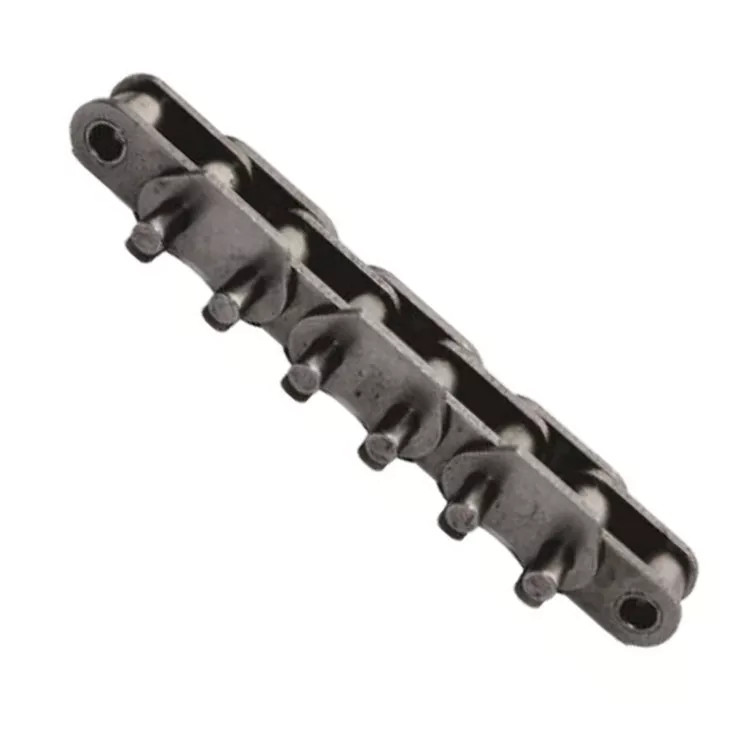
A conveyor chain is designed to handle a wide variety of materials in diverse industrial applications. It is capable of efficiently transporting different types of materials, including:
1. Bulk Materials: Conveyor chains are commonly used to handle bulk materials such as grains, coal, ores, aggregates, and powders. The design of the chain, including the spacing and shape of the links, helps prevent material spillage and ensures smooth and consistent flow.
2. Packaged Goods: Conveyor chains are also used for conveying packaged goods such as boxes, cartons, crates, and pallets. They provide a stable and reliable method of transporting these items along the production line, reducing manual handling and increasing productivity.
3. Small Parts: Conveyor chains with specialized attachments or small-pitch configurations are suitable for handling small parts or components. These chains ensure precise positioning and gentle transport of delicate or intricate items.
4. Heavy-Duty Loads: Industrial conveyor chains are capable of handling heavy-duty loads, such as automotive parts, machinery components, and large equipment. They are engineered to withstand the weight and stress of these objects, providing reliable and efficient material handling in demanding environments.
5. Food and Beverage Products: Conveyor chains used in the food and beverage industry are designed to meet strict hygiene and safety standards. They are constructed from materials that are resistant to corrosion, easy to clean, and compliant with food-grade regulations. These chains ensure the safe and contamination-free handling of food products.
6. Hazardous Materials: Conveyor chains can be used to safely transport hazardous materials, such as chemicals or waste products. Specialized chains with additional safety features, such as sealed housings or containment systems, are utilized to minimize the risk of spills or leaks.
Conveyor chains can be customized with different chain configurations, attachments, and accessories to accommodate specific material characteristics and handling requirements. The selection of the appropriate chain type, material, and design parameters ensures optimal performance and efficient material handling for a wide range of materials.
Τι είναι μια αλυσίδα μεταφοράς και πώς λειτουργεί;
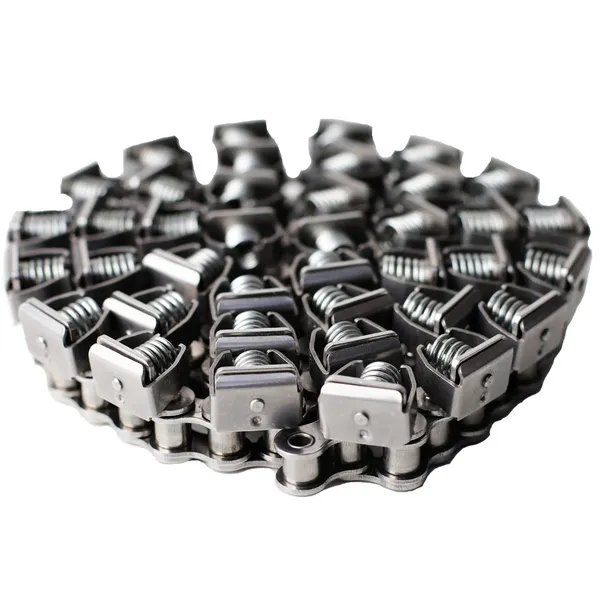
Μια αλυσίδα μεταφοράς είναι ένας τύπος μηχανικής αλυσίδας ειδικά σχεδιασμένος για χρήση σε συστήματα μεταφοράς. Αποτελείται από μια σειρά διασυνδεδεμένων κρίκων που σχηματίζουν έναν συνεχή βρόχο αλυσίδας. Οι κρίκοι είναι συνήθως κατασκευασμένοι από μέταλλο και ενώνονται μεταξύ τους μέσω πείρων ή άλλων συνδετικών στοιχείων.
Οι αλυσίδες μεταφοράς λειτουργούν μεταφέροντας ισχύ και κίνηση από τον μηχανισμό κίνησης, όπως έναν κινητήρα ή έναν οδοντωτό τροχό, στο σύστημα μεταφοράς για να μετακινήσουν υλικά ή προϊόντα κατά μήκος μιας προκαθορισμένης διαδρομής. Η αλυσίδα τοποθετείται σε μια τροχιά ή σε οδηγούς και καθώς κινείται, μεταφέρει το φορτίο που της έχει τοποθετηθεί.
Η λειτουργία μιας αλυσίδας μεταφοράς περιλαμβάνει τα ακόλουθα βήματα:
- Μετάδοση ισχύος:
Ο μηχανισμός κίνησης μεταφέρει την περιστροφική ισχύ στην αλυσίδα μεταφοράς, συνήθως μέσω ενός κινητήρα και γραναζιών. Ο κινητήρας παρέχει την απαραίτητη ροπή για την κίνηση της αλυσίδας.
- Έλξη και κίνηση:
Καθώς ο μηχανισμός κίνησης περιστρέφει τους οδοντωτούς τροχούς, τα δόντια των οδοντωτών τροχών εμπλέκονται με τους κρίκους της αλυσίδας του μεταφορέα. Αυτή η αλληλεπίδραση δημιουργεί πρόσφυση, προκαλώντας την κίνηση της αλυσίδας κατά μήκος της επιθυμητής διαδρομής.
- Μεταφορά φορτίου:
Το φορτίο που πρόκειται να μεταφερθεί τοποθετείται στην αλυσίδα μεταφοράς. Το φορτίο μπορεί να έχει τη μορφή προϊόντων, υλικών ή άλλων αντικειμένων. Καθώς η αλυσίδα κινείται, μεταφέρει το φορτίο κατά μήκος του συστήματος μεταφοράς, επιτρέποντας την αποτελεσματική μεταφορά ή χειρισμό.
- Υποστήριξη και καθοδήγηση:
Η αλυσίδα μεταφοράς υποστηρίζεται και καθοδηγείται από διάφορα εξαρτήματα, όπως οδηγούς, κυλίνδρους ή ταινίες φθοράς. Αυτά τα εξαρτήματα διασφαλίζουν την σωστή ευθυγράμμιση και την ομαλή κίνηση της αλυσίδας κατά μήκος του συστήματος μεταφοράς.
Οι αλυσίδες μεταφοράς χρησιμοποιούνται συνήθως σε βιομηχανίες όπως η κατασκευή, η εφοδιαστική, η συσκευασία και η διαχείριση υλικών. Προσφέρουν μια αξιόπιστη και αποτελεσματική μέθοδο για τη μεταφορά προϊόντων ή υλικών με ελεγχόμενο και αυτοματοποιημένο τρόπο.


editor by CX 2023-07-31