Descripción del Producto
Descripción del Producto
Parámetros del producto
| Standard | GB, ISO, ANSI, DIN |
| Type | Standard A and standard B precision roller chain, conveyor chain; |
| special chain with accessories, welding chain, leaf chain and sprocket | |
| ANSI chain No. | 40,50,60,80,100,120,140,160,180,200,240; |
| C40,C50,C60,C80,C100,C120,C140,C160; | |
| DIN/ISO chain No. | 08A,10A,12A,16A,20A,24A,28A,32A,36A,40A,48A; |
| C08A,C10A,C12A,C16A,C20A,C24A,C28A,C32A; | |
| Solicitud | Food processing, pharmaceutical and chemical industries, electronics, machinery; |
| household appliances, automotive manufacturing, metallurgy, sewage treatment | |
| Series | A series,B series |
More Products
Ventaja
Certificaciones
DETAILS ABOUT CZPT CHAIN
Exhibition
Workshop
Solicitud
Packaging Details
Shipping
Contact Information
Preguntas frecuentes
1. ¿Es usted fabricante o empresa comercial?
We are a factory founded in 1997 with trade team for international service.
2. ¿Qué condiciones de pago suele utilizar?
Depósito mediante transferencia bancaria (T/T) de 30% y contra presentación de documentos de 70%, Western Union, carta de crédito a la vista.
3. What is your lead time for your goods?
Normally 35 days after confirmed order. 30 days could be available in low season for some items (during May to July), and 45 days during new year and hot season ( Jan to March).
4. Samples
For customers who need sample confirmation before ordering, please bear in mind that the following policy will be adopted:
1) All samples are free of charge with the maximum value not exceeding USD 100.
2) The courier cost for the first-time sample sending will be charged for by the consignee. We will send the samples with freight to be collected. So please inform your account with FedEx, UPS, DHL or TNT so that we can proceed promptly.
3) The first-time courier cost will be totally deducted from the contract value of the trial cooperation.
4) OEM/ODM are both available.
| Uso: | Cadena de transmisión, cadena de arrastre, cadena transportadora, cadena especial dedicada |
|---|---|
| Material: | Acero inoxidable |
| Tratamiento de superficie: | Pulido |
| Característica: | Resistente al calor |
| Tamaño de la cadena: | 1/2"*11/128" |
| Estructura: | Cadena de rodillos |
| Muestras: | US$ 1/Meter 1 metro (pedido mínimo) | |
|---|
| Personalización: | Disponible | Solicitud personalizada |
|---|
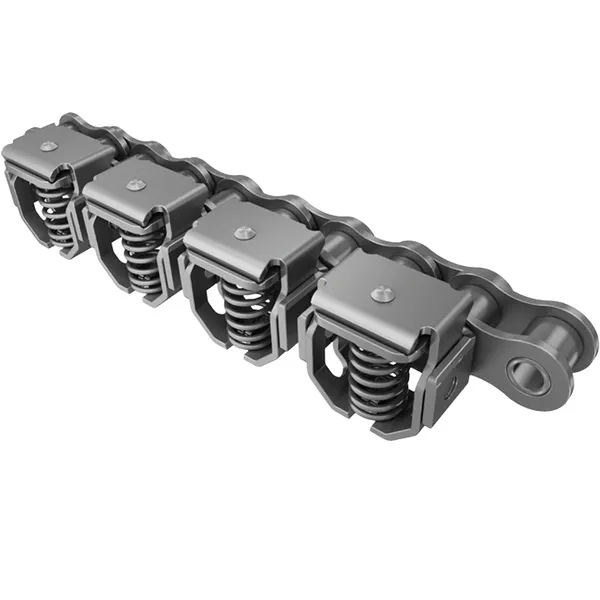
What are the benefits of using a self-lubricating conveyor chain?
Self-lubricating conveyor chains offer several advantages over traditional lubricated chains. Here are some key benefits:
1. Reduced Maintenance: Self-lubricating chains eliminate the need for regular lubrication, reducing the time and effort required for maintenance. This is particularly beneficial in applications where access to the chain is difficult or time-consuming.
2. Cost Savings: By eliminating the need for external lubrication, self-lubricating chains can help reduce lubrication costs over the lifetime of the chain. This includes the cost of lubricants, as well as the labor and equipment required for lubrication maintenance.
3. Clean and Environmentally Friendly: Self-lubricating chains do not require external lubricants, resulting in a cleaner working environment. There is no risk of lubricant spills or contamination of the surrounding area, making them ideal for applications that require strict cleanliness standards, such as food processing or pharmaceutical industries.
4. Extended Chain Life: Self-lubricating chains are designed with built-in lubrication systems that provide a continuous and controlled supply of lubricant to the chain components. This helps reduce friction, wear, and heat generation, resulting in longer chain life and improved performance.
5. Improved Reliability: With consistent and reliable lubrication, self-lubricating chains maintain optimal performance and minimize the risk of chain failure or breakdown. They are less susceptible to premature wear, elongation, and corrosion, ensuring a more reliable and efficient conveyor system.
It’s important to note that the specific benefits of self-lubricating chains may vary depending on the manufacturer and the design of the chain. It’s recommended to consult with the chain manufacturer or an industry expert to understand the suitability and advantages of self-lubricating chains for a particular application.
¿Cómo se calculan los requisitos de potencia para una cadena transportadora?
El cálculo de los requisitos de potencia para una cadena transportadora implica considerar varios factores. A continuación, se describe el proceso paso a paso:
1. Determinar el peso total a transportar: Medir o estimar el peso total del material o producto que transportará la cadena transportadora. Esto incluye el peso del producto en sí, el embalaje y las cargas adicionales.
2. Determinar la velocidad de la cinta transportadora: Determinar la velocidad deseada a la que funcionará la cadena transportadora. Esta se suele medir en pies por minuto (FPM) o metros por segundo (m/s).
3. Calcula la capacidad requerida: Multiplica el peso total por la velocidad deseada para determinar la capacidad necesaria del sistema de transporte. Esto te dará el peso por unidad de tiempo (por ejemplo, libras por minuto o kilogramos por hora).
4. Considere los factores de diseño del transportador: Tenga en cuenta diversos factores de diseño, como el tipo y el paso de la cadena transportadora, el coeficiente de fricción entre la cadena y los componentes del transportador, y cualquier ángulo de inclinación o declinación del sistema. Estos factores afectan los requisitos de potencia.
5. Determinar la potencia requerida: Utilice la siguiente fórmula para calcular los requisitos de potencia:
Potencia (en caballos de fuerza) = (Capacidad × Factor de fricción) ÷ (33.000 × Eficiencia)
Dónde:
– La capacidad es el peso por unidad de tiempo (del paso 3)
– El factor de fricción es la relación entre la tensión de la cadena y el peso de la cadena, teniendo en cuenta los factores de diseño.
– 33.000 es un factor de conversión para convertir las unidades a caballos de fuerza.
– La eficiencia es la eficiencia general del sistema de transporte, expresada normalmente como un valor decimal (por ejemplo, 0,95 para la eficiencia del 95%).
6. Seleccione un motor adecuado: En función de los requisitos de potencia calculados, seleccione un motor que pueda proporcionar la potencia necesaria para accionar la cadena transportadora. Tenga en cuenta factores como el tipo de motor, su eficiencia y su capacidad de sobrecarga.
Es importante tener en cuenta que los requisitos de potencia pueden variar según el diseño específico del sistema de transporte y las condiciones de funcionamiento. Se recomienda consultar con un ingeniero cualificado o un fabricante de sistemas de transporte para garantizar cálculos precisos y la selección adecuada del motor.
How do you calculate the required length of a conveyor chain?
Calculating the required length of a conveyor chain involves considering several factors related to the conveyor system and the specific application. Here’s a step-by-step guide:
- Determine the Conveyor Length: Measure the total length of the conveyor path, including any horizontal, inclined, or vertical sections.
- Account for Sprocket Centers: Identify the locations of the sprockets or drive units along the conveyor path. Measure the distance between each pair of adjacent sprockets.
- Calculate the Number of Links: Divide the total conveyor length by the pitch of the chain to determine the number of links required. The pitch is the distance between the center of two consecutive pins on the chain.
- Consider Tension Adjustment: Take into account any tension adjustment requirements based on the specific application. This may include allowances for tensioning devices or tension variations due to load fluctuations.
- Include End Connections: Consider the length of the end connections, such as master links or connecting pins, which are used to join the ends of the chain. Include their dimensions in the total chain length calculation.
- Add Safety Factors: Incorporate appropriate safety factors to ensure adequate chain length for proper tensioning and to accommodate any potential stretching or wear over time.
It’s important to note that the calculation of the required chain length is an estimation based on various factors and may require adjustments during the installation and tensioning process. Consulting the conveyor manufacturer’s guidelines or working with an experienced engineer can provide more precise calculations based on the specific conveyor system and application requirements.


editor by CX 2023-08-31