Описание продукта
Описание продукта
Параметры продукта
| Standard | GB, ISO, ANSI, DIN |
| Type | Standard A and standard B precision roller chain, conveyor chain; |
| special chain with accessories, welding chain, leaf chain and sprocket | |
| ANSI chain No. | 40,50,60,80,100,120,140,160,180,200,240; |
| C40,C50,C60,C80,C100,C120,C140,C160; | |
| DIN/ISO chain No. | 08A,10A,12A,16A,20A,24A,28A,32A,36A,40A,48A; |
| C08A,C10A,C12A,C16A,C20A,C24A,C28A,C32A; | |
| Приложение | Food processing, pharmaceutical and chemical industries, electronics, machinery; |
| household appliances, automotive manufacturing, metallurgy, sewage treatment | |
| Series | A series,B series |
More Products
Преимущество
Сертификаты
DETAILS ABOUT CZPT CHAIN
Exhibition
Workshop
Приложение
Packaging Details
Shipping
Contact Information
Часто задаваемые вопросы
1. Вы производитель или торговая компания?
We are a factory founded in 1997 with trade team for international service.
2. Какие условия оплаты вы обычно используете?
Предоплата банковским переводом 30% и 70% по предъявлении документов, Western Union, аккредитив по предъявлению.
3. Каков срок поставки вашей продукции?
Normally 35 days after confirmed order. 30 days could be available in low season for some items (during May to July), and 45 days during new year and hot season ( Jan to March).
4. Samples
For customers who need sample confirmation before ordering, please bear in mind that the following policy will be adopted:
1) All samples are free of charge with the maximum value not exceeding USD 100.
2) The courier cost for the first-time sample sending will be charged for by the consignee. We will send the samples with freight to be collected. So please inform your account with FedEx, UPS, DHL or TNT so that we can proceed promptly.
3) The first-time courier cost will be totally deducted from the contract value of the trial cooperation.
4) OEM/ODM are both available.
| Применение: | Цепь привода, тяговая цепь, конвейерная цепь, специализированная цепь. |
|---|---|
| Материал: | Нержавеющая сталь |
| Обработка поверхности: | Полировка |
| Особенность: | Термостойкий |
| Размер цепочки: | 1/2"*11/128" |
| Структура: | Роликовая цепь |
| Образцы: | US$ 1/Meter 1 метр (минимальный заказ) | |
|---|
| Настройка: | Доступный | Индивидуальный запрос |
|---|
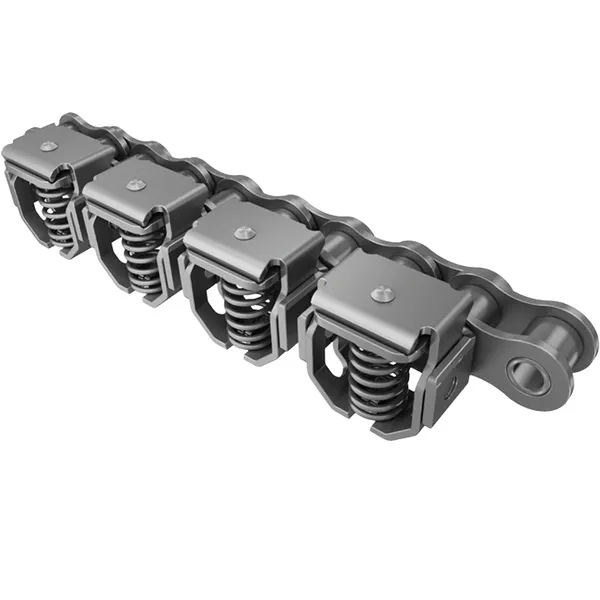
What are the benefits of using a self-lubricating conveyor chain?
Self-lubricating conveyor chains offer several advantages over traditional lubricated chains. Here are some key benefits:
1. Reduced Maintenance: Self-lubricating chains eliminate the need for regular lubrication, reducing the time and effort required for maintenance. This is particularly beneficial in applications where access to the chain is difficult or time-consuming.
2. Cost Savings: By eliminating the need for external lubrication, self-lubricating chains can help reduce lubrication costs over the lifetime of the chain. This includes the cost of lubricants, as well as the labor and equipment required for lubrication maintenance.
3. Clean and Environmentally Friendly: Self-lubricating chains do not require external lubricants, resulting in a cleaner working environment. There is no risk of lubricant spills or contamination of the surrounding area, making them ideal for applications that require strict cleanliness standards, such as food processing or pharmaceutical industries.
4. Extended Chain Life: Self-lubricating chains are designed with built-in lubrication systems that provide a continuous and controlled supply of lubricant to the chain components. This helps reduce friction, wear, and heat generation, resulting in longer chain life and improved performance.
5. Improved Reliability: With consistent and reliable lubrication, self-lubricating chains maintain optimal performance and minimize the risk of chain failure or breakdown. They are less susceptible to premature wear, elongation, and corrosion, ensuring a more reliable and efficient conveyor system.
It’s important to note that the specific benefits of self-lubricating chains may vary depending on the manufacturer and the design of the chain. It’s recommended to consult with the chain manufacturer or an industry expert to understand the suitability and advantages of self-lubricating chains for a particular application.
Как рассчитать потребляемую мощность конвейерной цепи?
Расчет потребляемой мощности конвейерной цепи включает в себя учет различных факторов. Вот пошаговый процесс:
1. Определите общий вес, подлежащий транспортировке: Измерьте или оцените общий вес материала или продукта, который будет перемещаться по конвейерной цепи. Это включает вес самого продукта, любой упаковки и дополнительных грузов.
2. Определите скорость конвейера: Определите желаемую скорость, с которой будет работать конвейерная цепь. Обычно она измеряется в футах в минуту (FPM) или метрах в секунду (м/с).
3. Рассчитайте необходимую производительность: умножьте общий вес на желаемую скорость, чтобы определить необходимую производительность конвейерной системы. Это даст вам вес в единицу времени (например, фунты в минуту или килограммы в час).
4. Учитывайте конструктивные особенности конвейера: примите во внимание различные конструктивные факторы, такие как тип и шаг конвейерной цепи, коэффициент трения между цепью и компонентами конвейера, а также любые углы наклона или спуска конвейерной системы. Эти факторы влияют на потребляемую мощность.
5. Определите требуемую мощность: Используйте следующую формулу для расчета необходимой мощности:
Мощность (в лошадиных силах) = (Мощность × Коэффициент трения) ÷ (33 000 × КПД)
Где:
– Грузоподъемность – это вес в единицу времени (из шага 3).
– Коэффициент трения – это отношение натяжения цепи к весу цепи с учетом конструктивных особенностей.
– 33 000 – это коэффициент пересчета для перевода единиц измерения в лошадиные силы.
– Эффективность – это общая эффективность конвейерной системы, обычно выражаемая в десятичном виде (например, 0,95 для эффективности 95%).
6. Выберите подходящий двигатель: исходя из рассчитанных потребностей в мощности, выберите двигатель, способный обеспечить необходимую мощность для привода конвейерной цепи. Учитывайте такие факторы, как тип двигателя, КПД двигателя и допустимая перегрузка.
Важно отметить, что потребляемая мощность может варьироваться в зависимости от конкретной конструкции конвейерной системы и условий эксплуатации. Для обеспечения точных расчетов и правильного выбора двигателя рекомендуется проконсультироваться с квалифицированным инженером или производителем конвейеров.
How do you calculate the required length of a conveyor chain?
Calculating the required length of a conveyor chain involves considering several factors related to the conveyor system and the specific application. Here’s a step-by-step guide:
- Determine the Conveyor Length: Measure the total length of the conveyor path, including any horizontal, inclined, or vertical sections.
- Account for Sprocket Centers: Identify the locations of the sprockets or drive units along the conveyor path. Measure the distance between each pair of adjacent sprockets.
- Calculate the Number of Links: Divide the total conveyor length by the pitch of the chain to determine the number of links required. The pitch is the distance between the center of two consecutive pins on the chain.
- Consider Tension Adjustment: Take into account any tension adjustment requirements based on the specific application. This may include allowances for tensioning devices or tension variations due to load fluctuations.
- Include End Connections: Consider the length of the end connections, such as master links or connecting pins, which are used to join the ends of the chain. Include their dimensions in the total chain length calculation.
- Add Safety Factors: Incorporate appropriate safety factors to ensure adequate chain length for proper tensioning and to accommodate any potential stretching or wear over time.
It’s important to note that the calculation of the required chain length is an estimation based on various factors and may require adjustments during the installation and tensioning process. Consulting the conveyor manufacturer’s guidelines or working with an experienced engineer can provide more precise calculations based on the specific conveyor system and application requirements.


editor by CX 2023-08-31