Descripción del Producto
OUR PRODUCTS LIST:
A and B series single/double/triple standard roller chain and no-standard roller chain
| DIN/ISO | ANSI | Paso | Roller | Ancho | Alfiler | Alfiler | Lnner | Lámina | Ultimate | Average | weight | |
| KIN/ISO | ANSL | entre | diámetro | longitud | plate | thick | tensile | tensile | por | |||
| Chain | Chain | inner plates | profundidad | -ness | fortaleza | fortaleza | metro | |||||
| No. | No. | PAG | d1 | b1 | d2 | L | Lc | h2 | T | Q | Q0 | q |
| max | min | max | max | max | max | max | min | |||||
| mm | mm | mm | mm | mm | mm | mm | mm | kN/LB | kN | kg/m | ||
| *03C | *15 | 4.7625 | 2.48 | 2.38 | 1.62 | 6.1 | 6.9 | 4.3 | 0.6 | 1.80/409 | 2 | 0.08 |
| *04C-1 | *25 | 6.35 | 3.3 | 3.18 | 2.31 | 7.9 | 8.4 | 6 | 0.8 | 3.50/795 | 4.6 | 0.15 |
| *06C-1 | *35 | 9.525 | 5.08 | 4.77 | 3.58 | 12.4 | 13.17 | 9 | 1.3 | 7.90/1795 | 10.8 | 0.33 |
| 085-1 | 41 | 12.7 | 7.77 | 6.25 | 3.58 | 13.75 | 15 | 9.91 | 1.3 | 6.67/1516 | 12.6 | 0.41 |
| 08A-1 | 40 | 12.7 | 7.95 | 7.85 | 3.96 | 16.6 | 17.8 | 12 | 1.5 | 14.10/3205 | 17.5 | 0.62 |
| 10A-1 | 50 | 15.875 | 10.16 | 9.4 | 5.08 | 20.7 | 22.2 | 15.09 | 2.03 | 22.20/5045 | 29.4 | 1.02 |
| 12A-1 | 60 | 19.05 | 11.91 | 12.57 | 5.94 | 25.9 | 27.7 | 18 | 2.42 | 31.80/7227 | 41.5 | 1.5 |
| 16A-1 | 80 | 25.4 | 15.88 | 15.75 | 7.92 | 32.7 | 35 | 24 | 3.25 | 59.70/12886 | 69.4 | 2.6 |
| 20A-1 | 100 | 31.75 | 19.05 | 18.9 | 9.53 | 40.4 | 44.7 | 30 | 4 | 88.50/20114 | 109.2 | 3.91 |
| 24A-1 | 120 | 38.1 | 22.23 | 25.22 | 11.1 | 50.3 | 54.3 | 35.7 | 4.8 | 127.00/28864 | 156.3 | 5.62 |
| 28A-1 | 140 | 44.45 | 25.4 | 25.22 | 12.7 | 54.4 | 59 | 41 | 5.6 | 172.40/39182 | 212 | 7.5 |
| 32A-1 | 160 | 50.8 | 28.58 | 31.55 | 14.27 | 64.8 | 69.6 | 47.8 | 6.4 | 226.80/51545 | 278.9 | 1.1 |
| 36A-1 | 180 | 57.15 | 35.71 | 35.48 | 17.46 | 72.8 | 78.6 | 53.6 | 7.2 | 280.20/63682 | 341.8 | 13.45 |
| 40A-1 | 200 | 63.5 | 39.68 | 37.85 | 19.85 | 80.3 | 87.2 | 60 | 8 | 353.80/80409 | 431.6 | 16.15 |
| 48A-1 | 240 | 76.2 | 47.63 | 47.35 | 23.81 | 90.5 | 103 | 72.39 | 9.5 | 51.30/115977 | 622.5 | 23.2 |
| DIN/ISO | Paso | Roller | Ancho | Alfiler | Alfiler | Lnner | Lámina | Ultimate | Average | weight | |
| KIN/ISO | entre | diámetro | longitud | plate | thick | tensile | tensile | por | |||
| Chain | inner plates | profundidad | -ness | fortaleza | fortaleza | metro | |||||
| No. | PAG | d1 | b1 | d2 | L | Lc | h2 | T | Q | Q0 | q |
| max | min | max | max | max | max | max | min | ||||
| mm | mm | mm | mm | mm | mm | mm | mm | kN/LB | kN | kg/m | |
| 04B-1 | 6 | 4 | 2.8 | 1.85 | 6.8 | 7.8 | 5 | 0.6 | 3.2/682 | 3.2 | 0.11 |
| 05B-1 | 8 | 5 | 3 | 2.31 | 8.2 | 8.9 | 7.1 | 0.8 | 5.0/1136 | 5.9 | 0.2 |
| *06B-1 | 9.525 | 6.35 | 5.72 | 3.28 | 13.15 | 14.1 | 8.2 | 1.3 | 9.0/2045 | 10.4 | 0.41 |
| 08B-1 | 12.7 | 8.51 | 7.75 | 4.45 | 16.7 | 18.2 | 11.8 | 1.6 | 18.0/4091 | 19.4 | 0.69 |
| 10B-1 | 15.875 | 10.16 | 9.65 | 5.08 | 19.5 | 20.9 | 14.7 | 1.7 | 22.4/5091 | 27.5 | 0.93 |
| 12B-1 | 19.05 | 12.07 | 11.68 | 5.72 | 22.5 | 24.2 | 16 | 1.85 | 29.0/6591 | 32.2 | 1.15 |
| 16B-1 | 25.4 | 15.88 | 17.02 | 8.28 | 36.1 | 37.4 | 21 | 4.15/3.1 | 60.0/13636 | 72.8 | 2.71 |
| 20B-1 | 31.75 | 19.05 | 19.56 | 10.19 | 41.3 | 45 | 26.4 | 4.5/3.5 | 95.0/21591 | 106.7 | 3.7 |
| 24B-1 | 38.1 | 25.4 | 25.4 | 14.63 | 53.4 | 57.8 | 33.2 | 6.0/4.8 | 160.0/36364 | 178 | 7.1 |
| 28B-1 | 44.45 | 27.94 | 30.99 | 15.9 | 65.1 | 69.5 | 36.7 | 7.5/6.0 | 200.0/45455 | 222 | 8.5 |
| 32B-1 | 50.8 | 29.21 | 30.99 | 17.81 | 66 | 71 | 42 | 7.0/6.0 | 250.0/56818 | 277.5 | 10.25 |
| 40B-1 | 63.5 | 39.37 | 38.1 | 22.89 | 82.2 | 89.2 | 52.96 | 8.5/8.0 | 355.0/80682 | 394 | 16.35 |
| 48B-1 | 76.2 | 48.26 | 45.72 | 29.24 | 99.1 | 107 | 63.8 | 560.0/127272 | 621.6 | 25 | |
Products show
Our workshop and hot treatment equipment.
Preguntas frecuentes
Q1. What is your terms of packing?
A: Generally, we pack our goods in single color box. If you have special request about packing, pls negotiate with us in advance, we can pack the goods as your request.
Q2. What is your terms of payment?
A: T/T 30% as deposit, and 70% before delivery. We’ll show you the photos of the products and packages
before you pay the balance. Other payments terms, pls negotiate with us in advance, we can discuss.
Q3. What is your terms of delivery?
A: EXW, FOB, CFR, CIF.
Q4. How about your delivery time?
A: Generally, it will take 25 to 30 days after receiving your advance payment. The specific delivery time depends
on the items and the quantity of your order.
Q5. Can you produce according to the samples?
A: Yes, we can produce by your samples or technical drawings. We can build the molds and fixtures.
Q6. What is your sample policy?
A: We can supply the sample if we have ready parts in stock, but the customers have to pay the sample cost and
the courier cost.We welcome sample order.
Q7. Do you test all your goods before delivery?
A: Yes, we have 100% test before delivery
Q8: How do you make our business long-term and good relationship?
1. We keep good quality and competitive price to ensure our customers benefit ;
2. We respect every customer as our friend and we sincerely do business and make friends with them,
no matter where they come from.
| Material: | Aleación |
|---|---|
| Estructura: | Cadena de rodillos |
| Tratamiento de superficie: | Pulido |
| Tamaño de la cadena: | 1/2"*11/128" |
| Característica: | Resistente al fuego, resistente al aceite, resistente al calor. |
| Paquete de transporte: | Non-Fumigation Wooden Box, by Air, by Ocean |
| Muestras: | US$ 2/Meter 1 metro (pedido mínimo) | |
|---|
| Personalización: | Disponible | Solicitud personalizada |
|---|
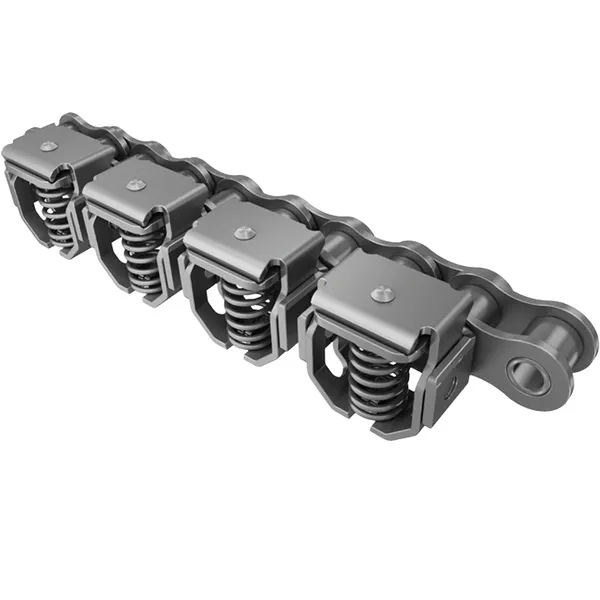
¿Cuáles son las ventajas de utilizar un sistema de transporte aéreo mediante cadena?
El uso de un sistema de cadena transportadora aérea ofrece varias ventajas en diversas aplicaciones industriales. Estas son algunas de las principales ventajas:
1. Optimización del espacio:
Los sistemas de transporte aéreo mediante cadenas aprovechan el espacio vertical, lo que permite una utilización eficiente del espacio en planta. Esto resulta especialmente beneficioso en instalaciones con espacio limitado, ya que facilita la manipulación de materiales y el flujo de producción sin obstruir el área de trabajo.
2. Flexibilidad y versatilidad:
Las cadenas transportadoras aéreas ofrecen flexibilidad en el trazado y se pueden personalizar para adaptarse a los requisitos específicos de la planta. Pueden recorrer diferentes áreas, como líneas de montaje, cabinas de pintura, almacenes y más. La versatilidad de los sistemas aéreos permite un movimiento de materiales eficiente y adaptable.
3. Mayor seguridad:
Las cadenas transportadoras aéreas minimizan las obstrucciones a nivel del suelo, reduciendo el riesgo de tropiezos y accidentes. Los operarios y trabajadores pueden desplazarse con seguridad por la zona de trabajo sin interferencias del sistema de transporte.
4. Protección del producto:
Las cadenas transportadoras aéreas ofrecen una mejor protección para los productos que se transportan. Al mantener los productos elevados y alejados de posibles peligros en el suelo, como polvo, escombros o derrames, se reduce el riesgo de daños o contaminación.
5. Mayor eficiencia:
Los sistemas de transporte aéreo pueden mejorar la eficiencia de la producción al facilitar el flujo continuo de materiales y reducir la manipulación manual. Permiten la carga y descarga automatizada de materiales, lo que se traduce en tiempos de procesamiento más rápidos y una mayor productividad general.
6. Fácil mantenimiento:
Las cadenas transportadoras aéreas suelen estar diseñadas para facilitar el mantenimiento. Componentes como las cadenas, los carros y los accionamientos son accesibles y se les puede dar mantenimiento fácilmente, lo que minimiza el tiempo de inactividad y los costos de mantenimiento.
7. Personalización e integración:
Las cadenas transportadoras aéreas se pueden adaptar a los requisitos específicos de cada aplicación, incluyendo la capacidad de carga, la velocidad y los sistemas de control. También se pueden integrar con otros sistemas automatizados, como estaciones de trabajo robóticas o mecanismos de clasificación, para optimizar aún más el proceso de manipulación de materiales.
En general, el uso de un sistema de transporte aéreo mediante cadenas permite una manipulación eficiente de los materiales, maximiza la utilización del espacio, mejora la seguridad y aumenta la productividad en entornos industriales.
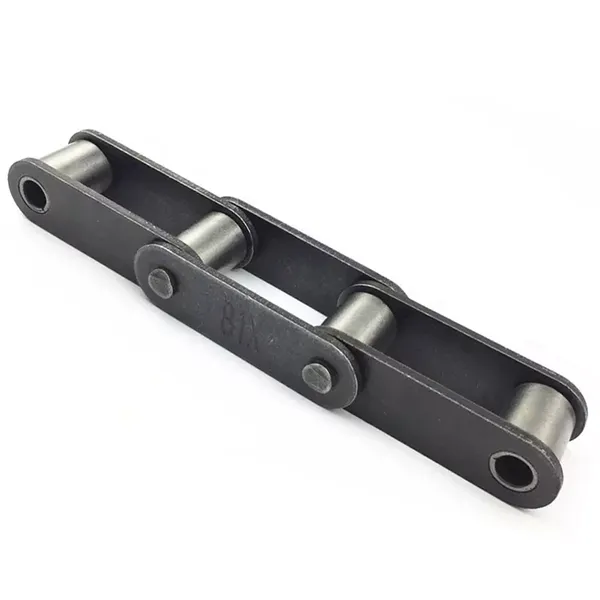
¿Cuáles son las tendencias y los avances futuros en la tecnología de cadenas transportadoras?
El campo de la tecnología de cadenas transportadoras está en constante evolución, impulsado por la necesidad de mejorar la eficiencia, la productividad y la sostenibilidad. A continuación, se presentan algunas de las tendencias y avances futuros en esta tecnología:
1. Automatización y robótica: La integración de cadenas transportadoras con sistemas de automatización y robótica es una tendencia en auge. Esto incluye el uso de sensores avanzados, visión artificial e inteligencia artificial para permitir el funcionamiento autónomo, el posicionamiento preciso y la manipulación eficiente de materiales.
2. Sistemas inteligentes y conectados: Las cadenas transportadoras se conectan cada vez más mediante la tecnología del Internet de las Cosas (IoT). Esto permite la monitorización en tiempo real, la recopilación de datos y el análisis de diversos parámetros de rendimiento, como el desgaste de la cadena, la tensión, la temperatura y el consumo de energía. Los sistemas inteligentes pueden optimizar los programas de mantenimiento, detectar posibles fallos y mejorar la eficiencia general del sistema.
3. Materiales ligeros y de alta resistencia: El desarrollo de materiales ligeros y a la vez resistentes es un objetivo constante en la tecnología de cadenas transportadoras. Las aleaciones avanzadas, los materiales compuestos y los plásticos de ingeniería ofrecen mejores relaciones resistencia-peso, lo que reduce el consumo de energía y aumenta la capacidad de carga de los sistemas de transporte.
4. Eficiencia energética: La eficiencia energética es un factor clave en el diseño de cadenas transportadoras. Los avances futuros buscan minimizar el consumo de energía mediante el uso de sistemas de accionamiento eficientes, frenado regenerativo y algoritmos de control inteligentes que optimizan los perfiles de velocidad y aceleración. Las tecnologías de recuperación de energía, como los accionamientos regenerativos, también permiten capturar y reutilizar la energía durante la desaceleración o el frenado.
5. Sostenibilidad y respeto al medio ambiente: La tecnología de cadenas transportadoras avanza hacia soluciones más sostenibles y respetuosas con el medio ambiente. Esto incluye el uso de materiales ecológicos, técnicas de lubricación mejoradas para minimizar el impacto ambiental y la adopción de componentes y sistemas energéticamente eficientes. Los conceptos de reciclaje y economía circular también están cobrando mayor importancia en el diseño y la fabricación de cadenas transportadoras.
6. Monitoreo avanzado del desgaste y mantenimiento predictivo: El futuro de la tecnología de cadenas transportadoras reside en sistemas avanzados de monitoreo del desgaste que permiten predecir con precisión la vida útil restante de las cadenas y sus componentes. Esto posibilita una planificación de mantenimiento proactiva y reduce el tiempo de inactividad no planificado. Los algoritmos de mantenimiento predictivo analizan los datos recopilados por los sensores y proporcionan alertas oportunas para la sustitución o reparación de la cadena.
Estos son solo algunos ejemplos de las tendencias y avances futuros en la tecnología de cadenas transportadoras. A medida que la tecnología siga avanzando, podemos esperar nuevas innovaciones que mejoren el rendimiento, la eficiencia, la fiabilidad y la sostenibilidad de los sistemas de transporte.
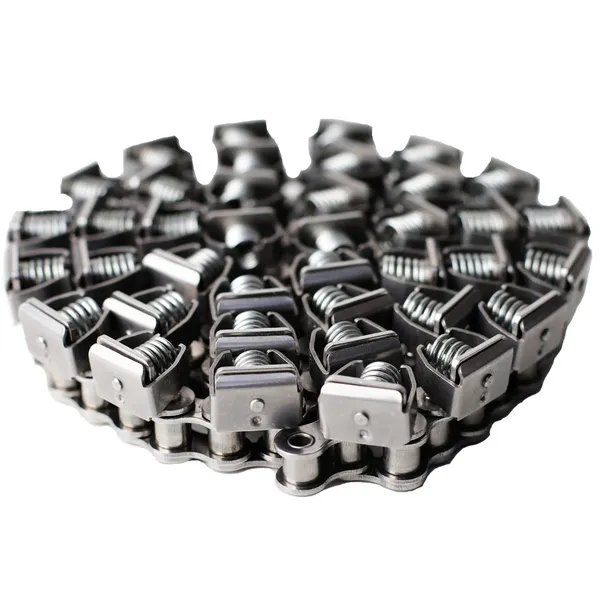
¿Qué es una cadena transportadora y cómo funciona?
Una cadena transportadora es un tipo de cadena mecánica diseñada específicamente para su uso en sistemas de transporte. Está compuesta por una serie de eslabones interconectados que forman un bucle continuo. Los eslabones suelen ser de metal y se unen mediante pasadores u otros elementos de conexión.
Las cadenas transportadoras funcionan transfiriendo potencia y movimiento desde el mecanismo de accionamiento, como un motor o una rueda dentada, al sistema de transporte para mover materiales o productos a lo largo de una trayectoria predeterminada. La cadena se coloca sobre un riel o guías y, al moverse, soporta la carga que se deposita sobre ella.
El funcionamiento de una cadena transportadora implica los siguientes pasos:
- Transmisión de potencia:
El mecanismo de accionamiento transfiere la potencia de rotación a la cadena transportadora, normalmente mediante un motor y piñones. El motor proporciona el par necesario para accionar la cadena.
- Tracción y movimiento:
A medida que el mecanismo de accionamiento hace girar las ruedas dentadas, los dientes de estas se engranan con los eslabones de la cadena transportadora. Esta interacción genera tracción, lo que provoca que la cadena se desplace a lo largo del camino deseado.
- Capacidad de carga:
La carga a transportar se coloca sobre la cadena transportadora. Esta carga puede consistir en productos, materiales u otros artículos. A medida que la cadena se mueve, transporta la carga a lo largo del sistema de transporte, lo que permite un transporte o manipulación eficiente.
- Apoyo y orientación:
La cadena transportadora está soportada y guiada por diversos componentes, como rieles guía, rodillos o bandas de desgaste. Estos componentes garantizan la correcta alineación y el movimiento fluido de la cadena a lo largo del sistema transportador.
Las cadenas transportadoras se utilizan habitualmente en industrias como la manufacturera, la logística, el embalaje y la manipulación de materiales. Ofrecen un método fiable y eficiente para el traslado controlado y automatizado de productos o materiales.


editor by CX 2023-07-19