Descripción del Producto
| Model NO. | 08B\10B\12B\16B |
| Chain Model | Roller Chains |
| Structure (for Chain) | Cadena de rodillos |
| Specification | GB/T, estruendo, ANSI, ISO, BS, JIS. |
| Origin | HangZhou, ZheJiang |
| Color | Solid Color |
| Chain Color | Customized |
Our company
Wolff Chain Co. is 1 of the professional chain manufacturers in China. We focus on reseaching, manufacturing and trading of the chain drive with famous brands — “DOVON” and “DECHO”. We supply OEM services for many famous enterprises such as SUZUKI, XIHU (WEST LAKE) DIS., FAW, AGCO, JUMING as well.
Wolff mainly producing the Transmission chains,Conveyor chains,Dragging Chains,Silent chains,Leaf chains,Roller chains,Special chain and many other series of chain products. Our technicians a have improved the chains quality to the world-level. High quality material selection, powerful and precise heat-treatment technology and excellent assembly methods ensure Wolff chains meet the tough and strict requirements for machines and vehicles.
All of our products completely conform to the international standard such as ISO\DIN\ANSI\BS\JIS, etc. Wolff has been successfully certified by ISO9001 Quality Management System,SGS inspection and BV inspection. Wolff chains can be widely applied to many industries including automobile, motorcycle, forklift, wood processing machine, constructure machine, packing machine, food machine,tobacco machine and agricultural equipments. Wolff chains are popular in America,South America,Europe,Middle East, South East Asia and Africa markets.
Our workshop
Our certification
Welcome to our exhibition
Preguntas frecuentes
Q1. What is your terms of packing?
A: Generally, we pack our goods in single color box. If you have special request about packing, pls negotiate with us in advance, we can pack the goods as your request.
Q2. What is your terms of payment?
A: T/T 30% as deposit, and 70% before delivery. We’ll show you the photos of the products and packages
before you pay the balance. Other payments terms, pls negotiate with us in advance, we can discuss.
Q3. What is your terms of delivery?
A: EXW, FOB, CFR, CIF.
Q4. How about your delivery time?
A: Generally, it will take 25 to 30 days after receiving your advance payment. The specific delivery time depends
on the items and the quantity of your order.
Q5. Can you produce according to the samples?
A: Yes, we can produce by your samples or technical drawings. We can build the molds and fixtures.
Q6. What is your sample policy?
A: We can supply the sample if we have ready parts in stock, but the customers have to pay the sample cost and
the courier cost.We welcome sample order.
Q7. Do you test all your goods before delivery?
A: Yes, we have 100% test before delivery
Q8: How do you make our business long-term and good relationship?
1. We keep good quality and competitive price to ensure our customers benefit ;
2. We respect every customer as our friend and we sincerely do business and make friends with them,
no matter where they come from.
| Standard or Nonstandard: | Standard |
|---|---|
| Application: | Textile Machinery, Garment Machinery, Conveyer Equipment, Packaging Machinery, Food Machinery, Marine, Mining Equipment |
| Tratamiento de superficie: | Oil Blooming |
| Estructura: | Cadena de rodillos |
| Material: | Carbon Steel |
| Tipo: | Short Pitch Chain |
| Personalización: | Disponible | Solicitud personalizada |
|---|
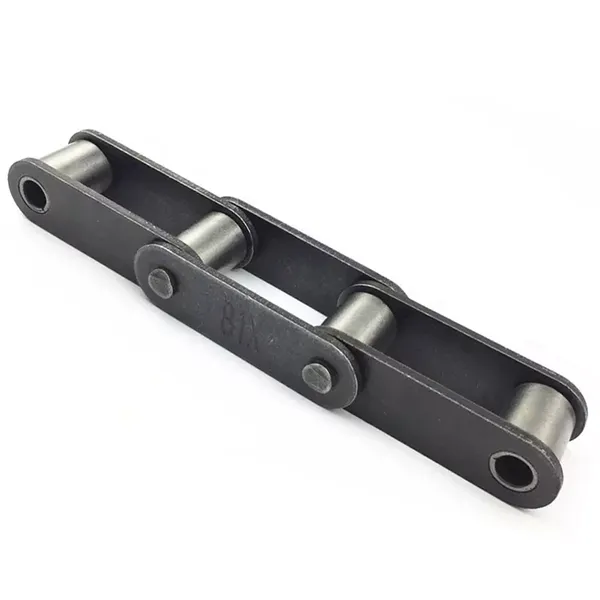
¿Cómo gestiona una cadena transportadora las aplicaciones de acumulación e indexación?
En los sistemas de transporte, la acumulación y la indexación se refieren a métodos específicos para controlar el movimiento y el posicionamiento de los artículos a lo largo de la línea transportadora. Una cadena transportadora puede gestionar eficazmente estas aplicaciones mediante el uso de componentes y mecanismos de control especializados. A continuación, se ofrece una explicación detallada:
Acumulación:
La acumulación se refiere al proceso de almacenar temporalmente o amortiguar artículos en la cinta transportadora para controlar el flujo de materiales. Las cadenas transportadoras diseñadas para aplicaciones de acumulación suelen incorporar características como guías de cadena de baja fricción, zonas de acumulación y sensores.
En un sistema de cadena transportadora de acumulación, la cadena se divide en zonas diferenciadas donde se acumulan los artículos. A medida que los productos entran en una zona, la cadena reduce su velocidad o se detiene, permitiendo que se acumulen sin chocar entre sí. Sensores o células fotoeléctricas detectan la presencia de artículos en cada zona y proporcionan señales para controlar el movimiento de la cadena.
Las zonas de acumulación en el sistema de cadena transportadora se pueden controlar de diferentes maneras, como mediante rodillos motorizados, dispositivos neumáticos o sensores electrónicos. Esto garantiza un flujo controlado y sincronizado de los artículos a lo largo de la línea transportadora.
Indexación:
La indexación se refiere al posicionamiento preciso de los artículos a intervalos específicos a lo largo de la línea de transporte. Esto se utiliza comúnmente en aplicaciones donde se requiere un posicionamiento o secuenciación precisos, como en procesos de ensamblaje o empaquetado.
Las cadenas transportadoras diseñadas para aplicaciones de indexación incorporan pasadores de indexación especializados, topes o accionamientos de indexación de precisión. Estos componentes trabajan en conjunto para posicionar con precisión los artículos en ubicaciones predeterminadas a lo largo de la cinta transportadora.
El mecanismo de indexación de un sistema de cadena transportadora puede accionarse mediante levas mecánicas, servomotores o controladores lógicos programables (PLC). El movimiento de indexación puede sincronizarse con otros procesos o máquinas posteriores para garantizar operaciones precisas de ensamblaje o empaquetado.
Al combinar capacidades de acumulación e indexación, un sistema de cadena transportadora puede gestionar una amplia gama de aplicaciones, incluyendo clasificación, almacenamiento temporal, secuenciación y ensamblaje automatizado. Proporciona control sobre el flujo y el posicionamiento de los artículos, lo que permite una manipulación eficiente de los materiales y procesos de producción optimizados.
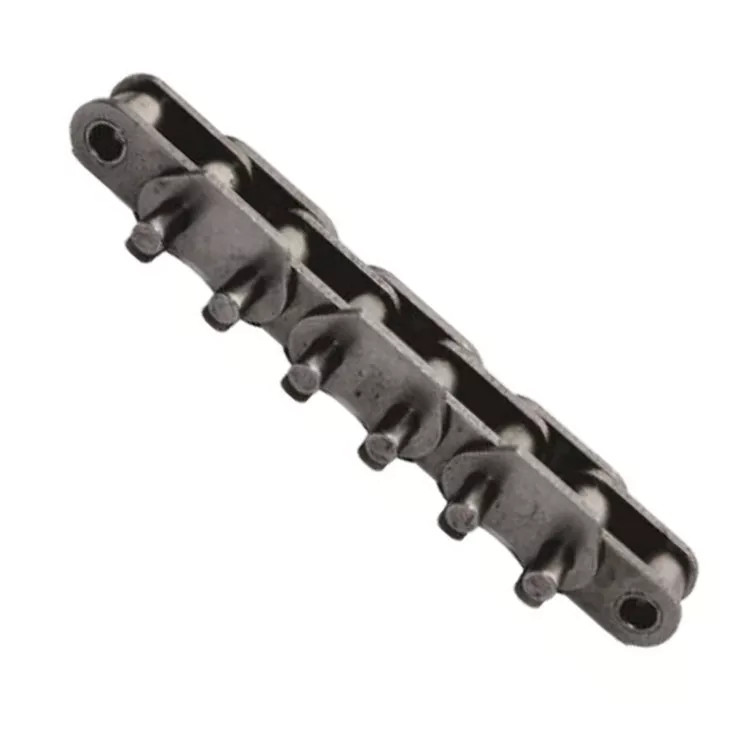
How do you prevent corrosion in conveyor chains?
Preventing corrosion in conveyor chains is essential for maintaining their performance and prolonging their lifespan. Here are some effective measures to prevent corrosion:
1. Material Selection: Choose conveyor chains made from corrosion-resistant materials such as stainless steel, plastic, or coatings specifically designed to resist corrosion. These materials offer better protection against rust and corrosion compared to standard steel chains.
2. Proper Lubrication: Apply a suitable lubricant to the conveyor chain regularly. Lubrication creates a protective barrier that helps prevent moisture and contaminants from reaching the metal surface, reducing the risk of corrosion. Select a lubricant that provides corrosion protection properties and is compatible with the chain material.
3. Environmental Controls: Control the operating environment to minimize exposure to corrosive elements. Implement measures such as humidity control, proper ventilation, and protection from direct contact with water or chemicals. Consider using covers or enclosures to shield the conveyor chain from environmental factors that can accelerate corrosion.
4. Surface Treatments: Apply corrosion-resistant coatings or treatments to the conveyor chain. These coatings can provide an additional protective layer that acts as a barrier against moisture and corrosive substances. Examples of surface treatments include zinc plating, galvanizing, or epoxy coatings.
5. Regular Inspections and Cleaning: Regularly inspect the conveyor chain for signs of corrosion or damage. Remove any accumulated dirt, debris, or corrosive substances promptly. Cleaning the chain helps prevent the buildup of contaminants that can accelerate corrosion.
6. Preventive Maintenance: Implement a preventive maintenance program that includes regular cleaning, lubrication, and inspection of the conveyor chain. This proactive approach helps identify and address any potential corrosion issues early on, preventing further damage.
7. Proper Storage: When not in use, store the conveyor chains in a dry and controlled environment. Protect them from exposure to moisture, humidity, and corrosive substances. Use appropriate storage methods, such as hanging the chains or storing them in sealed containers.
By following these preventive measures, you can significantly reduce the risk of corrosion in conveyor chains, ensuring their optimal performance and longevity.
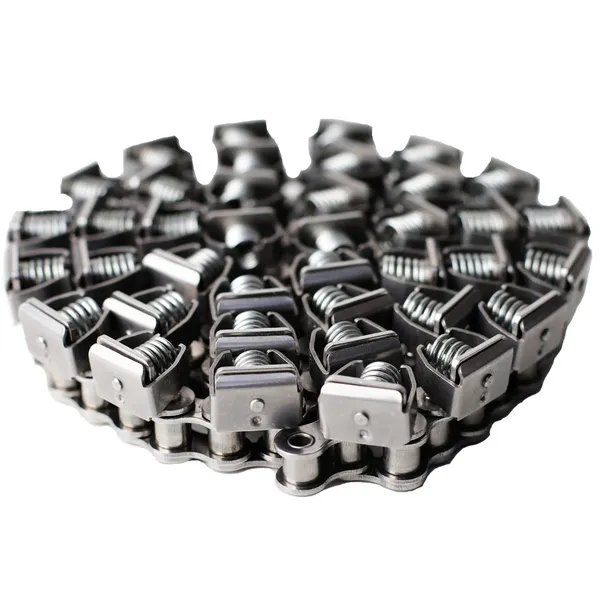
What is the load capacity of a conveyor chain?
The load capacity of a conveyor chain depends on various factors, including the chain design, material, size, and the operating conditions. It is crucial to consider the specific application requirements when determining the load capacity of a conveyor chain. Here are some key factors to consider:
- Diseño de la cadena: Different types of conveyor chains have varying load capacities. The chain design includes factors such as the type of links, their configuration, and the presence of attachments or rollers.
- Material: The material used to manufacture the conveyor chain significantly affects its load capacity. Common materials include steel, stainless steel, and plastic. Steel chains are generally more robust and have higher load-bearing capabilities.
- Tamaño de la cadena: The size of the conveyor chain, including the pitch and width, plays a role in determining its load capacity. Larger chains with wider links tend to have higher load capacities.
- Operating Conditions: Factors such as the speed of the conveyor, the type and weight of the transported materials, and the environmental conditions (temperature, humidity, etc.) can impact the load capacity of the chain.
- Manufacturer Specifications: It is essential to consult the manufacturer’s specifications and guidelines for the specific conveyor chain being used. Manufacturers typically provide load capacity charts or tables based on their chain designs.
The load capacity of a conveyor chain is typically specified in terms of its maximum allowable working load or breaking strength. These values are determined through rigorous testing and engineering calculations. To ensure safe and efficient operation, it is important to select a conveyor chain that has a load capacity suitable for the intended application. Exceeding the recommended load capacity can lead to premature wear, chain failure, and potential safety hazards.


editor by CX 2023-08-22