Tuotekuvaus
Tuotekuvaus
Tuoteparametrit
| Standardi | GB, ISO, ANSI, DIN |
| Tyyppi | Standard A and standard B precision roller chain, conveyor chain; |
| special chain with accessories, welding chain, leaf chain and sprocket | |
| ANSI chain No. | 40,50,60,80,100,120,140,160,180,200,240; |
| C40,C50,C60,C80,C100,C120,C140,C160; | |
| DIN/ISO chain No. | 08A,10A,12A,16A,20A,24A,28A,32A,36A,40A,48A; |
| C08A,C10A,C12A,C16A,C20A,C24A,C28A,C32A; | |
| Hakemus | Food processing, pharmaceutical and chemical industries, electronics, machinery; |
| household appliances, automotive manufacturing, metallurgy, sewage treatment | |
| Series | A series,B series |
More Products
Etu
Sertifioinnit
DETAILS ABOUT CZPT CHAIN
Exhibition
Workshop
Hakemus
Packaging Details
Shipping
Contact Information
Usein kysytyt kysymykset
1. Oletko valmistaja vai kauppayhtiö?
We are a factory founded in 1997 with trade team for international service.
2. Mitä maksuehtoja yleensä käytät?
T/T 30% talletus ja 70% asiakirjaa vastaan, Western Union, L/C näköpiirissä
3. Mikä on tavaroidenne toimitusaika?
Normally 35 days after confirmed order. 30 days could be available in low season for some items (during May to July), and 45 days during new year and hot season ( Jan to March).
4. Samples
For customers who need sample confirmation before ordering, please bear in mind that the following policy will be adopted:
1) All samples are free of charge with the maximum value not exceeding USD 100.
2) The courier cost for the first-time sample sending will be charged for by the consignee. We will send the samples with freight to be collected. So please inform your account with FedEx, UPS, DHL or TNT so that we can proceed promptly.
3) The first-time courier cost will be totally deducted from the contract value of the trial cooperation.
4) OEM/ODM are both available.
| Käyttö: | Voimansiirtoketju, vetoketju, kuljetinketju, erillinen erikoisketju |
|---|---|
| Materiaali: | Ruostumaton teräs |
| Pintakäsittely: | Kiillotus |
| Ominaisuus: | Lämmönkestävä |
| Ketjun koko: | 1/2" * 11/128" |
| Rakenne: | Rullaketju |
| Näytteet: | US$ 1/metri 1 metri (vähimmäistilaus) | |
|---|
| Mukauttaminen: | Saatavilla | Mukautettu pyyntö |
|---|
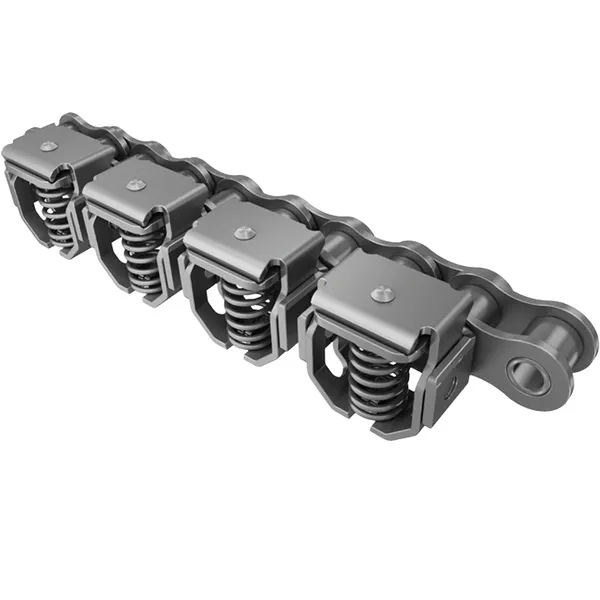
What are the benefits of using a self-lubricating conveyor chain?
Self-lubricating conveyor chains offer several advantages over traditional lubricated chains. Here are some key benefits:
1. Reduced Maintenance: Self-lubricating chains eliminate the need for regular lubrication, reducing the time and effort required for maintenance. This is particularly beneficial in applications where access to the chain is difficult or time-consuming.
2. Cost Savings: By eliminating the need for external lubrication, self-lubricating chains can help reduce lubrication costs over the lifetime of the chain. This includes the cost of lubricants, as well as the labor and equipment required for lubrication maintenance.
3. Clean and Environmentally Friendly: Self-lubricating chains do not require external lubricants, resulting in a cleaner working environment. There is no risk of lubricant spills or contamination of the surrounding area, making them ideal for applications that require strict cleanliness standards, such as food processing or pharmaceutical industries.
4. Extended Chain Life: Self-lubricating chains are designed with built-in lubrication systems that provide a continuous and controlled supply of lubricant to the chain components. This helps reduce friction, wear, and heat generation, resulting in longer chain life and improved performance.
5. Improved Reliability: With consistent and reliable lubrication, self-lubricating chains maintain optimal performance and minimize the risk of chain failure or breakdown. They are less susceptible to premature wear, elongation, and corrosion, ensuring a more reliable and efficient conveyor system.
It’s important to note that the specific benefits of self-lubricating chains may vary depending on the manufacturer and the design of the chain. It’s recommended to consult with the chain manufacturer or an industry expert to understand the suitability and advantages of self-lubricating chains for a particular application.
How do you calculate the power requirements for a conveyor chain?
Calculating the power requirements for a conveyor chain involves considering various factors. Here’s a step-by-step process:
1. Determine the total weight to be transported: Measure or estimate the total weight of the material or product that will be carried by the conveyor chain. This includes the weight of the product itself, any packaging, and additional loads.
2. Determine the speed of the conveyor: Determine the desired speed at which the conveyor chain will operate. This is typically measured in feet per minute (FPM) or meters per second (m/s).
3. Calculate the required capacity: Multiply the total weight by the desired speed to determine the required capacity of the conveyor system. This will give you the weight per unit of time (e.g., pounds per minute or kilograms per hour).
4. Consider the conveyor’s design factors: Take into account various design factors such as the type and pitch of the conveyor chain, the coefficient of friction between the chain and the conveyor components, and any incline or decline angles of the conveyor system. These factors affect the power requirements.
5. Determine the required power: Use the following formula to calculate the power requirements:
Power (in horsepower) = (Capacity × Friction Factor) ÷ (33,000 × Efficiency)
Where:
– Capacity is the weight per unit of time (from step 3)
– Friction Factor is the ratio of chain tension to chain weight, taking into account the design factors
– 33,000 is a conversion factor to convert the units to horsepower
– Efficiency is the overall efficiency of the conveyor system, typically expressed as a decimal value (e.g., 0.95 for 95% efficiency)
6. Select a suitable motor: Based on the calculated power requirements, select a motor that can provide the necessary power to drive the conveyor chain. Consider factors such as motor type, motor efficiency, and overload capacity.
It’s important to note that the power requirements may vary depending on specific conveyor system designs and operating conditions. Consulting with a qualified engineer or conveyor manufacturer is recommended to ensure accurate calculations and proper motor selection.
Miten lasketaan tarvittava kuljetinketjun pituus?
Kuljetinketjun tarvittavan pituuden laskeminen edellyttää useiden kuljetinjärjestelmään ja tiettyyn sovellukseen liittyvien tekijöiden huomioon ottamista. Tässä on vaiheittainen opas:
- Määritä kuljettimen pituus: Mittaa kuljettimen reitin kokonaispituus, mukaan lukien kaikki vaakasuorat, kaltevat tai pystysuorat osat.
- Sprocket Centersin tili: Tunnista ketjupyörien tai käyttöyksiköiden sijainnit kuljettimen reitillä. Mittaa vierekkäisten ketjupyöräparien välinen etäisyys.
- Laske linkkien lukumäärä: Jaa kuljettimen kokonaispituus ketjun nousulla määrittääksesi tarvittavien lenkkien lukumäärän. Nousu on kahden peräkkäisen ketjun tapin keskipisteiden välinen etäisyys.
- Harkitse jännityksen säätöä: Ota huomioon kaikki sovellukseen liittyvät jännityksen säätövaatimukset. Tämä voi sisältää kiristyslaitteiden tai kuormitusvaihteluista johtuvien jännitysvaihteluiden aiheuttamat toleranssit.
- Sisällytä päätyyhteydet: Ota huomioon ketjun päiden yhdistämiseen käytettyjen päätyliitosten, kuten päälenkkien tai liitostappien, pituus. Sisällytä niiden mitat ketjun kokonaispituuden laskelmaan.
- Lisää turvallisuustekijöitä: Käytä asianmukaisia turvatekijöitä varmistaaksesi riittävän ketjun pituuden oikeaa kireyttä varten ja ottaaksesi huomioon mahdollisen venymisen tai kulumisen ajan myötä.
On tärkeää huomata, että tarvittavan ketjun pituuden laskelma on arvio, joka perustuu useisiin tekijöihin, ja se voi vaatia säätöjä asennuksen ja kiristyksen aikana. Kuljettimen valmistajan ohjeiden tarkistaminen tai kokeneen insinöörin kanssa työskentely voi antaa tarkempia laskelmia tietyn kuljetinjärjestelmän ja käyttötarkoituksen vaatimusten perusteella.


editor by CX 2023-08-31