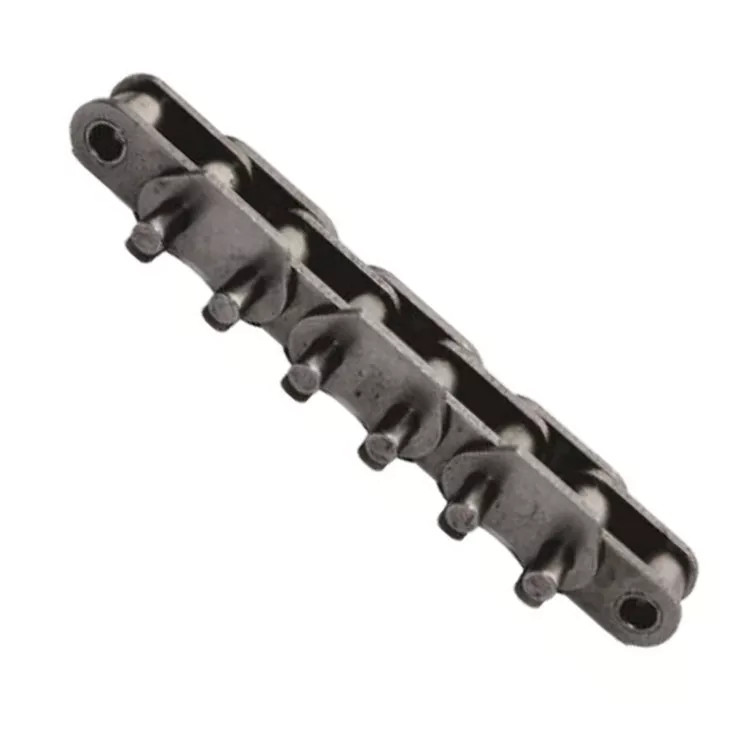
Descrizione del prodotto
SGS Approved Conveyor Chain
A. Our Services
1. Any of your kind inquiry conveyor chain would be replied within 24 hours.
2. Well-trained and experienced sales staffs will reply all your concerns in fluent English.
3. OEM services are available with us, our professional designer would make your private idea into being.
4. Protection of your sales area, ideas of design and all your private information.
5. Delivery by air mail or ship for your orders.
6. With years of manufacture and promotion experience in global market, brings you profit and great success!
B. Conveyor Chain List
1. Double pitch precision roller chains and attachments for transmission and conveyors
ANSI 2040 ~ 2100,ANSI C2040 ~ C2100, ANSI C2042 ~ C2102,ANSI C2062H ~ C2102H,
Attachment: K1,KK1,M1(SK1),K2,KK2,M2(SK2) and so on
2. Hollow pin chains
40HP ~ 80HP, 08BHP ~ 16BHP, C2040HP ~ C2080HP, C2042HP ~ C2082HP
3. Lumber conveyor chains & attachments
81X, 81XH, 81XHH, 81XHS, 81XF1, 81XHF10
4. Stainless steel roller chains & attachments
35SS ~ 140SS, 06BSS ~ 32BSS
Attachment: WK1, WK2
5. Steel pintle chains
662, 667H, 667X, 667XH, 667XH, 667K, 667J, 88K, 88C
6. Special chains
40-1-1LTR ~ 100-1-1LTR, P19.05F50, P22.225F10, 16A-CGF1, C212AL-CGF1, C216AL-CGF1 and so on
C. Company show & Product process
D. Packaging & Certificate
| Dettagli della confezione: | Chain+Plastic Bag+Neutral Box+Wooden case+Big Carton+Steel Pallets |
| Delivery Detail: | six weeks |
E. FAQ
1. Siete un'azienda produttrice o commerciale?
Siamo una fabbrica fondata nel 1991 con un team commerciale dedicato al servizio internazionale.
2. Quali sono le modalità di pagamento che utilizzate di solito?
Deposito T/T 30% e 70% contro documento, Western Union, L/C a vista
3. Quali sono i tempi di consegna per i vostri prodotti?
Normalmente la consegna avviene 45 giorni dopo la conferma dell'ordine. In bassa stagione per alcuni articoli (da maggio a luglio) la consegna potrebbe richiedere 30 giorni, mentre durante il periodo di Capodanno e l'alta stagione (da gennaio a marzo) i tempi di consegna possono arrivare a 65 giorni.
4. Partecipi a qualche spettacolo?
Partecipiamo alla fiera di Hannover in Germania, alla NMW in Australia, alla Fiera di Canton, alla PTC in Cina e a molte altre fiere specializzate nel settore dell'arredamento.
5. Do you have any instant chat ?
| Utilizzo: | catena di trasmissione |
|---|---|
| Materiale: | Acciaio legato/al carbonio |
| Trattamento superficiale: | Oil Blooming |
| Caratteristica: | Resistente al calore |
| Dimensioni della catena: | 1/2"*3/32" |
| Struttura: | Catena a rulli |
| Personalizzazione: | Disponibile | Richiesta personalizzata |
|---|

What are the considerations for selecting a corrosion-resistant conveyor chain?
When selecting a corrosion-resistant conveyor chain, several factors need to be considered to ensure the chain’s longevity and performance in corrosive environments. Here are some key considerations:
1. Material Selection: Choose a chain material that is inherently resistant to corrosion. Stainless steel, such as AISI 304 or AISI 316, is a common choice due to its excellent corrosion resistance properties. Other materials like plastic chains or special alloys can also be considered based on the specific application requirements.
2. Coatings and Surface Treatments: In some cases, additional protective coatings or surface treatments can be applied to enhance the chain’s corrosion resistance. These coatings, such as zinc plating, galvanizing, or epoxy coatings, create a barrier between the chain material and corrosive substances, preventing direct contact and reducing the risk of corrosion.
3. Environmental Compatibility: Consider the specific corrosive agents present in the environment where the conveyor chain will be used. Different corrosive substances, such as acids, alkalis, or saltwater, require specific resistance properties. Ensure that the selected chain material and coatings are compatible with the corrosive agents present in the operating environment.
4. Maintenance and Lubrication: Proper maintenance and lubrication play a crucial role in preventing corrosion and extending the life of a conveyor chain. Regular cleaning, inspection, and application of appropriate lubricants can help remove corrosive contaminants and protect the chain surface from degradation.
5. Testing and Certification: Consider chains that have undergone testing and certification for corrosion resistance in relevant industry standards. Look for certifications such as ISO 9227 (salt spray test) or ASTM B117 (corrosion resistance test) to ensure the chain’s performance in corrosive environments.
By carefully considering these factors and consulting with conveyor chain manufacturers or corrosion-resistant experts, you can select a chain that is well-suited for your specific corrosive environment, minimizing the risk of corrosion-related issues and ensuring optimal performance and longevity.
How does a conveyor chain handle different types of materials?
A conveyor chain is designed to handle a wide variety of materials in diverse industrial applications. It is capable of efficiently transporting different types of materials, including:
1. Bulk Materials: Conveyor chains are commonly used to handle bulk materials such as grains, coal, ores, aggregates, and powders. The design of the chain, including the spacing and shape of the links, helps prevent material spillage and ensures smooth and consistent flow.
2. Packaged Goods: Conveyor chains are also used for conveying packaged goods such as boxes, cartons, crates, and pallets. They provide a stable and reliable method of transporting these items along the production line, reducing manual handling and increasing productivity.
3. Small Parts: Conveyor chains with specialized attachments or small-pitch configurations are suitable for handling small parts or components. These chains ensure precise positioning and gentle transport of delicate or intricate items.
4. Heavy-Duty Loads: Industrial conveyor chains are capable of handling heavy-duty loads, such as automotive parts, machinery components, and large equipment. They are engineered to withstand the weight and stress of these objects, providing reliable and efficient material handling in demanding environments.
5. Food and Beverage Products: Conveyor chains used in the food and beverage industry are designed to meet strict hygiene and safety standards. They are constructed from materials that are resistant to corrosion, easy to clean, and compliant with food-grade regulations. These chains ensure the safe and contamination-free handling of food products.
6. Hazardous Materials: Conveyor chains can be used to safely transport hazardous materials, such as chemicals or waste products. Specialized chains with additional safety features, such as sealed housings or containment systems, are utilized to minimize the risk of spills or leaks.
Conveyor chains can be customized with different chain configurations, attachments, and accessories to accommodate specific material characteristics and handling requirements. The selection of the appropriate chain type, material, and design parameters ensures optimal performance and efficient material handling for a wide range of materials.

Quali fattori bisogna considerare nella progettazione di un sistema di catena di trasporto?
Nella progettazione di un sistema di catene di trasporto, è necessario considerare diversi fattori per garantire prestazioni e funzionalità ottimali. Questi fattori includono:
- Capacità di carico: La capacità di carico del sistema di catene di trasporto è un fattore critico. Essa implica la determinazione del peso e delle dimensioni massime dei materiali o dei prodotti da trasportare. Queste informazioni sono utili per selezionare il tipo, le dimensioni e la resistenza della catena più adatti a gestire il carico previsto.
- Velocità e produttività: La velocità desiderata a cui il sistema di trasporto deve operare e la portata prevista dei materiali sono fattori importanti. Essi influenzano la scelta del passo della catena, della dimensione del pignone e della potenza del motore per raggiungere la velocità del trasportatore e la capacità di movimentazione dei materiali desiderate.
- Condizioni ambientali: L'ambiente operativo riveste un ruolo cruciale nella progettazione di un sistema di catene di trasporto. Fattori quali temperatura, umidità, polvere, sostanze corrosive e presenza di acqua o agenti chimici influenzano la scelta dei materiali per la catena, le ruote dentate e gli altri componenti, al fine di garantirne la durata e la resistenza all'usura e alla corrosione.
- Disposizione e configurazione del nastro trasportatore: La disposizione e la configurazione del sistema di trasporto sono aspetti fondamentali da considerare. Fattori come lo spazio disponibile, il percorso del trasportatore, gli angoli di inclinazione o declinazione e le eventuali curve o svolte necessarie influenzano la scelta del tipo di catena, la disposizione delle ruote dentate e la progettazione complessiva del sistema.
- Manutenzione e accessibilità: La facilità di accesso per la manutenzione e l'assistenza è fondamentale per la longevità e l'efficienza operativa del sistema di catene di trasporto. Considerare fattori quali i punti di lubrificazione, i meccanismi di regolazione della tensione della catena e l'accessibilità generale per ispezioni e riparazioni garantisce un funzionamento regolare e riduce al minimo i tempi di fermo.
- Rumore e vibrazioni: Il livello di rumore e vibrazioni generato dal sistema di catene di trasporto può avere un impatto sull'ambiente di lavoro. Considerazioni progettuali come la scelta di tipi di catena con basse caratteristiche di rumorosità, l'implementazione di una lubrificazione adeguata e l'utilizzo di componenti antivibranti contribuiscono a minimizzare i livelli di rumore e vibrazioni.
- Sicurezza: La sicurezza è di fondamentale importanza nella progettazione dei sistemi di trasporto a catena. Fattori come protezioni, sistemi di arresto di emergenza, corretto allineamento e dispositivi antiscivolo devono essere integrati per garantire la sicurezza degli operatori e prevenire incidenti o infortuni.
Considerare questi fattori durante la fase di progettazione aiuta a selezionare il tipo, le dimensioni e la configurazione della catena di trasporto più adatti a soddisfare i requisiti specifici dell'applicazione, garantendo operazioni di movimentazione dei materiali fluide ed efficienti.


editor by CX 2023-08-29