Productbeschrijving
SGS Approved Conveyor Chain
A. Our Services
1. Any of your kind inquiry conveyor chain would be replied within 24 hours.
2. Well-trained and experienced sales staffs will reply all your concerns in fluent English.
3. OEM services are available with us, our professional designer would make your private idea into being.
4. Protection of your sales area, ideas of design and all your private information.
5. Delivery by air mail or ship for your orders.
6. With years of manufacture and promotion experience in global market, brings you profit and great success!
B. Conveyor Chain List
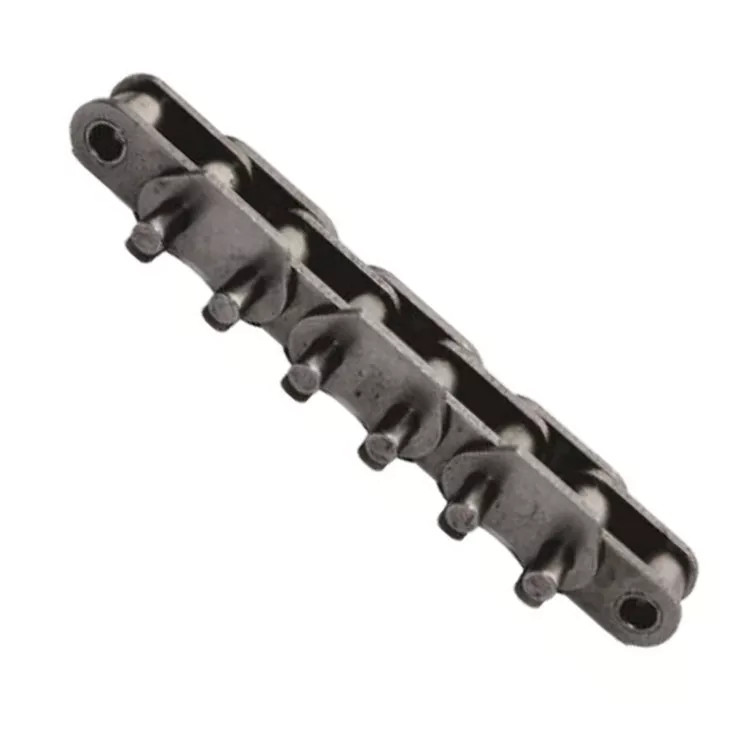
1. Double pitch precision roller chains and attachments for transmission and conveyors
ANSI 2040 ~ 2100,ANSI C2040 ~ C2100, ANSI C2042 ~ C2102,ANSI C2062H ~ C2102H,
Attachment: K1,KK1,M1(SK1),K2,KK2,M2(SK2) and so on
2. Hollow pin chains
40HP ~ 80HP, 08BHP ~ 16BHP, C2040HP ~ C2080HP, C2042HP ~ C2082HP
3. Lumber conveyor chains & attachments
81X, 81XH, 81XHH, 81XHS, 81XF1, 81XHF10
4. Stainless steel roller chains & attachments
35SS ~ 140SS, 06BSS ~ 32BSS
Attachment: WK1, WK2
5. Steel pintle chains
662, 667H, 667X, 667XH, 667XH, 667K, 667J, 88K, 88C
6. Special chains
40-1-1LTR ~ 100-1-1LTR, P19.05F50, P22.225F10, 16A-CGF1, C212AL-CGF1, C216AL-CGF1 and so on
C. Company show & Product process
D. Packaging & Certificate
| Verpakkingsdetails: | Chain+Plastic Bag+Neutral Box+Wooden case+Big Carton+Steel Pallets |
| Delivery Detail: | six weeks |
E. FAQ
1. Bent u een fabrikant of een handelsonderneming?
Wij zijn een fabriek, opgericht in 1991, met een handelsteam voor internationale service.
2. Welke betalingsvoorwaarden hanteert u gewoonlijk?
T/T 30% aanbetaling en 70% tegen document, Western Union, L/C op zicht
3. Wat is uw levertijd voor uw goederen?
Normaal gesproken is de levertijd 45 dagen na bevestiging van de bestelling. In het laagseizoen (mei tot en met juli) kan de levertijd voor sommige artikelen 30 dagen bedragen, en tijdens de jaarwisseling en het hoogseizoen (januari tot en met maart) 65 dagen.
4. Bezoek je wel eens een voorstelling?
We bezoeken de Hannover Messe in Duitsland, de NMW in Australië, de Canton Fair, de PTC in China en vele andere gespecialiseerde meubelbeurzen.
5. Do you have any instant chat ?
| Gebruik: | Transmissieketting |
|---|---|
| Materiaal: | Gelegeerd/koolstofstaal |
| Oppervlaktebehandeling: | Oliebloei |
| Functie: | Hittebestendig |
| Kettingmaat: | 1/2"*3/32" |
| Structuur: | Rollenketting |
| Aanpassing: | Beschikbaar | Aanvraag op maat |
|---|

What are the considerations for selecting a corrosion-resistant conveyor chain?
When selecting a corrosion-resistant conveyor chain, several factors need to be considered to ensure the chain’s longevity and performance in corrosive environments. Here are some key considerations:
1. Material Selection: Choose a chain material that is inherently resistant to corrosion. Stainless steel, such as AISI 304 or AISI 316, is a common choice due to its excellent corrosion resistance properties. Other materials like plastic chains or special alloys can also be considered based on the specific application requirements.
2. Coatings and Surface Treatments: In some cases, additional protective coatings or surface treatments can be applied to enhance the chain’s corrosion resistance. These coatings, such as zinc plating, galvanizing, or epoxy coatings, create a barrier between the chain material and corrosive substances, preventing direct contact and reducing the risk of corrosion.
3. Environmental Compatibility: Consider the specific corrosive agents present in the environment where the conveyor chain will be used. Different corrosive substances, such as acids, alkalis, or saltwater, require specific resistance properties. Ensure that the selected chain material and coatings are compatible with the corrosive agents present in the operating environment.
4. Maintenance and Lubrication: Proper maintenance and lubrication play a crucial role in preventing corrosion and extending the life of a conveyor chain. Regular cleaning, inspection, and application of appropriate lubricants can help remove corrosive contaminants and protect the chain surface from degradation.
5. Testing and Certification: Consider chains that have undergone testing and certification for corrosion resistance in relevant industry standards. Look for certifications such as ISO 9227 (salt spray test) or ASTM B117 (corrosion resistance test) to ensure the chain’s performance in corrosive environments.
By carefully considering these factors and consulting with conveyor chain manufacturers or corrosion-resistant experts, you can select a chain that is well-suited for your specific corrosive environment, minimizing the risk of corrosion-related issues and ensuring optimal performance and longevity.
How does a conveyor chain handle different types of materials?
A conveyor chain is designed to handle a wide variety of materials in diverse industrial applications. It is capable of efficiently transporting different types of materials, including:
1. Bulk Materials: Conveyor chains are commonly used to handle bulk materials such as grains, coal, ores, aggregates, and powders. The design of the chain, including the spacing and shape of the links, helps prevent material spillage and ensures smooth and consistent flow.
2. Packaged Goods: Conveyor chains are also used for conveying packaged goods such as boxes, cartons, crates, and pallets. They provide a stable and reliable method of transporting these items along the production line, reducing manual handling and increasing productivity.
3. Small Parts: Conveyor chains with specialized attachments or small-pitch configurations are suitable for handling small parts or components. These chains ensure precise positioning and gentle transport of delicate or intricate items.
4. Heavy-Duty Loads: Industrial conveyor chains are capable of handling heavy-duty loads, such as automotive parts, machinery components, and large equipment. They are engineered to withstand the weight and stress of these objects, providing reliable and efficient material handling in demanding environments.
5. Food and Beverage Products: Conveyor chains used in the food and beverage industry are designed to meet strict hygiene and safety standards. They are constructed from materials that are resistant to corrosion, easy to clean, and compliant with food-grade regulations. These chains ensure the safe and contamination-free handling of food products.
6. Hazardous Materials: Conveyor chains can be used to safely transport hazardous materials, such as chemicals or waste products. Specialized chains with additional safety features, such as sealed housings or containment systems, are utilized to minimize the risk of spills or leaks.
Conveyor chains can be customized with different chain configurations, attachments, and accessories to accommodate specific material characteristics and handling requirements. The selection of the appropriate chain type, material, and design parameters ensures optimal performance and efficient material handling for a wide range of materials.

Welke factoren moet in overweging worden genomen bij het ontwerpen van een transportkettingsysteem?
Bij het ontwerpen van een transportkettingsysteem moet rekening worden gehouden met verschillende factoren om optimale prestaties en functionaliteit te garanderen. Deze factoren omvatten:
- Draagvermogen: Het draagvermogen van het transportkettingsysteem is een cruciale factor. Hierbij moet het maximale gewicht en de maximale afmetingen van de te transporteren materialen of producten worden bepaald. Deze informatie helpt bij het selecteren van het juiste type, de juiste maat en de juiste sterkte van de ketting om de verwachte belasting aan te kunnen.
- Snelheid en doorvoer: De gewenste snelheid waarmee het transportsysteem moet werken en de verwachte materiaaldoorvoer zijn belangrijke factoren. Deze factoren beïnvloeden de keuze van de kettingsteek, de tandwielgrootte en het motorvermogen om de gewenste transportsnelheid en materiaalverwerkingscapaciteit te bereiken.
- Omgevingsomstandigheden: De bedrijfsomgeving speelt een cruciale rol bij het ontwerp van een transportkettingsysteem. Factoren zoals temperatuur, luchtvochtigheid, stof, corrosieve stoffen en de aanwezigheid van water of chemicaliën beïnvloeden de materiaalkeuze voor de ketting, tandwielen en andere componenten om duurzaamheid en weerstand tegen slijtage en corrosie te garanderen.
- Indeling en configuratie van de transportband: De lay-out en configuratie van het transportsysteem zijn cruciale overwegingen. Factoren zoals beschikbare ruimte, transporttraject, hellingshoeken en eventuele bochten beïnvloeden de keuze van het kettingtype, de tandwielconfiguratie en het algehele systeemontwerp.
- Onderhoud en toegankelijkheid: Gemakkelijke toegang voor onderhoud en service is cruciaal voor de levensduur en efficiënte werking van het transportkettingsysteem. Rekening houden met factoren zoals smeerpunten, mechanismen voor het afstellen van de kettingspanning en de algehele toegankelijkheid voor inspecties en reparaties zorgt voor een soepele werking en minimaliseert stilstandtijd.
- Geluid en trillingen: Het geluids- en trillingsniveau van het transportkettingsysteem kan de werkomgeving beïnvloeden. Ontwerpoverwegingen zoals het kiezen van kettingtypen met lage geluidsproductie, het toepassen van adequate smering en het gebruik van trillingsdempende componenten dragen bij aan het minimaliseren van geluids- en trillingsniveaus.
- Veiligheid: Veiligheid is van het grootste belang bij het ontwerp van transportbandsystemen. Factoren zoals afscherming, noodstopsystemen, correcte uitlijning en antislipmaatregelen moeten worden geïntegreerd om de veiligheid van de operators te waarborgen en ongelukken of verwondingen te voorkomen.
Door in de ontwerpfase rekening te houden met deze factoren, kan het juiste type, de juiste afmeting en de juiste configuratie van de transportketting worden geselecteerd om aan de specifieke eisen van de toepassing te voldoen, waardoor een soepel en efficiënt materiaaltransport wordt gegarandeerd.


editor by CX 2023-08-29