Produktbeskrivning
Produktbeskrivning
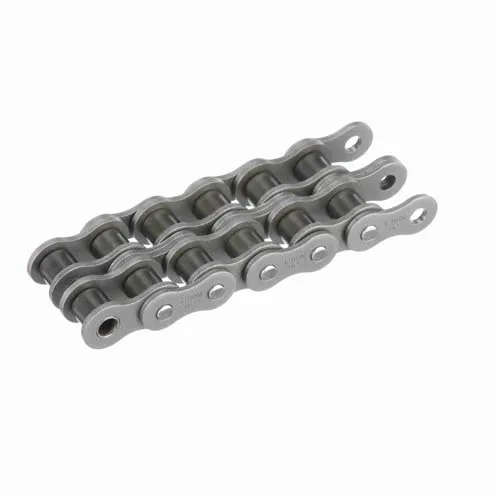
The drop forged chains made of heat treated high grade alloy steel.
1) X348,X458,X678,H698,9118,P1/8822 0571 -57152031 Fax: 86~/8822 0571 -57152030
Http://kasinchain
| Material: | SCR440 |
|---|---|
| Strukturera: | Smide |
| Ytbehandling: | Shot Blasting |
| Kedjestorlek: | P:153.2mm |
| Särdrag: | Heat Resistant, Forging |
| Breaking Load: | 320kn |
| Prover: | US$ 25/Meter 1 meter (minsta beställning) | |
|---|
| Anpassning: | Tillgänglig | Anpassad förfrågan |
|---|
What are the considerations for selecting a low-maintenance conveyor chain?
When selecting a low-maintenance conveyor chain, several considerations should be taken into account:
1. Materialval:
– Choose a conveyor chain made from materials that are resistant to wear, corrosion, and contamination. Stainless steel, plastic, or self-lubricating chains are commonly used for their durability and low maintenance requirements.
2. Lubrication-Free Design:
– Look for conveyor chains that have a self-lubricating design or are pre-lubricated with materials that reduce friction and eliminate the need for additional lubrication. This helps to minimize maintenance tasks associated with regular lubrication.
3. Sealed Construction:
– Consider conveyor chains with sealed construction to prevent the ingress of dirt, debris, and moisture. Sealed chains require less frequent cleaning and maintenance, making them ideal for low-maintenance applications.
4. Easy Cleaning:
– Opt for conveyor chains that are designed for easy cleaning. Smooth surfaces, open structures, and accessible components allow for quick and efficient cleaning, reducing maintenance time and effort.
5. Resistance to Contamination:
– Select a conveyor chain that is resistant to contamination. This includes resistance to chemicals, oils, greases, and other substances commonly found in the application environment. Chains that can withstand contamination require less frequent cleaning and maintenance.
6. Wear Monitoring:
– Look for conveyor chains that have wear monitoring features, such as wear indicators or sensors. These features help to identify chain wear and provide timely maintenance alerts, allowing for proactive replacement or adjustment.
7. Manufacturer Support:
– Consider the support provided by the chain manufacturer. A reputable manufacturer will offer guidance on maintenance intervals, replacement schedules, and provide technical assistance to ensure the proper functioning of the chain.
By considering these factors, you can select a low-maintenance conveyor chain that minimizes the need for frequent inspections, lubrication, cleaning, and replacement, resulting in reduced maintenance efforts and costs.
Vilka olika fästalternativ finns det för en transportörkedja?
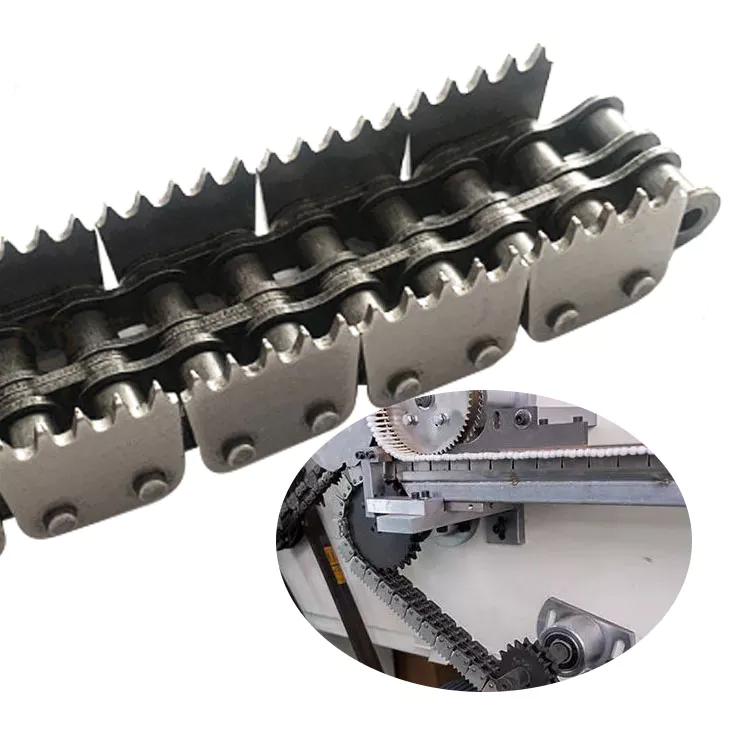
Transportörkedjor kan utrustas med olika typer av tillbehör eller redskap för att tillgodose specifika materialhanteringsbehov. Här är några vanliga redskapsalternativ:
1. Klossar eller vingar: Klossar eller vingar är upphöjda sektioner som är fästa vid transportkedjan för att förhindra att material glider av kedjan. De används ofta i lutande eller nedåtgående applikationer eller vid hantering av lösa eller bulkmaterial.
2. Sidoplattor eller sidoskydd: Sidoplattor eller sidoskydd installeras längs transportörkedjans kanter för att ge uppsamling och förhindra att material spills eller faller av sidorna. De är särskilt användbara vid transport av små eller oregelbundet formade föremål.
3. Påskjutningsstänger: Påskjutningsstänger är förlängningar monterade på transportkedjan som kan manövreras pneumatiskt eller mekaniskt för att trycka material till en annan transportörlinje eller omdirigera dem till en specifik plats. De används ofta för sortering eller omdirigering.
4. Fästen eller fästen: Fästen eller fästen är anordningar som är fästa vid transportkedjan för att säkra och stabilisera de transporterade materialen. De säkerställer att materialen förblir i ett fast läge under transportprocessen, särskilt vid vibrationer eller hastighetsförändringar.
5. Styrskenor: Styrskenor installeras längs transportkedjan för att ge vägledning och uppriktning för de material som transporteras. De hjälper till att bibehålla önskad bana och förhindra sidorörelse eller feljustering.
6. Magnetiska tillbehör: Magnetiska tillbehör används vid hantering av järnhaltiga material. De gör att transportkedjan kan attrahera och hålla fast magnetiska föremål, vilket säkerställer effektiv transport och separation.
7. Verktygsplattor: Verktygsplattor är plattformar eller monteringsytor som är fästa vid transportörkedjan för att rymma specifik utrustning, såsom fixturer, sensorer eller robotarmar. De ger ett bekvämt och anpassningsbart gränssnitt för att integrera ytterligare funktioner i transportörsystemet.
8. Avledare eller överföringsenheter: Avledare eller överföringsenheter är specialiserade tillbehör som möjliggör sömlös överföring av material från en transportörlinje till en annan, eller mellan olika bearbetningsstationer. De säkerställer smidiga övergångar och exakt materialflödeskontroll.
Dessa tillbehörsalternativ erbjuder flexibilitet och mångsidighet i transportörkedjeapplikationer, vilket möjliggör anpassning baserat på de specifika kraven för det material som transporteras eller produktionsprocessen. Genom att välja lämpliga tillbehör kan transportörkedjor effektivt hantera ett brett utbud av material och optimera materialflödet inom ett transportörsystem.

What are the advantages of using a conveyor chain in material handling?
Conveyor chains offer numerous advantages in material handling applications, making them a preferred choice in various industries. Here are some of the key advantages:
- Efficient Transportation: Conveyor chains provide a continuous and reliable means of transporting materials, ensuring a smooth flow throughout the production or distribution process. They can handle both light and heavy loads, enabling efficient movement of items of different sizes and weights.
- Increased Productivity: By automating the material handling process, conveyor chains help increase productivity and operational efficiency. They eliminate the need for manual handling and reduce human effort, allowing employees to focus on other tasks, resulting in higher throughput and reduced labor costs.
- Flexibility and Customization: Conveyor chains can be designed and configured to meet specific material handling requirements. They are available in various lengths, widths, and configurations, allowing for customization based on the layout and space constraints of the facility. Additionally, different types of conveyor chains can be selected to handle specific materials or accommodate special handling needs.
- Improved Safety: Conveyor chains enhance workplace safety by reducing the risk of manual lifting and carrying heavy loads. They provide a controlled and controlled movement of materials, minimizing the chances of accidents and injuries. Additionally, safety features such as emergency stop buttons, guardrails, and sensors can be incorporated into the conveyor system to further enhance safety.
- Space Optimization: Conveyor chains utilize vertical and horizontal space efficiently, making them ideal for facilities with limited floor space. They can be designed to navigate corners, inclines, and declines, allowing for optimized layout and maximizing the use of available space.
- Versatility: Conveyor chains are versatile and can handle a wide range of materials, including bulk items, packaged goods, fragile items, and irregularly shaped objects. They can accommodate different types of conveyance methods such as flat, inclined, or spiral conveyors, providing flexibility in material handling processes.
- Improved Inventory Control: Conveyor chains enable better inventory control by facilitating the smooth movement and tracking of materials. They can be integrated with barcode scanners, RFID technology, or other tracking systems to monitor the flow of goods and provide real-time information on inventory levels.
- Reduced Material Damage: Conveyor chains help minimize material damage during handling and transportation. They provide a stable and controlled movement, reducing the risk of items falling or getting damaged due to manual handling or rough transportation methods.
The advantages of using a conveyor chain in material handling include improved efficiency, productivity, safety, space utilization, and inventory control, leading to cost savings and enhanced overall operational performance.


editor by CX 2023-09-05