Produktbeskrivelse
Simplex stainless 304 Roller Chain (08B-1, 24B-1)
The most commonly used chain is roller chain or as it is also known transmission chain. These are the simplest chain drives, Used mainly for transmitting power. Can be supplied from 3mm pitch up to 4″ pitch in either mild steel or stainless steel.
| DIN/ISO Kæde nr. | Tonehøjde | Roller Diameter | Width Between Inner Plates | Pin Diameter | Pin Length | Inner Plate depth | Plate thick ness | Ultimate Trækfasthed Strength | Average Trækfasthed Strength | Weight Per Meter | |
| Mm | mm | mm | mm | mm | mm | mm | mm | kN/LB | kN | Kg/m | |
| 04B-1 | 6.000 | 4.00 | 2.80 | 1.85 | 6.80 | 7.80 | 5.00 | 0.60 | 3.0/682 | 3.2 | 0.11 |
| 05B-1 | 8.000 | 5.00 | 3.00 | 2.31 | 8.20 | 8.90 | 7.10 | 0.80 | 5.0/1136 | 5.9 | 0.20 |
| *06B-1 | 9.525 | 6.35 | 5.72 | 3.28 | 13.15 | 14.10 | 8.20 | 1.30 | 9.0/2045 | 10.4 | 0.41 |
| 08B-1 | 12.700 | 8.51 | 7.75 | 4.45 | 16.70 | 18.20 | 11.80 | 1.60 | 18.0/4091 | 19.40 | 0.69 |
| 10B-1 | 15.875 | 10.16 | 9.65 | 5.09 | 19.50 | 20.90 | 14.70 | 1.70 | 22.4/5091 | 27.50 | 0.93 |
| 12B-1 | 19.050 | 12.07 | 11.68 | 5.72 | 22.50 | 24.2 | 16.00 | 1.85 | 29.0/6591 | 32.20 | 1.15 |
| 16B-1 | 25.400 | 15.88 | 17.02 | 8.28 | 36.10 | 37.4 | 21.00 | 4.15/3.1 | 60.0/13636 | 72.80 | 2.71 |
| 20B-1 | 31.750 | 19.05 | 19.56 | 10.19 | 41.30 | 45.0 | 26.40 | 4.5/3.5 | 95.0/21591 | 106.7 | 3.70 |
| 24B-1 | 38.100 | 25.40 | 25.40 | 14.63 | 53.40 | 57.80 | 33.20 | 6.0/4.8 | 160.0/36364 | 178.0 | 7.10 |
| 28B-1 | 44.450 | 27.94 | 30.99 | 15.90 | 65.10 | 69.50 | 36.70 | 7.5/6.0 | 200.0/45455 | 222.0 | 8.50 |
| 32B-1 | 50.800 | 29.21 | 30.99 | 17.81 | 66.00 | 71.0 | 42.00 | 7.0/6.0 | 250.0/56818 | 277.5 | 10.25 |
| 40B-1 | 63.50 | 39.37 | 38.10 | 22.89 | 82.20 | 89.2 | 52.96 | 8.5/8.0 | 355.0/80682 | 394.0 | 16.35 |
| 48B-1 | 76.20 | 48.26 | 45.72 | 29.24 | 99.10 | 107.0 | 63.80 | 12.0/10.0 | 560.0/127272 | 621.6 | 25.00 |
| 56B-1 | 88.90 | 53.98 | 53.34 | 34.32 | 114.60 | 123.0 | 77.80 | 13.5/12.0 | 850.0/193180 | 940.0 | 35.78 |
| *Bushing chain: d1 in the table indicate the external diameter of bushing | |||||||||||
We own the sophisticated equipment and the advanced technology, such as:
1. CAD Designer
2. Wire Cutting Machine
3. Chain Running In Machine
4. Conveyor Furance
5. Ball Drift
6. Shot Peened Parts
7. Design Of Link Plate Waist
Company Detail:
GOODLUCK TRANSMISSION is 1 of a professional exporter with exporting POWER TRANSMISSION PARTS: Roller chains,conveyor chain,stainless steel chains, agricultural chains, steel detachable chains, special chains, sprockets, s. S. Sprockets, HRC couplings, pulleys, bushes etc. All these products have been supplied regularly to World Wide for over 15 years.
Welcome contact for more detail.
Company Detail:
GOODLUCK TRANSMISSION is 1 of a professional exporter with exporting POWER TRANSMISSION PARTS: Roller chains,conveyor chain,stainless steel chains, agricultural chains, steel detachable chains, special chains, sprockets, s. S. Sprockets, HRC couplings, pulleys, bushes etc. All these products have been supplied regularly to World Wide for over 15 years.
Welcome contact for more detail.
Company Detail:
GOODLUCK TRANSMISSION is 1 of a professional exporter with exporting POWER TRANSMISSION PARTS: Roller chains,conveyor chain,stainless steel chains, agricultural chains, steel detachable chains, special chains, sprockets, s. S. Sprockets, HRC couplings, pulleys, bushes etc. All these products have been supplied regularly to World Wide for over 15 years.
Welcome contact for more detail.
Sofia Chen(Sales Manager)
HangZhou Goodlukc Transmission Technology Co.,Ltd.
716 Gold River Center,NO.88 Shishan Rd.,
New District,HangZhou,P.R.China.P.C.:215011
| Anvendelse: | Transmissionskæde |
|---|---|
| Materiale: | Rustfrit stål |
| Overfladebehandling: | Polering |
| Funktion: | Varmebestandig |
| Kædestørrelse: | 1/2"*3/32" |
| Struktur: | Rullekæde |
| Tilpasning: | Tilgængelig | Tilpasset anmodning |
|---|
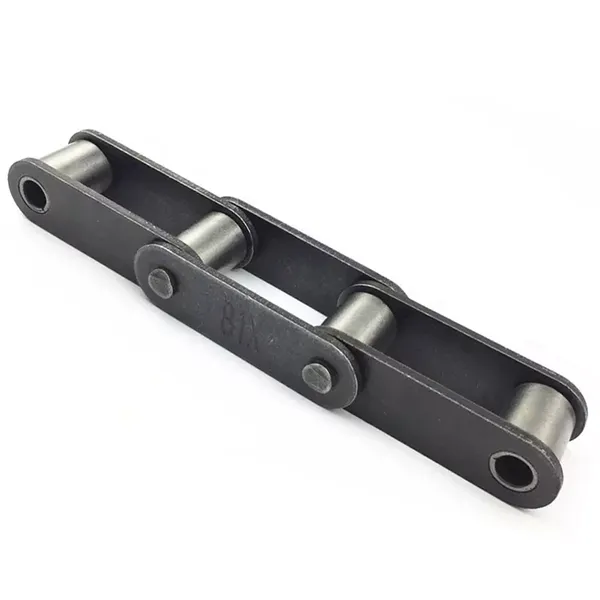
How does a conveyor chain handle inclined or declined conveyance?
A conveyor chain is designed to handle various types of conveyance, including inclined or declined applications. Here’s how a conveyor chain handles these situations:
1. Inclined Conveyance: When a conveyor system is required to move materials uphill, an inclined conveyor chain is used. The chain’s design includes special attachments or cleats that provide additional grip and prevent material from slipping or sliding backward. These attachments are strategically positioned along the chain to ensure effective conveyance on inclines.
2. Declined Conveyance: For conveyors that move materials downhill, a declined conveyor chain is utilized. Similar to inclined conveyance, the chain may have specialized attachments or cleats that help control the speed and prevent material from sliding too quickly. These attachments keep the material in place and ensure a controlled and efficient flow downward.
Both inclined and declined conveyance require careful consideration of the chain’s design, including the type and arrangement of attachments. The size, shape, and weight of the conveyed material also play a role in determining the appropriate chain configuration. It’s important to consult with conveyor chain manufacturers or experts to select the right chain and attachments for specific inclined or declined applications.

Hvordan bidrager en transportkæde til den samlede produktionseffektivitet?
En transportkæde spiller en afgørende rolle i at forbedre den samlede produktionseffektivitet i forskellige brancher. Her er de måder, hvorpå den bidrager til effektivitet:
1. Kontinuerlig materialestrøm: En transportkæde muliggør kontinuerlig og uafbrudt materialestrøm fra et punkt til et andet. Den eliminerer behovet for manuel håndtering eller transport af varer, hvilket reducerer nedetid og forsinkelser i produktionsprocesser.
2. Øget gennemløbshastighed: Ved at automatisere materialehåndtering muliggør en transportkæde hurtigere og mere effektiv bevægelse af varer. Det giver mulighed for højere gennemløbshastighed og produktionshastigheder, maksimerer udnyttelsen af ressourcer og reducerer cyklustider.
3. Forbedret produktivitet: Med en transportkæde kan medarbejderne fokusere på værdiskabende opgaver i stedet for manuel materialehåndtering. Dette fører til forbedret produktivitet, da medarbejderne kan koncentrere sig om mere kvalificerede og kritiske operationer.
4. Effektiv ressourceallokering: Et veldesignet transportbåndssystem optimerer pladsudnyttelsen og muliggør effektiv indretning og organisering af produktionsområder. Det hjælper med at strømline arbejdsgangen og minimere spild af ressourcer såsom gulvplads, arbejdskraft og udstyr.
5. Kvalitetskontrol: Transportbånd kan integreres med inspektionsstationer eller automatiserede processer for at sikre kvalitetskontrol på forskellige produktionsstadier. Dette hjælper med at opdage og afhjælpe eventuelle defekter eller uoverensstemmelser, hvilket reducerer risikoen for, at defekte produkter når markedet.
6. Reducerede omkostninger til materialehåndtering: Ved at eliminere eller minimere manuel materialehåndtering reducerer en transportkæde lønomkostningerne forbundet med transport, løft og bæring af varer. Det minimerer også risikoen for skader eller ulykker relateret til manuel håndtering.
7. Fleksibilitet og tilpasningsevne: Transportbånd kan tilpasses specifikke produktionskrav. De kan designes til at rumme forskellige typer produkter, håndtere forskellige lastekapaciteter og tilpasse sig ændringer i produktionskrav. Denne fleksibilitet muliggør problemfri integration med eksisterende produktionssystemer og nem skalerbarhed.
8. Sikkerhed og ergonomi: Transportbånd har sikkerhedsfunktioner som afskærmninger, nødstopknapper og låsemekanismer for at sikre medarbejdernes sikkerhed. De fremmer også ergonomiske fremgangsmåder ved at reducere den fysiske belastning af medarbejderne og minimere risikoen for muskuloskeletale skader.
Samlet set forbedrer et veldesignet og korrekt vedligeholdt transportkædesystem produktionseffektiviteten ved at optimere materialeflowet, øge gennemløbsmængden, forbedre produktiviteten, reducere omkostningerne, sikre kvalitetskontrol og prioritere medarbejdernes sikkerhed.
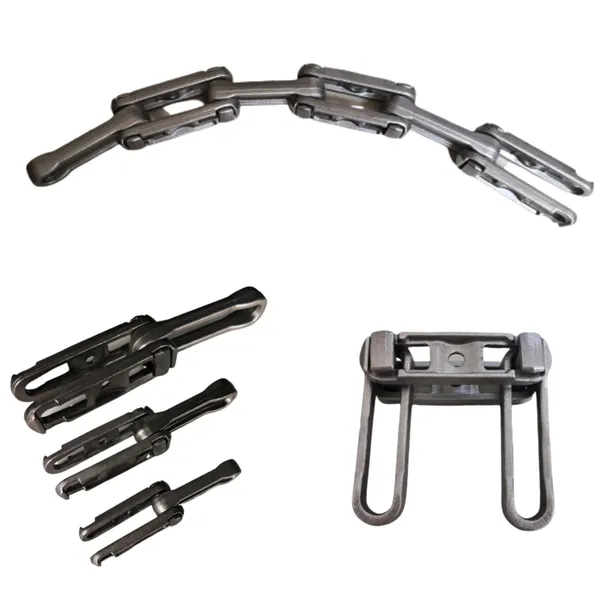
What are the signs of wear and tear in a conveyor chain?
Over time, a conveyor chain may experience wear and tear due to the demanding nature of material handling operations. Several signs indicate the need for maintenance or replacement of a conveyor chain. These signs of wear and tear include:
- Chain Elongation: One of the common signs of wear in a conveyor chain is elongation. As the chain wears, the pitch between the chain links gradually increases, resulting in a longer chain length. Excessive elongation can cause improper engagement with sprockets, leading to slippage or chain derailment.
- Chain Link Plate Wear: The link plates of a conveyor chain can experience wear on their surfaces. This wear is typically caused by friction against sprockets, guide rails, or other components. Signs of plate wear include thinning or deformation of the link plates, which can affect the overall strength and integrity of the chain.
- Sprocket Tooth Wear: The teeth of the sprockets that engage with the conveyor chain can also exhibit signs of wear. Over time, the teeth may become worn down, rounded, or have irregular shapes. This wear can cause improper chain engagement, resulting in reduced efficiency and potential chain slipping or skipping.
- Excessive Noise: Increased noise during the operation of the conveyor system can indicate wear and tear in the chain. Excessive wear can lead to metal-to-metal contact, resulting in noisy operation. Unusual squeaking, grinding, or rattling sounds are indicators that the chain may require inspection or maintenance.
- Visible Damage: Any visible damage to the chain, such as cracked or broken link plates, bent pins, or missing attachments, is a clear sign of wear and tear. These damages compromise the chain’s structural integrity and should be addressed promptly to prevent further issues or chain failure.
- Inconsistent Movement: If the conveyor chain starts to exhibit jerky or uneven movement, it may be a sign of wear or misalignment. Misalignment can occur due to worn chain links, damaged sprockets, or improper tensioning. Inconsistent movement can lead to reduced efficiency, increased wear, and potential chain failure.
Regular inspection and maintenance of the conveyor chain system are essential to identify these signs of wear and tear. Timely replacement of worn components and proper lubrication can help prolong the life of the chain and maintain efficient operation.


editor by CX 2023-10-12