Produktbeschreibung
Description
Stainless steel DIN763 long link chain ,Din766 short chain
1. Material: 300 series stainless steel
2. Standard: DIN763/Din766
3. Diameter: 2mm to 32mm
4. Breaking load: 1.25KN – 160KN
5. Welding type: argon-arc welding
6. Application: marine link chain, transmission, etc.
| Product | Dia (mm) | Inside Length (mm) | Outside Width (mm) | WLL (kg) | BL (N) | Weight (kg/m) |
| Long link chain | 2 | 22 | 8 | 25 | 1250 | 0.06 |
| 2.5 | 24 | 10 | 40 | 2000 | 0.10 | |
| 3 | 26 | 12 | 55 | 3200 | 0.15 | |
| 3.5 | 28 | 14 | 80 | 3850 | 0.20 | |
| 4 | 32 | 16 | 100 | 6000 | 0.27 | |
| 4.5 | 34 | 18 | 128 | 6300 | 0.35 | |
| 5 | 35 | 20 | 160 | 10000 | 0.43 | |
| 5.5 | 38.5 | 22 | 195 | 9500 | 0.52 | |
| 6 | 42 | 24 | 224 | 14000 | 0.63 | |
| 7 | 49 | 28 | 300 | 18000 | 0.86 | |
| 8 | 52 | 32 | 400 | 25000 | 1.10 | |
| 8.5 | 56 | 34 | 460 | 22500 | 1.25 | |
| 9 | 59 | 36 | 530 | 32000 | 1.41 | |
| 10 | 65 | 40 | 630 | 40000 | 1.75 | |
| 11 | 72 | 44 | 790 | 47500 | 2.11 | |
| 12 | 78 | 48 | 940 | 56500 | 2.55 | |
| 13 | 82 | 52 | 1000 | 63000 | 2.95 | |
| 16 | 100 | 64 | 1600 | 100000 | 4.45 | |
| 18 | 113 | 70 | 2120 | 127000 | 5.65 | |
| 19 | 119 | 72 | 2370 | 142000 | 6.25 | |
| 20 | 120 | 75 | 2500 | 160000 | 7.00 |
Packaging & Shipping
Packing: export standard packaging, or according to customer’s requirement.
Type of packing: Gunny bag, plastic reel, wooden reel, plastic drum, steel drum, wooden box.
Delivery time: 10-30 days after order confirmation
Shipping: by sea or by air
Trade terms: Ex.works, FOB, C&F, CIF, CFR
Our company:
Xihu (West Lake) Dis. City CZPT Steel Product Co., Ltd is founded in 1997.We are a large-scale production plant which specialized in producing high quality stainless steel wire, stainless steel wire rope, and PVC/Nylon/PE coated stainless steel wire products.
Our company serves both domestic and international market.Our products are with hith quality and competitive price.We are the official supplier for Chinese high speed train project.Moreover,our products are widely exported to CZPT market,such as US,Europe,Asian market.
We have ISO and SGS certicifates.
Why choose US?
1. We are Alibaba Assessed 6 years Gold Supplier.
2. We are a factory manufacturing stainless steel wire rope,Galvanized and Ungalvanized steel wire rope over 20 years. best production capability, best quality control, best service.
3. Competitive price and quality guaranteed.
FAQ:
Contact US:
| Verwendung: | Transmission Chain, Drag Chain, Conveyor Chain, Dedicated Special Chain |
|---|---|
| Material: | Stainless steel |
| Oberflächenbehandlung: | Polieren |
| Besonderheit: | Hitzebeständig |
| Kettengröße: | 1/2" * 3/32" |
| Struktur: | Geschweißte Kette |
| Proben: | US$ 30/Meter 1 Meter (Mindestbestellmenge) | |
|---|
| Anpassung: | Verfügbar | Kundenspezifische Anfrage |
|---|
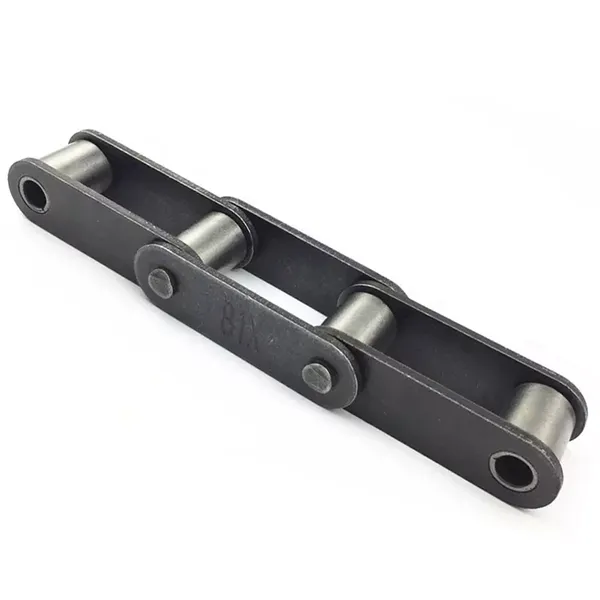
How does a conveyor chain handle inclined or declined conveyance?
A conveyor chain is designed to handle various types of conveyance, including inclined or declined applications. Here’s how a conveyor chain handles these situations:
1. Inclined Conveyance: When a conveyor system is required to move materials uphill, an inclined conveyor chain is used. The chain’s design includes special attachments or cleats that provide additional grip and prevent material from slipping or sliding backward. These attachments are strategically positioned along the chain to ensure effective conveyance on inclines.
2. Declined Conveyance: For conveyors that move materials downhill, a declined conveyor chain is utilized. Similar to inclined conveyance, the chain may have specialized attachments or cleats that help control the speed and prevent material from sliding too quickly. These attachments keep the material in place and ensure a controlled and efficient flow downward.
Both inclined and declined conveyance require careful consideration of the chain’s design, including the type and arrangement of attachments. The size, shape, and weight of the conveyed material also play a role in determining the appropriate chain configuration. It’s important to consult with conveyor chain manufacturers or experts to select the right chain and attachments for specific inclined or declined applications.
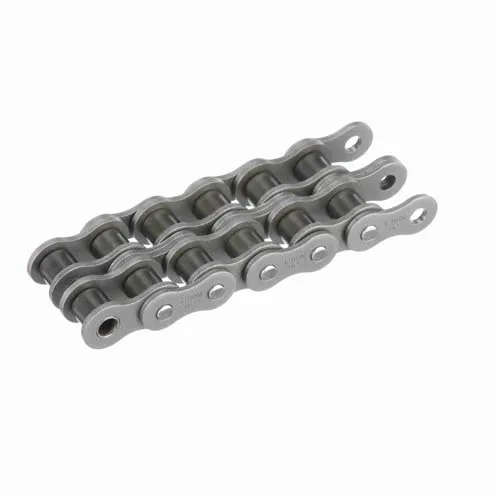
Welche Vorteile bietet der Einsatz eines modularen Förderkettensystems?
Ein modulares Förderkettensystem bietet zahlreiche Vorteile hinsichtlich Flexibilität, Effizienz und Wartungsfreundlichkeit. Hier einige der wichtigsten Vorteile:
1. Vielseitigkeit: Modulare Förderketten bestehen aus ineinandergreifenden Modulen, die sich einfach verbinden und trennen lassen. Dies ermöglicht eine flexible Konfiguration des Fördersystems entsprechend spezifischen Layoutvorgaben, Produktionsanforderungen oder Platzbeschränkungen. Module können hinzugefügt, entfernt oder neu positioniert werden, um sich an veränderte Produktionsprozesse oder Produktvarianten anzupassen.
2. Anpassbarkeit: Dank des modularen Aufbaus lässt sich das Förderkettensystem individuell an spezifische Anwendungsanforderungen anpassen. Verschiedene Modultypen sind verfügbar, darunter gerade Abschnitte, Kurven, Steigungen, Gefälle, Zusammenführungen und Weichen. Zubehör wie Seitenführungen, Klemmen oder Produkthalterungen kann problemlos in das System integriert werden.
3. Schnelle Installation und Anpassung: Modulare Förderketten sind für eine einfache Installation und Anpassung konzipiert. Dank ihrer Schnappverbindungen lassen sich die Module schnell montieren und demontieren, wodurch Ausfallzeiten bei der Systemeinrichtung oder -umkonfiguration minimiert werden. Diese Eigenschaft erleichtert zudem Wartung, Reparaturen und zukünftige Erweiterungen.
4. Höhere Effizienz: Die Modularität des Förderkettensystems ermöglicht effizientes Materialhandling und optimierte Arbeitsabläufe. Der reibungslose Übergang zwischen den Modulen minimiert Produktstaus und Fehlausrichtungen und gewährleistet einen kontinuierlichen und gleichmäßigen Materialfluss. Die Möglichkeit, Kurven oder Steigungen in das System zu integrieren, ermöglicht eine effiziente Nutzung der Bodenfläche und erleichtert den Transport von Produkten über verschiedene Höhen.
5. Einfache Wartung: Modulare Förderkettensysteme sind auf einfache Wartung ausgelegt. Einzelne Module sind leicht zugänglich und austauschbar, ohne dass das gesamte System demontiert werden muss. Dies reduziert Wartungsaufwand und -kosten. Darüber hinaus ermöglicht die offene Modulstruktur eine einfache Reinigung, Entfernung von Ablagerungen und Inspektion.
6. Langlebigkeit und Zuverlässigkeit: Modulare Förderketten werden typischerweise aus hochwertigen Materialien wie Kunststoff oder Edelstahl gefertigt und gewährleisten so Langlebigkeit und dauerhafte Leistung. Sie sind verschleiß-, korrosions- und chemikalienbeständig und eignen sich daher für verschiedene industrielle Umgebungen. Die ineinandergreifende Konstruktion sorgt für Stabilität und verhindert ein Durchrutschen der Kette im Betrieb.
7. Sicherheitsmerkmale: Modulare Förderkettensysteme können mit Sicherheitsmerkmalen wie Not-Aus-Tastern, Schutzvorrichtungen oder Sensoren zur Erkennung von Blockaden oder Überlastungen ausgestattet werden. Diese Merkmale tragen zu einem sicheren Arbeitsumfeld für die Bediener bei und schützen die Unversehrtheit der transportierten Güter.
Insgesamt bietet ein modulares Förderkettensystem Vielseitigkeit, Anpassbarkeit, Effizienz und Wartungsfreundlichkeit. Es ist eine zuverlässige Lösung für den Materialtransport in Branchen wie Fertigung, Verpackung, Vertrieb und Logistik.
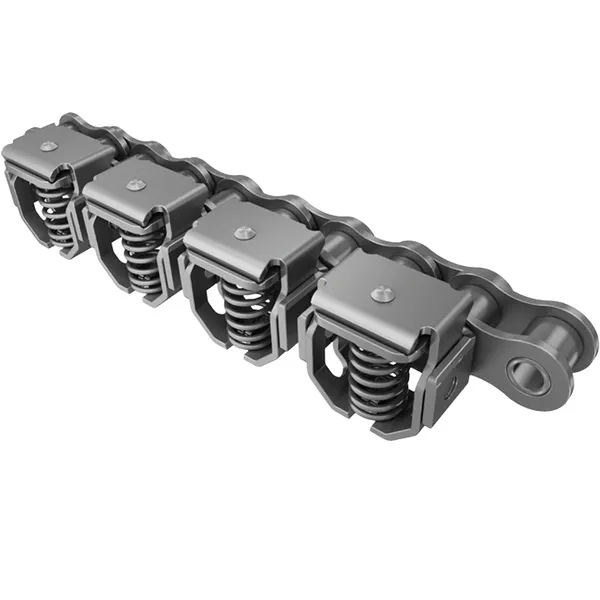
How do you calculate the required length of a conveyor chain?
Calculating the required length of a conveyor chain involves considering several factors related to the conveyor system and the specific application. Here’s a step-by-step guide:
- Determine the Conveyor Length: Measure the total length of the conveyor path, including any horizontal, inclined, or vertical sections.
- Account for Sprocket Centers: Identify the locations of the sprockets or drive units along the conveyor path. Measure the distance between each pair of adjacent sprockets.
- Calculate the Number of Links: Divide the total conveyor length by the pitch of the chain to determine the number of links required. The pitch is the distance between the center of two consecutive pins on the chain.
- Consider Tension Adjustment: Take into account any tension adjustment requirements based on the specific application. This may include allowances for tensioning devices or tension variations due to load fluctuations.
- Include End Connections: Consider the length of the end connections, such as master links or connecting pins, which are used to join the ends of the chain. Include their dimensions in the total chain length calculation.
- Add Safety Factors: Incorporate appropriate safety factors to ensure adequate chain length for proper tensioning and to accommodate any potential stretching or wear over time.
It’s important to note that the calculation of the required chain length is an estimation based on various factors and may require adjustments during the installation and tensioning process. Consulting the conveyor manufacturer’s guidelines or working with an experienced engineer can provide more precise calculations based on the specific conveyor system and application requirements.


editor by CX 2023-08-30