Descripción del Producto
Welcome to visit Xihu (West Lake) Dis. CHINAMFG mechanical (chain )factory .
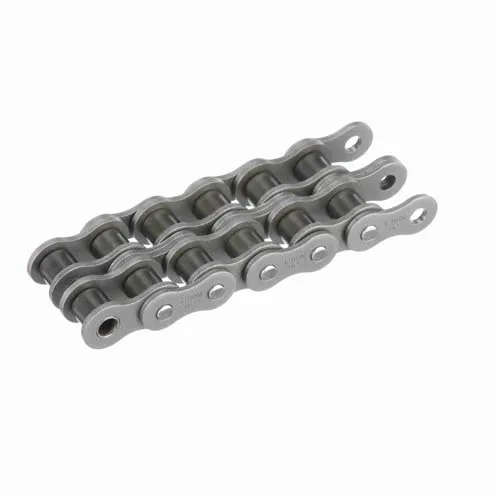
We produce a wide range power transmission products. Such as roller chains and leaf chains, conveyor chains, drive chains, agricultural chains .
Also we can supply all kinds of industrial sprockets, chain couplings.
Established in year of 2000. With over 20 years history of specializing in the roller chains producing. With stable and good quality. We now have gained customer’s high praise from at home and abroad.
Our manufacturing plant and workshop area is over 10000 square CHINAMFG and with staff is about 70. We are the middle scale factory in China.
Our chain quality can match with GB,DIN,ASA,ANSI,JIS standard.and have gain the ISO9001 Certificate.
Till now, except for the domestic market, we have exported many chains to USA, CANADA,COLOMBIA,BRAZIL,ARGENTINA,POLAND, ITALY,SPAIN AND SO ON.
1.Standards: ISO /DIN /ANSI/GB/JIS/ASA
2. Model: 06C-35-240, 04B-48B Simplex, Duplex, Triplex AND ACCORDING TO CUSTOMER’S REQUIREMENTS
3. Materials: Carbon steel 40Mn,# 10 FOR THE ROLLER AND BUSH,40CR FOR THE PIN
4. All spare parts of chains are heat treated(quenching and tempering) and controlled in a reasonable tolerance range and suitable for the industry standard.
5. Tensile strength: more higher than the standard about 15%
6. Certificate of Quality: ISO 9001
7. Good lubrication with excellent grease.
8. Color: Self color and shot peen.
9.Can match with sprockets freely
| we are CHINAMFG chain factory from CHINA. |
| We make roller chains over 20 years. main ASA chains: — main DIN chains:06b-08b-10b-12b-16b-20b-24b-32b main motorcycle chains: H 520 520H 530 Our quality: middle level and good and stable. Follow up XIHU (WEST LAKE) DIS.HUA standard We also exported many industrial sprockets together with our chains. We mainly exported chains to South America AND Europe. |
/* 22 de enero de 2571 19:08:37 */!function(){function s(e,r){var a,o={};try{e&&e.split(“”,).forEach(function(e,t){e&&(a=e.match(/(.*?):(.*)$/))&&1
| Standard or Nonstandard: | Standard |
|---|---|
| Solicitud: | Textile Machinery, Garment Machinery, Conveyer Equipment, Packaging Machinery, Electric Cars, Motorcycle, Food Machinery, Marine, Mining Equipment, Agricultural Machinery, Car |
| Tratamiento de superficie: | Pulido |
| Estructura: | Cadena de rodillos |
| Material: | Carbon Steel |
| Tipo: | Short Pitch Chain |
| Muestras: | US$ 1/Meter 1 metro (pedido mínimo) | |
|---|
| Personalización: | Disponible | Solicitud personalizada |
|---|
What are the considerations for selecting a low-maintenance conveyor chain?
When selecting a low-maintenance conveyor chain, several considerations should be taken into account:
1. Selección de materiales:
– Choose a conveyor chain made from materials that are resistant to wear, corrosion, and contamination. Stainless steel, plastic, or self-lubricating chains are commonly used for their durability and low maintenance requirements.
2. Lubrication-Free Design:
– Look for conveyor chains that have a self-lubricating design or are pre-lubricated with materials that reduce friction and eliminate the need for additional lubrication. This helps to minimize maintenance tasks associated with regular lubrication.
3. Sealed Construction:
– Consider conveyor chains with sealed construction to prevent the ingress of dirt, debris, and moisture. Sealed chains require less frequent cleaning and maintenance, making them ideal for low-maintenance applications.
4. Easy Cleaning:
– Opt for conveyor chains that are designed for easy cleaning. Smooth surfaces, open structures, and accessible components allow for quick and efficient cleaning, reducing maintenance time and effort.
5. Resistance to Contamination:
– Select a conveyor chain that is resistant to contamination. This includes resistance to chemicals, oils, greases, and other substances commonly found in the application environment. Chains that can withstand contamination require less frequent cleaning and maintenance.
6. Wear Monitoring:
– Look for conveyor chains that have wear monitoring features, such as wear indicators or sensors. These features help to identify chain wear and provide timely maintenance alerts, allowing for proactive replacement or adjustment.
7. Manufacturer Support:
– Consider the support provided by the chain manufacturer. A reputable manufacturer will offer guidance on maintenance intervals, replacement schedules, and provide technical assistance to ensure the proper functioning of the chain.
By considering these factors, you can select a low-maintenance conveyor chain that minimizes the need for frequent inspections, lubrication, cleaning, and replacement, resulting in reduced maintenance efforts and costs.
¿Cuáles son las ventajas de utilizar un sistema de cadena transportadora modular?
Un sistema modular de cadena transportadora ofrece varias ventajas en términos de flexibilidad, eficiencia y facilidad de mantenimiento. Estas son algunas de las principales ventajas:
1. Versatilidad: Las cadenas transportadoras modulares están diseñadas con módulos entrelazados que se conectan y desconectan fácilmente. Esto permite una configuración flexible del sistema de transporte según los requisitos de diseño, las necesidades de producción o las limitaciones de espacio. Los módulos se pueden añadir, quitar o reposicionar para adaptarse a los cambios en los procesos de producción o a las variaciones del producto.
2. Personalización: El diseño modular del sistema de cadena transportadora permite personalizarlo para satisfacer los requisitos específicos de cada aplicación. Se encuentran disponibles diferentes tipos de módulos, incluyendo tramos rectos, curvas, inclinaciones, descensos, fusiones y desviadores. Accesorios como guías laterales, grapas o sistemas de sujeción de productos se pueden integrar fácilmente al sistema.
3. Instalación y modificación rápidas: Las cadenas transportadoras modulares están diseñadas para una fácil instalación y modificación. Gracias a sus conexiones de encaje a presión, los módulos se pueden ensamblar o desensamblar rápidamente, lo que reduce el tiempo de inactividad durante la configuración o reconfiguración del sistema. Esta característica también facilita el mantenimiento, las reparaciones y las futuras ampliaciones.
4. Mayor eficiencia: La modularidad del sistema de cadena transportadora permite una manipulación eficiente de los materiales y un flujo de trabajo optimizado. La transferencia fluida entre módulos minimiza los atascos o desalineaciones de los productos, garantizando un flujo continuo y constante de materiales. La posibilidad de incorporar curvas o pendientes en el sistema permite un uso eficiente del espacio y facilita el movimiento de los productos a través de diferentes alturas.
5. Fácil mantenimiento: Los sistemas modulares de cadenas transportadoras están diseñados para facilitar el mantenimiento. Los módulos individuales se pueden acceder y reemplazar fácilmente sin necesidad de desmontar todo el sistema. Esto reduce el tiempo y los costos de mantenimiento. Además, la estructura abierta de los módulos permite una limpieza, eliminación de residuos e inspección sencillas.
6. Durabilidad y fiabilidad: Las cadenas transportadoras modulares suelen estar fabricadas con materiales de alta calidad, como plástico o acero inoxidable, lo que garantiza su durabilidad y un rendimiento prolongado. Son resistentes al desgaste, la corrosión y los daños químicos, lo que las hace idóneas para diversos entornos industriales. Su diseño entrelazado proporciona estabilidad y evita el deslizamiento de la cadena durante el funcionamiento.
7. Características de seguridad: Los sistemas modulares de cadenas transportadoras pueden incorporar características de seguridad como botones de parada de emergencia, protecciones o sensores para detectar bloqueos o cargas excesivas. Estas características contribuyen a mantener un entorno de trabajo seguro para los operarios y protegen la integridad de los productos transportados.
En resumen, un sistema modular de cadenas transportadoras ofrece versatilidad, personalización, eficiencia y facilidad de mantenimiento. Es una solución fiable para la manipulación de materiales en sectores como la fabricación, el embalaje, la distribución y la logística.
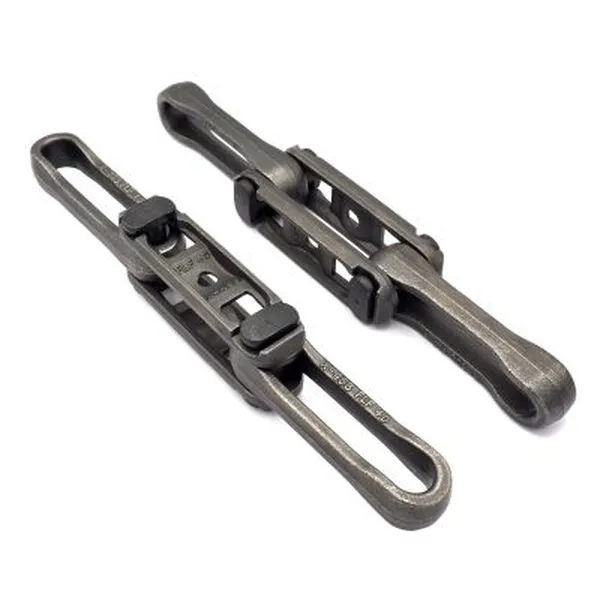
How can you prevent conveyor chain failures?
Preventing conveyor chain failures is crucial for maintaining the efficiency and reliability of a conveyor system. Here are some key preventive measures:
- Regular Inspection and Maintenance: Implement a routine inspection and maintenance schedule to identify potential issues before they escalate. Regularly inspect the chain for signs of wear, such as elongation, link plate wear, and sprocket tooth wear. Address any visible damage or abnormalities promptly.
- Proper Lubrication: Apply the appropriate lubricant to the conveyor chain to minimize friction and reduce wear. Lubrication helps to prevent metal-to-metal contact, corrosion, and excessive heat generation. Follow the manufacturer’s recommendations for lubrication frequency and use lubricants suitable for the operating conditions.
- Tensioning: Maintain proper tension in the conveyor chain to ensure optimal performance and reduce the risk of failures. Both over-tensioning and under-tensioning can lead to premature wear or chain damage. Follow the manufacturer’s guidelines for tensioning and regularly check and adjust the tension as needed.
- Sprocket Maintenance: Inspect and maintain the sprockets that engage with the conveyor chain. Check for any signs of wear or damage on the sprocket teeth and replace them if necessary. Ensure proper alignment between the chain and sprockets to prevent excessive wear and chain skipping.
- Environmental Considerations: Take into account the environmental factors that can affect the conveyor chain’s performance. Protect the chain from exposure to moisture, corrosive substances, excessive heat, or abrasive materials. Implement appropriate safeguards, such as covers or enclosures, to minimize environmental impact on the chain.
- Proper Loading: Ensure that the conveyor chain is not subjected to excessive loads beyond its capacity. Overloading can lead to accelerated wear and chain failures. Adhere to the recommended load limits and guidelines provided by the chain manufacturer.
- Operator Training: Provide proper training to operators and maintenance personnel on the correct operation, maintenance, and safety procedures related to the conveyor chain system. Educate them on identifying potential issues, performing routine inspections, and reporting any abnormalities.
By implementing these preventive measures, you can significantly reduce the risk of conveyor chain failures and extend the lifespan of the chain. Regular monitoring and maintenance are essential to ensure the system operates smoothly and safely.


editor by CX 2024-04-13