Description du produit
Description du produit
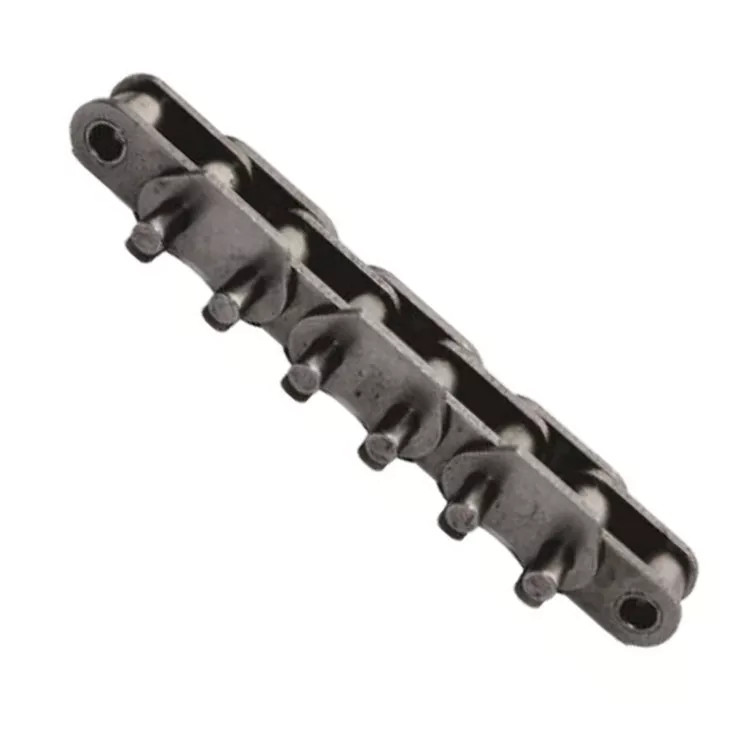
Agricultural chain,
1. Made of Alloy steel 40Mn
2. Type as CA type, A type, C type, S type, A type and Rice harvester chains
Agricultural Chain:
Our factory has manufactured agricultural chains for more than 10 years. All kinds of Agricultural chains, such as Walking tractor chains, Rice Harvest chains, Combine chains, A type steel agricultural chains, CA type steel agricultura chains, C type, A type chains, and with attachments. Such as CA550, CA557, S52, S32…
Attribut du produit
Usage | Transportation Chain |
Matériel | Acier inoxydable |
Traitement de surface | Galvanized / nickel plated / stainless steel / carbon steel |
Feature | Résistant à la chaleur |
Chain Size | Customized |
Structure | Combined Chain |
Color | Solid Color |
Chain Model | Conveyor Chains |
Chain Color | Customized |
Structure (for Chain) | Chaîne à rouleaux |
| Port | ZheJiang |
| Paiement | Lettre de crédit, virement bancaire, remise documentaire, Western Union |
| Emballer | Chaîne, sac en plastique, boîte couleur, caisse en bois. ou OEM |
Detailed Photos
Paramètres du produit
Nos avantages
Avantages de l'entreprise :
Licence d'import-export propre, marque TV enregistrée avec succès dans de nombreux pays, réseau de vente couvrant toute la Chine, produits exportés vers 65 pays sur 5 continents.
Adhésion:
1. Membre de l'Association chinoise de l'industrie des composants de machines générales.
2. Membre de l'Association chinoise de transmission par chaîne.
3. Membre de l'Association chinoise de normalisation des chaînes de valeur.
4. Membre de l'Association chinoise des fabricants de machines agricoles.
Grâce à notre personnel hautement qualifié, nos équipements performants et modernes, notre réseau de distribution étendu et nos systèmes d'assurance qualité rigoureux, vous avez l'assurance que notre chaîne de distribution de qualité supérieure répondra à toutes vos exigences et aux normes de qualité les plus strictes.
POURQUOI NOUS CHOISIR
Gamme complète de produits Nous produisons et fournissons une large gamme de transmissions de puissance
produits incluant chaînes de transmission, chaînes à maillons plats, chaînes de convoyeur, chaînes agricoles, pignons et
Accouplements. Cette expérience d'achat unique vous permettra de réduire considérablement vos coûts de recherche.
Nous vous garantissons de trouver ce que vous cherchez en un seul clic.
Produits Value Choice Nos produits offrent le meilleur rapport qualité-prix, et vous obtenez ce que vous voulez
vous souhaitez respecter votre budget
Vendeurs et ingénieurs expérimentés Nous avons 15 vendeurs expérimentés et 5 ingénieurs ;
Notre équipe est à votre disposition à tout moment lorsque vous avez besoin d'aide. Elle est parfaitement formée aux normes de l'industrie.
know-now répondra toujours à vos demandes dans les 24 heures.
100% Taux de fidélisation client Nos clients réguliers à l'étranger reviennent non seulement pour notre
Des produits de qualité supérieure, mais surtout des services exceptionnels que nous offrons depuis des années.
FAQ
Q1 : Quel est votre délai de livraison moyen ?
R : Cela varie. Notre délai de livraison standard est de 1 à 2 mois. Nous proposons également une livraison express pour les commandes urgentes. Pour plus d'informations, veuillez contacter votre conseiller commercial.
Q2 : Votre prix est-il meilleur que celui de vos concurrents pour une qualité équivalente ?
R : Absolument. Nous proposons les prix les plus compétitifs du secteur de la transmission de puissance. En cas d'écart de prix, nous nous alignerons volontiers sur le nôtre.
Q3 : Pouvez-vous fabriquer des chaînes selon mes dessins CAO ?
R : Oui. Outre les chaînes standard, nous fabriquons des produits non standard et sur mesure afin de répondre à des exigences techniques spécifiques. En réalité, une part importante de notre capacité de production est consacrée à la fabrication de produits non standard.
Q4 : Pouvons-nous inspecter les marchandises avant l'expédition ?
R : Oui. Vous, votre représentant ou tout organisme d'inspection tiers désigné êtes autorisé à accéder à nos installations et à effectuer l'inspection.
Q5 : Quel type de mode de paiement est acceptable pour votre usine ?
R : Nous sommes flexibles. Nous acceptons les virements bancaires (T/T), les lettres de crédit (L/C) ou tout autre mode de paiement en ligne, pourvu qu'il vous convienne.
Q6 : Que faire si j'ai d'autres questions ?
A: En cas de doute, n'hésitez pas à consulter notre conseiller commercial à tout moment – il vous aidera à votre entière satisfaction.
| Frais d'expédition : Frais de transport estimés par unité. | To be negotiated |
|---|
| Taper: | Chaîne agricole |
|---|---|
| Usage: | Grain Threshing, Cleaning and Drying |
| Matériel: | Carbon Steel |
| Exemples : | US$ 100/Meter 1 mètre (commande minimale) | Commander un échantillon |
|---|
| Personnalisation : | Disponible | Demande personnalisée |
|---|
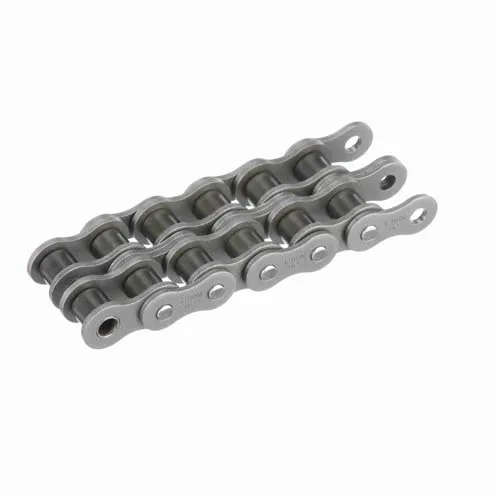
What are the considerations for selecting a low-maintenance conveyor chain?
When selecting a low-maintenance conveyor chain, several considerations should be taken into account:
1. Sélection des matériaux :
– Choose a conveyor chain made from materials that are resistant to wear, corrosion, and contamination. Stainless steel, plastic, or self-lubricating chains are commonly used for their durability and low maintenance requirements.
2. Lubrication-Free Design:
– Look for conveyor chains that have a self-lubricating design or are pre-lubricated with materials that reduce friction and eliminate the need for additional lubrication. This helps to minimize maintenance tasks associated with regular lubrication.
3. Sealed Construction:
– Consider conveyor chains with sealed construction to prevent the ingress of dirt, debris, and moisture. Sealed chains require less frequent cleaning and maintenance, making them ideal for low-maintenance applications.
4. Easy Cleaning:
– Opt for conveyor chains that are designed for easy cleaning. Smooth surfaces, open structures, and accessible components allow for quick and efficient cleaning, reducing maintenance time and effort.
5. Resistance to Contamination:
– Select a conveyor chain that is resistant to contamination. This includes resistance to chemicals, oils, greases, and other substances commonly found in the application environment. Chains that can withstand contamination require less frequent cleaning and maintenance.
6. Wear Monitoring:
– Look for conveyor chains that have wear monitoring features, such as wear indicators or sensors. These features help to identify chain wear and provide timely maintenance alerts, allowing for proactive replacement or adjustment.
7. Manufacturer Support:
– Consider the support provided by the chain manufacturer. A reputable manufacturer will offer guidance on maintenance intervals, replacement schedules, and provide technical assistance to ensure the proper functioning of the chain.
By considering these factors, you can select a low-maintenance conveyor chain that minimizes the need for frequent inspections, lubrication, cleaning, and replacement, resulting in reduced maintenance efforts and costs.
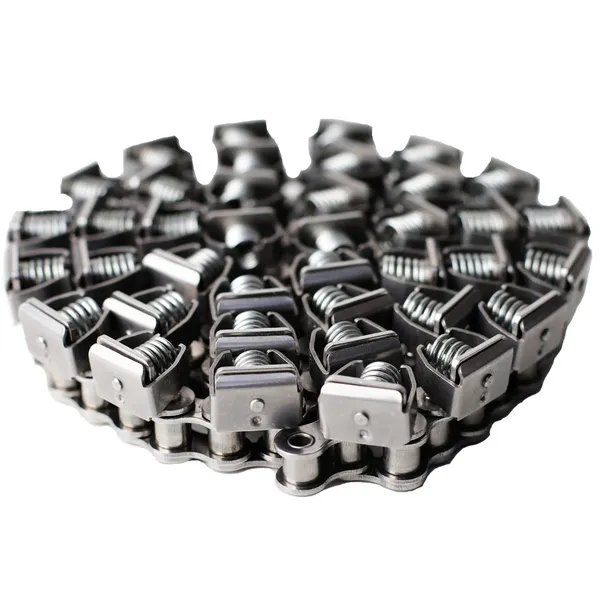
How does a conveyor chain handle different types of materials?
A conveyor chain is designed to handle a wide variety of materials in diverse industrial applications. It is capable of efficiently transporting different types of materials, including:
1. Bulk Materials: Conveyor chains are commonly used to handle bulk materials such as grains, coal, ores, aggregates, and powders. The design of the chain, including the spacing and shape of the links, helps prevent material spillage and ensures smooth and consistent flow.
2. Packaged Goods: Conveyor chains are also used for conveying packaged goods such as boxes, cartons, crates, and pallets. They provide a stable and reliable method of transporting these items along the production line, reducing manual handling and increasing productivity.
3. Small Parts: Conveyor chains with specialized attachments or small-pitch configurations are suitable for handling small parts or components. These chains ensure precise positioning and gentle transport of delicate or intricate items.
4. Heavy-Duty Loads: Industrial conveyor chains are capable of handling heavy-duty loads, such as automotive parts, machinery components, and large equipment. They are engineered to withstand the weight and stress of these objects, providing reliable and efficient material handling in demanding environments.
5. Food and Beverage Products: Conveyor chains used in the food and beverage industry are designed to meet strict hygiene and safety standards. They are constructed from materials that are resistant to corrosion, easy to clean, and compliant with food-grade regulations. These chains ensure the safe and contamination-free handling of food products.
6. Hazardous Materials: Conveyor chains can be used to safely transport hazardous materials, such as chemicals or waste products. Specialized chains with additional safety features, such as sealed housings or containment systems, are utilized to minimize the risk of spills or leaks.
Conveyor chains can be customized with different chain configurations, attachments, and accessories to accommodate specific material characteristics and handling requirements. The selection of the appropriate chain type, material, and design parameters ensures optimal performance and efficient material handling for a wide range of materials.
Qu'est-ce qu'une chaîne de convoyage et comment fonctionne-t-elle ?
Une chaîne de convoyeur est un type de chaîne mécanique conçue spécifiquement pour les systèmes de convoyage. Elle est composée d'une série de maillons interconnectés formant une boucle continue. Ces maillons sont généralement en métal et assemblés par des axes ou d'autres éléments de connexion.
Les chaînes de convoyage fonctionnent en transmettant la puissance et le mouvement du mécanisme d'entraînement, tel qu'un moteur ou un pignon, au système de convoyage afin de déplacer des matériaux ou des produits le long d'un parcours prédéfini. La chaîne est placée sur un rail ou des rails de guidage et, en se déplaçant, elle transporte la charge qui y est déposée.
Le fonctionnement d'une chaîne de convoyage comprend les étapes suivantes :
- Transmission de puissance :
Le mécanisme d'entraînement transmet la puissance de rotation à la chaîne du convoyeur, généralement par l'intermédiaire d'un moteur et de pignons. Le moteur fournit le couple nécessaire à l'entraînement de la chaîne.
- Traction et mouvement :
Lorsque le mécanisme d'entraînement fait tourner les pignons, les dents de ces derniers s'engrènent avec les maillons de la chaîne du convoyeur. Cette interaction crée une traction, ce qui permet à la chaîne de se déplacer le long du parcours prévu.
- Transport de charges :
La charge à transporter est placée sur la chaîne du convoyeur. Cette charge peut être constituée de produits, de matériaux ou d'autres articles. Le déplacement de la chaîne entraîne la charge le long du système de convoyage, permettant ainsi un transport ou une manutention efficace.
- Soutien et conseils :
La chaîne du convoyeur est supportée et guidée par divers composants, tels que des rails de guidage, des rouleaux ou des bandes d'usure. Ces composants garantissent l'alignement correct et le déplacement régulier de la chaîne le long du système de convoyage.
Les chaînes de convoyage sont couramment utilisées dans des secteurs tels que la fabrication, la logistique, l'emballage et la manutention. Elles constituent une méthode fiable et efficace pour déplacer des produits ou des matériaux de manière contrôlée et automatisée.


editor by CX 2023-08-03