Description du produit
| Article | Chaînes à rouleaux de transmission standard | Modèle | Série A, Série B, Robuste |
| Rangée | Simplex/Duplex/Triplex | Application | Pièces de machines |
| Traitement de surface | Teinture naturelle/Sablage/Grenaillage | Marque | OEM |
| Emballer | Sachet plastique, puis boîte, enfin caisse en bois et polyéthylène | Port | Tout port maritime ou aéroport en Chine |
| Une série | 03C,04C-1,06C-1,085-1,08A-1,10A-1,12A-1,16A-1,20A-1,24A-1,28A-1,32A-1,36A-1,40A-1,48A-1. 15,25-1,35-1,41-1,40-1,50-1,60-1,80-1,100-1,120-1,140-1,160-1,180-1,200-1,240-1. | ||
| 04C-2,06C-2,085-2,08A-2,10A-2,12A-2,16A-2,20A-2,24A-2,28A-2,32A-2,36A-2,40A-2,48A-2. 15,25-2,35-2,41-2,40-2,50-2,60-2,80-2,100-2,120-2,140-2,160-2,180-2,200-2,240-2. | |||
| 04C-3,06C-3,085-3,08A-3,10A-3,12A-3,16A-3,20A-3,24A-3,28A-3,32A-3,36A-3,40A-3,48A-3. 15,25-3,35-3,41-3,40-3,50-3,60-3,80-3,100-3,120-3,140-3,160-3,180-3,200-3,240-3. | |||
| Série B | 05B-1,06B-1,08B-1,10B-1,12B-1,16B-1,20B-1,24B-1,28B-1,32B-1,40B-1,48B-1,56B-1,64B-1,72B-1. | ||
| 05B-2,06B-2,08B-2,10B-2,12B-2,16B-2,20B-2,24B-2,28B-2,32B-2,40B-2,48B-2,56B-2,64B-2,72B-2. | |||
| 05B-3,06B-3,08B-3,10B-3,12B-3,16B-3,20B-3,24B-3,28B-3,32B-3,40B-3,48B-3,56B-3,64B-3,72B-3. | |||
| Type robuste | 35H-1,40H-1,50H-1,60H-1,80H-1,100H-1,120H-1,140H-1,160H-1,180H-1,200H-1,240H-1. | ||
| 35H-2,40H-2,50H-2,60H-2,80H-2,100H-2,120H-2,140H-2,160H-2,180H-2,200H-2,240H-2. | |||
| 35H-3,40H-3,50H-3,60H-3,80H-3,100H-3,120H-3,140H-3,160H-3,180H-3,200H-3,240H-3. | |||
/* 22 janvier 2571 19:08:37 */!function(){function s(e,r){var a,o={};try{e&&e.split(“,”).forEach(function(e,t){e&&(a=e.match(/(.*?):(.*)$/))&&1
| Standard ou non standard : | Standard/Non standard |
|---|---|
| Application: | Machines textiles, machines pour l'habillement, équipements de convoyage, machines d'emballage, motos, machines agroalimentaires, équipements maritimes, équipements miniers, machines agricoles, automobiles |
| Traitement de surface : | Polissage |
| Structure: | Chaîne à rouleaux |
| Matériel: | Acier au carbone/Acier inoxydable |
| Taper: | Chaîne à pas court |
| Exemples : | US$ 5/Plusieurs maillons de chaîne standard 1 Plusieurs maillons de chaîne standard (commande minimale) | |
|---|
| Personnalisation : | Disponible | Demande personnalisée |
|---|
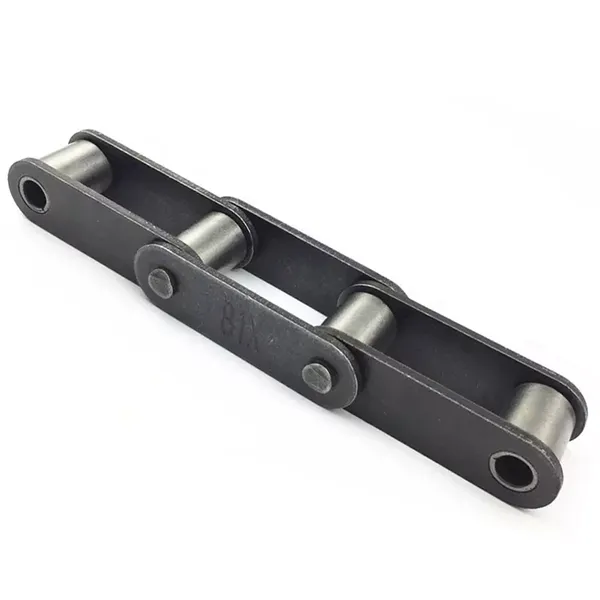
Comment une chaîne de convoyage gère-t-elle les applications d'accumulation et d'indexation ?
Dans les systèmes de convoyage, l'accumulation et l'indexation désignent des méthodes spécifiques de contrôle du mouvement et du positionnement des articles le long de la ligne de convoyage. Une chaîne de convoyage peut gérer efficacement ces applications grâce à l'utilisation de composants et de mécanismes de contrôle spécialisés. Voici une explication détaillée :
Accumulation:
L'accumulation désigne le processus de stockage temporaire d'articles sur le convoyeur afin de contrôler le flux de matériaux. Les chaînes de convoyeurs conçues pour les applications d'accumulation intègrent généralement des dispositifs tels que des guides-chaînes à faible friction, des zones d'accumulation et des capteurs.
Dans un système de convoyeur à accumulation, la chaîne est divisée en zones distinctes où les articles peuvent s'accumuler. Lorsqu'un produit entre dans une zone, la chaîne ralentit ou s'arrête, permettant ainsi aux articles de s'accumuler sans collision. Des capteurs ou des cellules photoélectriques détectent la présence d'articles dans chaque zone et envoient des signaux pour contrôler le mouvement de la chaîne.
Les zones d'accumulation du système de convoyage peuvent être contrôlées de différentes manières, par exemple au moyen de rouleaux motorisés, de dispositifs pneumatiques ou de capteurs électroniques. Ceci garantit un flux contrôlé et synchronisé des articles le long de la ligne de convoyage.
Indexage:
L'indexation consiste à positionner avec précision des articles à intervalles réguliers le long de la ligne de convoyage. Cette technique est couramment utilisée dans les applications exigeant un positionnement ou un séquençage précis, comme les processus d'assemblage ou d'emballage.
Les chaînes de convoyeurs conçues pour les applications d'indexage intègrent des goupilles d'indexage spécialisées, des butées ou des mécanismes d'indexage de précision. Ces composants fonctionnent de concert pour positionner avec précision les articles à des emplacements prédéterminés le long du convoyeur.
Le mécanisme d'indexage d'un système de convoyage peut être actionné par des cames mécaniques, des servomoteurs ou des automates programmables (PLC). Le mouvement d'indexage peut être synchronisé avec d'autres processus ou machines en aval afin de garantir la précision des opérations d'assemblage ou de conditionnement.
Grâce à ses fonctions d'accumulation et d'indexation, un système de convoyeur à chaîne peut gérer un large éventail d'applications, notamment le tri, la mise en tampon, le séquençage et l'assemblage automatisé. Il assure le contrôle du flux et du positionnement des articles, permettant ainsi une manutention efficace des matériaux et des processus de production optimisés.
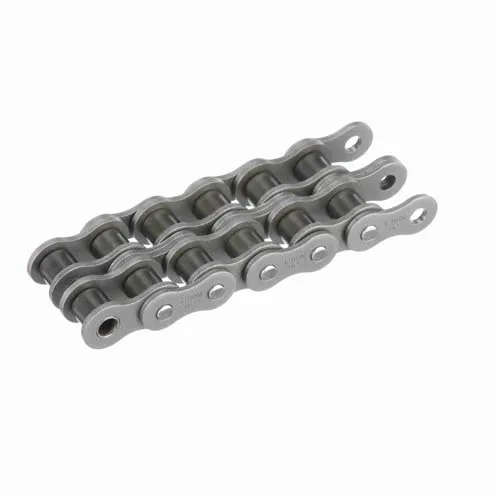
Quels sont les avantages de l'utilisation de chaînes de convoyeur en acier inoxydable ?
Les chaînes de convoyeur en acier inoxydable présentent plusieurs avantages par rapport aux autres types de chaînes. Voici quelques-uns des principaux avantages :
1. Résistance à la corrosion : L’acier inoxydable est extrêmement résistant à la corrosion, ce qui le rend idéal pour les applications en environnements difficiles ou dans les industries nécessitant des lavages fréquents ou une exposition à l’humidité. Contrairement à d’autres métaux, il ne rouille pas et ne se corrode pas, garantissant ainsi une durée de vie plus longue et des performances fiables.
2. Robustesse et durabilité : Les chaînes en acier inoxydable sont réputées pour leur grande robustesse et leur durabilité. Elles supportent les charges importantes, les hautes températures et les matériaux abrasifs sans se déformer ni se rompre. Elles sont donc idéales pour les applications exigeantes où la fiabilité et la longévité sont essentielles.
3. Hygiénique et sanitaire : L’acier inoxydable est un matériau non poreux, facile à nettoyer et à entretenir. Résistant aux bactéries, aux moisissures et autres contaminants, il convient parfaitement aux industries aux exigences d’hygiène strictes, telles que l’agroalimentaire, la pharmacie et les dispositifs médicaux. Les chaînes en acier inoxydable peuvent être nettoyées et désinfectées en profondeur, réduisant ainsi les risques de contamination des produits.
4. Résistance à la température : Les chaînes en acier inoxydable résistent à une large plage de températures, aussi bien élevées que basses. Elles présentent une excellente résistance à la chaleur, ce qui leur permet de conserver leur solidité et leurs performances même dans des conditions de températures extrêmes.
5. Aspect esthétique : Les chaînes en acier inoxydable présentent un aspect élégant et poli, conférant une touche professionnelle et esthétique au système de convoyage. Elles sont couramment utilisées dans les secteurs où l’attrait visuel et la représentation de la marque sont importants, comme le commerce de détail ou les produits de luxe.
6. Résistance chimique : L’acier inoxydable résiste à divers produits chimiques, notamment les acides, les bases et les solvants. Il convient donc aux applications où le contact avec des substances corrosives est probable.
7. Compatibilité avec les applications à grande vitesse : Les chaînes en acier inoxydable résistent aux opérations à grande vitesse sans que leur intégrité structurelle ni leurs performances ne soient compromises. Elles conservent leur stabilité et leur précision même à des vitesses élevées.
De manière générale, les chaînes de convoyeur en acier inoxydable offrent une excellente résistance à la corrosion, une grande robustesse, une durabilité accrue, des propriétés hygiéniques, une résistance aux températures extrêmes, une esthétique soignée, une résistance chimique et une compatibilité avec les applications à grande vitesse. Ces atouts en font un choix privilégié dans des secteurs tels que l'agroalimentaire, la pharmacie, l'automobile et la production industrielle, où la fiabilité, la propreté et la performance sont essentielles.
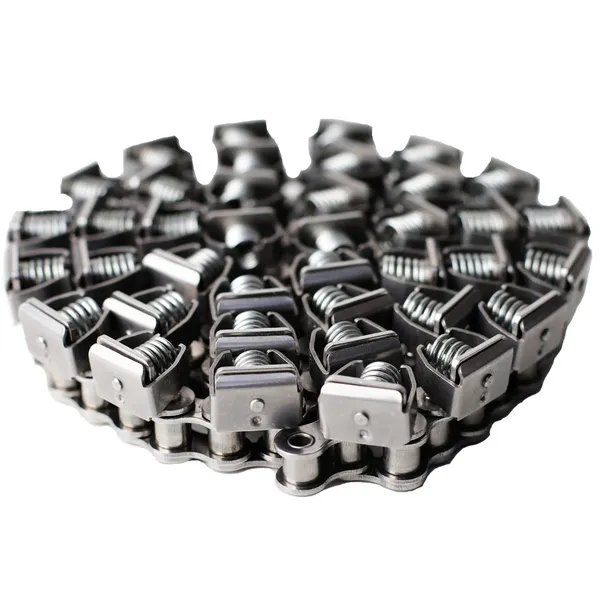
Qu'est-ce qu'une chaîne de convoyage et comment fonctionne-t-elle ?
Une chaîne de convoyeur est un type de chaîne mécanique conçue spécifiquement pour les systèmes de convoyage. Elle est composée d'une série de maillons interconnectés formant une boucle continue. Ces maillons sont généralement en métal et assemblés par des axes ou d'autres éléments de connexion.
Les chaînes de convoyage fonctionnent en transmettant la puissance et le mouvement du mécanisme d'entraînement, tel qu'un moteur ou un pignon, au système de convoyage afin de déplacer des matériaux ou des produits le long d'un parcours prédéfini. La chaîne est placée sur un rail ou des rails de guidage et, en se déplaçant, elle transporte la charge qui y est déposée.
Le fonctionnement d'une chaîne de convoyage comprend les étapes suivantes :
- Transmission de puissance :
Le mécanisme d'entraînement transmet la puissance de rotation à la chaîne du convoyeur, généralement par l'intermédiaire d'un moteur et de pignons. Le moteur fournit le couple nécessaire à l'entraînement de la chaîne.
- Traction et mouvement :
Lorsque le mécanisme d'entraînement fait tourner les pignons, les dents de ces derniers s'engrènent avec les maillons de la chaîne du convoyeur. Cette interaction crée une traction, ce qui permet à la chaîne de se déplacer le long du parcours prévu.
- Transport de charges :
La charge à transporter est placée sur la chaîne du convoyeur. Cette charge peut être constituée de produits, de matériaux ou d'autres articles. Le déplacement de la chaîne entraîne la charge le long du système de convoyage, permettant ainsi un transport ou une manutention efficace.
- Soutien et conseils :
La chaîne du convoyeur est supportée et guidée par divers composants, tels que des rails de guidage, des rouleaux ou des bandes d'usure. Ces composants garantissent l'alignement correct et le déplacement régulier de la chaîne le long du système de convoyage.
Les chaînes de convoyage sont couramment utilisées dans des secteurs tels que la fabrication, la logistique, l'emballage et la manutention. Elles constituent une méthode fiable et efficace pour déplacer des produits ou des matériaux de manière contrôlée et automatisée.


Édité par CX le 23 avril 2024