Descrizione del prodotto
| Item | Standard Transmission Roller Chains | Model | Series A, Series B, Heavy Duty |
| Row | Simplex/Duplex/Triplex | Applicazione | Machinery Parts |
| Surface Teatment | Self-color/Sand-blasted/Shot-peening | Brand | OEM |
| Pacchetto | Poly bag, then box, finally poly-wooden case | Port | Any sea port or airport in China |
| A Series | 03C,04C-1,06C-1,085-1,08A-1,10A-1,12A-1,16A-1,20A-1,24A-1,28A-1,32A-1,36A-1,40A-1,48A-1. 15,25-1,35-1,41-1,40-1,50-1,60-1,80-1,100-1,120-1,140-1,160-1,180-1,200-1,240-1. | ||
| 04C-2,06C-2,085-2,08A-2,10A-2,12A-2,16A-2,20A-2,24A-2,28A-2,32A-2,36A-2,40A-2,48A-2. 15,25-2,35-2,41-2,40-2,50-2,60-2,80-2,100-2,120-2,140-2,160-2,180-2,200-2,240-2. | |||
| 04C-3,06C-3,085-3,08A-3,10A-3,12A-3,16A-3,20A-3,24A-3,28A-3,32A-3,36A-3,40A-3,48A-3. 15,25-3,35-3,41-3,40-3,50-3,60-3,80-3,100-3,120-3,140-3,160-3,180-3,200-3,240-3. | |||
| B Series | 05B-1,06B-1,08B-1,10B-1,12B-1,16B-1,20B-1,24B-1,28B-1,32B-1,40B-1,48B-1,56B-1,64B-1,72B-1. | ||
| 05B-2,06B-2,08B-2,10B-2,12B-2,16B-2,20B-2,24B-2,28B-2,32B-2,40B-2,48B-2,56B-2,64B-2,72B-2. | |||
| 05B-3,06B-3,08B-3,10B-3,12B-3,16B-3,20B-3,24B-3,28B-3,32B-3,40B-3,48B-3,56B-3,64B-3,72B-3. | |||
| Heavy Duty Type | 35H-1,40H-1,50H-1,60H-1,80H-1,100H-1,120H-1,140H-1,160H-1,180H-1,200H-1,240H-1. | ||
| 35H-2,40H-2,50H-2,60H-2,80H-2,100H-2,120H-2,140H-2,160H-2,180H-2,200H-2,240H-2. | |||
| 35H-3,40H-3,50H-3,60H-3,80H-3,100H-3,120H-3,140H-3,160H-3,180H-3,200H-3,240H-3. | |||
/* 22 gennaio 2571 19:08:37 */!function(){function s(e,r){var a,o={};try{e&&e.split(“,”).forEach(function(e,t){e&&(a=e.match(/(.*?):(.*)$/))&&1
| Standard or Nonstandard: | Standard/Nonstandard |
|---|---|
| Applicazione: | Textile Machinery, Garment Machinery, Conveyer Equipment, Packaging Machinery, Motorcycle, Food Machinery, Marine, Mining Equipment, Agricultural Machinery, Car |
| Trattamento superficiale: | Lucidatura |
| Struttura: | Catena a rulli |
| Materiale: | Carbon Steel/Stainless Steel |
| Tipo: | Short Pitch Chain |
| Esempi: | US$ 5/Several links of standard chain 1 Several links of standard chain(Min.Order) | |
|---|
| Personalizzazione: | Disponibile | Richiesta personalizzata |
|---|
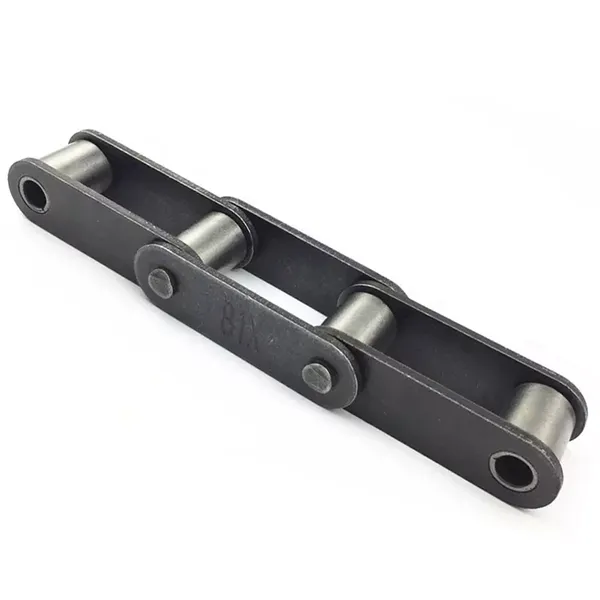
How does a conveyor chain handle accumulation and indexing applications?
In conveyor systems, accumulation and indexing refer to specific methods of controlling the movement and positioning of items along the conveyor line. A conveyor chain can effectively handle these applications through the use of specialized components and control mechanisms. Here’s a detailed explanation:
Accumulation:
– Accumulation refers to the process of temporarily storing or buffering items on the conveyor to control the flow of materials. Conveyor chains designed for accumulation applications typically incorporate features such as low-friction chain guides, accumulating zones, and sensors.
– In an accumulation conveyor chain system, the chain is divided into discrete zones where items can accumulate. As products enter a zone, the chain slows down or stops, allowing items to accumulate without colliding with each other. Sensors or photoelectric cells detect the presence of items in each zone and provide signals to control the chain movement.
– The accumulation zones in the conveyor chain system can be controlled in different ways, such as through the use of motorized rollers, pneumatic devices, or electronic sensors. This ensures a controlled and synchronized flow of items along the conveyor line.
Indexing:
– Indexing refers to the precise positioning of items at specific intervals along the conveyor line. This is commonly used in applications where accurate positioning or sequencing is required, such as assembly or packaging processes.
– Conveyor chains designed for indexing applications incorporate specialized index pins, stops, or precision indexing drives. These components work together to accurately position items at predetermined locations along the conveyor.
– The indexing mechanism of a conveyor chain system can be driven by mechanical cams, servo motors, or programmable logic controllers (PLCs). The indexing motion can be synchronized with other processes or machines downstream to ensure precise assembly or packaging operations.
– By combining accumulation and indexing capabilities, a conveyor chain system can handle a wide range of applications, including sorting, buffering, sequencing, and automated assembly. It provides control over the flow and positioning of items, allowing for efficient material handling and optimized production processes.

Quali sono i vantaggi dell'utilizzo di catene di trasporto in acciaio inossidabile?
Le catene di trasporto in acciaio inossidabile offrono numerosi vantaggi rispetto ad altri tipi di catene. Ecco alcuni dei principali benefici:
1. Resistenza alla corrosione: l'acciaio inossidabile è altamente resistente alla corrosione, il che lo rende adatto ad applicazioni in ambienti difficili o in settori in cui sono richiesti lavaggi frequenti o l'esposizione all'umidità. Non arrugginisce né si corrode come altri metalli, garantendo una maggiore durata e prestazioni affidabili.
2. Resistenza e durata: le catene in acciaio inossidabile sono note per la loro elevata resistenza e durata. Possono sopportare carichi pesanti, alte temperature e materiali abrasivi senza deformarsi o rompersi. Questo le rende ideali per applicazioni gravose in cui affidabilità e longevità sono fondamentali.
3. Igiene e sanificazione: l'acciaio inossidabile è un materiale non poroso, facile da pulire e da manutenere. È resistente a batteri, muffe e altri contaminanti, il che lo rende adatto a settori con rigorosi requisiti igienici come l'industria alimentare, farmaceutica e dei dispositivi medici. Le catene in acciaio inossidabile possono essere pulite e sanificate a fondo, riducendo il rischio di contaminazione del prodotto.
4. Resistenza alla temperatura: le catene in acciaio inossidabile possono sopportare un'ampia gamma di temperature, sia alte che basse. Presentano un'eccellente resistenza al calore, che consente loro di mantenere la propria forza e le proprie prestazioni anche in condizioni di temperatura estreme.
5. Aspetto estetico: le catene in acciaio inossidabile hanno un aspetto elegante e lucido, che conferisce un tocco professionale ed estetico al sistema di trasporto. Sono comunemente utilizzate in settori in cui l'impatto visivo e la rappresentazione del marchio sono importanti, come la vendita al dettaglio o i beni di lusso.
6. Resistenza chimica: l'acciaio inossidabile è resistente a diverse sostanze chimiche, tra cui acidi, alcali e solventi. Ciò lo rende adatto ad applicazioni in cui è probabile il contatto con sostanze corrosive.
7. Compatibilità con applicazioni ad alta velocità: le catene in acciaio inossidabile possono sopportare operazioni ad alta velocità senza compromettere la loro integrità strutturale o le loro prestazioni. Mantengono la loro stabilità e precisione anche a velocità elevate.
Nel complesso, le catene portacavi in acciaio inossidabile offrono resistenza alla corrosione, robustezza, durata, proprietà igieniche, resistenza alle alte temperature, un aspetto gradevole, resistenza chimica e compatibilità con applicazioni ad alta velocità. Questi vantaggi le rendono la scelta ideale in settori come quello alimentare e delle bevande, farmaceutico, automobilistico e manifatturiero, dove affidabilità, pulizia e prestazioni sono essenziali.

What is a conveyor chain and how does it work?
A conveyor chain is a type of mechanical chain specifically designed for use in conveyor systems. It is composed of a series of interconnected links that form a continuous chain loop. The links are typically made of metal and are joined together through pins or other connecting elements.
Conveyor chains work by transferring power and motion from the driving mechanism, such as a motor or sprocket, to the conveyor system to move materials or products along a predetermined path. The chain is placed on a track or guide rails, and as it moves, it carries the load placed on it.
The operation of a conveyor chain involves the following steps:
- Power transmission:
The driving mechanism transfers rotational power to the conveyor chain, typically through a motor and sprockets. The motor provides the necessary torque to drive the chain.
- Traction and motion:
As the driving mechanism rotates the sprockets, the teeth of the sprockets engage with the links of the conveyor chain. This interaction creates traction, causing the chain to move along the desired path.
- Load carrying:
The load to be transported is placed on the conveyor chain. The load can be in the form of products, materials, or other items. As the chain moves, it carries the load along the conveyor system, allowing for efficient transportation or handling.
- Support and guidance:
The conveyor chain is supported and guided by various components, such as guide rails, rollers, or wear strips. These components ensure the proper alignment and smooth movement of the chain along the conveyor system.
Conveyor chains are commonly used in industries such as manufacturing, logistics, packaging, and material handling. They offer a reliable and efficient method for moving products or materials in a controlled and automated manner.


editor by CX 2024-04-23