제품 설명
SGS Approved Conveyor Chain
A. Our Services
1. Any of your kind inquiry conveyor chain would be replied within 24 hours.
2. 숙련되고 경험이 풍부한 영업 직원이 유창한 영어로 고객님의 모든 문의 사항에 답변해 드립니다.
3. OEM 서비스도 제공하고 있으며, 저희 전문 디자이너가 고객님의 개인적인 아이디어를 현실로 만들어 드립니다.
4. 판매 영역, 디자인 아이디어 및 모든 개인 정보 보호.
5. 주문하신 상품은 항공 우편 또는 선박으로 배송됩니다.
6. 글로벌 시장에서 수년간 쌓아온 제조 및 판촉 경험을 바탕으로, 귀사에 수익과 큰 성공을 가져다 드립니다!
B. Conveyor Chain List
1. Double pitch precision roller chains and attachments for transmission and conveyors
ANSI 2040 ~ 2100,ANSI C2040 ~ C2100, ANSI C2042 ~ C2102,ANSI C2062H ~ C2102H,
Attachment: K1,KK1,M1(SK1),K2,KK2,M2(SK2) and so on
2. Hollow pin chains
40HP ~ 80HP, 08BHP ~ 16BHP, C2040HP ~ C2080HP, C2042HP ~ C2082HP
3. Lumber conveyor chains & attachments
81X, 81XH, 81XHH, 81XHS, 81XF1, 81XHF10
4. Stainless steel roller chains & attachments
35SS ~ 140SS, 06BSS ~ 32BSS
Attachment: WK1, WK2
5. Steel pintle chains
662, 667H, 667X, 667XH, 667XH, 667K, 667J, 88K, 88C
6. Special chains
40-1-1LTR ~ 100-1-1LTR, P19.05F50, P22.225F10, 16A-CGF1, C212AL-CGF1, C216AL-CGF1 and so on
C. Company show & Product process
D. Packaging & Certificate
| 포장 세부 정보: | 체인+비닐봉투+중립 상자+목재 상자+대형 골판지 상자+철제 팔레트 |
| 배송 상세 정보: | six weeks |
E. FAQ
1. 귀사는 제조업체입니까, 아니면 무역 회사입니까?
저희는 1991년에 설립된 공장으로, 국제 서비스를 위한 무역팀을 보유하고 있습니다.
2. 주로 어떤 결제 조건을 사용하시나요?
T/T 30% 선입금 및 70% 서류 제시 후 지급, 웨스턴 유니온, 일람불 신용장
3. 귀사 제품의 리드 타임은 얼마나 됩니까?
주문 확정 후 보통 45일 소요됩니다. 일부 품목은 비수기(5월~7월)에는 30일, 연휴 및 성수기(1월~3월)에는 65일이 소요될 수 있습니다.
4. 혹시 공연 같은 걸 보러 가신 적 있으세요?
저희는 독일 하노버 쇼, 호주 NMW, 중국 캔톤 페어, PTC를 비롯한 여러 전문 가구 전시회에 참가합니다.
5. Do you have any instant chat ?
| 용법: | 변속기 |
|---|---|
| 재료: | 합금/탄소강 |
| 표면 처리: | 오일 블룸 |
| 특징: | 내열성 |
| 체인 크기: | 1/2"*3/32" |
| 구조: | 롤러 체인 |
| 맞춤 설정: | 사용 가능 | 맞춤형 요청 |
|---|

What are the considerations for selecting a corrosion-resistant conveyor chain?
When selecting a corrosion-resistant conveyor chain, several factors need to be considered to ensure the chain’s longevity and performance in corrosive environments. Here are some key considerations:
1. Material Selection: Choose a chain material that is inherently resistant to corrosion. Stainless steel, such as AISI 304 or AISI 316, is a common choice due to its excellent corrosion resistance properties. Other materials like plastic chains or special alloys can also be considered based on the specific application requirements.
2. Coatings and Surface Treatments: In some cases, additional protective coatings or surface treatments can be applied to enhance the chain’s corrosion resistance. These coatings, such as zinc plating, galvanizing, or epoxy coatings, create a barrier between the chain material and corrosive substances, preventing direct contact and reducing the risk of corrosion.
3. Environmental Compatibility: Consider the specific corrosive agents present in the environment where the conveyor chain will be used. Different corrosive substances, such as acids, alkalis, or saltwater, require specific resistance properties. Ensure that the selected chain material and coatings are compatible with the corrosive agents present in the operating environment.
4. Maintenance and Lubrication: Proper maintenance and lubrication play a crucial role in preventing corrosion and extending the life of a conveyor chain. Regular cleaning, inspection, and application of appropriate lubricants can help remove corrosive contaminants and protect the chain surface from degradation.
5. Testing and Certification: Consider chains that have undergone testing and certification for corrosion resistance in relevant industry standards. Look for certifications such as ISO 9227 (salt spray test) or ASTM B117 (corrosion resistance test) to ensure the chain’s performance in corrosive environments.
By carefully considering these factors and consulting with conveyor chain manufacturers or corrosion-resistant experts, you can select a chain that is well-suited for your specific corrosive environment, minimizing the risk of corrosion-related issues and ensuring optimal performance and longevity.
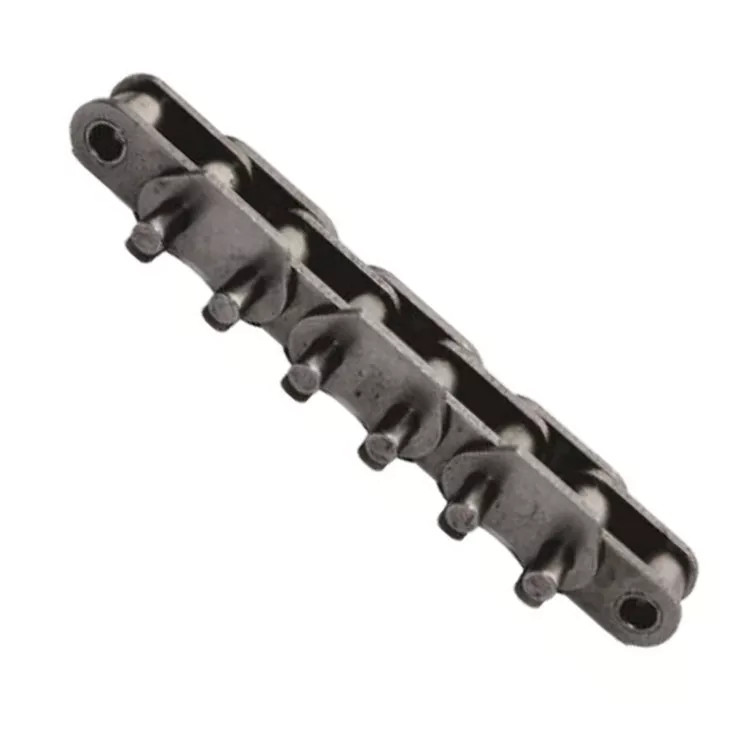
How does a conveyor chain handle different types of materials?
A conveyor chain is designed to handle a wide variety of materials in diverse industrial applications. It is capable of efficiently transporting different types of materials, including:
1. Bulk Materials: Conveyor chains are commonly used to handle bulk materials such as grains, coal, ores, aggregates, and powders. The design of the chain, including the spacing and shape of the links, helps prevent material spillage and ensures smooth and consistent flow.
2. Packaged Goods: Conveyor chains are also used for conveying packaged goods such as boxes, cartons, crates, and pallets. They provide a stable and reliable method of transporting these items along the production line, reducing manual handling and increasing productivity.
3. Small Parts: Conveyor chains with specialized attachments or small-pitch configurations are suitable for handling small parts or components. These chains ensure precise positioning and gentle transport of delicate or intricate items.
4. Heavy-Duty Loads: Industrial conveyor chains are capable of handling heavy-duty loads, such as automotive parts, machinery components, and large equipment. They are engineered to withstand the weight and stress of these objects, providing reliable and efficient material handling in demanding environments.
5. Food and Beverage Products: Conveyor chains used in the food and beverage industry are designed to meet strict hygiene and safety standards. They are constructed from materials that are resistant to corrosion, easy to clean, and compliant with food-grade regulations. These chains ensure the safe and contamination-free handling of food products.
6. Hazardous Materials: Conveyor chains can be used to safely transport hazardous materials, such as chemicals or waste products. Specialized chains with additional safety features, such as sealed housings or containment systems, are utilized to minimize the risk of spills or leaks.
Conveyor chains can be customized with different chain configurations, attachments, and accessories to accommodate specific material characteristics and handling requirements. The selection of the appropriate chain type, material, and design parameters ensures optimal performance and efficient material handling for a wide range of materials.

컨베이어 체인 시스템을 설계할 때 고려해야 할 요소는 무엇입니까?
컨베이어 체인 시스템을 설계할 때는 최적의 성능과 기능을 보장하기 위해 여러 요소를 고려해야 합니다. 이러한 요소에는 다음이 포함됩니다.
- 적재 용량: 컨베이어 체인 시스템의 적재 용량은 매우 중요한 고려 사항입니다. 이는 운반할 자재 또는 제품의 최대 무게와 크기를 파악하는 것을 포함합니다. 이러한 정보를 바탕으로 예상 하중을 처리할 수 있는 적절한 체인 유형, 크기 및 강도를 선택할 수 있습니다.
- 속도 및 처리량: 컨베이어 시스템이 작동해야 하는 원하는 속도와 예상되는 자재 처리량은 중요한 요소입니다. 이러한 요소들은 원하는 컨베이어 속도와 자재 처리 용량을 달성하기 위해 체인 피치, 스프로킷 크기 및 모터 출력을 선택하는 데 영향을 미칩니다.
- 환경 조건: 컨베이어 체인 시스템 설계에서 작동 환경은 매우 중요한 역할을 합니다. 온도, 습도, 먼지, 부식성 물질, 물 또는 화학 물질의 존재와 같은 요소는 체인, 스프로킷 및 기타 구성 요소의 재료 선택에 영향을 미치며, 이는 내구성과 내마모성 및 내식성을 보장하기 위함입니다.
- 컨베이어 배치 및 구성: 컨베이어 시스템의 배치 및 구성은 핵심적인 고려 사항입니다. 사용 가능한 공간, 컨베이어 경로, 경사각, 필요한 곡선 또는 회전 구간과 같은 요소들은 체인 종류, 스프로킷 배열 및 전체 시스템 설계 선택에 영향을 미칩니다.
- 유지보수 및 접근성: 컨베이어 체인 시스템의 수명 연장과 효율적인 작동을 위해서는 유지보수 및 점검을 위한 손쉬운 접근성이 매우 중요합니다. 윤활 지점, 체인 장력 조절 메커니즘, 그리고 점검 및 수리를 위한 전반적인 접근성을 고려하면 원활한 작동을 보장하고 가동 중지 시간을 최소화할 수 있습니다.
- 소음 및 진동: 컨베이어 체인 시스템에서 발생하는 소음과 진동은 작업 환경에 영향을 미칠 수 있습니다. 소음이 적은 체인 유형을 선택하고, 적절한 윤활을 시행하며, 진동 감쇠 부품을 사용하는 등의 설계 고려 사항은 소음과 진동 수준을 최소화하는 데 도움이 됩니다.
- 안전: 컨베이어 체인 시스템 설계에서 안전은 최우선 사항입니다. 작업자의 안전을 확보하고 사고나 부상을 예방하기 위해서는 안전 가드, 비상 정지 시스템, 정확한 정렬, 미끄럼 방지 조치 등의 요소를 반드시 포함해야 합니다.
설계 단계에서 이러한 요소들을 고려하면 특정 용도에 필요한 요구 사항을 충족하는 적절한 컨베이어 체인의 유형, 크기 및 구성을 선택하는 데 도움이 되며, 원활하고 효율적인 자재 이송 작업을 보장할 수 있습니다.


editor by CX 2023-08-29