Descrição do produto
Descrição do produto
Parâmetros do produto
| Standard | GB, ISO, ANSI, DIN |
| Type | Standard A and standard B precision roller chain, conveyor chain; |
| special chain with accessories, welding chain, leaf chain and sprocket | |
| ANSI chain No. | 40,50,60,80,100,120,140,160,180,200,240; |
| C40,C50,C60,C80,C100,C120,C140,C160; | |
| DIN/ISO chain No. | 08A,10A,12A,16A,20A,24A,28A,32A,36A,40A,48A; |
| C08A,C10A,C12A,C16A,C20A,C24A,C28A,C32A; | |
| Aplicativo | Food processing, pharmaceutical and chemical industries, electronics, machinery; |
| household appliances, automotive manufacturing, metallurgy, sewage treatment | |
| Series | A series,B series |
More Products
Vantagem
Certificações
DETAILS ABOUT CZPT CHAIN
Exposição
Workshop
Aplicativo
Packaging Details
Shipping
Contact Information
Perguntas frequentes
1. Você é fabricante ou empresa comercial?
We are a factory founded in 1997 with trade team for international service.
2. Quais são as condições de pagamento que você costuma usar?
Depósito T/T 30% e 70% contra documento, Western Union, Carta de Crédito à vista.
3. Qual é o prazo de entrega dos seus produtos?
Normally 35 days after confirmed order. 30 days could be available in low season for some items (during May to July), and 45 days during new year and hot season ( Jan to March).
4. Samples
For customers who need sample confirmation before ordering, please bear in mind that the following policy will be adopted:
1) All samples are free of charge with the maximum value not exceeding USD 100.
2) The courier cost for the first-time sample sending will be charged for by the consignee. We will send the samples with freight to be collected. So please inform your account with FedEx, UPS, DHL or TNT so that we can proceed promptly.
3) The first-time courier cost will be totally deducted from the contract value of the trial cooperation.
4) OEM/ODM are both available.
| Uso: | Corrente de transmissão, corrente de arrasto, corrente transportadora, corrente especial dedicada |
|---|---|
| Material: | Aço inoxidável |
| Tratamento de superfície: | Polimento |
| Recurso: | Resistente ao calor |
| Tamanho da corrente: | 1/2"*11/128" |
| Estrutura: | Corrente de rolos |
| Exemplos: | US$ 1/Meter 1 metro (pedido mínimo) | |
|---|
| Personalização: | Disponível | Solicitação personalizada |
|---|
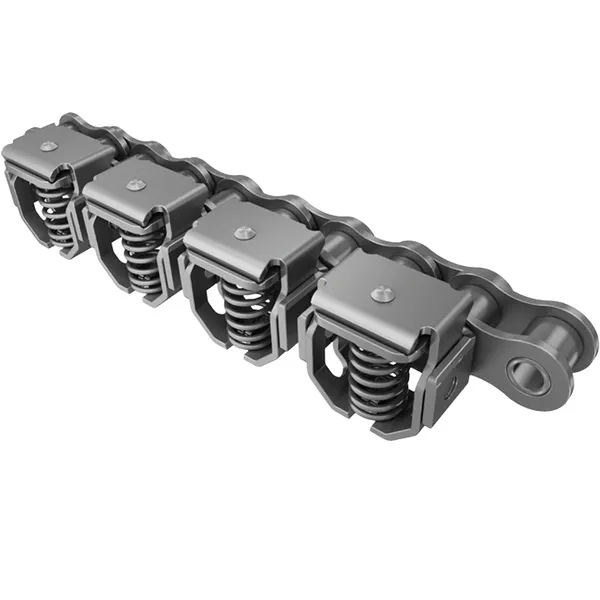
What are the benefits of using a self-lubricating conveyor chain?
Self-lubricating conveyor chains offer several advantages over traditional lubricated chains. Here are some key benefits:
1. Reduced Maintenance: Self-lubricating chains eliminate the need for regular lubrication, reducing the time and effort required for maintenance. This is particularly beneficial in applications where access to the chain is difficult or time-consuming.
2. Cost Savings: By eliminating the need for external lubrication, self-lubricating chains can help reduce lubrication costs over the lifetime of the chain. This includes the cost of lubricants, as well as the labor and equipment required for lubrication maintenance.
3. Clean and Environmentally Friendly: Self-lubricating chains do not require external lubricants, resulting in a cleaner working environment. There is no risk of lubricant spills or contamination of the surrounding area, making them ideal for applications that require strict cleanliness standards, such as food processing or pharmaceutical industries.
4. Extended Chain Life: Self-lubricating chains are designed with built-in lubrication systems that provide a continuous and controlled supply of lubricant to the chain components. This helps reduce friction, wear, and heat generation, resulting in longer chain life and improved performance.
5. Improved Reliability: With consistent and reliable lubrication, self-lubricating chains maintain optimal performance and minimize the risk of chain failure or breakdown. They are less susceptible to premature wear, elongation, and corrosion, ensuring a more reliable and efficient conveyor system.
It’s important to note that the specific benefits of self-lubricating chains may vary depending on the manufacturer and the design of the chain. It’s recommended to consult with the chain manufacturer or an industry expert to understand the suitability and advantages of self-lubricating chains for a particular application.
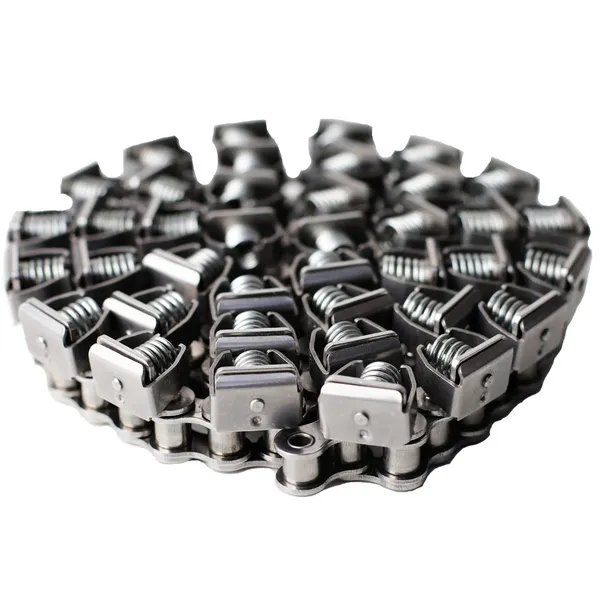
Como calcular a potência necessária para uma corrente transportadora?
Calcular a potência necessária para uma corrente transportadora envolve considerar diversos fatores. Aqui está um processo passo a passo:
1. Determine o peso total a ser transportado: Meça ou estime o peso total do material ou produto que será transportado pela esteira. Isso inclui o peso do próprio produto, qualquer embalagem e cargas adicionais.
2. Determine a velocidade da esteira: Determine a velocidade desejada na qual a corrente da esteira irá operar. Esta velocidade é normalmente medida em pés por minuto (FPM) ou metros por segundo (m/s).
3. Calcule a capacidade necessária: Multiplique o peso total pela velocidade desejada para determinar a capacidade necessária do sistema de transporte. Isso lhe dará o peso por unidade de tempo (por exemplo, libras por minuto ou quilogramas por hora).
4. Considere os fatores de projeto do transportador: Leve em conta diversos fatores de projeto, como o tipo e o passo da corrente do transportador, o coeficiente de atrito entre a corrente e os componentes do transportador e quaisquer ângulos de inclinação ou declive do sistema de transporte. Esses fatores afetam os requisitos de energia.
5. Determine a potência necessária: Utilize a seguinte fórmula para calcular a potência necessária:
Potência (em cavalos-vapor) = (Capacidade × Fator de Atrito) ÷ (33.000 × Eficiência)
Onde:
– A capacidade é o peso por unidade de tempo (do passo 3)
– O fator de atrito é a relação entre a tensão da corrente e o peso da corrente, levando em consideração os fatores de projeto.
– 33.000 é um fator de conversão para converter as unidades em cavalos de potência.
– A eficiência é a eficiência geral do sistema de transporte, normalmente expressa como um valor decimal (por exemplo, 0,95 para a eficiência do modelo 95%).
6. Selecione um motor adequado: Com base nos requisitos de potência calculados, selecione um motor que possa fornecer a potência necessária para acionar a corrente transportadora. Considere fatores como tipo de motor, eficiência e capacidade de sobrecarga.
É importante observar que os requisitos de energia podem variar dependendo do projeto específico do sistema de esteira transportadora e das condições de operação. Recomenda-se consultar um engenheiro qualificado ou o fabricante da esteira para garantir cálculos precisos e a seleção adequada do motor.
Como calcular o comprimento necessário de uma corrente transportadora?
Calcular o comprimento necessário de uma corrente transportadora envolve considerar diversos fatores relacionados ao sistema de transporte e à aplicação específica. Aqui está um guia passo a passo:
- Determine o comprimento da esteira transportadora: Meça o comprimento total do percurso da esteira transportadora, incluindo quaisquer seções horizontais, inclinadas ou verticais.
- Contabilize os centros das rodas dentadas: Identifique a localização das rodas dentadas ou unidades de acionamento ao longo do percurso da esteira. Meça a distância entre cada par de rodas dentadas adjacentes.
- Calcule o número de links: Divida o comprimento total da esteira pelo passo da corrente para determinar o número de elos necessários. O passo é a distância entre o centro de dois pinos consecutivos na corrente.
- Considere o ajuste de tensão: Leve em consideração quaisquer requisitos de ajuste de tensão com base na aplicação específica. Isso pode incluir compensações para dispositivos de tensionamento ou variações de tensão devido a flutuações de carga.
- Incluir conexões finais: Considere o comprimento das conexões terminais, como elos mestres ou pinos de conexão, que são usados para unir as extremidades da corrente. Inclua suas dimensões no cálculo do comprimento total da corrente.
- Adicionar fatores de segurança: Incorpore fatores de segurança adequados para garantir comprimento suficiente da corrente para tensionamento correto e para acomodar qualquer alongamento ou desgaste potencial ao longo do tempo.
É importante observar que o cálculo do comprimento necessário da corrente é uma estimativa baseada em diversos fatores e pode exigir ajustes durante o processo de instalação e tensionamento. Consultar as diretrizes do fabricante do transportador ou trabalhar com um engenheiro experiente pode fornecer cálculos mais precisos com base no sistema de transporte específico e nos requisitos da aplicação.


editor by CX 2023-08-31