Описание продукта
These chains used in a variety of industries including manufacturing, assembly, and packaging, for example, cosmetics, foodstuffs, paper, eletrical and Electronic sectors, mechanical, chemical and automotive industry.
Max conveyor length per drive until 25m
Operating temperature -20¯ +60º C
Allowed max speed ca 50m/min
Packing: 1M 26PCS
Min curve radius: 150mm
Chain Width:83mm
Chain Pitch:38mm
| Chain Type | Plate Width | Working Load(max) | Sideflex Radius(min) | Backflex Radius(min) | Масса | ||||
| мм | дюйм | N(21ºC) | IBF(21ºC) | мм | дюйм | мм | дюйм | кг/м | |
| 83-1 | 83 | 3.25 | 2100 | 472 | 150 | 5.90 | 40 | 1.57 | 1.35 |
HangZhou CZPT Conveyor Equipment Co.,Ltd. is specialized in manufacturing all kinds of Plastic Tabletop Chains, Modular Plastic Belts and Conveyor Components and our products have been applied in many industries. With professional engineers, we can meet your demand with specific solutions.
With the idea of innovation, CZPT has been developing a variety of new products. Our aim is to meet your various requirement with leading solutions. The range of our products as well as production scale are leading the industry. As the professional manufacturer, our products are applied in a variety of industries, such as the food processing of meat, seafood, bakery, fruit and vegetable as well as beverage and dairy products. They also play an important role in the industry of pharmacy, chemistry, battery, paper and tire production etc.
Since CZPT was established, we are trying our best to satisfy every customer’s requirement. We have been supplying some CZPT companies such as ZheJiang ASG group, Wahaha, Mengniu, Yurun, Coca Cola, Tsingtao beer, Hayao Group etc.
The company has been qualified with ISO 9001 quality system. The production strictly complies with the standard and procedures of ISO 9001, which ensures good product quality. An increasing number of customers start to use our products because of Tuoxin’s advanced facilities, rich experience, efficient management and excellent sales team. CZPT has not only gained good reputation in domestic market, but also exported products to Southeast Asia, Japan, Russia, Australia, Newzealand, Germany and other countries.
CZPT has been always keeping our vision in mind, which is “Satisfy customer with reasonable price, reliable quality and timely delivery.
We believe that satisfying our customer is the basis of the company’s sustainable development. CZPT is willing to cooperate with you and achieve mutual benefits.
Any enquiries from customers are welcome.
| Применение: | Transportation Chain |
|---|---|
| Материал: | Пластик |
| Обработка поверхности: | Полировка |
| Особенность: | Термостойкий |
| Размер цепочки: | 1/2"*3/32" |
| Структура: | Верхняя цепь |
| Настройка: | Доступный | Индивидуальный запрос |
|---|
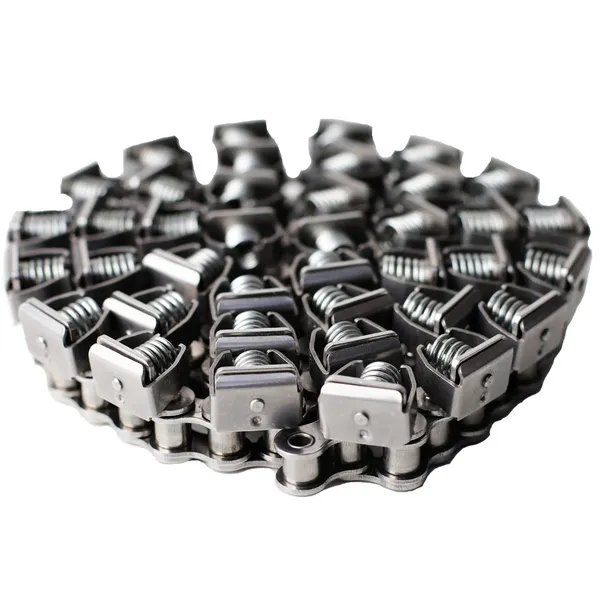
How do you calculate the maximum allowable tension in a conveyor chain?
The maximum allowable tension in a conveyor chain can be calculated using the following steps:
1. Determine the Chain Pitch:
– Measure the distance between the centers of two consecutive chain pins. This measurement is known as the chain pitch and is typically expressed in inches or millimeters.
2. Determine the Chain Speed:
– Determine the speed at which the conveyor chain will be operating. The chain speed is typically expressed in feet per minute or meters per second.
3. Calculate the Chain Pull:
– Determine the total weight or force that needs to be moved by the conveyor chain. This includes the weight of the conveyed material and any additional loads or forces acting on the chain.
4. Calculate the Required Tension:
– Use the following formula to calculate the required tension:
Tension = (Chain Pull × Chain Speed) / (Chain Pitch × Efficiency)
– The efficiency factor accounts for losses due to friction and other factors and is typically expressed as a decimal between 0 and 1.
5. Determine the Maximum Allowable Tension:
– The maximum allowable tension is determined by the manufacturer’s specifications for the conveyor chain. It is important to consult the manufacturer’s documentation or contact them directly to obtain the maximum allowable tension value.
6. Compare the Required Tension and Maximum Allowable Tension:
– Compare the calculated required tension with the maximum allowable tension. The required tension should be less than or equal to the maximum allowable tension to ensure safe and reliable operation of the conveyor chain.
By following these steps and considering the manufacturer’s specifications, you can accurately calculate the maximum allowable tension in a conveyor chain and ensure that it is within the safe operating limits.
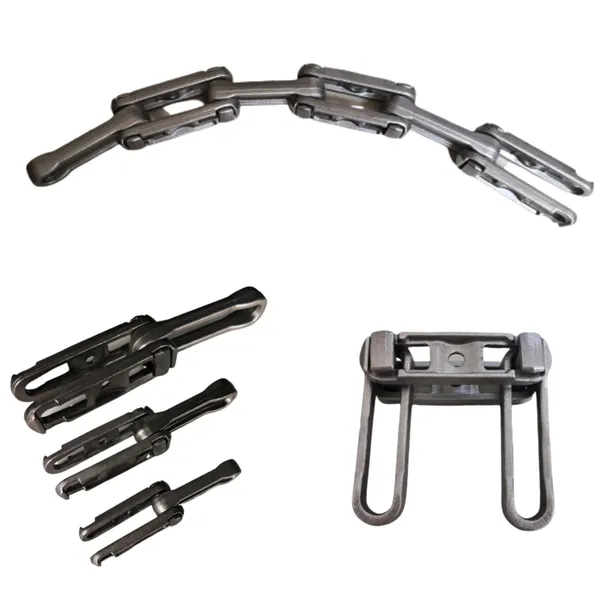
Как смазка влияет на производительность конвейерной цепи?
Смазка играет решающую роль в работе и долговечности конвейерной цепи. Правильная смазка помогает снизить трение, износ и тепловыделение, обеспечивая плавную работу и минимизируя риск преждевременного выхода из строя. Вот как смазка влияет на работу конвейерной цепи:
1. Снижение трения: Смазка образует тонкую пленку между компонентами цепи, уменьшая трение между металлическими поверхностями. Это снижает энергозатраты на работу, минимизирует выделение тепла и предотвращает чрезмерный износ.
2. Предотвращение износа: Смазка образует защитный слой на компонентах цепи, предотвращая прямой контакт металла с металлом. Это помогает уменьшить износ и продлить срок службы цепи.
3. Защита от коррозии: Смазочные материалы часто содержат антикоррозионные добавки, которые защищают цепь от ржавчины и окисления. Это особенно важно в условиях высокой влажности или при воздействии коррозионных веществ.
4. Снижение уровня шума: Правильная смазка снижает шум, возникающий во время работы цепи, за счет минимизации трения и контакта металла с металлом. Это может способствовать созданию более тихой и комфортной рабочей среды.
5. Контроль температуры: Смазка помогает рассеивать тепло, выделяемое во время работы цепи, предотвращая чрезмерное повышение температуры. Это крайне важно в высокоскоростных или тяжелых условиях эксплуатации, где нагрев может привести к ускоренному износу и снижению производительности цепи.
6. Техническое обслуживание и срок службы: Регулярная смазка и правильный выбор смазочного материала необходимы для поддержания работоспособности цепи и продления срока ее службы. Адекватная смазка снижает необходимость частого технического обслуживания, минимизирует время простоя и снижает общие эксплуатационные расходы.
Важно следовать рекомендациям производителя по частоте смазки и использовать соответствующую смазку для конвейерной цепи. Также следует проводить регулярные осмотры и техническое обслуживание, чтобы обеспечить надлежащий уровень смазки и оперативно устранять любые неполадки. Правильная смазка повысит производительность, надежность и долговечность системы конвейерной цепи.
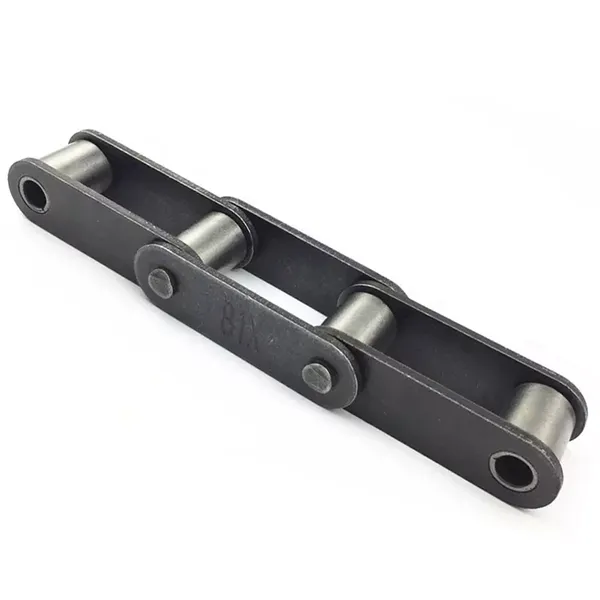
What are the common causes of conveyor chain failures?
Conveyor chain failures can occur due to various reasons, and identifying the root cause is crucial for preventing future issues. Here are some common causes of conveyor chain failures:
- Lack of Lubrication: Insufficient or improper lubrication can lead to increased friction and wear on the chain components, resulting in premature failure.
- Excessive Load: Overloading the conveyor chain beyond its rated capacity can cause excessive stress and strain, leading to chain elongation, deformation, or link breakage.
- Misalignment: Improper alignment of the conveyor chain can cause uneven loading and excessive wear on specific areas, leading to chain failure.
- Environmental Factors: Harsh operating environments, such as high temperatures, corrosive substances, or abrasive materials, can accelerate chain wear and corrosion, leading to failure.
- Foreign Objects: The presence of foreign objects or debris on the conveyor system can interfere with the movement of the chain, causing jamming, binding, or chain damage.
- Poor Maintenance: Inadequate maintenance practices, such as irregular inspections, failure to address minor issues promptly, or neglecting to replace worn components, can contribute to chain failures.
- Incorrect Installation: Improper installation, including incorrect tensioning, misalignment, or using incompatible components, can result in premature chain failure.
- Fatigue and Wear: Continuous operation over time can lead to fatigue and wear in the chain, especially in high-speed or heavy-duty applications, resulting in eventual failure.
Regular maintenance, proper lubrication, adequate training for operators, and adherence to manufacturer guidelines can help mitigate these common causes of conveyor chain failures. Conducting routine inspections, promptly addressing issues, and replacing worn components can also significantly extend the life of the conveyor chain.


editor by CX 2023-09-12