Produktbeskrivning
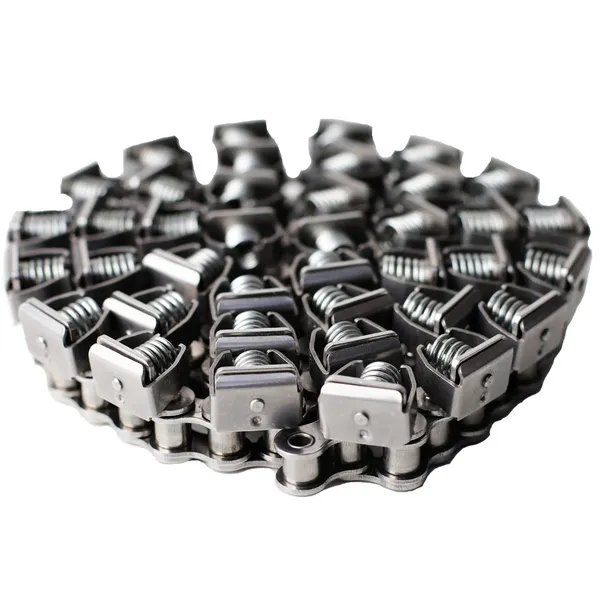
Professional Standard C216ALSS-I Type Conveyor Chain For Ice Cream
C216ALSS-I type chain is a transmission chain for ice cream production and conveying machinery. The pitch is 50.8mm. The roller material is made of reinforced nylon and machined. It is not injection molded and it is wear-resistant, low-temperature resistant, and not easy to break. The chain piece is made of stainless steel 304, with high hardness, low temperature resistance and not easy to break. The main parameters of the product comply with ISO, ANSI, DIN, BS, JIS standards
HangZhou CHINAMFG Industry Co., Ltd. is a specialized supplier of a full range of chains.
Due to our CHINAMFG in offering best service to our clients, understanding of your needs and overriding sense of responsibility toward filling ordering requirements, we have obtained the trust of buyers worldwide. Having accumulated precious experience in cooperating with foreign customers, our products are selling well in the American, European, South American and Asian markets.Our products are manufactured by modern computerized machinery and equipment. Meanwhile, our products are manufactured according to high quality standards, and complying with the international advanced standard criteria.
With many years’ experience in this line, we will be trusted by our advantages in competitive price, one-time delivery, prompt response, on-hand engineering support and good after-sales services.
Additionally, all our production procedures are in compliance with ISO9001 standards. We also can design and make non-standard products to meet customers’ special requirements. Quality and credit are the bases that make a corporation alive. We will provide best services and high quality products with all sincerity. If you need any information or samples, please contact us and you will have our soon reply.
FAQ:
Q1: Are you trading company or manufacturer ?
A: We are factory.
Q2: How long is your delivery time and shipment?
1.Sample Lead-times: generally 30 workdays.
2.Production Lead-times: 60 workdays after getting your deposit.
Q3. What is your terms of payment?
A: T/T 30% as deposit, and 70% before delivery.
We’ll show you the photos of the products and packages before you pay the balance.
Q4: What is your advantages?
1. Manufacturer,the most competitive price and good quality.
2. Perfect technical engineers give you the best support.
3. OEM is available.
4. Rich stock and quick delivery.
Q5. If you can’t find the product on our website,what do you next?
Please send us inquiry with product pictures and drawings by email or other ways and we’ll check
| Standard eller icke-standard: | Standard |
|---|---|
| Ansökan: | Textile Machinery, Garment Machinery, Conveyer Equipment, Food Machinery |
| Ytbehandling: | Putsning |
| Prover: | US$ 50/Meter 1 meter (minsta beställning) | Beställ prov |
|---|
| Anpassning: | Tillgänglig | Anpassad förfrågan |
|---|
.shipping-cost-tm .tm-status-off{bakgrund: ingen;fyllning: 0;färg: #1470cc}
| Fraktkostnad: Beräknad frakt per enhet. | om fraktkostnad och beräknad leveranstid. |
|---|
| Betalningsmetod: |
|
|---|---|
| Första betalningen Full betalning |
| Valuta: | US$ |
|---|
| Retur och återbetalning: | Du kan ansöka om återbetalning upp till 30 dagar efter att du mottagit produkterna. |
|---|
How do you calculate the maximum allowable tension in a conveyor chain?
The maximum allowable tension in a conveyor chain can be calculated using the following steps:
1. Determine the Chain Pitch:
– Measure the distance between the centers of two consecutive chain pins. This measurement is known as the chain pitch and is typically expressed in inches or millimeters.
2. Determine the Chain Speed:
– Determine the speed at which the conveyor chain will be operating. The chain speed is typically expressed in feet per minute or meters per second.
3. Calculate the Chain Pull:
– Determine the total weight or force that needs to be moved by the conveyor chain. This includes the weight of the conveyed material and any additional loads or forces acting on the chain.
4. Calculate the Required Tension:
– Use the following formula to calculate the required tension:
Tension = (Chain Pull × Chain Speed) / (Chain Pitch × Efficiency)
– The efficiency factor accounts for losses due to friction and other factors and is typically expressed as a decimal between 0 and 1.
5. Determine the Maximum Allowable Tension:
– The maximum allowable tension is determined by the manufacturer’s specifications for the conveyor chain. It is important to consult the manufacturer’s documentation or contact them directly to obtain the maximum allowable tension value.
6. Compare the Required Tension and Maximum Allowable Tension:
– Compare the calculated required tension with the maximum allowable tension. The required tension should be less than or equal to the maximum allowable tension to ensure safe and reliable operation of the conveyor chain.
By following these steps and considering the manufacturer’s specifications, you can accurately calculate the maximum allowable tension in a conveyor chain and ensure that it is within the safe operating limits.
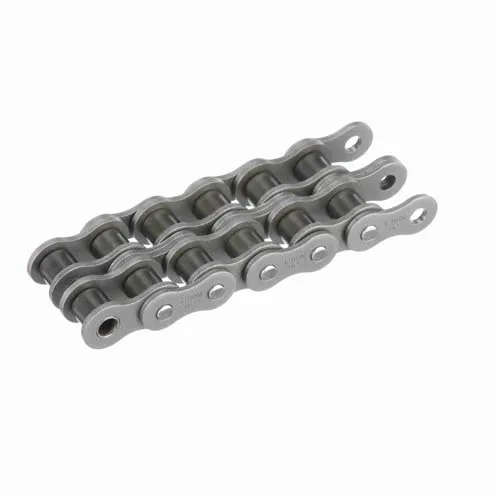
Vilka är fördelarna med att använda transportkedjor i rostfritt stål?
Transportkedjor i rostfritt stål erbjuder flera fördelar jämfört med andra typer av kedjor. Här är några av de viktigaste fördelarna:
1. Korrosionsbeständighet: Rostfritt stål är mycket korrosionsbeständigt, vilket gör det lämpligt för tillämpningar i tuffa miljöer eller industrier där frekventa tvättningar eller exponering för fukt krävs. Det rostar eller korroderar inte som andra metaller, vilket säkerställer längre livslängd och tillförlitlig prestanda.
2. Styrka och hållbarhet: Kedjor i rostfritt stål är kända för sin höga hållfasthet och hållbarhet. De tål tunga belastningar, höga temperaturer och slipande material utan deformation eller brott. Detta gör dem idealiska för krävande tillämpningar där tillförlitlighet och livslängd är avgörande.
3. Hygieniskt och sanitärt: Rostfritt stål är ett icke-poröst material som är lätt att rengöra och underhålla. Det är resistent mot bakterier, mögel och andra föroreningar, vilket gör det lämpligt för industrier med strikta hygienkrav som livsmedelsbearbetning, läkemedel och medicintekniska produkter. Kedjor i rostfritt stål kan rengöras och desinficeras noggrant, vilket minskar risken för produktkontaminering.
4. Temperaturbeständighet: Kedjor i rostfritt stål tål ett brett temperaturområde, både höga och låga. De uppvisar utmärkt värmebeständighet, vilket gör att de bibehåller sin styrka och prestanda även under extrema temperaturförhållanden.
5. Estetiskt tilltalande: Kedjor i rostfritt stål har ett elegant och polerat utseende, vilket ger transportbandssystemet en professionell och estetisk touch. De används ofta i branscher där visuellt tilltalande och varumärkesrepresentation är viktigt, såsom detaljhandel eller lyxvaror.
6. Kemisk resistens: Rostfritt stål är resistent mot olika kemikalier, inklusive syror, alkalier och lösningsmedel. Detta gör det lämpligt för tillämpningar där kontakt med frätande ämnen är sannolik.
7. Kompatibilitet med höghastighetsapplikationer: Kedjor i rostfritt stål tål höghastighetsoperationer utan att kompromissa med sin strukturella integritet eller prestanda. De bibehåller sin stabilitet och noggrannhet även vid höga hastigheter.
Sammantaget erbjuder transportkedjor i rostfritt stål korrosionsbeständighet, styrka, hållbarhet, hygieniska egenskaper, temperaturbeständighet, estetiskt tilltalande, kemisk resistens och kompatibilitet med höghastighetsapplikationer. Dessa fördelar gör dem till ett föredraget val inom industrier som livsmedel och dryck, läkemedel, fordonsindustrin och tillverkning, där tillförlitlighet, renlighet och prestanda är avgörande.
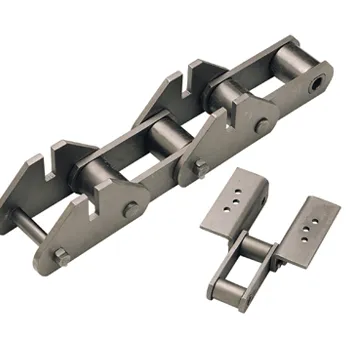
Vilka är branschstandarderna och föreskrifterna för transportörkedjor?
Inom området transportörkedjor finns det flera branschstandarder och föreskrifter som bidrar till att säkerställa säkerhet, prestanda och kvalitet. Några av de allmänt erkända standarderna inkluderar:
1. ISO 1977:2013 – Transportörkedjor, tillbehör och kedjehjul: Denna standard från Internationella standardiseringsorganisationen (ISO) specificerar krav och dimensioner för olika typer av transportörkedjor, tillbehör och kedjehjul som används i allmänna industriella tillämpningar.
2. ANSI/ASME B29.1 – Rullkedjor, tillbehör och kedjehjul för precisionskraftöverföring: Denna standard från American National Standard Institute (ANSI) ger riktlinjer för design, dimensioner och prestanda för rullkedjor, tillbehör och kedjehjul som används i kraftöverföringssystem, inklusive transportörkedjor.
3. CEMA – Conveyor Equipment Manufacturers Association: CEMA publicerar olika standarder och tekniska dokument relaterade till transportörsystem, inklusive transportörkedjor. Dessa standarder täcker ämnen som säkerhet, design, installation, underhåll och drift av transportörutrustning.
4. OSHA – Occupational Safety and Health Administration: OSHA är en tillsynsmyndighet i USA som fastställer och tillämpar säkerhetsstandarder för arbetsplatser. De har specifika föreskrifter relaterade till transportbandssystem, inklusive krav på skydd, underhåll och anställdas säkerhet.
5. Lokala och nationella byggregler: Beroende på plats och tillämpning kan det finnas specifika byggregler eller föreskrifter som föreskriver design, installation och drift av transportörkedjor. Dessa regler säkerställer att säkerhets- och konstruktionskrav uppfylls.
Det är viktigt för tillverkare av transportörkedjor, systemintegratörer och slutanvändare att följa dessa branschstandarder och föreskrifter för att säkerställa säker och tillförlitlig drift av transportörsystem. Efterlevnad av dessa standarder bidrar till att upprätthålla arbetstagarnas säkerhet, främja systemprestanda och säkerställa kompatibilitet och utbytbarhet mellan transportörkedjekomponenter.


editor by CX 2023-11-02