คำอธิบายผลิตภัณฑ์
ภาพถ่ายโดยละเอียด
คำอธิบายผลิตภัณฑ์
ข้อมูลบริษัท
ZheJiang Miaoou Trading Co., LTD mainly produces and sells bicycle tires and accessories, motorcycle tires, electric car tires, child carriage tires and so on. We always take “create greater benefits for customers” as the purpose, and constantly improve the quality of products. With the continuous development of the enterprise and the increasing expansion of productivity, we hope to cooperate sincerely with friends at home and abroad based on the principle of “good faith and common development
ใบรับรอง
บรรจุภัณฑ์และการจัดส่ง
Order process
คำถามที่พบบ่อย
Q1. Can I have a sample order for your product?
A: Sample order is welcome here. Mixed samples are acceptable. We can supply the sample if we have ready parts in stock, but the customers have to pay the sample cost and the courier cost.
Q2. Is it OK to print my logo on the product?
A: Yes. Please inform us formally before our production and confirm the design firstly based on our sample.
Q3. Do you have any MOQ limit for the order?
A: Generally, we do not limit MOQ; if you need customized products or mass-produced products, we need to talk in detail.
Q4. How long would it be shipped?
A: Most of our products are in stock;sample or small amount orders :1-3 days , mass production :20-60 days, depending on actual order quantity.
Q5. How do you ship the goods?
A: We usually ship by express way like DHL, UPS, FedEx or TNT. Airline and sea shipping are also optional.
Q6. How long does it take to arrive?
A: Generally, It usually takes 3-7 days to arrive. Except for customized products and order.
Q7: Where is your company located? How can I visit there?
A: Our factory is located in HangZhou Cty, China. You can visit at any time.
/* 22 มกราคม 2571 19:08:37 */!function(){function s(e,r){var a,o={};try{e&&e.split(“,”).forEach(function(e,t){e&&(a=e.match(/(.*?):(.*)$/))&&1
| มาตรฐานหรือไม่มาตรฐาน: | มาตรฐาน |
|---|---|
| แอปพลิเคชัน: | Textile Machinery, Garment Machinery, Conveyer Equipment, Packaging Machinery, Electric Cars, Motorcycle, Food Machinery, Marine, Mining Equipment, Agricultural Machinery, Car |
| การเตรียมพื้นผิว: | การขัดเงา |
| ตัวอย่าง: | US$ 1/Piece 1 ชิ้น (สั่งขั้นต่ำ) | สั่งซื้อตัวอย่าง โซ่ส่งกำลัง |
|---|
| การปรับแต่ง: | มีอยู่ | คำขอที่กำหนดเอง |
|---|
.shipping-cost-tm .tm-status-off{background: none;padding:0;color: #1470cc}
| ค่าจัดส่ง: ค่าขนส่งโดยประมาณต่อหน่วย | เกี่ยวกับค่าขนส่งและเวลาจัดส่งโดยประมาณ |
|---|
| วิธีการชำระเงิน: |
|
|---|---|
| การชำระเงินครั้งแรก ชำระเงินเต็มจำนวน |
| สกุลเงิน: | ยูเอส1ทีพี6ที |
|---|
| การคืนสินค้าและการขอคืนเงิน: | คุณสามารถขอรับเงินคืนได้ภายใน 30 วันหลังจากได้รับสินค้า |
|---|

How do you calculate the required horsepower for a conveyor chain drive?
The calculation of required horsepower for a conveyor chain drive involves considering various factors related to the conveyor system and the specific application. Here is a step-by-step process:
1. Determine the Total Resistance:
– Calculate the total resistance that the conveyor chain needs to overcome during operation. This includes the resistance due to the load being conveyed, frictional losses, elevation changes, and any other resistances in the system.
2. Convert the Resistance to Equivalent Inertia:
– Convert the total resistance to an equivalent inertia by multiplying it by the square of the chain speed.
3. Calculate the Total Inertia:
– Determine the total inertia of the system by considering the inertia of all the rotating components, such as the conveyor chain, sprockets, and any other driven elements.
4. Determine the Required Torque:
– Calculate the required torque by multiplying the total inertia by the desired acceleration or deceleration rate.
5. Convert Torque to Horsepower:
– Convert the required torque to horsepower by dividing it by the motor speed (in RPM) and multiplying by a conversion factor.
6. Consider Safety Factors and Efficiency:
– Apply safety factors to the calculated horsepower to account for variations, contingencies, and future growth.
– Consider the efficiency of the drive system, including the motor, gearbox, and other transmission components, to ensure accurate power transmission.
It’s important to note that the above calculation method provides an estimate of the required horsepower. Consulting with conveyor system manufacturers, engineers, or industry-specific guidelines is recommended for precise calculations and to ensure the selected conveyor chain drive meets the application requirements.
จะป้องกันการกัดกร่อนในโซ่ลำเลียงได้อย่างไร?
การป้องกันการกัดกร่อนในโซ่ลำเลียงเป็นสิ่งสำคัญอย่างยิ่งต่อการรักษาประสิทธิภาพและยืดอายุการใช้งาน ต่อไปนี้คือมาตรการที่มีประสิทธิภาพบางประการในการป้องกันการกัดกร่อน:
1. การเลือกวัสดุ: เลือกโซ่ลำเลียงที่ทำจากวัสดุที่ทนต่อการกัดกร่อน เช่น สแตนเลส พลาสติก หรือสารเคลือบที่ออกแบบมาเพื่อต้านทานการกัดกร่อนโดยเฉพาะ วัสดุเหล่านี้ให้การป้องกันสนิมและการกัดกร่อนได้ดีกว่าโซ่เหล็กมาตรฐาน
2. การหล่อลื่นที่เหมาะสม: ควรใช้สารหล่อลื่นที่เหมาะสมกับโซ่ลำเลียงอย่างสม่ำเสมอ การหล่อลื่นจะสร้างเกราะป้องกันที่ช่วยป้องกันความชื้นและสิ่งปนเปื้อนไม่ให้เข้าถึงพื้นผิวโลหะ ลดความเสี่ยงต่อการกัดกร่อน เลือกสารหล่อลื่นที่มีคุณสมบัติป้องกันการกัดกร่อนและเข้ากันได้กับวัสดุของโซ่
3. การควบคุมสภาพแวดล้อม: ควบคุมสภาพแวดล้อมในการทำงานเพื่อลดการสัมผัสกับสารกัดกร่อนให้น้อยที่สุด ดำเนินการต่างๆ เช่น การควบคุมความชื้น การระบายอากาศที่เหมาะสม และการป้องกันการสัมผัสโดยตรงกับน้ำหรือสารเคมี พิจารณาใช้ฝาครอบหรือสิ่งห่อหุ้มเพื่อป้องกันโซ่ลำเลียงจากปัจจัยด้านสิ่งแวดล้อมที่อาจเร่งการกัดกร่อน
4. การเคลือบผิว: ควรเคลือบผิวโซ่ลำเลียงด้วยสารเคลือบป้องกันการกัดกร่อน สารเคลือบเหล่านี้จะช่วยสร้างชั้นป้องกันเพิ่มเติมที่ทำหน้าที่เป็นเกราะป้องกันความชื้นและสารกัดกร่อน ตัวอย่างของการเคลือบผิว ได้แก่ การชุบสังกะสี การชุบสังกะสีแบบกัลวาไนซ์ หรือการเคลือบอีพ็อกซี
5. การตรวจสอบและทำความสะอาดอย่างสม่ำเสมอ: ตรวจสอบโซ่ลำเลียงอย่างสม่ำเสมอเพื่อหาสัญญาณของการกัดกร่อนหรือความเสียหาย กำจัดสิ่งสกปรก เศษวัสดุ หรือสารกัดกร่อนที่สะสมอยู่โดยทันที การทำความสะอาดโซ่จะช่วยป้องกันการสะสมของสิ่งปนเปื้อนที่อาจเร่งการกัดกร่อนได้
6. การบำรุงรักษาเชิงป้องกัน: ดำเนินการตามโปรแกรมการบำรุงรักษาเชิงป้องกัน ซึ่งรวมถึงการทำความสะอาด การหล่อลื่น และการตรวจสอบโซ่ลำเลียงอย่างสม่ำเสมอ แนวทางเชิงรุกนี้ช่วยระบุและแก้ไขปัญหาการกัดกร่อนที่อาจเกิดขึ้นได้ตั้งแต่เนิ่นๆ ป้องกันความเสียหายเพิ่มเติม
7. การจัดเก็บอย่างเหมาะสม: เมื่อไม่ได้ใช้งาน ควรจัดเก็บโซ่ลำเลียงในที่แห้งและมีการควบคุมอุณหภูมิ ป้องกันไม่ให้สัมผัสกับความชื้น ไอน้ำ และสารกัดกร่อน ใช้วิธีการจัดเก็บที่เหมาะสม เช่น การแขวนโซ่ หรือการจัดเก็บในภาชนะที่ปิดสนิท
การปฏิบัติตามมาตรการป้องกันเหล่านี้จะช่วยลดความเสี่ยงของการเกิดสนิมในโซ่ลำเลียงได้อย่างมาก ทำให้มั่นใจได้ถึงประสิทธิภาพสูงสุดและอายุการใช้งานที่ยาวนาน

What are the different types of conveyor chains?
There are several types of conveyor chains available, each designed to meet specific application requirements. Here are some common types of conveyor chains:
- Roller chains: Roller chains are the most commonly used type of conveyor chain. They consist of a series of cylindrical rollers connected by side plates. Roller chains provide smooth and efficient movement and are suitable for medium to heavy-duty applications.
- Double pitch chains: Double pitch chains have larger pitch (distance between the centers of adjacent pins) compared to standard roller chains. They are often used in applications that require slower speeds and lighter loads.
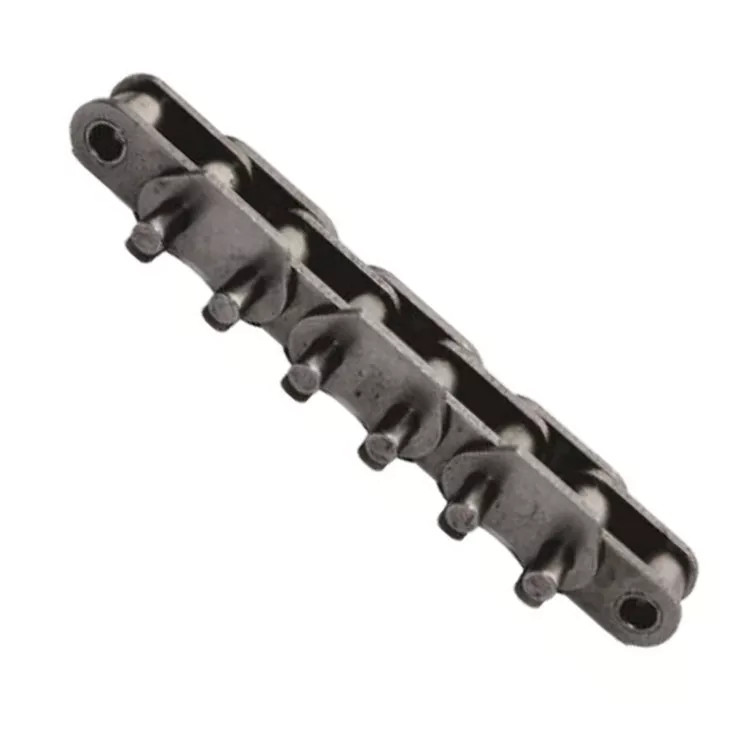
- Hollow pin chains: Hollow pin chains have hollow pins that allow for easy attachment of various accessories or attachments. They are commonly used in conveying applications that require customization or where attachments need to be mounted.
- Apron or slat chains: Apron or slat chains consist of plates or slats that are connected by hinges. They are used in heavy-duty applications where the chain needs to support and carry large loads or withstand harsh environments.
- Plastic chains: Plastic chains are made of durable and lightweight materials such as acetal or polyethylene. They offer benefits such as corrosion resistance, low noise levels, and the ability to work in wet or washdown environments. Plastic chains are commonly used in food processing, packaging, and pharmaceutical industries.
These are just a few examples of conveyor chain types, and there are many other variations available depending on specific application requirements. The selection of the appropriate conveyor chain type depends on factors such as load capacity, speed, environment, and desired functionality.


editor by CX 2024-04-12