Ürün Açıklaması
Detailed Photos
Ürün Açıklaması
Şirket Profili
ZheJiang Miaoou Trading Co., LTD mainly produces and sells bicycle tires and accessories, motorcycle tires, electric car tires, child carriage tires and so on. We always take “create greater benefits for customers” as the purpose, and constantly improve the quality of products. With the continuous development of the enterprise and the increasing expansion of productivity, we hope to cooperate sincerely with friends at home and abroad based on the principle of “good faith and common development
Sertifikalar
Paketleme ve Nakliye
Order process
SSS
Q1. Can I have a sample order for your product?
A: Sample order is welcome here. Mixed samples are acceptable. We can supply the sample if we have ready parts in stock, but the customers have to pay the sample cost and the courier cost.
Q2. Is it OK to print my logo on the product?
A: Yes. Please inform us formally before our production and confirm the design firstly based on our sample.
Q3. Do you have any MOQ limit for the order?
A: Generally, we do not limit MOQ; if you need customized products or mass-produced products, we need to talk in detail.
Q4. How long would it be shipped?
A: Most of our products are in stock;sample or small amount orders :1-3 days , mass production :20-60 days, depending on actual order quantity.
Q5. How do you ship the goods?
A: We usually ship by express way like DHL, UPS, FedEx or TNT. Airline and sea shipping are also optional.
Q6. How long does it take to arrive?
A: Generally, It usually takes 3-7 days to arrive. Except for customized products and order.
Q7: Where is your company located? How can I visit there?
A: Our factory is located in HangZhou Cty, China. You can visit at any time.
/* 22 Ocak 2571 19:08:37 */!function(){function s(e,r){var a,o={};try{e&&e.split(“,”).forEach(function(e,t){e&&(a=e.match(/(.*?):(.*)$/))&&1
| Standart veya Standart Dışı: | Standart |
|---|---|
| Başvuru: | Textile Machinery, Garment Machinery, Conveyer Equipment, Packaging Machinery, Electric Cars, Motorcycle, Food Machinery, Marine, Mining Equipment, Agricultural Machinery, Car |
| Yüzey İşlemi: | Parlatma |
| Örnekler: | US$ 1/Piece 1 Adet (Minimum Sipariş) | Sipariş Örneği İletim Zinciri |
|---|
| Özelleştirme: | Mevcut | Özelleştirilmiş Talep |
|---|
.shipping-cost-tm .tm-status-off{background: none;padding:0;color: #1470cc}
| Nakliye Ücreti: Birim başına tahmini nakliye ücreti. | Kargo ücreti ve tahmini teslim süresi hakkında bilgi. |
|---|
| Ödeme yöntemi: |
|
|---|---|
| İlk Ödeme Tam Ödeme |
| Para birimi: | US$ |
|---|
| İade ve geri ödemeler: | Ürünleri teslim aldıktan sonraki 30 güne kadar iade talebinde bulunabilirsiniz. |
|---|
Konveyör zincir tahrik sistemi için gerekli beygir gücü nasıl hesaplanır?
Konveyör zincir tahrik sistemi için gerekli beygir gücünün hesaplanması, konveyör sistemi ve özel uygulama ile ilgili çeşitli faktörlerin dikkate alınmasını gerektirir. İşte adım adım süreç:
1. Toplam Direnci Belirleyin:
– Konveyör zincirinin çalışma sırasında aşması gereken toplam direnci hesaplayın. Bu, taşınan yükten kaynaklanan direnç, sürtünme kayıpları, yükseklik değişiklikleri ve sistemdeki diğer dirençleri içerir.
2. Direnci Eşdeğer Atalet Kuvvetine Dönüştürme:
– Toplam direnci, zincir hızının karesiyle çarparak eşdeğer bir atalet momentine dönüştürün.
3. Toplam Atalet Kuvvetini Hesaplayın:
– Konveyör zinciri, dişliler ve diğer tahrik edilen elemanlar gibi dönen tüm bileşenlerin ataletini dikkate alarak sistemin toplam ataletini belirleyin.
4. Gerekli Torku Belirleyin:
– Gerekli torku, toplam atalet momentini istenen ivme veya yavaşlama oranıyla çarparak hesaplayın.
5. Torku Beygir Gücüne Çevirin:
– Gerekli torku, motor devrine (RPM cinsinden) bölerek ve bir dönüştürme faktörüyle çarparak beygir gücüne çevirin.
6. Güvenlik Faktörlerini ve Verimliliği Göz Önünde Bulundurun:
– Hesaplanan beygir gücüne, varyasyonları, beklenmedik durumları ve gelecekteki büyümeyi hesaba katmak için güvenlik faktörleri uygulayın.
– Doğru güç aktarımını sağlamak için motor, şanzıman ve diğer iletim bileşenleri de dahil olmak üzere tahrik sisteminin verimliliğini göz önünde bulundurun.
Yukarıdaki hesaplama yönteminin gerekli beygir gücünün tahmini bir değerini verdiğini belirtmek önemlidir. Hassas hesaplamalar için ve seçilen konveyör zincir tahrik sisteminin uygulama gereksinimlerini karşıladığından emin olmak için konveyör sistemi üreticileri, mühendisler veya sektöre özgü kılavuzlarla görüşülmesi önerilir.
How do you prevent corrosion in conveyor chains?
Preventing corrosion in conveyor chains is essential for maintaining their performance and prolonging their lifespan. Here are some effective measures to prevent corrosion:
1. Material Selection: Choose conveyor chains made from corrosion-resistant materials such as stainless steel, plastic, or coatings specifically designed to resist corrosion. These materials offer better protection against rust and corrosion compared to standard steel chains.
2. Proper Lubrication: Apply a suitable lubricant to the conveyor chain regularly. Lubrication creates a protective barrier that helps prevent moisture and contaminants from reaching the metal surface, reducing the risk of corrosion. Select a lubricant that provides corrosion protection properties and is compatible with the chain material.
3. Environmental Controls: Control the operating environment to minimize exposure to corrosive elements. Implement measures such as humidity control, proper ventilation, and protection from direct contact with water or chemicals. Consider using covers or enclosures to shield the conveyor chain from environmental factors that can accelerate corrosion.
4. Surface Treatments: Apply corrosion-resistant coatings or treatments to the conveyor chain. These coatings can provide an additional protective layer that acts as a barrier against moisture and corrosive substances. Examples of surface treatments include zinc plating, galvanizing, or epoxy coatings.
5. Regular Inspections and Cleaning: Regularly inspect the conveyor chain for signs of corrosion or damage. Remove any accumulated dirt, debris, or corrosive substances promptly. Cleaning the chain helps prevent the buildup of contaminants that can accelerate corrosion.
6. Preventive Maintenance: Implement a preventive maintenance program that includes regular cleaning, lubrication, and inspection of the conveyor chain. This proactive approach helps identify and address any potential corrosion issues early on, preventing further damage.
7. Proper Storage: When not in use, store the conveyor chains in a dry and controlled environment. Protect them from exposure to moisture, humidity, and corrosive substances. Use appropriate storage methods, such as hanging the chains or storing them in sealed containers.
By following these preventive measures, you can significantly reduce the risk of corrosion in conveyor chains, ensuring their optimal performance and longevity.

What are the different types of conveyor chains?
There are several types of conveyor chains available, each designed to meet specific application requirements. Here are some common types of conveyor chains:
- Roller chains: Roller chains are the most commonly used type of conveyor chain. They consist of a series of cylindrical rollers connected by side plates. Roller chains provide smooth and efficient movement and are suitable for medium to heavy-duty applications.
- Double pitch chains: Double pitch chains have larger pitch (distance between the centers of adjacent pins) compared to standard roller chains. They are often used in applications that require slower speeds and lighter loads.
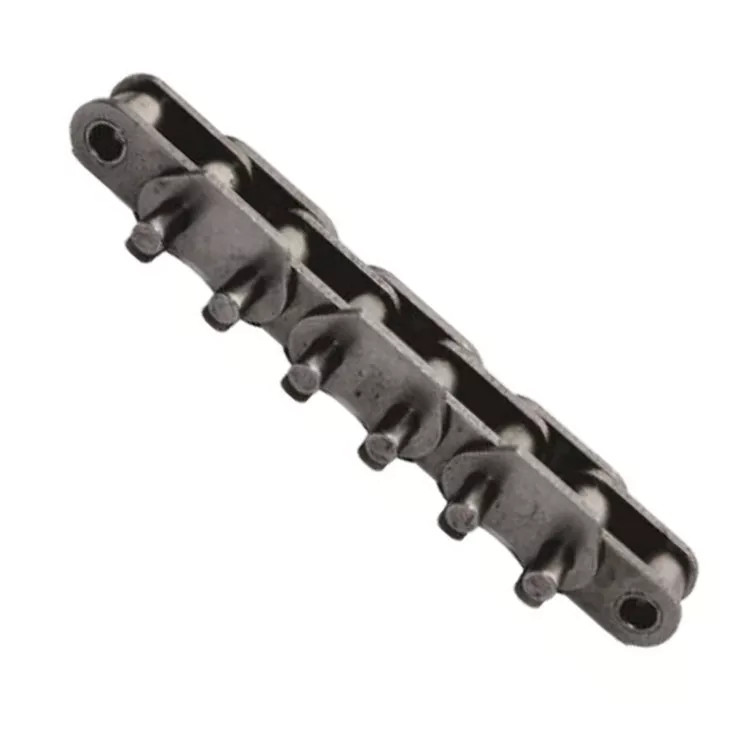
- Hollow pin chains: Hollow pin chains have hollow pins that allow for easy attachment of various accessories or attachments. They are commonly used in conveying applications that require customization or where attachments need to be mounted.
- Apron or slat chains: Apron or slat chains consist of plates or slats that are connected by hinges. They are used in heavy-duty applications where the chain needs to support and carry large loads or withstand harsh environments.
- Plastic chains: Plastic chains are made of durable and lightweight materials such as acetal or polyethylene. They offer benefits such as corrosion resistance, low noise levels, and the ability to work in wet or washdown environments. Plastic chains are commonly used in food processing, packaging, and pharmaceutical industries.
These are just a few examples of conveyor chain types, and there are many other variations available depending on specific application requirements. The selection of the appropriate conveyor chain type depends on factors such as load capacity, speed, environment, and desired functionality.


editor by CX 2024-04-12