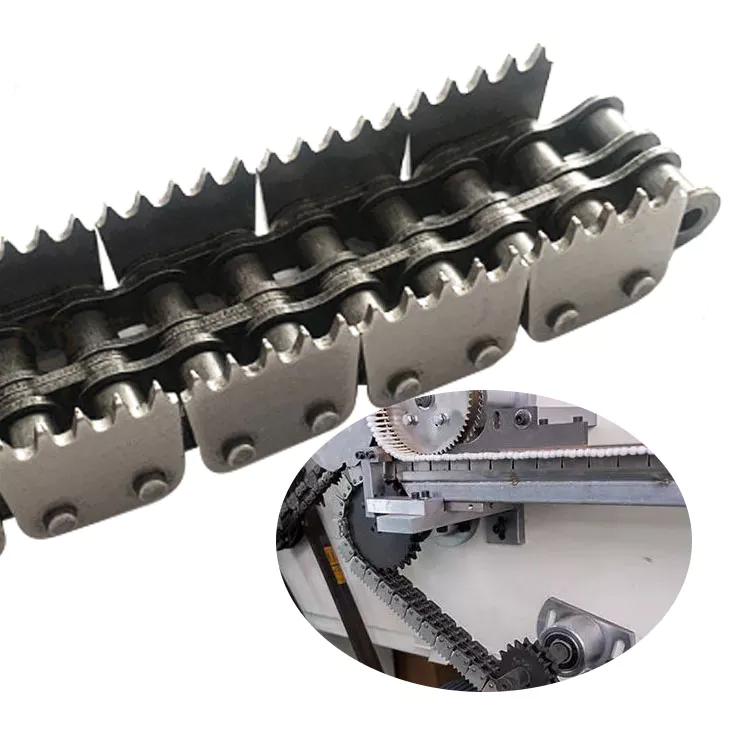
Description du produit
High Quality Motorcycle Conveyor Roller Chain Stainless Steel Professional China Factory Supply (ANSI, BS, DIN, JIS Standard)
Description du produit
1. Material: Stainless steel / Alloy steel / Made to order
2. Surface Treatment: Zinc-Plated / Nickel-Plated / Shot Peening / Blackening
3. Chain Type: Roller chains, Drive chains,Conveyor Chains, Hollow Pin Chains,Welded chains, Steel Pin Chains, Palm oil chains,Sugar Mill Chains.ect.
4. Application: Chains is a very important industry parts, The many industry will be use chain. For examples Sugar mill ,Steel mill,Cement mill, Palm oil mill and more. thus the chain is industrial family main member.
5. “PLW” Company Purpose : Powering Your Business Worldswide. Driving the word and future.
| Nom du produit | High Quality Motorcycle Conveyor Roller Chain Stainless Steel Professional China Factory Supply (ANSI, BS, DIN, JIS Standard) |
| Chain Type | 1. Driving Chain (roller chain, Heavy Duty Cranked-Link,Bushing Chains etc) |
| 2. Conveyor Chain( Double Pitch chains,,MT & MC Series etc) | |
| 3. Hollow Pin Chain | |
| 4. Palm Oil Chain | |
| 5. Sugar Mill Chain | |
| 6. Welded Steel Chain | |
| 7. Rubber Glove Chain | |
| Traitement de surface | Shot peening, Blackening, Oxygenation, Polishing, Zinc-plated, Nickel-plated, Anodized, etc. |
| Characteristic | Fire Resistant, Oil Resistant, Heat Resistant |
| Design criterion | ISO DIN ANSI & Customer’s Drawing |
| Taille | Customer’s Drawing & ISO Standard |
| Emballer | Wooden Case / Container and pallet, or made-to-order |
| Certificat | ISO9001: 2008 |
| Avantage | First quality, Best Service, Competitive price, Fast delivery |
| Délai de livraison | 20 days for samples. 45 days for official order. |
View more products,please click here…
Profil de l'entreprise
| Matériel: | Steel or Stainless Steel etc |
|---|---|
| Structure: | Chaîne |
| Traitement de surface : | Shot Peening, Blackening, Oxygenation, Polishing, |
| Taille de la chaîne : | All of The Chain |
| Fonctionnalité: | Fire Resistant, Heat Resistant |
| Colis de transport : | Plastic Bag+Box+Plywood Case |
| Exemples : | US$ 0/Mètre 1 mètre (commande minimale) | |
|---|
| Personnalisation : | Disponible | Demande personnalisée |
|---|

How do you calculate the maximum allowable tension in a conveyor chain?
The maximum allowable tension in a conveyor chain can be calculated using the following steps:
1. Determine the Chain Pitch:
– Measure the distance between the centers of two consecutive chain pins. This measurement is known as the chain pitch and is typically expressed in inches or millimeters.
2. Determine the Chain Speed:
– Determine the speed at which the conveyor chain will be operating. The chain speed is typically expressed in feet per minute or meters per second.
3. Calculate the Chain Pull:
– Determine the total weight or force that needs to be moved by the conveyor chain. This includes the weight of the conveyed material and any additional loads or forces acting on the chain.
4. Calculate the Required Tension:
– Use the following formula to calculate the required tension:
Tension = (Chain Pull × Chain Speed) / (Chain Pitch × Efficiency)
– The efficiency factor accounts for losses due to friction and other factors and is typically expressed as a decimal between 0 and 1.
5. Determine the Maximum Allowable Tension:
– The maximum allowable tension is determined by the manufacturer’s specifications for the conveyor chain. It is important to consult the manufacturer’s documentation or contact them directly to obtain the maximum allowable tension value.
6. Compare the Required Tension and Maximum Allowable Tension:
– Compare the calculated required tension with the maximum allowable tension. The required tension should be less than or equal to the maximum allowable tension to ensure safe and reliable operation of the conveyor chain.
By following these steps and considering the manufacturer’s specifications, you can accurately calculate the maximum allowable tension in a conveyor chain and ensure that it is within the safe operating limits.
Comment choisir le lubrifiant approprié pour une chaîne de convoyeur ?
Choisir le bon lubrifiant est essentiel pour maintenir les performances et la durée de vie d'une chaîne de convoyeur. Voici les principaux facteurs à prendre en compte lors du choix d'un lubrifiant :
1. Type et matériau de la chaîne : Les exigences de lubrification varient selon les matériaux et la conception des chaînes de convoyeurs. Consultez les recommandations ou les spécifications du fabricant pour déterminer la compatibilité du lubrifiant.
2. Conditions de fonctionnement : Tenez compte de l’environnement d’utilisation, notamment de la température, de l’humidité et de la présence de contaminants. Pour les applications à haute température, choisissez un lubrifiant supportant des températures élevées. En milieu humide ou poussiéreux, privilégiez les lubrifiants offrant une excellente résistance au lessivage par l’eau et une protection efficace contre les contaminants.
3. Charge et vitesse : Évaluer la capacité de charge et la vitesse de la chaîne du convoyeur. Des charges et des vitesses plus élevées peuvent nécessiter des lubrifiants offrant une meilleure résistance du film et des propriétés anti-usure supérieures afin de réduire le frottement et de prévenir l’usure prématurée.
4. Méthode de lubrification : Déterminez la méthode de lubrification à utiliser pour la chaîne du convoyeur. Les lubrifiants peuvent être appliqués par goutte-à-goutte, brosses, buses de pulvérisation ou systèmes de lubrification automatiques. Tenez compte de la viscosité et de la consistance du lubrifiant pour garantir une application et une répartition optimales.
5. Exigences de qualité alimentaire : Dans les applications de transformation alimentaire ou pharmaceutiques, où un contact direct avec le produit peut se produire, il est essentiel d'utiliser des lubrifiants de qualité alimentaire qui répondent aux réglementations et exigences de l'industrie en matière de sécurité et d'hygiène.
6. Programme d'entretien : Tenez compte des intervalles d'entretien souhaités et de la durée de vie du lubrifiant. Certains lubrifiants peuvent nécessiter des applications plus fréquentes, tandis que d'autres offrent une lubrification plus durable.
7. Compatibilité avec d'autres matériaux : Tenez compte de la compatibilité du lubrifiant avec les autres matériaux du système de convoyage, tels que les joints d'étanchéité et les peintures. Assurez-vous que le lubrifiant n'a aucun effet néfaste sur ces composants.
Il est recommandé de consulter les fabricants de lubrifiants ou des experts du secteur afin de choisir le lubrifiant le plus adapté à votre application spécifique de chaîne de convoyeur. Ils pourront vous conseiller grâce à leur expertise et à leur connaissance des formulations et des caractéristiques de performance des lubrifiants.

What are the cost considerations when purchasing a conveyor chain?
When purchasing a conveyor chain, there are several cost considerations that need to be taken into account to ensure an optimal investment and operational efficiency.
1. Initial Cost: The initial cost of the conveyor chain includes the cost of the chain itself, as well as any additional components such as sprockets, attachments, and connecting links. It is important to compare prices from different suppliers and evaluate the overall value for the money.
2. Maintenance and Repair Costs: Consider the long-term maintenance and repair costs associated with the conveyor chain. Some chains may require more frequent lubrication or replacement of components, which can add to the overall operating expenses.
3. Service Life: The service life of the conveyor chain is an essential factor in determining its cost-effectiveness. Chains with longer service life may have a higher initial cost but can result in lower replacement and downtime costs in the long run.
4. Energy Efficiency: Energy consumption is an ongoing cost to consider. Conveyor chains that offer lower friction and efficient power transmission can contribute to energy savings and reduce operating expenses.
5. Maintenance Ease: Consider the ease of maintenance when selecting a conveyor chain. Chains that are easier to clean, inspect, and maintain can reduce labor costs and increase operational efficiency.
6. Compatibility and Integration: Ensure that the selected conveyor chain is compatible with the existing conveyor system or equipment. Retrofitting or modifying the system to accommodate a specific chain may incur additional costs.
7. Supplier Support and Warranty: Evaluate the level of technical support provided by the supplier and the warranty coverage offered for the conveyor chain. This can impact the overall cost of ownership and provide peace of mind in case of any unforeseen issues.
It is important to consider these factors holistically and make a cost-benefit analysis based on the specific requirements of the application. Choosing a conveyor chain that aligns with the budget, performance needs, and long-term cost considerations will help optimize the investment and ensure efficient material handling operations.


editor by CX 2023-10-20