Descrição do produto
Detailed Photos
Certificações
Embalagem e envio
perfil de companhia
Kunyi Metal Materials Co., Ltd., formerly known as ZheJiang Yakuo Industry and Trade Co., Ltd., specializes in the production and sales of bicycle parts for 30 years. It is 1 of the large manufacturers of bicycle parts in the north. For the past 30 years, we have been exported to Central and Eastern Europe, South America, Southeast Asia, Africa and other regions, and have received widespread praise in the domestic and international markets. We adhere to the principle of “quality first, reputation guarantee, and customer satisfaction”, strive for integrity, pragmatism, and innovation, and look CHINAMFG to working with you for a CHINAMFG situation with our excellent technical strength and sincere service quality.
Perguntas frequentes
Q1: Are you a factory or trading company?
A: Our factory is 1 of the large manufacturers of bicycle and motorcycle parts in north China, which was founded in 1993. It’s located in Xihu (West Lake) Dis. County, LangFang City.
Q2: When can get the price?
A: We usually quote within 24 hours after getting your detailed requirements, like size, quantity etc. If it is an urgent order, you can call us directly.
Q3:Can I have my own customized product?
A: Yes, your customized requirements for color, size, logo, design, package, carton mark .etc. are welcome.
Q4:What is the MOQ?
A: Our MOQ is 500.
Q5:Do you charge for the sample?
A:There is no charge for the sample. We only charge for shipping.
Q6: How to deliver your product?
A: We cooperate with very reliable shipping company and agent, if you dont have your own agent, we can help you and give you suggestions and the most economic way for shipping by sea.
Q7: How does your factory carry out quality control?
A: We attach great importance to quality control. Every part of our products has its own QC.
/* 22 de janeiro de 2571 19:08:37 */!function(){function s(e,r){var a,o={};try{e&&e.split(“”,).forEach(function(e,t){e&&(a=e.match(/(.*?):(.*)$/))&&1
| Serviço pós-venda: | Yes |
|---|---|
| Garantia: | 1 ano |
| Doença: | Novo |
| Certificação: | CE |
| Personalizado: | Não personalizado |
| Aplicativo: | Kids Bike, Road Bike, Mountain Bike, Ordinary Bicycle |
| Exemplos: | US$ 4/Piece 1 unidade (pedido mínimo) | |
|---|
| Personalização: | Disponível | Solicitação personalizada |
|---|

Quais são os fatores a serem considerados na seleção de uma corrente transportadora de baixa manutenção?
Ao selecionar uma corrente transportadora de baixa manutenção, vários fatores devem ser levados em consideração:
1. Seleção de Materiais:
– Escolha uma corrente transportadora feita de materiais resistentes ao desgaste, à corrosão e à contaminação. Correntes de aço inoxidável, plástico ou autolubrificantes são comumente usadas devido à sua durabilidade e baixa necessidade de manutenção.
2. Design sem lubrificação:
Procure correntes transportadoras com design autolubrificante ou pré-lubrificadas com materiais que reduzem o atrito e eliminam a necessidade de lubrificação adicional. Isso ajuda a minimizar as tarefas de manutenção associadas à lubrificação regular.
3. Construção selada:
– Considere correntes transportadoras com construção selada para evitar a entrada de sujeira, detritos e umidade. Correntes seladas exigem limpeza e manutenção menos frequentes, sendo ideais para aplicações que requerem pouca manutenção.
4. Limpeza fácil:
– Opte por correntes transportadoras projetadas para facilitar a limpeza. Superfícies lisas, estruturas abertas e componentes acessíveis permitem uma limpeza rápida e eficiente, reduzindo o tempo e o esforço de manutenção.
5. Resistência à contaminação:
Selecione uma corrente transportadora resistente à contaminação. Isso inclui resistência a produtos químicos, óleos, graxas e outras substâncias comuns no ambiente de aplicação. Correntes que resistem à contaminação exigem limpeza e manutenção menos frequentes.
6. Monitoramento do desgaste:
Procure correntes transportadoras que possuam recursos de monitoramento de desgaste, como indicadores ou sensores de desgaste. Esses recursos ajudam a identificar o desgaste da corrente e fornecem alertas de manutenção oportunos, permitindo a substituição ou o ajuste proativos.
7. Suporte do fabricante:
– Considere o suporte oferecido pelo fabricante da corrente. Um fabricante de boa reputação oferecerá orientações sobre intervalos de manutenção, cronogramas de substituição e fornecerá assistência técnica para garantir o funcionamento adequado da corrente.
Ao considerar esses fatores, você pode selecionar uma corrente transportadora de baixa manutenção que minimize a necessidade de inspeções, lubrificação, limpeza e substituição frequentes, resultando em redução dos esforços e custos de manutenção.
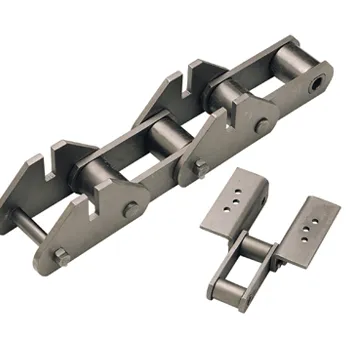
How does a conveyor chain impact material flow in a production line?
A conveyor chain plays a crucial role in facilitating the smooth and efficient flow of materials in a production line. Here are the key ways in which a conveyor chain impacts material flow:
1. Continuous Movement: A conveyor chain enables continuous movement of materials along the production line. By securely holding and transporting the materials, the chain ensures a consistent flow without interruptions or delays.
2. Speed Control: The speed at which the conveyor chain moves can be adjusted to match the desired production rate. This allows for precise control over the material flow, ensuring that it aligns with the downstream processes and avoids bottlenecks or overloading.
3. Orientation and Positioning: Conveyor chains can be designed with specific attachments or fixtures to orient and position materials in a desired manner. This ensures that the materials are presented correctly for processing, assembly, or packaging, optimizing the overall production flow.
4. Sorting and Diverging: In certain applications, conveyor chains can be equipped with mechanisms for sorting or diverging materials based on predetermined criteria. This allows for efficient routing of different products or components to their respective destinations, streamlining the material flow.
5. Accumulation and Buffering: Conveyor chains can incorporate accumulation zones or buffering areas where materials can temporarily pause or accumulate. This feature is useful when downstream processes experience temporary disruptions or when there is a need to balance the flow between different production stages.
6. Integration with Equipment: Conveyor chains can be integrated with other equipment or machines in the production line, such as robotic arms, automated packaging systems, or inspection stations. This seamless integration enables synchronized material handling, optimizing the flow and efficiency of the entire production process.
7. Customization for Specific Needs: Conveyor chains can be customized to meet specific material handling requirements. This includes considerations such as chain width, length, height adjustments, inclines or declines, and specialized attachments or guides. Such customization ensures that the material flow is tailored to the unique needs of the production line.
By providing a reliable and controlled method of transporting materials, a conveyor chain significantly influences the material flow in a production line. It enhances productivity, reduces manual handling, minimizes the risk of errors or damage, and ultimately contributes to the overall efficiency and success of the manufacturing process.
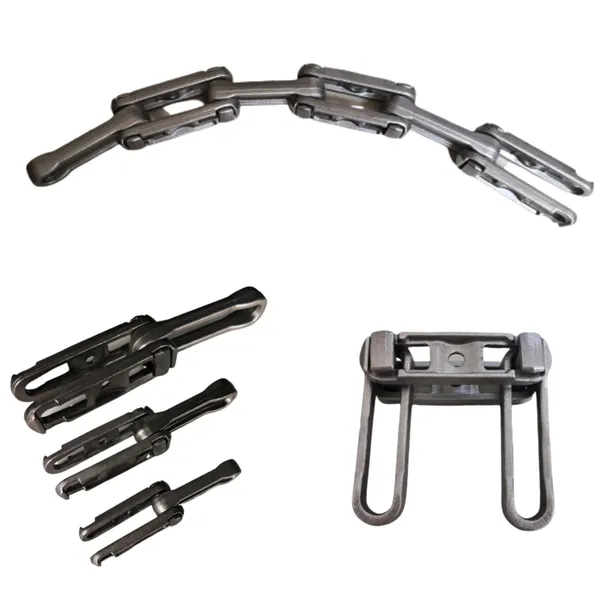
What are the signs of wear and tear in a conveyor chain?
Over time, a conveyor chain may experience wear and tear due to the demanding nature of material handling operations. Several signs indicate the need for maintenance or replacement of a conveyor chain. These signs of wear and tear include:
- Chain Elongation: One of the common signs of wear in a conveyor chain is elongation. As the chain wears, the pitch between the chain links gradually increases, resulting in a longer chain length. Excessive elongation can cause improper engagement with sprockets, leading to slippage or chain derailment.
- Chain Link Plate Wear: The link plates of a conveyor chain can experience wear on their surfaces. This wear is typically caused by friction against sprockets, guide rails, or other components. Signs of plate wear include thinning or deformation of the link plates, which can affect the overall strength and integrity of the chain.
- Sprocket Tooth Wear: The teeth of the sprockets that engage with the conveyor chain can also exhibit signs of wear. Over time, the teeth may become worn down, rounded, or have irregular shapes. This wear can cause improper chain engagement, resulting in reduced efficiency and potential chain slipping or skipping.
- Ruído excessivo: Increased noise during the operation of the conveyor system can indicate wear and tear in the chain. Excessive wear can lead to metal-to-metal contact, resulting in noisy operation. Unusual squeaking, grinding, or rattling sounds are indicators that the chain may require inspection or maintenance.
- Visible Damage: Any visible damage to the chain, such as cracked or broken link plates, bent pins, or missing attachments, is a clear sign of wear and tear. These damages compromise the chain’s structural integrity and should be addressed promptly to prevent further issues or chain failure.
- Inconsistent Movement: If the conveyor chain starts to exhibit jerky or uneven movement, it may be a sign of wear or misalignment. Misalignment can occur due to worn chain links, damaged sprockets, or improper tensioning. Inconsistent movement can lead to reduced efficiency, increased wear, and potential chain failure.
Regular inspection and maintenance of the conveyor chain system are essential to identify these signs of wear and tear. Timely replacement of worn components and proper lubrication can help prolong the life of the chain and maintain efficient operation.


editor by CX 2024-03-26