Descriere produs
Descriere produs
Product Parameter
| Product Name | Cathode Copper Conveyor Chain |
| Standard | GB, ISO, ANSI, DIN |
| Structure | Lanț transportor |
| Treatment | Heat treatment |
| Certificări | ISO9001:2015, GB/T19001-2016, ISO1400:2015 |
| Rezistență la tracțiune | High strength |
| Packaging | Plastic Bag+ Carton+Wooden Case |
| Aplicație | Industry Machinery |
More Products
Advantage
Certificări
DETAILS ABOUT CZPT CHAIN
Exhibition
Workshop
Packaging Details
Shipping
FAQ
1. Are you a manufacturer or trade Company?
We are a factory founded in 1997 with a trade team for international service.
2. What terms of payment do you usually use?
T/T 30% deposit and 70% against document, Western Union, L/C at sight
3. What is your lead time for your goods?
Normally 35 days after confirmed order. 30 days could be available in the low season for some items (during May to July), and 45 days during the new year and hot season ( Jan to March).
4. Samples
For customers who need sample confirmation before ordering, please bear in mind that the following policy will be adopted:
1) All samples are free of charge with a maximum value not exceeding USD 100.
2) The courier cost for the first-time sample sending will be charged by the consignee. We will send the samples with freight to be collected. So please inform your account with FedEx, UPS, DHL, or TNT so that we can proceed promptly.
3) The first-time courier cost will be deducted from the contract value of the trial cooperation.
| Material: | Stainless Steel |
|---|---|
| Structura: | Lanț cu role |
| Tratament de suprafață: | Lustruire |
| Dimensiunea lanțului: | 1/2"*11/128" |
| Caracteristică: | Fire Resistant, Oil Resistant, Heat Resistant |
| Heat Treatment: | High Temperature Hardening |
| Mostre: | US$ 0/Bucată 1 bucată (comandă minimă) | |
|---|
| Personalizare: | Disponibil | Cerere personalizată |
|---|

What are the considerations for selecting a corrosion-resistant conveyor chain?
When selecting a corrosion-resistant conveyor chain, several considerations should be taken into account to ensure optimal performance and longevity in corrosive environments. Here are the key factors to consider:
– Material Selection:
Choose a conveyor chain material that is resistant to the specific corrosive agents present in the environment. Stainless steel, plastic, and special coatings such as zinc or nickel plating are commonly used for their corrosion resistance properties.
– Corrosion Resistance Ratings:
Review the corrosion resistance ratings of different chain materials and coatings. Look for industry standards such as ASTM or ISO ratings that indicate the material’s resistance to specific corrosive substances or environmental conditions.
– Environmental Factors:
Consider the specific environmental factors that contribute to corrosion, such as humidity, temperature, presence of chemicals or solvents, and exposure to saltwater or acids. Evaluate how these factors may impact the chain’s corrosion resistance requirements.
– Coating or Surface Treatment:
If using a metal chain, consider applying additional coatings or surface treatments to enhance its corrosion resistance. Options may include electroplating, powder coating, or using specialized anti-corrosion coatings.
– Compatibility with Cleaning Methods:
Ensure that the selected chain material is compatible with the cleaning methods and chemicals used in the application. Some corrosive-resistant materials may require specific cleaning procedures to maintain their performance and longevity.
– Operational Considerations:
Take into account the load capacity, speed, and operational requirements of the conveyor system. Ensure that the corrosion-resistant chain can withstand the mechanical stresses and operational demands without compromising its corrosion resistance properties.
– Cost-Effectiveness:
Weigh the initial cost and long-term benefits of using a corrosion-resistant conveyor chain. While corrosion-resistant materials may have a higher upfront cost, they can significantly reduce maintenance, replacement, and downtime costs associated with corrosion-related failures.
By considering these factors, you can select a corrosion-resistant conveyor chain that is well-suited for the specific corrosive environment, ensuring reliable and durable performance in applications such as chemical processing, food production, wastewater treatment, or outdoor environments.
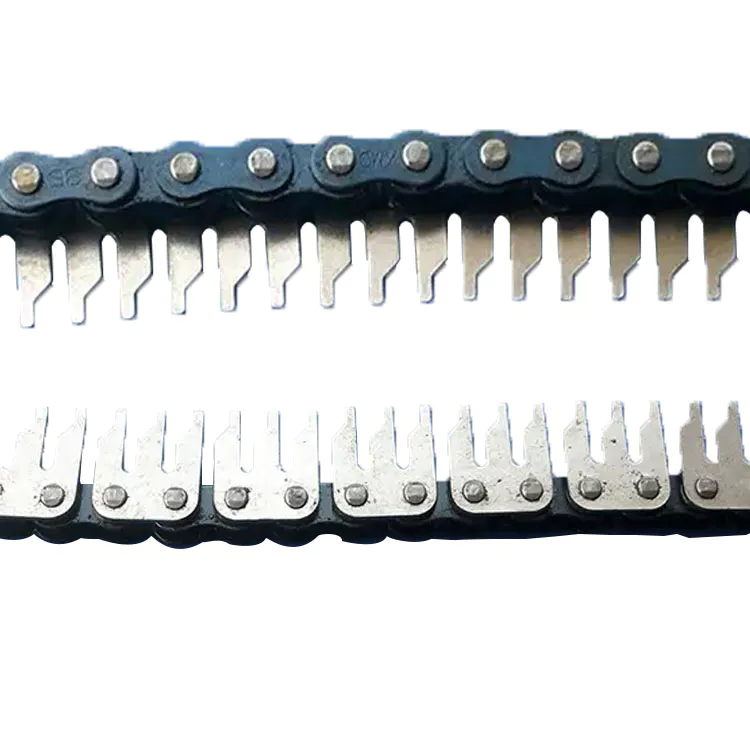
Can a conveyor chain be used in food processing applications?
Yes, a conveyor chain can be used in food processing applications. Conveyor chains play a crucial role in the efficient and hygienic handling of food products throughout the production process. Here are some key points to consider:
1. Food-Grade Materials: Conveyor chains used in food processing applications are typically made from food-grade materials such as stainless steel or plastic. These materials are corrosion-resistant, easy to clean, and comply with food safety regulations.
2. Hygiene Considerations: Food processing environments require high standards of hygiene. Conveyor chains designed for food applications incorporate features such as smooth surfaces, open link designs, and easy disassembly for thorough cleaning. They may also have specialized coatings or treatments to prevent bacterial growth.
3. Sanitary Design: Conveyor chains for food processing applications are designed with minimal crevices or joints to prevent food particles from getting trapped. They may have self-draining capabilities to remove excess fluids or debris.
4. Product Integrity: Conveyor chains in food processing applications ensure gentle handling of delicate food products to avoid damage or contamination. They can be equipped with accessories like cleats, side guards, or modular belt systems to securely hold and transport items of various shapes and sizes.
5. High Temperature and Washdown Capabilities: Some food processing applications require conveyor chains to withstand high temperatures during cooking, baking, or sterilization processes. Specialized chains with heat-resistant materials or coatings are available. Additionally, conveyor chains used in food processing should be capable of withstanding frequent washdowns and cleaning with water or cleaning agents.
6. Compliance with Standards: Conveyor chains used in food processing applications must comply with industry-specific standards such as FDA (Food and Drug Administration) regulations, HACCP (Hazard Analysis Critical Control Point) guidelines, and other food safety certifications.
When selecting a conveyor chain for food processing applications, it is important to consider the specific requirements of the production line, including the type of food being handled, the operating conditions, and the necessary sanitary standards. Proper maintenance and regular cleaning protocols should also be implemented to ensure food safety and product integrity.
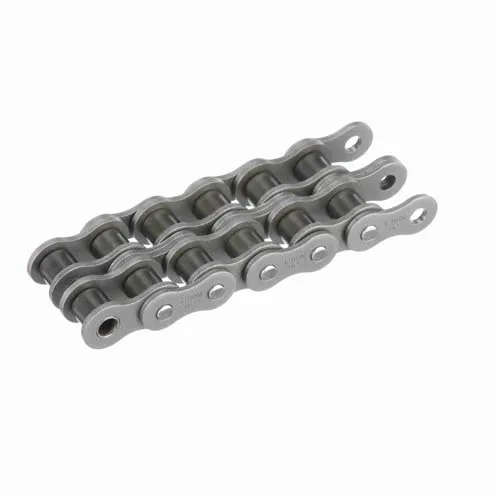
Ce măsuri de siguranță trebuie respectate atunci când se lucrează cu lanțuri transportoare?
Lucrul cu lanțuri transportoare implică potențiale pericole și este esențial să se respecte măsurile de siguranță adecvate pentru a asigura bunăstarea lucrătorilor și a preveni accidentele. Iată câteva măsuri de siguranță importante de luat în considerare:
- Antrenament adecvat: Asigurați-vă că lucrătorii care operează sau întrețin lanțurile transportoare primesc instruire adecvată privind practicile de siguranță, inclusiv manipularea lanțurilor, procedurile de întreținere și protocoalele de urgență.
- Echipament individual de protecție (EIP): Lucrătorii trebuie să poarte echipament individual de protecție adecvat, cum ar fi ochelari de protecție, mănuși și încălțăminte cu vârf de oțel, pentru a se proteja de potențialele pericole, inclusiv resturi proiectate, puncte de prindere sau încurcare.
- Blocare/Etichetare: Înainte de a efectua orice sarcini de întreținere sau reparații la lanțurile transportoare, urmați procedurile de blocare/etichetare pentru a izola și deconecta echipamentul de la sursa de alimentare și a preveni pornirea accidentală sau eliberarea energiei stocate.
- Pază: Asigurați-vă că lanțurile transportoarelor sunt protejate corespunzător pentru a preveni accesul la piesele mobile, cum ar fi punctele de prindere și pinioanele rotative. Apărătorile trebuie să fie fixate în siguranță și să nu interfereze cu funcționarea lanțului.
- Menaj: Mențineți zona de lucru curată și lipsită de resturi, unelte sau alte obiecte care ar putea cauza pericole de împiedicare sau ar putea interfera cu funcționarea lanțului transportorului.
- Inspecții regulate: Inspectați periodic lanțurile transportoarelor pentru a depista orice semne de uzură, deteriorare sau nealiniere. Remediați prompt orice problemă pentru a preveni potențialele pericole de siguranță.
- Încărcare și descărcare în siguranță: La încărcarea sau descărcarea materialelor pe transportor, urmați tehnicile de ridicare în siguranță și asigurați-vă că sarcina este distribuită uniform pentru a preveni supraîncărcarea sau dezechilibrul.
- Dispozitive de oprire de urgență: Instalați și marcați clar dispozitivele de oprire de urgență de-a lungul sistemului transportor pentru a permite oprirea imediată în caz de urgență sau situație periculoasă.
- Comunicare clară: Stabiliți protocoale de comunicare clare, inclusiv semnale sau semne, pentru a asigura o comunicare eficientă între lucrătorii care operează diferite secțiuni ale sistemului de transport.
Aceste măsuri de precauție sunt îndrumări generale și este important să consultați și să respectați reglementările și îndrumările specifice de siguranță furnizate de producătorul echipamentului și de autoritățile de siguranță relevante. Instruirea regulată în domeniul siguranței, conștientizarea și o cultură proactivă a siguranței sunt cruciale pentru menținerea unui mediu de lucru sigur atunci când lucrați cu lanțuri transportoare.


editor by CX 2023-09-11