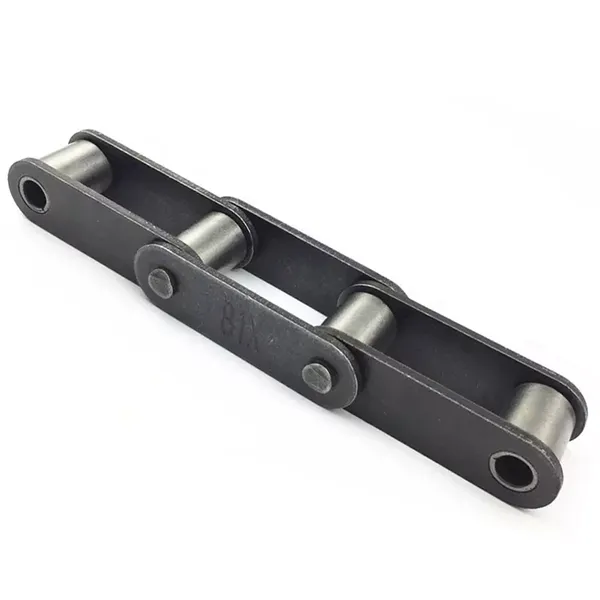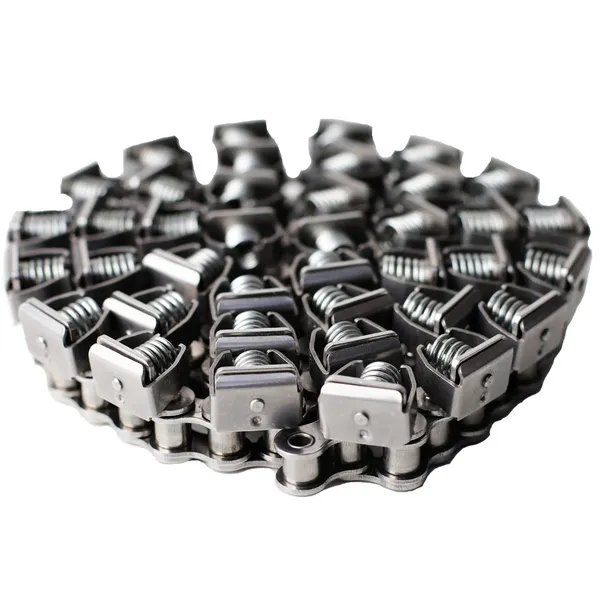
คำอธิบายผลิตภัณฑ์
| DIN Chain No. | ISO/ANSI Chain No. | P/mm | d1/mm | L/mm | b1/mm | T/mm | |||||||||||||||||||||||||||
| 08A-1 | 40 | 12.70 | 7.92 | 16.70 | 7.85 | 1.50 | |||||||||||||||||||||||||||
| 10A-1 | 50 | 15.875 | 10.16 | 20.70 | 9.40 | 2. Abbreviation: CHOHO Industry. √ HangZhou CHOHO Industrial Co., Ltd. was founded in 1999. Has become the leader of chain system technology, the first batch of natioal recognized enterprise technology center,national technology innovation demonstration enterprise,and the first A-share listed company in China’s chain drive industry.The securities code is 003033.
We are very close to the port of HangZhou, which saves a lot of logistics costs and transportation time! We have our own logistics company and transportation department. If you need me to deliver goods to your warehouse or other ports in China, such as ZheJiang Port and ZheJiang Port, we can also do it!
√ CHOHO has a natural brand awareness. As of January 2571, CHOHO has registered the “CHOHO” trademark in more than 60 countries, including the United States, Japan, the United Kingdom, France, Germany, Russia, Spain, Austria, Belgium, Bulgaria, Croatia, Czech Republic, Denmark, Finland, Greece , Hungary, Ireland, Italy, Netherlands, Poland, Portugal, Romania, Ukraine, Sweden, Australia, Algeria, Egypt, Kenya, Morocco, South Korea, Kazakhstan, Mongolia, Syria, Thailand, Pakistan, India, Brazil, Mexico, Colombia, etc. CHOHO has been invited to participate in many international exhibitions around the world, including industrial exhibitions, agricultural exhibitions, motorcycle exhibitions, engine exhibitions, such as Hannover Messe, Bologna Fair, Canton Fair ,VIV ASIA and other world famous exhibitions! COOPERATIVE CLIENT ตลาดช่องทางลูกค้าที่หลากหลายยังคงพัฒนาอย่างต่อเนื่อง! Choho ให้บริการโซลูชันระบบห่วงโซ่อุปทานแก่บริษัทชั้นนำระดับโลก 500 อันดับแรก และบริษัทชั้นนำ 10 อันดับแรกในหลากหลายสาขา! คำถามที่พบบ่อย
1. Are you a Manufacturer or Trade Company? OTHER HOT SELL PRODUCTS
Thx for Reading!
.shipping-cost-tm .tm-status-off{background: none;padding:0;color: #1470cc}
สายพานลำเลียงจัดการกับการสะสมและการจัดเรียงอย่างไร?ในระบบสายพานลำเลียง การสะสมและการจัดเรียงหมายถึงวิธีการเฉพาะในการควบคุมการเคลื่อนที่และการจัดวางตำแหน่งของสิ่งของตามแนวสายพานลำเลียง โซ่สายพานลำเลียงสามารถจัดการการใช้งานเหล่านี้ได้อย่างมีประสิทธิภาพโดยใช้ส่วนประกอบและกลไกควบคุมเฉพาะทาง ต่อไปนี้เป็นคำอธิบายโดยละเอียด: การสะสม: – การสะสมหมายถึงกระบวนการจัดเก็บหรือพักวัสดุไว้ชั่วคราวบนสายพานลำเลียงเพื่อควบคุมการไหลของวัสดุ โซ่สายพานลำเลียงที่ออกแบบมาสำหรับการใช้งานแบบสะสมมักจะมีคุณสมบัติต่างๆ เช่น ตัวนำทางโซ่ที่มีแรงเสียดทานต่ำ โซนสะสม และเซ็นเซอร์ – ในระบบสายพานลำเลียงแบบสะสม สายพานจะถูกแบ่งออกเป็นโซนต่างๆ ที่สินค้าสามารถสะสมได้ เมื่อสินค้าเข้าสู่โซนใดโซนหนึ่ง สายพานจะชะลอความเร็วลงหรือหยุด ทำให้สินค้าสามารถสะสมได้โดยไม่ชนกัน เซ็นเซอร์หรือเซลล์แสงจะตรวจจับการมีอยู่ของสินค้าในแต่ละโซนและส่งสัญญาณเพื่อควบคุมการเคลื่อนที่ของสายพาน – สามารถควบคุมพื้นที่สะสมสินค้าในระบบสายพานลำเลียงได้หลายวิธี เช่น การใช้ลูกกลิ้งขับเคลื่อนด้วยมอเตอร์ อุปกรณ์ลม หรือเซ็นเซอร์อิเล็กทรอนิกส์ ซึ่งช่วยให้การไหลของสินค้าตามแนวสายพานลำเลียงเป็นไปอย่างควบคุมและประสานกัน การจัดทำดัชนี: – การกำหนดตำแหน่ง (Indexing) หมายถึงการจัดวางชิ้นส่วนต่างๆ อย่างแม่นยำในช่วงเวลาที่กำหนดตลอดสายพานลำเลียง วิธีนี้มักใช้ในงานที่ต้องการการจัดวางหรือลำดับที่แม่นยำ เช่น กระบวนการประกอบหรือการบรรจุภัณฑ์ – โซ่ลำเลียงที่ออกแบบมาสำหรับการใช้งานแบบกำหนดตำแหน่ง จะประกอบด้วยหมุดกำหนดตำแหน่ง ตัวหยุด หรือตัวขับกำหนดตำแหน่งที่มีความแม่นยำสูง ส่วนประกอบเหล่านี้ทำงานร่วมกันเพื่อวางตำแหน่งสิ่งของได้อย่างแม่นยำ ณ ตำแหน่งที่กำหนดไว้ล่วงหน้าตามแนวสายพานลำเลียง – กลไกการกำหนดตำแหน่งของระบบสายพานลำเลียงสามารถขับเคลื่อนได้ด้วยลูกเบี้ยวเชิงกล มอเตอร์เซอร์โว หรือตัวควบคุมลอจิกแบบโปรแกรมได้ (PLC) การเคลื่อนที่ของการกำหนดตำแหน่งสามารถซิงโครไนซ์กับกระบวนการหรือเครื่องจักรอื่นๆ ที่อยู่ถัดไป เพื่อให้มั่นใจได้ถึงการประกอบหรือการบรรจุภัณฑ์ที่แม่นยำ – ด้วยการผสานรวมความสามารถในการสะสมและการจัดทำดัชนี ระบบสายพานลำเลียงจึงสามารถรองรับการใช้งานได้หลากหลาย รวมถึงการคัดแยก การจัดเก็บ การจัดลำดับ และการประกอบอัตโนมัติ ระบบนี้ช่วยควบคุมการไหลและตำแหน่งของชิ้นงาน ทำให้การจัดการวัสดุมีประสิทธิภาพและกระบวนการผลิตได้รับการปรับให้เหมาะสมที่สุด
How do you calculate the power requirements for a conveyor chain?Calculating the power requirements for a conveyor chain involves considering various factors. Here’s a step-by-step process: 1. Determine the total weight to be transported: Measure or estimate the total weight of the material or product that will be carried by the conveyor chain. This includes the weight of the product itself, any packaging, and additional loads. 2. Determine the speed of the conveyor: Determine the desired speed at which the conveyor chain will operate. This is typically measured in feet per minute (FPM) or meters per second (m/s). 3. Calculate the required capacity: Multiply the total weight by the desired speed to determine the required capacity of the conveyor system. This will give you the weight per unit of time (e.g., pounds per minute or kilograms per hour). 4. Consider the conveyor’s design factors: Take into account various design factors such as the type and pitch of the conveyor chain, the coefficient of friction between the chain and the conveyor components, and any incline or decline angles of the conveyor system. These factors affect the power requirements. 5. Determine the required power: Use the following formula to calculate the power requirements: Power (in horsepower) = (Capacity × Friction Factor) ÷ (33,000 × Efficiency) Where: – Capacity is the weight per unit of time (from step 3) – Friction Factor is the ratio of chain tension to chain weight, taking into account the design factors – 33,000 is a conversion factor to convert the units to horsepower – Efficiency is the overall efficiency of the conveyor system, typically expressed as a decimal value (e.g., 0.95 for 95% efficiency) 6. Select a suitable motor: Based on the calculated power requirements, select a motor that can provide the necessary power to drive the conveyor chain. Consider factors such as motor type, motor efficiency, and overload capacity. It’s important to note that the power requirements may vary depending on specific conveyor system designs and operating conditions. Consulting with a qualified engineer or conveyor manufacturer is recommended to ensure accurate calculations and proper motor selection.
What are the main components of a conveyor chain?The main components of a conveyor chain include:
The combination of these components creates a robust and reliable conveyor chain system capable of efficiently transporting materials in a wide range of industrial applications.
|