Descrição do produto
Descrição do produto
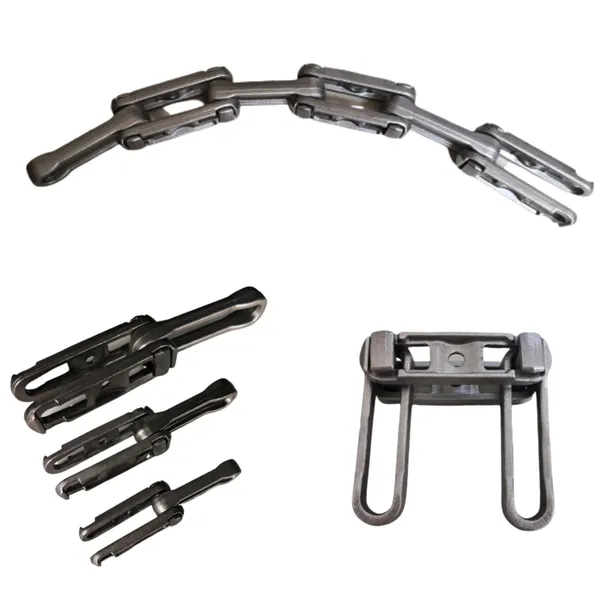
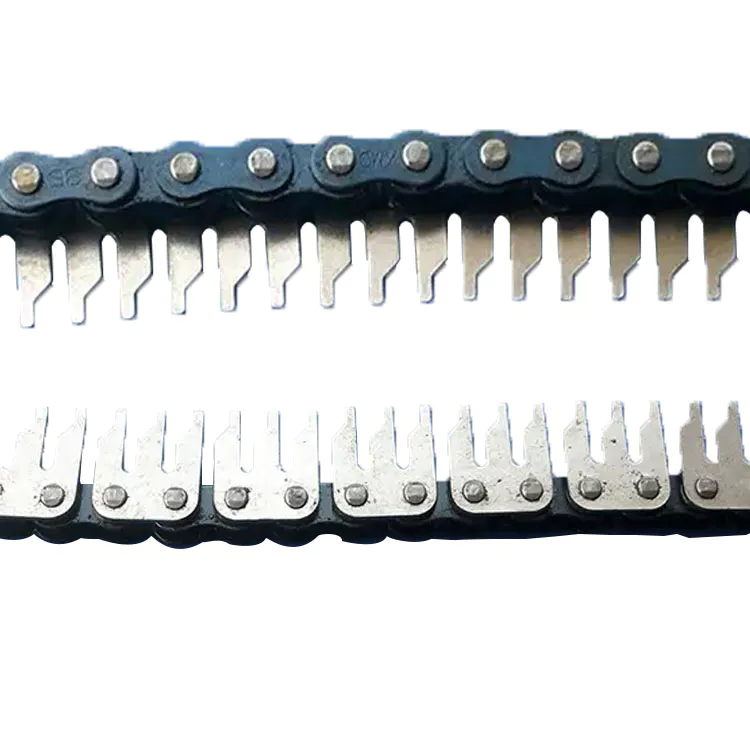
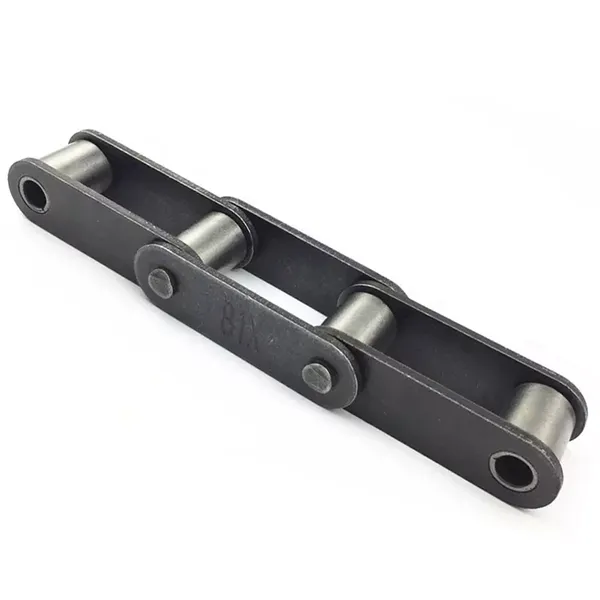
1, Our Chain types: Agricultural roller chain, hollow pin conveyor chain, sugar industry chain, cane feeder and washing table chain, welded steel chain, bakery industry chain, weld steel drag chains,coil conveyor chain, palm oil chain etc;
2, Main materials: It is 40Mn. 40Cr, 45Mn alloy steel, SUS304, and POM Plastic for plates, 10#, 20#, 20CrMnMo, 30CrMnTi for pins and rollers;
3, Heat treatment: Carburizing, Austemper Stressing, nitro-caburizing harden etc;
4, Surface: Shot peening, black, blue or original;
Detailed Photos
For example of WH78, WH82, WH124, WH111, WH106, WH110, WH132, WH150, WH155
Parâmetros do produto
Embalagem e envio
plastic bag+carton+ OSB Case
Shipping way: these products will be shipped to your local port by sea, these also could be sent to your specific address by air.
Nossas vantagens
Our chains could be customized according to your actual order quantity, actual drawing and actual requirement. We have own chain process workshop, heat treatment workshop, process equipments and experienced designers.
(01)Assembled workshop
(02)Punching plate workshop
(03)Plate fabrication workshop
(04)Heat treatment workshop
(05)Shot peening workshop
(06) our warehouse
After Sales Service
Our products can be repaired or replaced the new parts with free cost in six months.
| Material: | Liga |
|---|---|
| Estrutura: | Corrente soldada |
| Tratamento de superfície: | Carburizing and Quenching |
| Tamanho da corrente: | 153.67mm |
| Recurso: | Resistente ao calor |
| Bush Diameter on Inner Link: | 44.50mm |
| Personalização: | Disponível | Solicitação personalizada |
|---|
Can a conveyor chain be used in cleanroom environments?
Yes, conveyor chains can be used in cleanroom environments with proper selection and design considerations. Cleanroom environments require stringent control of airborne particles, such as dust, microbes, and contaminants, to maintain high levels of cleanliness. Here are some factors to consider when using a conveyor chain in a cleanroom:
1. Seleção de Materiais:
– Choose a conveyor chain made from materials that are compatible with cleanroom requirements. Stainless steel, plastic, or special coatings are commonly used for their clean and non-contaminating properties.
– Avoid materials that generate excessive particles or contaminants, such as certain types of lubricants or chain coatings.
2. Design Considerations:
– Design the conveyor chain system to minimize particle generation. This includes smooth surfaces, rounded edges, and avoiding areas that can trap or accumulate particles.
– Use sealed or enclosed chain designs to prevent the release of lubricants or contaminants.
– Consider the integration of additional features, such as covers or guards, to further protect the chain and prevent particle ingress.
3. Cleaning and Maintenance:
– Establish a cleaning and maintenance protocol specific to the cleanroom environment. This may include regular cleaning and sanitization procedures to maintain cleanliness standards.
– Use cleaning agents and procedures that are approved for cleanroom use and do not introduce contaminants.
– Regularly inspect the conveyor chain system for any signs of wear, damage, or contamination. Promptly address any issues to ensure the chain’s reliability and cleanliness.
4. Compliance with Cleanroom Standards:
– Ensure that the conveyor chain system meets the cleanliness and particle generation requirements of the specific cleanroom standards or classifications in which it will be used.
– Comply with relevant industry guidelines and regulations, such as ISO standards, when selecting and using conveyor chains in cleanroom environments.
By considering these factors and implementing proper material selection, design considerations, cleaning protocols, and compliance with cleanroom standards, a conveyor chain can be effectively used in cleanroom environments while maintaining the required cleanliness levels.
Quais são as vantagens de usar uma corrente transportadora de plástico?
As correntes transportadoras de plástico oferecem diversas vantagens em relação às correntes metálicas tradicionais. Aqui estão algumas das principais vantagens:
1. Resistência à corrosão: As correntes de plástico são altamente resistentes à corrosão, tornando-as ideais para aplicações em ambientes úmidos ou corrosivos. Elas não enferrujam nem se deterioram quando expostas à umidade ou a produtos químicos.
2. Leveza: As correntes de plástico são significativamente mais leves do que as correntes de metal, o que facilita o manuseio e a instalação. Sua leveza reduz o peso total do sistema de transporte e pode resultar em economia de energia durante a operação.
3. Operação silenciosa: As correntes de plástico geram menos ruído em comparação com as correntes de metal, proporcionando um ambiente de trabalho mais silencioso. Isso pode ser particularmente benéfico em indústrias onde a redução de ruído é importante, como no processamento ou embalagem de alimentos.
4. Redução do atrito e do desgaste: As correntes de plástico possuem propriedades autolubrificantes, que reduzem o atrito e o desgaste. Isso resulta em menores necessidades de manutenção e maior vida útil da corrente. A superfície lisa das correntes de plástico também minimiza o risco de danos ao produto durante o transporte.
5. Flexibilidade e Modularidade: As correntes de plástico podem ser facilmente personalizadas e projetadas para atender às necessidades específicas de sistemas de transporte. Elas oferecem flexibilidade em termos de comprimento, largura e configuração. Além disso, as correntes de plástico são frequentemente modulares, permitindo a fácil substituição de seções danificadas ou desgastadas sem a necessidade de trocar toda a corrente.
6. Custo-benefício: As correntes transportadoras de plástico são geralmente mais econômicas em comparação com as correntes metálicas. Elas costumam ser mais baratas de fabricar e oferecem uma vida útil mais longa com requisitos mínimos de manutenção, resultando em custos gerais mais baixos.
7. Resistência Química: As correntes de plástico são resistentes a uma ampla gama de produtos químicos, tornando-as adequadas para aplicações onde a exposição a substâncias agressivas é uma preocupação. Elas podem suportar o contato com óleos, ácidos, álcalis e diversos agentes de limpeza.
De forma geral, as vantagens de usar correntes transportadoras de plástico incluem resistência à corrosão, design leve, operação silenciosa, redução do atrito e desgaste, flexibilidade, custo-benefício e resistência química. Esses benefícios tornam as correntes de plástico uma escolha popular em diversos setores, incluindo processamento de alimentos, embalagens, produtos farmacêuticos e logística.
What are the common causes of conveyor chain failures?
Conveyor chain failures can occur due to various reasons, and identifying the root cause is crucial for preventing future issues. Here are some common causes of conveyor chain failures:
- Lack of Lubrication: Insufficient or improper lubrication can lead to increased friction and wear on the chain components, resulting in premature failure.
- Excessive Load: Overloading the conveyor chain beyond its rated capacity can cause excessive stress and strain, leading to chain elongation, deformation, or link breakage.
- Misalignment: Improper alignment of the conveyor chain can cause uneven loading and excessive wear on specific areas, leading to chain failure.
- Environmental Factors: Harsh operating environments, such as high temperatures, corrosive substances, or abrasive materials, can accelerate chain wear and corrosion, leading to failure.
- Foreign Objects: The presence of foreign objects or debris on the conveyor system can interfere with the movement of the chain, causing jamming, binding, or chain damage.
- Poor Maintenance: Inadequate maintenance practices, such as irregular inspections, failure to address minor issues promptly, or neglecting to replace worn components, can contribute to chain failures.
- Incorrect Installation: Improper installation, including incorrect tensioning, misalignment, or using incompatible components, can result in premature chain failure.
- Fatigue and Wear: Continuous operation over time can lead to fatigue and wear in the chain, especially in high-speed or heavy-duty applications, resulting in eventual failure.
Regular maintenance, proper lubrication, adequate training for operators, and adherence to manufacturer guidelines can help mitigate these common causes of conveyor chain failures. Conducting routine inspections, promptly addressing issues, and replacing worn components can also significantly extend the life of the conveyor chain.


editor by CX 2023-10-24