Description du produit
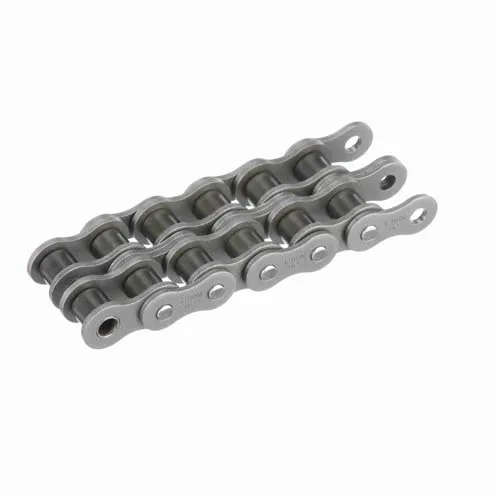
Chaîne de transmission à rouleaux de convoyeur de précision à pas court duplex (DIN764)
CHAÎNES À ROULEAUX DE PRÉCISION À PAS COURT (SÉRIE B)
Matériau : Acier allié
Traitement de surface : grenaillage / noircissement / bleuissement
Application principale : Machines industrielles
N° DE CHAÎNE ANSI : 05B-2 06B-2 10B-2 12B-2 16B-2 20B-2 24B-2 28B-2 32B-2 40B-2 48B-2 56B-2 72B-2
Hauteur : 8 9,525 12,7 15,875 19,05 25,4 31,75 38,1 44,45 50,8 63,5 76,2 88,9 101,6 114,3
| Nom du produit | Chaîne à rouleaux de précision duplex à pas court (série B) (DIN764) |
| Matériaux disponibles | 1. Acier inoxydable : SS201, SS303, SS304, SS316, SS416, SS420 |
| 2. Acier : C45 (K1045), C46 (K1046), C20 | |
| 3. Laiton : C36000 (C26800), C37700 (HPb59), C38500 (HPb58), C27200 (CuZn37), C28000 (CuZn40) | |
| 4. Bronze : C51000, C52100, C54400, etc. | |
| 5. Fer : 1213, 12L14, 1215 | |
| 6. Aluminium : Al6061, Al6063 | |
| 7. Fabrication sur mesure selon votre demande | |
| Traitement de surface | Recuit, anodisation naturelle, traitement thermique, polissage, nickelage, chromage, zingage, passivation jaune, passivation or, satinage, peinture noire, etc. |
| Produits disponibles | chaînes à pignons, poulies, arbres (essieux, arbres cannelés, arbres à dents), engrenages (pignons, roues, crémaillères), roulements, sièges de roulements, bagues, accouplements, ensembles de verrouillage, etc. |
| Méthode de traitement | Usinage CNC, poinçonnage, tournage, fraisage, perçage, rectification, brochage, soudage et assemblage |
| QC : | Les techniciens effectuent un autocontrôle en production, et un contrôle final avant emballage est réalisé par un inspecteur qualité professionnel. |
| Taille | Dessins |
| Emballer | Caisse/conteneur en bois et palette, ou selon les spécifications personnalisées |
| Certificat | ISO 9001:2008, ISO 14001:2001, ISO/TS 16949:2009 |
| Avantage | Qualité avant tout, service supérieur, équipements de pointe, personnel expérimenté, matériel de test parfait |
| Délai de mise en œuvre | Échantillons : 15 à 25 jours. Commande officielle : 30 à 45 jours. |
1. Êtes-vous fabricant ou société commerciale ?
Nous sommes une usine fondée en 1991 avec une équipe commerciale dédiée au service international.
2. Quelles sont vos conditions de paiement habituelles ?
Paiement par virement bancaire (T/T 30%) pour dépôt et par virement (T/T 70%) contre documents, Western Union ou lettre de crédit à vue.
3. Quel est votre délai de livraison pour vos marchandises ?
Normalement, 45 jours après confirmation de la commande. Un délai de 30 jours peut être disponible en basse saison pour certains articles (de mai à juillet), et de 65 jours pendant la période des fêtes et la haute saison (de janvier à mars).
4. Assistez-vous à des spectacles ?
Nous participons au salon de Hanovre en Allemagne, au NMW en Australie, à la Foire de Canton, au PTC en Chine et à de nombreux autres salons spécialisés dans le meuble.
| Usage: | Chaîne de transmission |
|---|---|
| Matériel: | Acier allié/carbone |
| Traitement de surface : | Polissage |
| Fonctionnalité: | Résistant à la chaleur |
| Taille de la chaîne : | 1/2"*3/32" |
| Structure: | Chaîne à rouleaux |
| Personnalisation : | Disponible | Demande personnalisée |
|---|
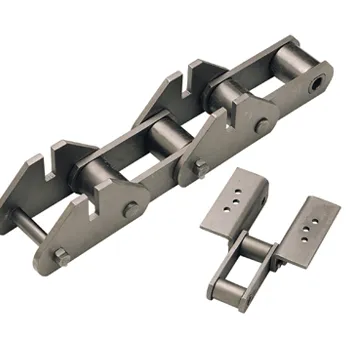
Une chaîne de convoyeur peut-elle être utilisée dans les systèmes de convoyeurs aériens ?
Oui, une chaîne de convoyage peut être utilisée dans les systèmes de convoyage aérien. Ces systèmes sont conçus pour déplacer des matériaux, des produits ou des composants le long d'une trajectoire surélevée, généralement dans les usines ou les centres de distribution.
Les chaînes de convoyeurs utilisées dans les systèmes de convoyage aérien sont spécialement conçues pour supporter le poids et la charge requis par l'application. Elles sont généralement fabriquées à partir de matériaux durables tels que l'acier ou l'acier inoxydable afin de garantir leur robustesse et leur longévité.
Voici quelques points clés à prendre en compte lors de l'utilisation d'une chaîne de convoyeur dans les systèmes de convoyeurs aériens :
1. Capacité de charge :
– S’assurer que la chaîne du convoyeur possède une capacité de charge suffisante pour supporter le poids des articles transportés. Cette capacité de charge doit être déterminée en fonction de la charge maximale prévue et des forces dynamiques potentielles.
2. Type et conception de la chaîne :
– Choisissez une chaîne de convoyage adaptée aux applications aériennes, comme une chaîne de convoyage aérien ou une chaîne à denture inversée. Ces chaînes sont spécialement conçues pour répondre aux exigences spécifiques du convoyage aérien.
3. Lubrification :
Une lubrification adéquate est essentielle au bon fonctionnement de la chaîne de convoyage dans un système aérien. Il est recommandé d'utiliser des lubrifiants adaptés aux applications aériennes et d'assurer une lubrification régulière afin de minimiser la friction et l'usure.
4. Mesures de sécurité :
– Mettre en œuvre des mesures de sécurité appropriées pour prévenir les accidents et garantir la sécurité des travailleurs. Cela peut inclure l’installation de dispositifs de sécurité, de systèmes d’arrêt d’urgence et la mise en place de procédures régulières d’entretien et d’inspection.
Il est important de consulter les fabricants de systèmes de convoyage ou des experts spécialisés dans les systèmes de convoyage aériens afin de s'assurer que la chaîne de convoyage est sélectionnée et installée correctement pour les exigences spécifiques de l'application.

Quels sont les facteurs à prendre en compte lors du choix du pas d'une chaîne de convoyeur ?
Lors du choix du pas d'une chaîne de convoyeur, plusieurs facteurs doivent être pris en compte afin de garantir des performances et une efficacité optimales. Voici les principaux facteurs :
1. Capacité de charge : Le pas de la chaîne du convoyeur doit être choisi en fonction de la capacité de charge prévue du système. Tenez compte du poids et des dimensions des matériaux transportés afin de garantir que la chaîne puisse supporter la charge requise sans dépasser sa capacité.
2. Vitesse et application : La vitesse de fonctionnement du système de convoyage et l’application spécifique influent sur le choix du pas. À vitesse élevée, des chaînes à pas plus court peuvent être nécessaires pour un fonctionnement fluide et fiable.
3. Longueur du convoyeur : La longueur du système de convoyage influe sur le choix du pas de la chaîne. Les convoyeurs plus longs peuvent nécessiter des chaînes à pas plus grand afin de répartir la charge et de réduire la tension sur chaque maillon.
4. Contraintes d'espace : Tenez compte de l'espace disponible pour le système de convoyage. Dans les applications où l'espace est limité, il peut être préférable d'utiliser des chaînes à pas plus court afin de minimiser l'encombrement global du convoyeur.
5. Usure et entretien : Le choix du pas doit également tenir compte de l’usure et des besoins d’entretien prévus. Les chaînes à pas plus petit offrent souvent une meilleure résistance à l’usure et peuvent nécessiter une lubrification et un entretien moins fréquents.
6. Régulation de la vitesse : Si le système de convoyage nécessite une régulation de vitesse ou un positionnement précis, le choix du pas doit être adapté aux capacités de contrôle du système d’entraînement. Les chaînes à pas plus court offrent un contrôle et une précision accrus.
7. Compatibilité : Assurez-vous que le pas sélectionné est compatible avec les autres composants du système de convoyage, notamment les pignons, les guides et les accessoires. Ces derniers doivent être conçus pour fonctionner ensemble de manière fluide et efficace.
8. Environnement d'application : Tenez compte des conditions environnementales dans lesquelles le convoyeur fonctionnera. Des facteurs tels que la température, l'humidité, les substances corrosives ou les matériaux abrasifs peuvent influencer le choix du pas et du matériau de la chaîne afin d'assurer sa durabilité et sa longévité.
En tenant compte de ces facteurs, vous pouvez sélectionner le pas approprié pour la chaîne du convoyeur, garantissant ainsi des performances optimales, une longue durée de vie et un fonctionnement fiable du système.
Quelles précautions de sécurité doivent être suivies lors de la manipulation de chaînes de convoyeurs ?
L’utilisation de chaînes de convoyeurs comporte des risques potentiels ; il est donc essentiel de respecter les consignes de sécurité afin de garantir la sécurité des travailleurs et de prévenir les accidents. Voici quelques mesures de sécurité importantes à prendre en compte :
- Formation adéquate : Veillez à ce que les travailleurs qui utilisent ou entretiennent les chaînes de convoyeurs reçoivent une formation adéquate sur les pratiques de sécurité, notamment la manipulation des chaînes, les procédures d'entretien et les protocoles d'urgence.
- Équipement de protection individuelle (EPI) : Les travailleurs doivent porter un équipement de protection individuelle approprié, tel que des lunettes de sécurité, des gants et des chaussures à embout d'acier, afin de se protéger des dangers potentiels, notamment les projections de débris, les points de pincement ou les risques d'enchevêtrement.
- Consignation/Étiquetage : Avant d'effectuer toute opération de maintenance ou de réparation sur les chaînes de convoyeurs, suivez les procédures de consignation/déconsignation pour isoler et mettre hors tension l'équipement afin d'éviter tout démarrage accidentel ou toute libération d'énergie stockée.
- Garde: Veillez à ce que les chaînes de convoyeur soient correctement protégées afin d'empêcher l'accès aux pièces mobiles, telles que les points de pincement et les pignons rotatifs. Les protections doivent être solidement fixées et ne pas entraver le fonctionnement de la chaîne.
- Entretien ménager : Maintenez la zone de travail propre et exempte de débris, d'outils ou d'autres objets susceptibles de provoquer des chutes ou d'entraver le fonctionnement de la chaîne du convoyeur.
- Inspections régulières : Inspectez régulièrement les chaînes du convoyeur afin de détecter tout signe d'usure, de dommage ou de désalignement. Réglez rapidement tout problème afin de prévenir tout risque potentiel pour la sécurité.
- Chargement et déchargement en toute sécurité : Lors du chargement ou du déchargement de matériaux sur le convoyeur, respectez les techniques de levage sécuritaires et assurez-vous que la charge est répartie uniformément afin d'éviter toute surcharge ou tout déséquilibre.
- Dispositifs d'arrêt d'urgence : Installez et signalez clairement les dispositifs d'arrêt d'urgence le long du système de convoyeur afin de permettre un arrêt immédiat en cas d'urgence ou de situation dangereuse.
- Communication claire : Établir des protocoles de communication clairs, incluant des signaux ou des panneaux, afin d'assurer une communication efficace entre les travailleurs exploitant différentes sections du système de convoyage.
Ces consignes de sécurité constituent des recommandations générales. Il est important de consulter et de respecter les réglementations et consignes de sécurité spécifiques fournies par le fabricant de l'équipement et les autorités compétentes en matière de sécurité. Une formation régulière à la sécurité, la sensibilisation et une culture de sécurité proactive sont essentielles pour maintenir un environnement de travail sûr lors de l'utilisation de chaînes de convoyeurs.


Édité par CX le 10/08/2023