Description du produit
HangZhou HAYING TECHNOLOGY INDUSTRIES CO., LTD
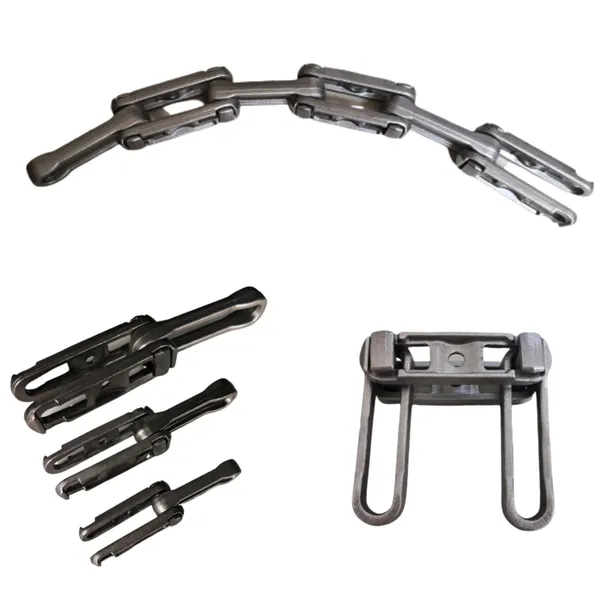
We are a research and development production, distribution in 1 of the business enterprises. The main production of Marine anchor chain and hoist ring chain, hoist chain and various accessories.
Founded in 1965, has been producing Marine anchor chain (13-46) and elevator ring chain (13-30), plate chain and various types of machine accessories. Also distributes Japanese standard, American standard, German standard series chain, sprocket, can be processed according to the user’s drawing.
Products are widely used in agricultural machinery, lifting platform, food machinery, metallurgical machinery, mining machinery, engineering machinery, road construction machinery, CNC machinery and other industries.
Our high-quality products have won the recognition of the majority of users, the current products are not only sold to more than 30 provinces and cities in the country, but also exported to many countries in Asia, Europe and America.
Our company has a complete and scientific quality management system, we regard quality as the core element of the long-term development of enterprises. And has a mature production technology, good service attitude of the team. We will continue to strengthen the technology research and development and manufacturing capabilities of high-end products, and continue to introduce products with market competitiveness to meet the needs of our customers.
Description du produit
Large conveying capacity: conveying capacity up to 100m3/h
Long service life: The high strength wear-resistant chain made of alloy steel by advanced heat treatment means can ensure the service life of the conveyor chain for 3-5 years under normal continuous use
Wide lifting range: it can not only lift powder and granular materials, but also lift large grinding materials and materials with temperatures up to 200ºC
High lifting height: under the rated conveying capacity, the lifting height can reach 50m. Materials with high humidity and strong viscosity should not be selected
| Matériel: | Iron |
|---|---|
| Structure: | Chaîne soudée |
| Traitement de surface : | Polissage |
| Taille de la chaîne : | 1/2"*11/128" |
| Fonctionnalité: | Résistant à la chaleur |
| Garantie: | 1-3 Years |
| Personnalisation : | Disponible | Demande personnalisée |
|---|
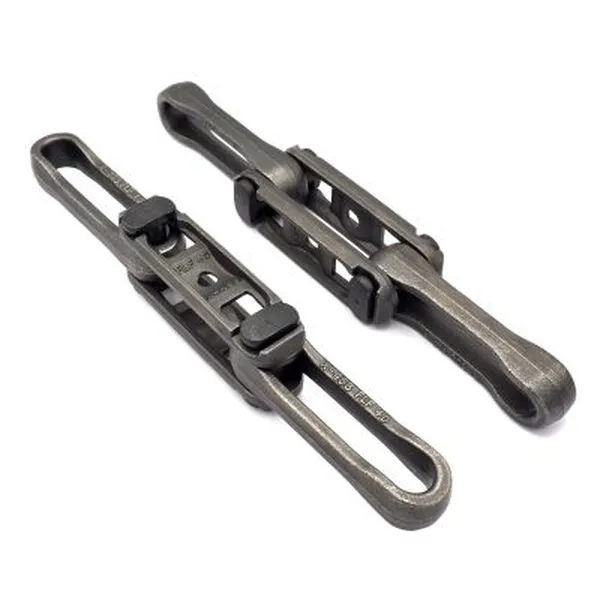
Quels sont les avantages de l'utilisation d'une chaîne de convoyeur à lattes ?
Une chaîne de convoyeur à lattes offre plusieurs avantages pour la manutention et le transport de matériaux. Voici quelques-uns de ses principaux atouts :
1. Capacité de charge élevée :
– Les chaînes de convoyeurs à lattes sont conçues pour supporter des charges lourdes et résister aux environnements industriels rigoureux.
– Ils sont couramment utilisés dans des applications nécessitant le transport d'objets volumineux, encombrants ou de forme irrégulière, tels que des pièces automobiles, des palettes ou des conteneurs.
2. Flexibilité :
Les chaînes à maillons peuvent être personnalisées et configurées pour répondre à des exigences de convoyage spécifiques. Elles sont disponibles en différentes largeurs, longueurs et configurations de chaînes afin de s'adapter à des produits de tailles et de formes variées.
– La conception modulaire des chaînes à lattes permet de modifier ou d'étendre facilement le système de convoyage en fonction de l'évolution des besoins de production.
3. Polyvalence :
Les chaînes à maillons peuvent être utilisées pour le convoyage horizontal et incliné. Capables de transporter des produits en montée ou en descente, elles conviennent aux lignes de production présentant des dénivellations.
– Ces chaînes peuvent être intégrées à des courbes, des virages, des jonctions et des déviateurs pour créer des systèmes de convoyage complexes qui optimisent l'utilisation de l'espace et le flux de produits.
4. Durabilité et longévité :
– Les chaînes à lamelles sont généralement fabriquées à partir de matériaux robustes tels que l'acier ou le plastique, offrant une excellente durabilité et une grande résistance à l'usure.
– Ils peuvent résister à des conditions de fonctionnement exigeantes, notamment des températures élevées, des environnements corrosifs ou une exposition à des produits chimiques.
5. Peu d'entretien :
Les convoyeurs à chaînes à lattes nécessitent un entretien minimal comparé aux autres types de systèmes de convoyage. Ils comportent moins de pièces mobiles et fonctionnent généralement avec un frottement réduit.
– Avec une lubrification appropriée et une inspection périodique, les chaînes à maillons peuvent conserver leurs performances et leur fiabilité pendant une durée de vie prolongée.
6. Nettoyage facile :
La conception ouverte des chaînes à lamelles facilite le nettoyage et l'élimination des débris. Elles conviennent aux applications nécessitant un entretien fréquent en matière de nettoyage ou d'hygiène, comme dans les industries agroalimentaires ou pharmaceutiques.
Globalement, l'utilisation d'un convoyeur à chaînes à lattes présente de nombreux avantages : capacité de charge élevée, conception flexible, polyvalence pour diverses applications de convoyage, durabilité, faibles besoins d'entretien et facilité de nettoyage. Ces caractéristiques font des chaînes à lattes une solution efficace pour de nombreux secteurs industriels exigeant une manutention de matériaux performante et fiable.

Quels sont les facteurs à prendre en compte lors du choix du pas d'une chaîne de convoyeur ?
Lors du choix du pas d'une chaîne de convoyeur, plusieurs facteurs doivent être pris en compte afin de garantir des performances et une efficacité optimales. Voici les principaux facteurs :
1. Capacité de charge : Le pas de la chaîne du convoyeur doit être choisi en fonction de la capacité de charge prévue du système. Tenez compte du poids et des dimensions des matériaux transportés afin de garantir que la chaîne puisse supporter la charge requise sans dépasser sa capacité.
2. Vitesse et application : La vitesse de fonctionnement du système de convoyage et l’application spécifique influent sur le choix du pas. À vitesse élevée, des chaînes à pas plus court peuvent être nécessaires pour un fonctionnement fluide et fiable.
3. Longueur du convoyeur : La longueur du système de convoyage influe sur le choix du pas de la chaîne. Les convoyeurs plus longs peuvent nécessiter des chaînes à pas plus grand afin de répartir la charge et de réduire la tension sur chaque maillon.
4. Contraintes d'espace : Tenez compte de l'espace disponible pour le système de convoyage. Dans les applications où l'espace est limité, il peut être préférable d'utiliser des chaînes à pas plus court afin de minimiser l'encombrement global du convoyeur.
5. Usure et entretien : Le choix du pas doit également tenir compte de l’usure et des besoins d’entretien prévus. Les chaînes à pas plus petit offrent souvent une meilleure résistance à l’usure et peuvent nécessiter une lubrification et un entretien moins fréquents.
6. Régulation de la vitesse : Si le système de convoyage nécessite une régulation de vitesse ou un positionnement précis, le choix du pas doit être adapté aux capacités de contrôle du système d’entraînement. Les chaînes à pas plus court offrent un contrôle et une précision accrus.
7. Compatibilité : Assurez-vous que le pas sélectionné est compatible avec les autres composants du système de convoyage, notamment les pignons, les guides et les accessoires. Ces derniers doivent être conçus pour fonctionner ensemble de manière fluide et efficace.
8. Environnement d'application : Tenez compte des conditions environnementales dans lesquelles le convoyeur fonctionnera. Des facteurs tels que la température, l'humidité, les substances corrosives ou les matériaux abrasifs peuvent influencer le choix du pas et du matériau de la chaîne afin d'assurer sa durabilité et sa longévité.
En tenant compte de ces facteurs, vous pouvez sélectionner le pas approprié pour la chaîne du convoyeur, garantissant ainsi des performances optimales, une longue durée de vie et un fonctionnement fiable du système.
What are the signs of wear and tear in a conveyor chain?
Over time, a conveyor chain may experience wear and tear due to the demanding nature of material handling operations. Several signs indicate the need for maintenance or replacement of a conveyor chain. These signs of wear and tear include:
- Chain Elongation: One of the common signs of wear in a conveyor chain is elongation. As the chain wears, the pitch between the chain links gradually increases, resulting in a longer chain length. Excessive elongation can cause improper engagement with sprockets, leading to slippage or chain derailment.
- Chain Link Plate Wear: The link plates of a conveyor chain can experience wear on their surfaces. This wear is typically caused by friction against sprockets, guide rails, or other components. Signs of plate wear include thinning or deformation of the link plates, which can affect the overall strength and integrity of the chain.
- Sprocket Tooth Wear: The teeth of the sprockets that engage with the conveyor chain can also exhibit signs of wear. Over time, the teeth may become worn down, rounded, or have irregular shapes. This wear can cause improper chain engagement, resulting in reduced efficiency and potential chain slipping or skipping.
- Excessive Noise: Increased noise during the operation of the conveyor system can indicate wear and tear in the chain. Excessive wear can lead to metal-to-metal contact, resulting in noisy operation. Unusual squeaking, grinding, or rattling sounds are indicators that the chain may require inspection or maintenance.
- Visible Damage: Any visible damage to the chain, such as cracked or broken link plates, bent pins, or missing attachments, is a clear sign of wear and tear. These damages compromise the chain’s structural integrity and should be addressed promptly to prevent further issues or chain failure.
- Inconsistent Movement: If the conveyor chain starts to exhibit jerky or uneven movement, it may be a sign of wear or misalignment. Misalignment can occur due to worn chain links, damaged sprockets, or improper tensioning. Inconsistent movement can lead to reduced efficiency, increased wear, and potential chain failure.
Regular inspection and maintenance of the conveyor chain system are essential to identify these signs of wear and tear. Timely replacement of worn components and proper lubrication can help prolong the life of the chain and maintain efficient operation.


editor by CX 2023-11-29