Productbeschrijving
HangZhou HAYING TECHNOLOGY INDUSTRIES CO., LTD
We are a research and development production, distribution in 1 of the business enterprises. The main production of Marine anchor chain and hoist ring chain, hoist chain and various accessories.
Founded in 1965, has been producing Marine anchor chain (13-46) and elevator ring chain (13-30), plate chain and various types of machine accessories. Also distributes Japanese standard, American standard, German standard series chain, sprocket, can be processed according to the user’s drawing.
Products are widely used in agricultural machinery, lifting platform, food machinery, metallurgical machinery, mining machinery, engineering machinery, road construction machinery, CNC machinery and other industries.
Our high-quality products have won the recognition of the majority of users, the current products are not only sold to more than 30 provinces and cities in the country, but also exported to many countries in Asia, Europe and America.
Our company has a complete and scientific quality management system, we regard quality as the core element of the long-term development of enterprises. And has a mature production technology, good service attitude of the team. We will continue to strengthen the technology research and development and manufacturing capabilities of high-end products, and continue to introduce products with market competitiveness to meet the needs of our customers.
Productbeschrijving
Large conveying capacity: conveying capacity up to 100m3/h
Long service life: The high strength wear-resistant chain made of alloy steel by advanced heat treatment means can ensure the service life of the conveyor chain for 3-5 years under normal continuous use
Wide lifting range: it can not only lift powder and granular materials, but also lift large grinding materials and materials with temperatures up to 200ºC
High lifting height: under the rated conveying capacity, the lifting height can reach 50m. Materials with high humidity and strong viscosity should not be selected
| Materiaal: | Ijzer |
|---|---|
| Structuur: | Gelaste ketting |
| Oppervlaktebehandeling: | Polijsten |
| Kettingmaat: | 1/2"*11/128" |
| Functie: | Hittebestendig |
| Garantie: | 1-3 Years |
| Aanpassing: | Beschikbaar | Aanvraag op maat |
|---|
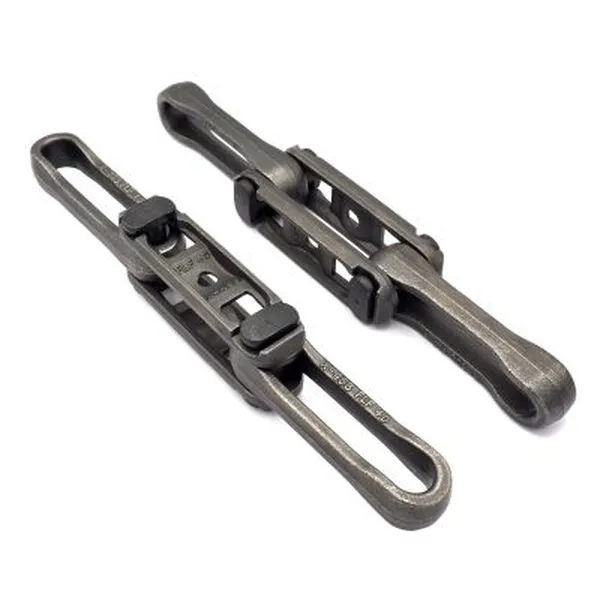
What are the advantages of using a slat conveyor chain?
A slat conveyor chain offers several advantages in material handling and conveying applications. Here are some key benefits:
1. Heavy-Duty Capacity:
– Slat conveyor chains are designed to handle heavy loads and can withstand rigorous industrial environments.
– They are commonly used in applications that require transporting large, bulky, or irregularly shaped items, such as automotive parts, pallets, or containers.
2. Flexibility:
– Slat chains can be customized and configured to suit specific conveying requirements. They are available in various widths, lengths, and chain configurations to accommodate different product sizes and shapes.
– The modular design of slat chains allows for easy modification or expansion of the conveyor system as production needs change.
3. Versatility:
– Slat chains can be used in both horizontal and inclined conveying applications. They are capable of moving products up or down slopes, making them suitable for production lines with varying elevations.
– These chains can be integrated with curves, turns, merges, and diverters to create complex conveying systems that optimize space utilization and product flow.
4. Durability and Longevity:
– Slat chains are typically made from robust materials such as steel or plastic, providing excellent durability and resistance to wear and tear.
– They can withstand demanding operating conditions, including high temperatures, corrosive environments, or exposure to chemicals.
5. Low Maintenance:
– Slat conveyor chains require minimal maintenance compared to other types of conveyor systems. They have fewer moving parts and typically operate with reduced friction.
– With proper lubrication and periodic inspection, slat chains can maintain their performance and reliability over an extended service life.
6. Easy Cleaning:
– The open design of slat chains allows for easy cleaning and debris removal. They are suitable for applications that require frequent sanitation or hygiene maintenance, such as in food processing or pharmaceutical industries.
Overall, using a slat conveyor chain offers the advantages of high load capacity, flexibility in design, versatility in conveying applications, durability, low maintenance requirements, and ease of cleaning. These features make slat chains an effective solution for various industries requiring efficient and reliable material handling.

Welke factoren moet je in overweging nemen bij het kiezen van de steek van een transportketting?
Bij het kiezen van de steek van een transportketting moet rekening worden gehouden met verschillende factoren om optimale prestaties en efficiëntie te garanderen. Hieronder volgen de belangrijkste factoren:
1. Draagvermogen: De steek van de transportketting moet worden gekozen op basis van het verwachte draagvermogen van het systeem. Houd rekening met het gewicht en de afmetingen van de te transporteren materialen om ervoor te zorgen dat de ketting de vereiste belasting aankan zonder zijn capaciteit te overschrijden.
2. Snelheid en toepassing: De bedrijfssnelheid van het transportsysteem en de specifieke toepassing spelen een rol bij het bepalen van de steek. Bij hogere snelheden zijn mogelijk kettingen met een kleinere steek nodig om een soepele en betrouwbare werking te garanderen.
3. Lengte van de transportband: De lengte van het transportbandsysteem beïnvloedt de keuze van de kettingsteek. Langere transportbanden vereisen mogelijk kettingen met een grotere steek om de belasting te verdelen en de spanning op de afzonderlijke schakels te verminderen.
4. Ruimtebeperkingen: Houd rekening met de beschikbare ruimte voor het transportsysteem. Bij toepassingen met beperkte ruimte kan de voorkeur uitgaan naar kettingen met een kleinere steek om de totale afmetingen van het transportsysteem te minimaliseren.
5. Slijtage en onderhoud: Bij de keuze van de steekmaat moet ook rekening worden gehouden met de verwachte slijtage en het benodigde onderhoud. Kettingen met een kleinere steekmaat bieden vaak een betere slijtvastheid en vereisen mogelijk minder frequente smering en onderhoud.
6. Snelheidsregeling: Als het transportsysteem snelheidsregeling of nauwkeurige positionering vereist, moet de steekgrootte van de ketting aansluiten op de regelmogelijkheden van het aandrijfsysteem. Kettingen met een kleinere steek bieden fijnere controle en nauwkeurigheid.
7. Compatibiliteit: Zorg ervoor dat de gekozen steek compatibel is met andere componenten van het transportsysteem, waaronder tandwielen, geleiders en hulpstukken. Deze moeten zo ontworpen zijn dat ze soepel en efficiënt samenwerken.
8. Toepassingsomgeving: Houd rekening met de omgevingsomstandigheden waarin de transportband zal werken. Factoren zoals temperatuur, luchtvochtigheid, corrosieve stoffen of schurende materialen kunnen van invloed zijn op de keuze van de kettingsteek en het materiaal om duurzaamheid en een lange levensduur te garanderen.
Door rekening te houden met deze factoren kunt u de juiste steek voor de transportketting selecteren, waardoor optimale prestaties, een lange levensduur en een betrouwbare werking van het systeem worden gegarandeerd.
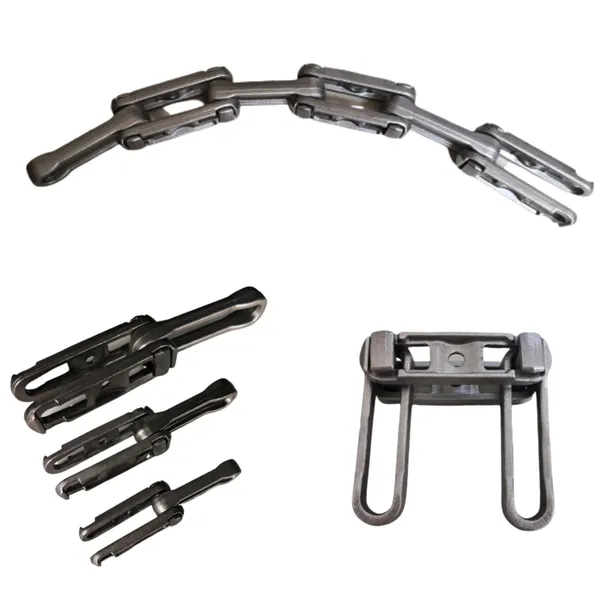
What are the signs of wear and tear in a conveyor chain?
Over time, a conveyor chain may experience wear and tear due to the demanding nature of material handling operations. Several signs indicate the need for maintenance or replacement of a conveyor chain. These signs of wear and tear include:
- Chain Elongation: One of the common signs of wear in a conveyor chain is elongation. As the chain wears, the pitch between the chain links gradually increases, resulting in a longer chain length. Excessive elongation can cause improper engagement with sprockets, leading to slippage or chain derailment.
- Chain Link Plate Wear: The link plates of a conveyor chain can experience wear on their surfaces. This wear is typically caused by friction against sprockets, guide rails, or other components. Signs of plate wear include thinning or deformation of the link plates, which can affect the overall strength and integrity of the chain.
- Sprocket Tooth Wear: The teeth of the sprockets that engage with the conveyor chain can also exhibit signs of wear. Over time, the teeth may become worn down, rounded, or have irregular shapes. This wear can cause improper chain engagement, resulting in reduced efficiency and potential chain slipping or skipping.
- Overmatig lawaai: Increased noise during the operation of the conveyor system can indicate wear and tear in the chain. Excessive wear can lead to metal-to-metal contact, resulting in noisy operation. Unusual squeaking, grinding, or rattling sounds are indicators that the chain may require inspection or maintenance.
- Visible Damage: Any visible damage to the chain, such as cracked or broken link plates, bent pins, or missing attachments, is a clear sign of wear and tear. These damages compromise the chain’s structural integrity and should be addressed promptly to prevent further issues or chain failure.
- Inconsistent Movement: If the conveyor chain starts to exhibit jerky or uneven movement, it may be a sign of wear or misalignment. Misalignment can occur due to worn chain links, damaged sprockets, or improper tensioning. Inconsistent movement can lead to reduced efficiency, increased wear, and potential chain failure.
Regular inspection and maintenance of the conveyor chain system are essential to identify these signs of wear and tear. Timely replacement of worn components and proper lubrication can help prolong the life of the chain and maintain efficient operation.


editor by CX 2023-11-29