Produktbeskrivning
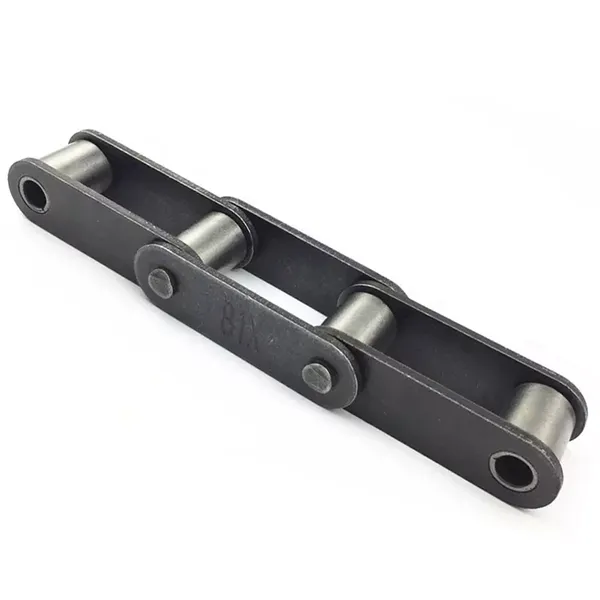
| DIN Chain No. | ISO/ANSI Chain No. | P/mm | d1/mm | L/mm | b1/mm | T/mm | |||||||||||||||||||||||||||
| 08A-1 | 40 | 12.70 | 7.92 | 16.70 | 7.85 | 1.50 | |||||||||||||||||||||||||||
| 10A-1 | 50 | 15.875 | 10.16 | 20.70 | 9.40 | 2. Abbreviation: CHOHO Industry. √ HangZhou CHOHO Industrial Co., Ltd. was founded in 1999. Has become the leader of chain system technology, the first batch of natioal recognized enterprise technology center,national technology innovation demonstration enterprise,and the first A-share listed company in China’s chain drive industry.The securities code is 003033.
We are very close to the port of HangZhou, which saves a lot of logistics costs and transportation time! We have our own logistics company and transportation department. If you need me to deliver goods to your warehouse or other ports in China, such as ZheJiang Port and ZheJiang Port, we can also do it!
√ CHOHO has a natural brand awareness. As of January 2571, CHOHO has registered the “CHOHO” trademark in more than 60 countries, including the United States, Japan, the United Kingdom, France, Germany, Russia, Spain, Austria, Belgium, Bulgaria, Croatia, Czech Republic, Denmark, Finland, Greece , Hungary, Ireland, Italy, Netherlands, Poland, Portugal, Romania, Ukraine, Sweden, Australia, Algeria, Egypt, Kenya, Morocco, South Korea, Kazakhstan, Mongolia, Syria, Thailand, Pakistan, India, Brazil, Mexico, Colombia, etc. CHOHO has been invited to participate in many international exhibitions around the world, including industrial exhibitions, agricultural exhibitions, motorcycle exhibitions, engine exhibitions, such as Hannover Messe, Bologna Fair, Canton Fair ,VIV ASIA and other world famous exhibitions! COOPERATIVE CLIENT Broad Customer Channels Market Continues to Develop! Choho Provide Chain System Solutions for The Global Top 500 and The Enterprises in Various Fields Top 10! Vanliga frågor
1. Are you a Manufacturer or Trade Company? OTHER HOT SELL PRODUCTS
Thx for Reading!
.shipping-cost-tm .tm-status-off{bakgrund: ingen;fyllning: 0;färg: #1470cc}
Hur hanterar en transportörkedja ackumulerings- och indexeringsapplikationer?I transportbandssystem hänvisar ackumulering och indexering till specifika metoder för att styra rörelsen och positioneringen av föremål längs transportbandet. En transportbandskedja kan effektivt hantera dessa applikationer genom användning av specialiserade komponenter och styrmekanismer. Här är en detaljerad förklaring: Ackumulation: – Ackumulering avser processen att tillfälligt lagra eller buffra föremål på transportbandet för att kontrollera materialflödet. Transportörkedjor som är konstruerade för ackumuleringsapplikationer innehåller vanligtvis funktioner som kedjestyrningar med låg friktion, ackumuleringszoner och sensorer. – I ett kedjesystem för ackumuleringstransportörer är kedjan uppdelad i separata zoner där föremål kan ackumuleras. När produkter kommer in i en zon saktar kedjan ner eller stannar, vilket gör att föremål kan ackumuleras utan att kollidera med varandra. Sensorer eller fotoelektriska celler detekterar närvaron av föremål i varje zon och ger signaler för att styra kedjans rörelse. – Uppsamlingszonerna i transportbandets kedjesystem kan styras på olika sätt, till exempel genom användning av motoriserade rullar, pneumatiska enheter eller elektroniska sensorer. Detta säkerställer ett kontrollerat och synkroniserat flöde av föremål längs transportbandet. Indexering: – Indexering avser exakt positionering av föremål med specifika intervall längs transportbandet. Detta används ofta i applikationer där noggrann positionering eller sekvensering krävs, såsom monterings- eller förpackningsprocesser. – Transportörkedjor konstruerade för indexeringstillämpningar innehåller specialiserade indexstift, stopp eller precisionsindexeringsdrivningar. Dessa komponenter arbetar tillsammans för att exakt placera föremål på förutbestämda platser längs transportören. – Indexeringsmekanismen i ett transportörkedjesystem kan drivas av mekaniska kammar, servomotorer eller programmerbara logikstyrenheter (PLC). Indexeringsrörelsen kan synkroniseras med andra processer eller maskiner nedströms för att säkerställa exakta monterings- eller förpackningsoperationer. – Genom att kombinera ackumulerings- och indexeringsfunktioner kan ett transportbandskedjesystem hantera ett brett spektrum av applikationer, inklusive sortering, buffring, sekvensering och automatiserad montering. Det ger kontroll över flödet och positioneringen av artiklar, vilket möjliggör effektiv materialhantering och optimerade produktionsprocesser.
How do you calculate the power requirements for a conveyor chain?Calculating the power requirements for a conveyor chain involves considering various factors. Here’s a step-by-step process: 1. Determine the total weight to be transported: Measure or estimate the total weight of the material or product that will be carried by the conveyor chain. This includes the weight of the product itself, any packaging, and additional loads. 2. Determine the speed of the conveyor: Determine the desired speed at which the conveyor chain will operate. This is typically measured in feet per minute (FPM) or meters per second (m/s). 3. Calculate the required capacity: Multiply the total weight by the desired speed to determine the required capacity of the conveyor system. This will give you the weight per unit of time (e.g., pounds per minute or kilograms per hour). 4. Consider the conveyor’s design factors: Take into account various design factors such as the type and pitch of the conveyor chain, the coefficient of friction between the chain and the conveyor components, and any incline or decline angles of the conveyor system. These factors affect the power requirements. 5. Determine the required power: Use the following formula to calculate the power requirements: Power (in horsepower) = (Capacity × Friction Factor) ÷ (33,000 × Efficiency) Where: – Capacity is the weight per unit of time (from step 3) – Friction Factor is the ratio of chain tension to chain weight, taking into account the design factors – 33,000 is a conversion factor to convert the units to horsepower – Efficiency is the overall efficiency of the conveyor system, typically expressed as a decimal value (e.g., 0.95 for 95% efficiency) 6. Select a suitable motor: Based on the calculated power requirements, select a motor that can provide the necessary power to drive the conveyor chain. Consider factors such as motor type, motor efficiency, and overload capacity. It’s important to note that the power requirements may vary depending on specific conveyor system designs and operating conditions. Consulting with a qualified engineer or conveyor manufacturer is recommended to ensure accurate calculations and proper motor selection.
What are the main components of a conveyor chain?The main components of a conveyor chain include:
The combination of these components creates a robust and reliable conveyor chain system capable of efficiently transporting materials in a wide range of industrial applications.
|