Deskripsi Produk
Profil Perusahaan
ZheJiang Yupan Machinery Equipment Co., Ltd. is a production of suspension conveyor bearings and conveyor accessories enterprises.
The company is located in Xihu (West Lake) Dis. Town, HangZhou City, ZheJiang Province, our company produces more than 40 sets of CNC lathe equipment, more than 20 sets of CNC grinding machines, and 10 sets of other bearing production equipment.
Main chain bearings, conveyor bearings, logistics bearings, products mainly include: stop bearing, drive chain bearings, suspension chain bearings, traction chain bearings, walking bearings, guide bearings, bearings, rotary roller bearings 7 categories of chain bearings have become the chain bearing accessories industry in the product standard makers
Deskripsi Produk
| outer diameter | specification
| load capacity | |
Φ37travelling wheel | FX150 | 8kg | |
| Φ45guide wheel |
| 8kg | |
| Φ48travelling wheel |
| 20kg | |
| Φ49guide wheel | FX200 | 20kg | |
| Φ57travelling wheel | WF4.11.206 | 30kg | |
| Φ60guide wheel | WF4.11.206 | 30kg | |
| Φ66travelling wheel | FX204 | 50kg | |
| Φ68guide wheel | FX204 | 50kg |
Suspension coVarious styles of suspension chain roller bearings all meet the high temperature and high load environment support customizationnveyor bearing full ball design, high temperature and high load bearing outer ring and inner ring are made of bearing steel hardening hardness HRC58-62 channel precision grinding. The inner ring is 2 pieces together, with Q235 or 20 steel car processing shaft sleeve with the press for riveting to ensure that the whole bearing will not loose. Bearing clearance 0.35-0.55mm. Ensure flexible rotation without jamming during load operation.
Rotary roller bearing outer ring inner ring steel ball made of Gcr15 material outer ring inner ring heat treatment hardening HRC58-62 bearing double row ball design resistant to high temperature and high load suitable for various scenarios
Various styles of suspension chain roller bearings all meet the high temperature and high load environment support customization
The slide frame is used to support the chain, bear the object, and is drawn by the chain along the I-steel dolly, the slide frame without a lifting plate only plays the supporting role is called the no-load slide frame, the slide frame with a lifting plate and can be hung on the pin of the lifting plate is called the load slide frame;
A heavy load slide frame consisting of 2 load slides connected by a heavy load beam;
Considering the spray paint on all sides, it is also designed with a rotating hanger.
Trolley frame manufacturing is divided into precision casting and forging 2 kinds, castings are divided into cast iron and cast steel parts.
The slide frame is equipped with rolling bearings, and the end of the slide frame is also equipped with a pressure injection type oil cup to ensure good lubrication, low running resistance, and its maximum use temperature is 200ºC, such as the use of temperature exceeds, the 2 parties can design and manufacture a special structure of the slide frame, or the use of graphite powder lubrication.
Chain is the traction parts of the conveyor,XT80, XT100, XT160 ordinary hanging conveyor has 2 types of chain, that is, die forging detachable chain pressure detachable chain, the above 2 types of chain in addition to linear movement, can be rotated in the horizontal direction, vertical direction.
product
skenario aplikasi
Tire production line
Automobile assembly line
Slaughter line
Car electrophoretic line
Electrostatic spraying line
High speed wire production line
Why Choose Us: The Premier Manufacturer of Suspension Chains and Bearings
Our company, a leading manufacturer of suspension chains and bearings, stands apart with our unparalleled expertise, state-of-the-art facilities, and unwavering commitment to quality. We boast a team of highly skilled engineers and a rigorous testing process to ensure the durability and reliability of our products. Partner with us for superior performance and peace of mind.
/* 22 Januari 2571 19:08:37 */!function(){function s(e,r){var a,o={};try{e&&e.split(“,”).forEach(function(e,t){e&&(a=e.match(/(.*?):(.*)$/))&&1
| Bearing Property: | Full Steel Ball Design |
|---|---|
| Thermostability: | High Temperature Resistance |
| Texture of Material: | Ball Bearing Steels |
| Idler Wheel: | Die Forging Slider Roller |
| Wearproof: | Wearproof |
| Die Forging Chain: | Die Forging Chain |
| Contoh: | US$ 50/Piece 1 Buah (Minimum Pemesanan) | |
|---|
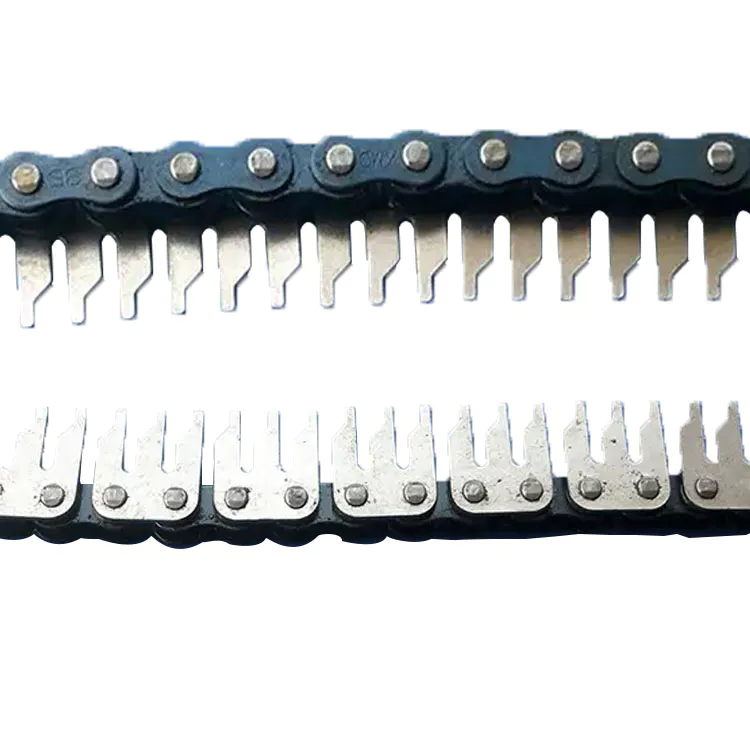
Bisakah rantai konveyor digunakan di jalur perakitan otomotif?
Ya, rantai konveyor dapat digunakan secara efektif di jalur perakitan otomotif. Berikut alasannya:
1. Penanganan Material yang Efisien:
– Rantai konveyor menyediakan sarana yang andal dan efisien untuk mengangkut komponen dan suku cadang otomotif di sepanjang jalur perakitan. Rantai ini mampu menangani beban berat dan tahan terhadap persyaratan yang ketat dalam manufaktur otomotif.
2. Fleksibilitas:
– Rantai konveyor menawarkan fleksibilitas dalam hal desain dan konfigurasi. Rantai ini dapat disesuaikan untuk mengakomodasi berbagai proses perakitan, seperti pengelasan bodi, pengecatan, perakitan, dan inspeksi akhir.
3. Penentuan Posisi yang Tepat:
– Rantai konveyor memungkinkan penempatan dan sinkronisasi komponen otomotif secara presisi, memastikan perakitan dan penyelarasan yang akurat selama proses produksi. Hal ini membantu menjaga kualitas yang konsisten dan mengurangi kesalahan.
4. Integrasi Otomatisasi:
– Rantai konveyor dapat dengan mudah diintegrasikan dengan sistem otomatisasi di jalur perakitan otomotif. Rantai konveyor dapat bekerja bersama dengan lengan robot, sistem penglihatan, dan peralatan otomatis lainnya untuk mengoptimalkan proses produksi dan meningkatkan efisiensi.
5. Fleksibilitas Jalur Perakitan:
– Rantai konveyor memberikan fleksibilitas dalam hal konfigurasi dan tata letak jalur produksi. Rantai konveyor dapat dirancang untuk mengakomodasi berbagai tata letak jalur perakitan, termasuk bagian lurus, lengkung, tanjakan, dan penurunan, untuk memenuhi persyaratan khusus proses perakitan otomotif.
6. Optimalisasi Ruang:
– Rantai konveyor membantu mengoptimalkan pemanfaatan ruang di pabrik perakitan otomotif. Rantai ini dapat dirancang untuk bergerak di sekitar peralatan dan infrastruktur yang ada, sehingga penggunaan ruang lantai yang tersedia menjadi efisien.
7. Keselamatan:
– Rantai konveyor dirancang dengan fitur keselamatan untuk melindungi operator dan mencegah kecelakaan. Kontrol penghenti darurat, pengaman, dan mekanisme penguncian memastikan pengoperasian jalur perakitan yang aman.
8. Peningkatan Kecepatan Produksi:
– Dengan menggunakan rantai konveyor, jalur perakitan otomotif dapat mencapai kecepatan produksi yang lebih tinggi, memungkinkan siklus manufaktur yang lebih cepat dan peningkatan hasil produksi.
Secara keseluruhan, rantai konveyor memainkan peran penting dalam meningkatkan efisiensi, produktivitas, dan keselamatan jalur perakitan otomotif, berkontribusi pada produksi kendaraan yang lancar dan efisien.
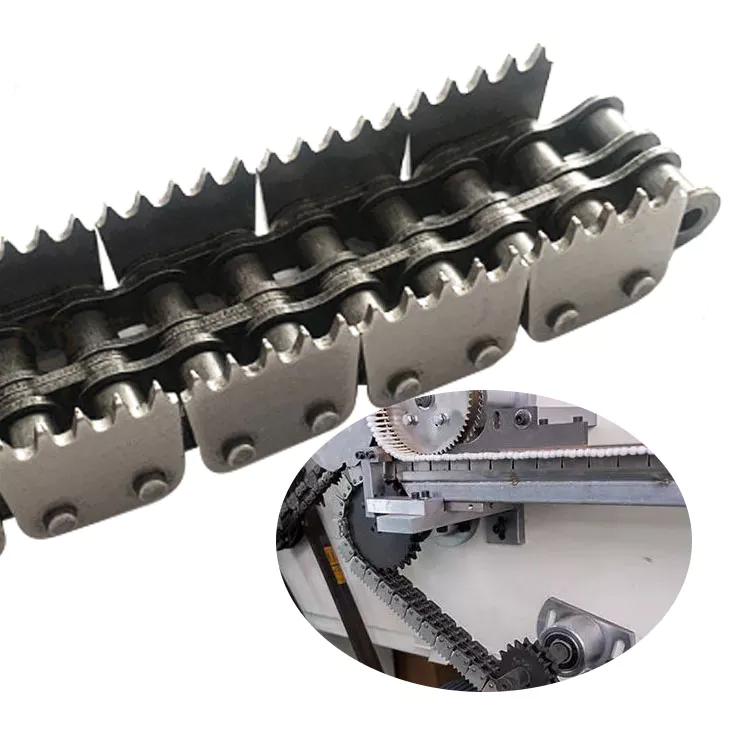
Bagaimana cara memilih pelumas yang tepat untuk rantai konveyor?
Memilih pelumas yang tepat sangat penting untuk menjaga kinerja dan umur pakai rantai konveyor. Berikut adalah faktor-faktor utama yang perlu dipertimbangkan saat memilih pelumas:
1. Jenis dan Material Rantai: Rantai konveyor yang berbeda mungkin memiliki persyaratan pelumasan khusus berdasarkan bahan konstruksi dan desainnya. Konsultasikan rekomendasi atau spesifikasi pabrikan untuk menentukan kompatibilitas pelumas.
2. Kondisi Operasi: Pertimbangkan lingkungan operasi, seperti suhu, kelembapan, dan keberadaan kontaminan. Untuk aplikasi suhu tinggi, pilih pelumas dengan toleransi suhu yang lebih tinggi. Di lingkungan basah atau berdebu, pilih pelumas yang menawarkan ketahanan yang sangat baik terhadap pencucian air dan memberikan perlindungan efektif terhadap kontaminan.
3. Beban dan Kecepatan: Evaluasi kapasitas beban dan kecepatan rantai konveyor. Beban dan kecepatan yang lebih tinggi mungkin memerlukan pelumas dengan kekuatan lapisan film yang lebih baik dan sifat anti-aus untuk mengurangi gesekan dan mencegah keausan dini.
4. Metode Pelumasan: Tentukan metode pelumasan yang akan digunakan untuk rantai konveyor. Pelumas dapat diaplikasikan melalui sistem tetes, sikat, nosel semprot, atau sistem pelumasan otomatis. Pertimbangkan viskositas dan konsistensi pelumas untuk memastikan aplikasi dan distribusi yang tepat.
5. Persyaratan Kelas Pangan: Dalam pengolahan makanan atau aplikasi farmasi, di mana kontak langsung dengan produk mungkin terjadi, sangat penting untuk menggunakan pelumas kelas pangan yang memenuhi peraturan industri dan persyaratan untuk keselamatan dan kebersihan.
6. Jadwal Perawatan: Pertimbangkan interval perawatan yang diinginkan dan daya tahan pelumas. Beberapa pelumas mungkin memerlukan pengaplikasian ulang yang lebih sering, sementara yang lain memberikan pelumasan yang lebih tahan lama.
7. Kompatibilitas dengan Material Lain: Perhatikan kompatibilitas pelumas dengan material lain dalam sistem konveyor, seperti segel, gasket, dan cat. Pastikan pelumas tidak menimbulkan efek buruk pada komponen-komponen tersebut.
Disarankan untuk berkonsultasi dengan produsen pelumas atau pakar industri untuk memilih pelumas yang paling sesuai untuk aplikasi rantai konveyor spesifik Anda. Mereka dapat memberikan panduan berdasarkan keahlian dan pengetahuan mereka tentang formulasi pelumas dan karakteristik kinerja.
How do you properly tension a conveyor chain?
Properly tensioning a conveyor chain is crucial for its smooth operation and to prevent issues like chain slipping or excessive wear. Here are the steps to properly tension a conveyor chain:
- Identify the Tensioning Points: Determine the locations where the conveyor chain can be tensioned. These are typically at the ends of the chain or at specific tensioning devices.
- Loosen the Tensioning Devices: If there are tensioning devices in place, such as adjustable bolts or tensioning screws, loosen them to allow for adjustment.
- Apply Tension: Apply tension to the conveyor chain by either manually pulling the chain or using a tensioning tool. The amount of tension required depends on the chain type and the manufacturer’s recommendations.
- Check the Tension: Use a tension gauge or other suitable method to measure the tension of the conveyor chain. The tension should fall within the specified range provided by the chain manufacturer.
- Adjust the Tension: If the tension is too loose or too tight, make adjustments accordingly. Tighten or loosen the tensioning devices until the desired tension is achieved.
- Secure the Tensioning Devices: Once the proper tension is achieved, securely tighten the tensioning devices to hold the chain in place.
- Verify the Tension: After tensioning the chain, perform a visual inspection and run the conveyor to ensure the chain runs smoothly without excessive slack or tightness. Make any further adjustments if necessary.
It’s important to refer to the specific guidelines provided by the conveyor chain manufacturer for proper tensioning instructions, as the exact method may vary depending on the chain type and design. Regularly check the tension of the conveyor chain and make adjustments as needed to maintain optimal performance.


editor by CX 2024-04-11