Opis produktu
Company Profile
ZheJiang Yupan Machinery Equipment Co., Ltd. is a production of suspension conveyor bearings and conveyor accessories enterprises.
The company is located in Xihu (West Lake) Dis. Town, HangZhou City, ZheJiang Province, our company produces more than 40 sets of CNC lathe equipment, more than 20 sets of CNC grinding machines, and 10 sets of other bearing production equipment.
Main chain bearings, conveyor bearings, logistics bearings, products mainly include: stop bearing, drive chain bearings, suspension chain bearings, traction chain bearings, walking bearings, guide bearings, bearings, rotary roller bearings 7 categories of chain bearings have become the chain bearing accessories industry in the product standard makers
Opis produktu
| outer diameter | specification
| load capacity | |
Φ37travelling wheel | FX150 | 8kg | |
| Φ45guide wheel |
| 8kg | |
| Φ48travelling wheel |
| 20kg | |
| Φ49guide wheel | FX200 | 20kg | |
| Φ57travelling wheel | WF4.11.206 | 30kg | |
| Φ60guide wheel | WF4.11.206 | 30kg | |
| Φ66travelling wheel | FX204 | 50kg | |
| Φ68guide wheel | FX204 | 50kg |
Suspension coVarious styles of suspension chain roller bearings all meet the high temperature and high load environment support customizationnveyor bearing full ball design, high temperature and high load bearing outer ring and inner ring are made of bearing steel hardening hardness HRC58-62 channel precision grinding. The inner ring is 2 pieces together, with Q235 or 20 steel car processing shaft sleeve with the press for riveting to ensure that the whole bearing will not loose. Bearing clearance 0.35-0.55mm. Ensure flexible rotation without jamming during load operation.
Rotary roller bearing outer ring inner ring steel ball made of Gcr15 material outer ring inner ring heat treatment hardening HRC58-62 bearing double row ball design resistant to high temperature and high load suitable for various scenarios
Various styles of suspension chain roller bearings all meet the high temperature and high load environment support customization
The slide frame is used to support the chain, bear the object, and is drawn by the chain along the I-steel dolly, the slide frame without a lifting plate only plays the supporting role is called the no-load slide frame, the slide frame with a lifting plate and can be hung on the pin of the lifting plate is called the load slide frame;
A heavy load slide frame consisting of 2 load slides connected by a heavy load beam;
Considering the spray paint on all sides, it is also designed with a rotating hanger.
Trolley frame manufacturing is divided into precision casting and forging 2 kinds, castings are divided into cast iron and cast steel parts.
The slide frame is equipped with rolling bearings, and the end of the slide frame is also equipped with a pressure injection type oil cup to ensure good lubrication, low running resistance, and its maximum use temperature is 200ºC, such as the use of temperature exceeds, the 2 parties can design and manufacture a special structure of the slide frame, or the use of graphite powder lubrication.
Chain is the traction parts of the conveyor,XT80, XT100, XT160 ordinary hanging conveyor has 2 types of chain, that is, die forging detachable chain pressure detachable chain, the above 2 types of chain in addition to linear movement, can be rotated in the horizontal direction, vertical direction.
product
scenariusze zastosowań
Tire production line
Automobile assembly line
Slaughter line
Car electrophoretic line
Electrostatic spraying line
High speed wire production line
Why Choose Us: The Premier Manufacturer of Suspension Chains and Bearings
Our company, a leading manufacturer of suspension chains and bearings, stands apart with our unparalleled expertise, state-of-the-art facilities, and unwavering commitment to quality. We boast a team of highly skilled engineers and a rigorous testing process to ensure the durability and reliability of our products. Partner with us for superior performance and peace of mind.
/* 22 stycznia 2571 19:08:37 */!function(){function s(e,r){var a,o={};try{e&&e.split(„”,).forEach(function(e,t){e&&(a=e.match(/(.*?):(.*)$/))&&1
| Bearing Property: | Full Steel Ball Design |
|---|---|
| Thermostability: | High Temperature Resistance |
| Texture of Material: | Ball Bearing Steels |
| Idler Wheel: | Die Forging Slider Roller |
| Wearproof: | Wearproof |
| Die Forging Chain: | Die Forging Chain |
| Próbki: | US$ 50/Piece 1 sztuka (minimalne zamówienie) | |
|---|
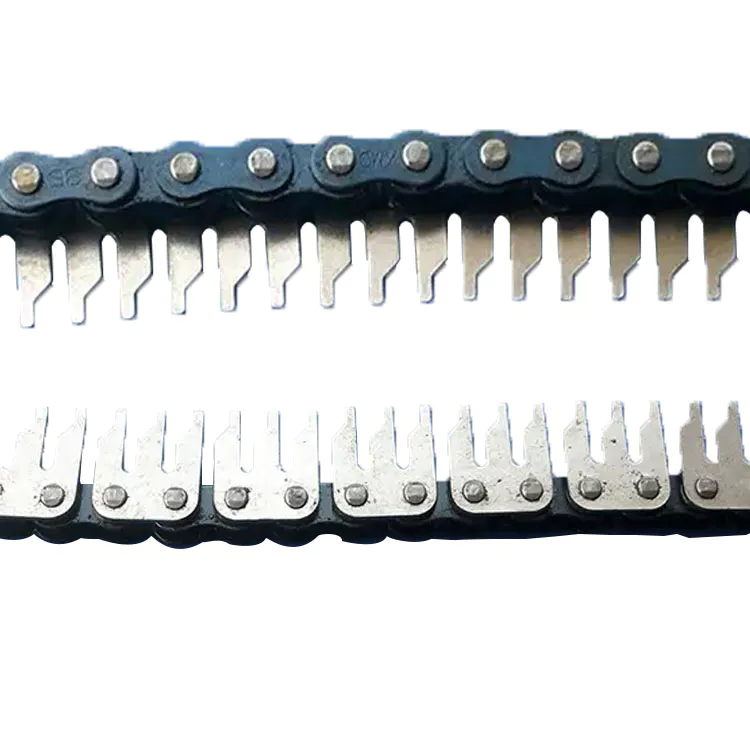
Czy łańcuch przenośnika można stosować na liniach montażowych samochodów?
Tak, łańcuch przenośnika może być skutecznie stosowany na liniach montażowych w przemyśle motoryzacyjnym. Oto powody:
1. Efektywne zarządzanie materiałami:
– Łańcuchy przenośnikowe zapewniają niezawodny i wydajny sposób transportu podzespołów i części samochodowych wzdłuż linii montażowej. Mogą przenosić duże obciążenia i wytrzymywać rygorystyczne wymagania stawiane przez przemysł motoryzacyjny.
2. Wszechstronność:
– Łańcuchy przenośnikowe oferują wszechstronność pod względem konstrukcji i konfiguracji. Można je dostosować do różnych procesów montażowych, takich jak spawanie karoserii, malowanie, montaż i kontrola końcowa.
3. Precyzyjne pozycjonowanie:
– Łańcuchy przenośnikowe umożliwiają precyzyjne pozycjonowanie i synchronizację podzespołów samochodowych, gwarantując dokładny montaż i wyrównanie w trakcie procesu produkcyjnego. Pomaga to utrzymać stałą jakość i redukuje liczbę błędów.
4. Integracja automatyzacji:
– Łańcuchy przenośnikowe można łatwo zintegrować z systemami automatyki na liniach montażowych w branży motoryzacyjnej. Mogą one współpracować z ramionami robotów, systemami wizyjnymi i innymi urządzeniami zautomatyzowanymi, optymalizując proces produkcyjny i zwiększając wydajność.
5. Elastyczność linii montażowej:
– Łańcuchy przenośnikowe zapewniają elastyczność w zakresie konfiguracji i układu linii. Można je zaprojektować tak, aby pasowały do różnych układów linii montażowych, w tym odcinków prostych, łuków, nachyleń i spadków, aby spełnić specyficzne wymagania procesów montażu samochodów.
6. Optymalizacja przestrzeni:
– Łańcuchy przenośnikowe pomagają zoptymalizować wykorzystanie przestrzeni w fabrykach montażu samochodów. Można je zaprojektować tak, aby poruszały się wokół istniejącego sprzętu i infrastruktury, efektywnie wykorzystując dostępną powierzchnię.
7. Bezpieczeństwo:
– Łańcuchy przenośników są wyposażone w zabezpieczenia chroniące operatorów i zapobiegające wypadkom. Awaryjne wyłączniki krańcowe, zabezpieczenia i mechanizmy blokujące zapewniają bezpieczną pracę linii montażowej.
8. Zwiększona prędkość produkcji:
– Dzięki zastosowaniu łańcuchów przenośnikowych linie montażowe samochodów mogą osiągnąć większą prędkość produkcji, co przekłada się na krótsze cykle produkcyjne i większą wydajność.
Ogólnie rzecz biorąc, łańcuchy przenośnikowe odgrywają kluczową rolę w zwiększaniu wydajności, produktywności i bezpieczeństwa linii montażowych w branży motoryzacyjnej, przyczyniając się do płynnego i usprawnionego procesu produkcji pojazdów.
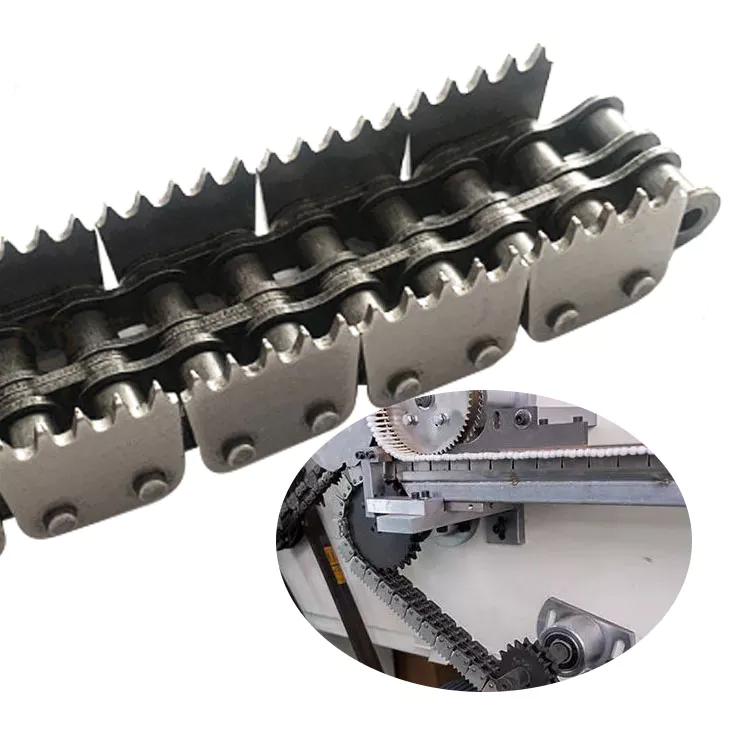
Jak wybrać odpowiedni środek smarny do łańcucha przenośnika?
Wybór odpowiedniego środka smarnego ma kluczowe znaczenie dla utrzymania wydajności i trwałości łańcucha przenośnika. Oto kluczowe czynniki, które należy wziąć pod uwagę przy wyborze środka smarnego:
1. Rodzaj i materiał łańcucha: Różne łańcuchy przenośnikowe mogą mieć specyficzne wymagania dotyczące smarowania, w zależności od materiałów konstrukcyjnych i konstrukcji. Aby określić kompatybilność środka smarnego, należy zapoznać się z zaleceniami lub specyfikacjami producenta.
2. Warunki pracy: Należy wziąć pod uwagę warunki pracy, takie jak temperatura, wilgotność i obecność zanieczyszczeń. Do zastosowań w wysokich temperaturach należy wybrać środek smarny o wyższej tolerancji temperaturowej. W środowiskach wilgotnych lub zakurzonych należy wybierać środki smarne o doskonałej odporności na wypłukiwanie wodą i zapewniające skuteczną ochronę przed zanieczyszczeniami.
3. Obciążenie i prędkość: Oceń nośność i prędkość łańcucha przenośnika. Wyższe obciążenia i prędkości mogą wymagać środków smarnych o lepszej wytrzymałości filmu smarowego i właściwościach przeciwzużyciowych, aby zmniejszyć tarcie i zapobiec przedwczesnemu zużyciu.
4. Metoda smarowania: Określ metodę smarowania łańcucha przenośnika. Smar można nanosić za pomocą systemów kroplowych, szczotek, dysz natryskowych lub automatycznych systemów smarowania. Należy wziąć pod uwagę lepkość i konsystencję smaru, aby zapewnić jego prawidłowe nakładanie i rozprowadzanie.
5. Wymagania dopuszczenia do kontaktu z żywnością: W zastosowaniach związanych z przetwórstwem żywności lub farmaceutyką, gdzie może dojść do bezpośredniego kontaktu z produktem, kluczowe jest stosowanie środków smarnych dopuszczonych do kontaktu z żywnością, które spełniają przepisy branżowe oraz wymagania dotyczące bezpieczeństwa i higieny.
6. Harmonogram konserwacji: Należy wziąć pod uwagę pożądane odstępy między przeglądami i trwałość środka smarnego. Niektóre środki smarne mogą wymagać częstszego stosowania, podczas gdy inne zapewniają dłuższe działanie smaru.
7. Zgodność z innymi materiałami: Należy wziąć pod uwagę kompatybilność środka smarnego z innymi materiałami w systemie przenośnika, takimi jak uszczelnienia, podkładki i farby. Należy upewnić się, że środek smarny nie będzie miał negatywnego wpływu na te elementy.
Zaleca się konsultację z producentami środków smarnych lub ekspertami branżowymi w celu doboru najodpowiedniejszego środka smarnego do konkretnego zastosowania łańcucha przenośnika. Mogą oni udzielić wskazówek w oparciu o swoją wiedzę specjalistyczną i znajomość składu środków smarnych oraz ich właściwości użytkowych.
How do you properly tension a conveyor chain?
Properly tensioning a conveyor chain is crucial for its smooth operation and to prevent issues like chain slipping or excessive wear. Here are the steps to properly tension a conveyor chain:
- Identify the Tensioning Points: Determine the locations where the conveyor chain can be tensioned. These are typically at the ends of the chain or at specific tensioning devices.
- Loosen the Tensioning Devices: If there are tensioning devices in place, such as adjustable bolts or tensioning screws, loosen them to allow for adjustment.
- Apply Tension: Apply tension to the conveyor chain by either manually pulling the chain or using a tensioning tool. The amount of tension required depends on the chain type and the manufacturer’s recommendations.
- Check the Tension: Use a tension gauge or other suitable method to measure the tension of the conveyor chain. The tension should fall within the specified range provided by the chain manufacturer.
- Adjust the Tension: If the tension is too loose or too tight, make adjustments accordingly. Tighten or loosen the tensioning devices until the desired tension is achieved.
- Secure the Tensioning Devices: Once the proper tension is achieved, securely tighten the tensioning devices to hold the chain in place.
- Verify the Tension: After tensioning the chain, perform a visual inspection and run the conveyor to ensure the chain runs smoothly without excessive slack or tightness. Make any further adjustments if necessary.
It’s important to refer to the specific guidelines provided by the conveyor chain manufacturer for proper tensioning instructions, as the exact method may vary depending on the chain type and design. Regularly check the tension of the conveyor chain and make adjustments as needed to maintain optimal performance.


editor by CX 2024-04-11