Περιγραφή προϊόντος
Προφίλ Εταιρείας
ZheJiang Yupan Machinery Equipment Co., Ltd. is a production of suspension conveyor bearings and conveyor accessories enterprises.
The company is located in Xihu (West Lake) Dis. Town, HangZhou City, ZheJiang Province, our company produces more than 40 sets of CNC lathe equipment, more than 20 sets of CNC grinding machines, and 10 sets of other bearing production equipment.
Main chain bearings, conveyor bearings, logistics bearings, products mainly include: stop bearing, drive chain bearings, suspension chain bearings, traction chain bearings, walking bearings, guide bearings, bearings, rotary roller bearings 7 categories of chain bearings have become the chain bearing accessories industry in the product standard makers
Περιγραφή προϊόντος
| outer diameter | specification
| load capacity | |
Φ37travelling wheel | FX150 | 8kg | |
| Φ45guide wheel |
| 8kg | |
| Φ48travelling wheel |
| 20kg | |
| Φ49guide wheel | FX200 | 20kg | |
| Φ57travelling wheel | WF4.11.206 | 30kg | |
| Φ60guide wheel | WF4.11.206 | 30kg | |
| Φ66travelling wheel | FX204 | 50kg | |
| Φ68guide wheel | FX204 | 50kg |
Suspension coVarious styles of suspension chain roller bearings all meet the high temperature and high load environment support customizationnveyor bearing full ball design, high temperature and high load bearing outer ring and inner ring are made of bearing steel hardening hardness HRC58-62 channel precision grinding. The inner ring is 2 pieces together, with Q235 or 20 steel car processing shaft sleeve with the press for riveting to ensure that the whole bearing will not loose. Bearing clearance 0.35-0.55mm. Ensure flexible rotation without jamming during load operation.
Rotary roller bearing outer ring inner ring steel ball made of Gcr15 material outer ring inner ring heat treatment hardening HRC58-62 bearing double row ball design resistant to high temperature and high load suitable for various scenarios
Various styles of suspension chain roller bearings all meet the high temperature and high load environment support customization
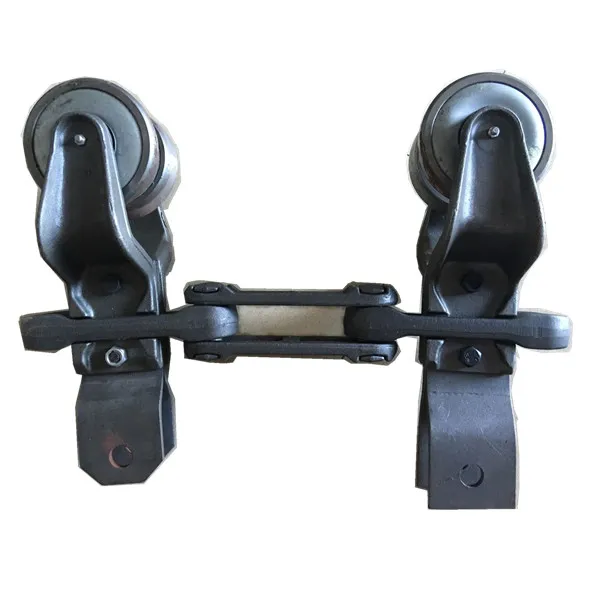
The slide frame is used to support the chain, bear the object, and is drawn by the chain along the I-steel dolly, the slide frame without a lifting plate only plays the supporting role is called the no-load slide frame, the slide frame with a lifting plate and can be hung on the pin of the lifting plate is called the load slide frame;
A heavy load slide frame consisting of 2 load slides connected by a heavy load beam;
Considering the spray paint on all sides, it is also designed with a rotating hanger.
Trolley frame manufacturing is divided into precision casting and forging 2 kinds, castings are divided into cast iron and cast steel parts.
The slide frame is equipped with rolling bearings, and the end of the slide frame is also equipped with a pressure injection type oil cup to ensure good lubrication, low running resistance, and its maximum use temperature is 200ºC, such as the use of temperature exceeds, the 2 parties can design and manufacture a special structure of the slide frame, or the use of graphite powder lubrication.
Chain is the traction parts of the conveyor,XT80, XT100, XT160 ordinary hanging conveyor has 2 types of chain, that is, die forging detachable chain pressure detachable chain, the above 2 types of chain in addition to linear movement, can be rotated in the horizontal direction, vertical direction.
/* 22 Ιανουαρίου 2571 19:08:37 */!function(){function s(e,r){var a,o={};try{e&&e.split(“,”).forEach(function(e,t){e&&(a=e.match(/(.*1?):(.)*)
| 40cr: | 40cr Material |
|---|---|
| Chain: | Die Forging Chain |
| Overhead Chain: | Overhead Chain |
| Die Forging Slide Frame: | Die Forging Slide Frame |
| Πακέτο μεταφοράς: | Carton and Wooden Case |
| Προσδιορισμός: | carton |
| Δείγματα: | US$ 30/Meter 1 μέτρο (ελάχιστη παραγγελία) | |
|---|

What are the considerations for selecting a corrosion-resistant conveyor chain?
When selecting a corrosion-resistant conveyor chain, several factors need to be considered to ensure the chain’s longevity and performance in corrosive environments. Here are some key considerations:
1. Material Selection: Choose a chain material that is inherently resistant to corrosion. Stainless steel, such as AISI 304 or AISI 316, is a common choice due to its excellent corrosion resistance properties. Other materials like plastic chains or special alloys can also be considered based on the specific application requirements.
2. Coatings and Surface Treatments: In some cases, additional protective coatings or surface treatments can be applied to enhance the chain’s corrosion resistance. These coatings, such as zinc plating, galvanizing, or epoxy coatings, create a barrier between the chain material and corrosive substances, preventing direct contact and reducing the risk of corrosion.
3. Environmental Compatibility: Consider the specific corrosive agents present in the environment where the conveyor chain will be used. Different corrosive substances, such as acids, alkalis, or saltwater, require specific resistance properties. Ensure that the selected chain material and coatings are compatible with the corrosive agents present in the operating environment.
4. Maintenance and Lubrication: Proper maintenance and lubrication play a crucial role in preventing corrosion and extending the life of a conveyor chain. Regular cleaning, inspection, and application of appropriate lubricants can help remove corrosive contaminants and protect the chain surface from degradation.
5. Testing and Certification: Consider chains that have undergone testing and certification for corrosion resistance in relevant industry standards. Look for certifications such as ISO 9227 (salt spray test) or ASTM B117 (corrosion resistance test) to ensure the chain’s performance in corrosive environments.
By carefully considering these factors and consulting with conveyor chain manufacturers or corrosion-resistant experts, you can select a chain that is well-suited for your specific corrosive environment, minimizing the risk of corrosion-related issues and ensuring optimal performance and longevity.
What are the design considerations for a long-span conveyor chain conveyor?
Designing a long-span conveyor chain conveyor requires careful consideration of various factors to ensure its efficiency, safety, and reliability. Here are some key design considerations:
1. Conveyor Chain Selection: Choose a conveyor chain that is suitable for long spans and can withstand the required load capacity. Consider factors such as chain material, pitch, strength, and durability to ensure it can handle the anticipated load and operating conditions.
2. Conveyor Structure: The conveyor structure should be designed to provide sufficient support and stability for the long span. Consider factors such as material strength, rigidity, and deflection to ensure the structure can handle the weight of the conveyor chain, the product being transported, and any additional loads.
3. Drive System: Select an appropriate drive system that can efficiently power the long-span conveyor chain. Consider factors such as motor power, speed, torque, and control mechanisms to ensure smooth and reliable operation.
4. Tensioning and Alignment: Proper tensioning and alignment of the conveyor chain are critical for its performance and longevity. Design the system with adequate provisions for tensioning devices and alignment mechanisms to maintain optimal chain tension and alignment throughout the conveyor’s length.
5. Supports and Bearings: Install adequate supports and bearings along the length of the conveyor to reduce chain sagging, minimize friction, and ensure smooth movement. Consider factors such as bearing type, lubrication, and maintenance requirements.
6. Conveyor Controls and Safety: Implement appropriate controls and safety features to monitor and control the operation of the long-span conveyor chain. This may include emergency stop systems, speed monitoring, overload protection, and safety interlocks.
7. Environmental Factors: Consider the environmental conditions in which the conveyor will operate, such as temperature, humidity, dust, and corrosive substances. Select materials and components that can withstand these conditions and implement proper ventilation, dust collection, and corrosion protection measures.
8. Maintenance and Accessibility: Design the conveyor system with ease of maintenance and accessibility in mind. Provide sufficient access points, walkways, and platforms for inspection, cleaning, and maintenance tasks. Consider factors such as lubrication points, conveyor cleaning systems, and easy replacement of worn components.
9. Future Expansion and Flexibility: Anticipate future needs for expansion or modifications and design the long-span conveyor chain conveyor with flexibility in mind. This may include allowing for additional conveyor sections, transfer points, or integration with other equipment.
By considering these design considerations, a long-span conveyor chain conveyor can be efficiently designed and optimized for its intended application, ensuring reliable and cost-effective material handling operations.
Ποιες προφυλάξεις ασφαλείας πρέπει να τηρούνται κατά την εργασία με αλυσίδες μεταφοράς;
Η εργασία με αλυσίδες μεταφοράς ενέχει πιθανούς κινδύνους και είναι απαραίτητο να ακολουθούνται οι κατάλληλες προφυλάξεις ασφαλείας για να διασφαλιστεί η ευημερία των εργαζομένων και να αποφευχθούν ατυχήματα. Ακολουθούν ορισμένα σημαντικά μέτρα ασφαλείας που πρέπει να λάβετε υπόψη:
- Σωστή Εκπαίδευση: Βεβαιωθείτε ότι οι εργαζόμενοι που χειρίζονται ή συντηρούν αλυσίδες μεταφοράς λαμβάνουν την κατάλληλη εκπαίδευση σχετικά με τις ασφαλείς πρακτικές, συμπεριλαμβανομένου του χειρισμού αλυσίδων, των διαδικασιών συντήρησης και των πρωτοκόλλων έκτακτης ανάγκης.
- Μέσα Ατομικής Προστασίας (ΜΑΠ): Οι εργαζόμενοι θα πρέπει να φορούν κατάλληλα ΜΑΠ, όπως γυαλιά ασφαλείας, γάντια και παπούτσια με ατσάλινη μύτη, για να προστατεύονται από πιθανούς κινδύνους, όπως εκτοξευόμενα υπολείμματα, σημεία σύνθλιψης ή εμπλοκή.
- Κλείδωμα/Ετικέτα: Πριν από την εκτέλεση οποιωνδήποτε εργασιών συντήρησης ή επισκευής σε αλυσίδες μεταφοράς, ακολουθήστε τις διαδικασίες κλειδώματος/σήμανσης για να απομονώσετε και να απενεργοποιήσετε τον εξοπλισμό, ώστε να αποτρέψετε τυχαία εκκίνηση ή απελευθέρωση αποθηκευμένης ενέργειας.
- Φρούρηση: Βεβαιωθείτε ότι οι αλυσίδες μεταφοράς προστατεύονται επαρκώς για να αποτρέψετε την πρόσβαση σε κινούμενα μέρη, όπως σημεία σύσφιξης και περιστρεφόμενα γρανάζια. Τα προστατευτικά πρέπει να είναι σταθερά στη θέση τους και να μην παρεμβαίνουν στη λειτουργία της αλυσίδας.
- Νοικοκυριό: Διατηρείτε τον χώρο εργασίας καθαρό και απαλλαγμένο από υπολείμματα, εργαλεία ή άλλα αντικείμενα που θα μπορούσαν να προκαλέσουν κίνδυνο πτώσης ή να επηρεάσουν τη λειτουργία της αλυσίδας μεταφοράς.
- Τακτικές επιθεωρήσεις: Ελέγχετε τακτικά τις αλυσίδες μεταφοράς για τυχόν σημάδια φθοράς, ζημιάς ή κακής ευθυγράμμισης. Αντιμετωπίστε άμεσα τυχόν προβλήματα για να αποτρέψετε πιθανούς κινδύνους για την ασφάλεια.
- Ασφαλής φόρτωση και εκφόρτωση: Κατά τη φόρτωση ή την εκφόρτωση υλικών στον μεταφορικό ιμάντα, ακολουθήστε ασφαλείς τεχνικές ανύψωσης και βεβαιωθείτε ότι το φορτίο κατανέμεται ομοιόμορφα για να αποτρέψετε υπερφόρτωση ή ανισορροπία.
- Συσκευές διακοπής έκτακτης ανάγκης: Εγκαταστήστε και επισημάνετε ευκρινώς τις συσκευές διακοπής έκτακτης ανάγκης κατά μήκος του συστήματος μεταφοράς, ώστε να είναι δυνατή η άμεση διακοπή λειτουργίας σε περίπτωση έκτακτης ανάγκης ή επικίνδυνης κατάστασης.
- Σαφής επικοινωνία: Καθιερώστε σαφή πρωτόκολλα επικοινωνίας, συμπεριλαμβανομένων σημάτων ή πινακίδων, για να διασφαλίσετε την αποτελεσματική επικοινωνία μεταξύ των εργαζομένων που χειρίζονται διαφορετικά τμήματα του συστήματος μεταφορικών ταινιών.
Αυτές οι προφυλάξεις ασφαλείας αποτελούν γενικές οδηγίες και είναι σημαντικό να συμβουλεύεστε και να τηρείτε συγκεκριμένους κανονισμούς και οδηγίες ασφαλείας που παρέχονται από τον κατασκευαστή του εξοπλισμού και τις αρμόδιες αρχές ασφαλείας. Η τακτική εκπαίδευση σε θέματα ασφάλειας, η ευαισθητοποίηση και η προληπτική κουλτούρα ασφάλειας είναι ζωτικής σημασίας για τη διατήρηση ενός ασφαλούς εργασιακού περιβάλλοντος κατά την εργασία με αλυσίδες μεταφοράς.


editor by CX 2024-04-19