Description du produit
Profil de l'entreprise
ZheJiang Yupan Machinery Equipment Co., Ltd. is a production of suspension conveyor bearings and conveyor accessories enterprises.
The company is located in Xihu (West Lake) Dis. Town, HangZhou City, ZheJiang Province, our company produces more than 40 sets of CNC lathe equipment, more than 20 sets of CNC grinding machines, and 10 sets of other bearing production equipment.
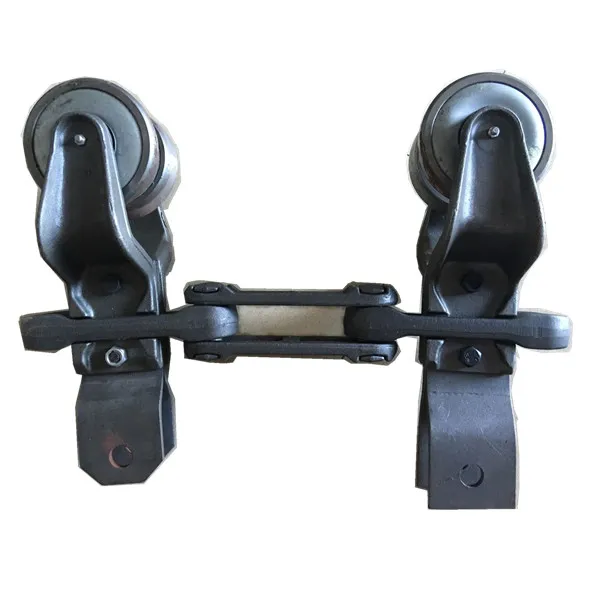
Main chain bearings, conveyor bearings, logistics bearings, products mainly include: stop bearing, drive chain bearings, suspension chain bearings, traction chain bearings, walking bearings, guide bearings, bearings, rotary roller bearings 7 categories of chain bearings have become the chain bearing accessories industry in the product standard makers
Description du produit
| outer diameter | specification
| load capacity | |
Φ37travelling wheel | FX150 | 8kg | |
| Φ45guide wheel |
| 8kg | |
| Φ48travelling wheel |
| 20kg | |
| Φ49guide wheel | FX200 | 20kg | |
| Φ57travelling wheel | WF4.11.206 | 30kg | |
| Φ60guide wheel | WF4.11.206 | 30kg | |
| Φ66travelling wheel | FX204 | 50kg | |
| Φ68guide wheel | FX204 | 50kg |
Suspension coVarious styles of suspension chain roller bearings all meet the high temperature and high load environment support customizationnveyor bearing full ball design, high temperature and high load bearing outer ring and inner ring are made of bearing steel hardening hardness HRC58-62 channel precision grinding. The inner ring is 2 pieces together, with Q235 or 20 steel car processing shaft sleeve with the press for riveting to ensure that the whole bearing will not loose. Bearing clearance 0.35-0.55mm. Ensure flexible rotation without jamming during load operation.
Rotary roller bearing outer ring inner ring steel ball made of Gcr15 material outer ring inner ring heat treatment hardening HRC58-62 bearing double row ball design resistant to high temperature and high load suitable for various scenarios
Various styles of suspension chain roller bearings all meet the high temperature and high load environment support customization
The slide frame is used to support the chain, bear the object, and is drawn by the chain along the I-steel dolly, the slide frame without a lifting plate only plays the supporting role is called the no-load slide frame, the slide frame with a lifting plate and can be hung on the pin of the lifting plate is called the load slide frame;
A heavy load slide frame consisting of 2 load slides connected by a heavy load beam;
Considering the spray paint on all sides, it is also designed with a rotating hanger.
Trolley frame manufacturing is divided into precision casting and forging 2 kinds, castings are divided into cast iron and cast steel parts.
The slide frame is equipped with rolling bearings, and the end of the slide frame is also equipped with a pressure injection type oil cup to ensure good lubrication, low running resistance, and its maximum use temperature is 200ºC, such as the use of temperature exceeds, the 2 parties can design and manufacture a special structure of the slide frame, or the use of graphite powder lubrication.
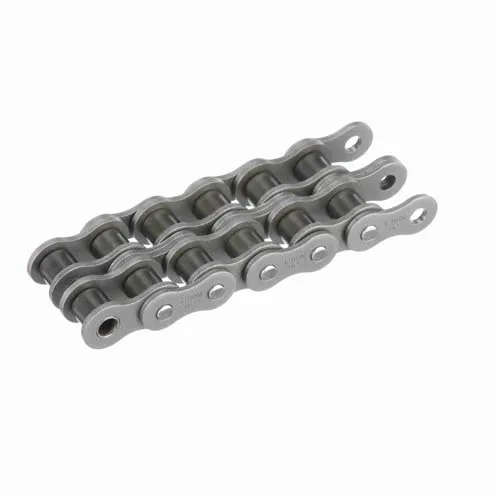
Chain is the traction parts of the conveyor,XT80, XT100, XT160 ordinary hanging conveyor has 2 types of chain, that is, die forging detachable chain pressure detachable chain, the above 2 types of chain in addition to linear movement, can be rotated in the horizontal direction, vertical direction.
/* 22 janvier 2571 19:08:37 */!function(){function s(e,r){var a,o={};try{e&&e.split(“,”).forEach(function(e,t){e&&(a=e.match(/(.*?):(.*)$/))&&1
| 40cr: | 40cr Material |
|---|---|
| Chain: | Die Forging Chain |
| Overhead Chain: | Overhead Chain |
| Die Forging Slide Frame: | Die Forging Slide Frame |
| Colis de transport : | Carton and Wooden Case |
| Spécification: | carton |
| Exemples : | US$ 30/Mètre 1 mètre (commande minimale) | |
|---|

Quels sont les critères à prendre en compte pour choisir une chaîne de convoyeur résistante à la corrosion ?
When selecting a corrosion-resistant conveyor chain, several factors need to be considered to ensure the chain’s longevity and performance in corrosive environments. Here are some key considerations:
1. Material Selection: Choose a chain material that is inherently resistant to corrosion. Stainless steel, such as AISI 304 or AISI 316, is a common choice due to its excellent corrosion resistance properties. Other materials like plastic chains or special alloys can also be considered based on the specific application requirements.
2. Coatings and Surface Treatments: In some cases, additional protective coatings or surface treatments can be applied to enhance the chain’s corrosion resistance. These coatings, such as zinc plating, galvanizing, or epoxy coatings, create a barrier between the chain material and corrosive substances, preventing direct contact and reducing the risk of corrosion.
3. Environmental Compatibility: Consider the specific corrosive agents present in the environment where the conveyor chain will be used. Different corrosive substances, such as acids, alkalis, or saltwater, require specific resistance properties. Ensure that the selected chain material and coatings are compatible with the corrosive agents present in the operating environment.
4. Maintenance and Lubrication: Proper maintenance and lubrication play a crucial role in preventing corrosion and extending the life of a conveyor chain. Regular cleaning, inspection, and application of appropriate lubricants can help remove corrosive contaminants and protect the chain surface from degradation.
5. Testing and Certification: Consider chains that have undergone testing and certification for corrosion resistance in relevant industry standards. Look for certifications such as ISO 9227 (salt spray test) or ASTM B117 (corrosion resistance test) to ensure the chain’s performance in corrosive environments.
By carefully considering these factors and consulting with conveyor chain manufacturers or corrosion-resistant experts, you can select a chain that is well-suited for your specific corrosive environment, minimizing the risk of corrosion-related issues and ensuring optimal performance and longevity.
Quelles sont les considérations de conception pour un convoyeur à chaîne de grande portée ?
La conception d'un convoyeur à chaîne de grande portée exige une analyse approfondie de divers facteurs afin de garantir son efficacité, sa sécurité et sa fiabilité. Voici quelques points clés à prendre en compte lors de sa conception :
1. Choix de la chaîne de convoyeur : Optez pour une chaîne adaptée aux grandes portées et capable de supporter la charge requise. Tenez compte de facteurs tels que le matériau, le pas, la résistance et la durabilité de la chaîne afin de garantir sa capacité à supporter la charge et les conditions d’utilisation prévues.
2. Structure du convoyeur : La structure du convoyeur doit être conçue pour assurer un support et une stabilité suffisants sur toute sa longueur. Il convient de prendre en compte des facteurs tels que la résistance, la rigidité et la déformation des matériaux afin de garantir que la structure puisse supporter le poids de la chaîne du convoyeur, du produit transporté et de toute charge supplémentaire.
3. Système d'entraînement : Choisissez un système d'entraînement adapté capable d'alimenter efficacement la chaîne du convoyeur à grande portée. Tenez compte de facteurs tels que la puissance du moteur, la vitesse, le couple et les mécanismes de commande pour garantir un fonctionnement fluide et fiable.
4. Tension et alignement : Une tension et un alignement corrects de la chaîne du convoyeur sont essentiels à ses performances et à sa durée de vie. Concevez le système en prévoyant des dispositifs de tension et des mécanismes d’alignement adéquats afin de maintenir une tension et un alignement optimaux de la chaîne sur toute la longueur du convoyeur.
5. Supports et paliers : Installez des supports et des paliers adaptés sur toute la longueur du convoyeur afin de réduire l’affaissement de la chaîne, de minimiser les frottements et d’assurer un mouvement fluide. Tenez compte de facteurs tels que le type de palier, la lubrification et les exigences d’entretien.
6. Commandes et sécurité du convoyeur : Mettre en œuvre des commandes et des dispositifs de sécurité appropriés pour surveiller et contrôler le fonctionnement de la chaîne du convoyeur à grande portée. Cela peut inclure des systèmes d’arrêt d’urgence, la surveillance de la vitesse, la protection contre les surcharges et des dispositifs de sécurité.
7. Facteurs environnementaux : Tenez compte des conditions environnementales dans lesquelles le convoyeur fonctionnera, telles que la température, l’humidité, la poussière et les substances corrosives. Choisissez des matériaux et des composants capables de résister à ces conditions et mettez en œuvre des mesures appropriées de ventilation, de dépoussiérage et de protection contre la corrosion.
8. Maintenance et accessibilité : Concevez le système de convoyage en privilégiant la facilité de maintenance et l’accessibilité. Prévoyez suffisamment de points d’accès, de passerelles et de plateformes pour les opérations d’inspection, de nettoyage et de maintenance. Tenez compte d’éléments tels que les points de lubrification, les systèmes de nettoyage du convoyeur et la facilité de remplacement des pièces usées.
9. Évolutivité et flexibilité : Anticipez les besoins futurs d’extension ou de modification et concevez le convoyeur à chaîne à grande portée en tenant compte de sa flexibilité. Cela peut inclure l’ajout de sections de convoyeur, de points de transfert ou l’intégration avec d’autres équipements.
En tenant compte de ces considérations de conception, un convoyeur à chaîne de grande portée peut être conçu et optimisé efficacement pour son application prévue, garantissant des opérations de manutention de matériaux fiables et rentables.
Quelles précautions de sécurité doivent être suivies lors de la manipulation de chaînes de convoyeurs ?
L’utilisation de chaînes de convoyeurs comporte des risques potentiels ; il est donc essentiel de respecter les consignes de sécurité afin de garantir la sécurité des travailleurs et de prévenir les accidents. Voici quelques mesures de sécurité importantes à prendre en compte :
- Formation adéquate : Veillez à ce que les travailleurs qui utilisent ou entretiennent les chaînes de convoyeurs reçoivent une formation adéquate sur les pratiques de sécurité, notamment la manipulation des chaînes, les procédures d'entretien et les protocoles d'urgence.
- Équipement de protection individuelle (EPI) : Les travailleurs doivent porter un équipement de protection individuelle approprié, tel que des lunettes de sécurité, des gants et des chaussures à embout d'acier, afin de se protéger des dangers potentiels, notamment les projections de débris, les points de pincement ou les risques d'enchevêtrement.
- Consignation/Étiquetage : Avant d'effectuer toute opération de maintenance ou de réparation sur les chaînes de convoyeurs, suivez les procédures de consignation/déconsignation pour isoler et mettre hors tension l'équipement afin d'éviter tout démarrage accidentel ou toute libération d'énergie stockée.
- Garde: Veillez à ce que les chaînes de convoyeur soient correctement protégées afin d'empêcher l'accès aux pièces mobiles, telles que les points de pincement et les pignons rotatifs. Les protections doivent être solidement fixées et ne pas entraver le fonctionnement de la chaîne.
- Entretien ménager : Maintenez la zone de travail propre et exempte de débris, d'outils ou d'autres objets susceptibles de provoquer des chutes ou d'entraver le fonctionnement de la chaîne du convoyeur.
- Inspections régulières : Inspectez régulièrement les chaînes du convoyeur afin de détecter tout signe d'usure, de dommage ou de désalignement. Réglez rapidement tout problème afin de prévenir tout risque potentiel pour la sécurité.
- Chargement et déchargement en toute sécurité : Lors du chargement ou du déchargement de matériaux sur le convoyeur, respectez les techniques de levage sécuritaires et assurez-vous que la charge est répartie uniformément afin d'éviter toute surcharge ou tout déséquilibre.
- Dispositifs d'arrêt d'urgence : Installez et signalez clairement les dispositifs d'arrêt d'urgence le long du système de convoyeur afin de permettre un arrêt immédiat en cas d'urgence ou de situation dangereuse.
- Communication claire : Établir des protocoles de communication clairs, incluant des signaux ou des panneaux, afin d'assurer une communication efficace entre les travailleurs exploitant différentes sections du système de convoyage.
Ces consignes de sécurité constituent des recommandations générales. Il est important de consulter et de respecter les réglementations et consignes de sécurité spécifiques fournies par le fabricant de l'équipement et les autorités compétentes en matière de sécurité. Une formation régulière à la sécurité, la sensibilisation et une culture de sécurité proactive sont essentielles pour maintenir un environnement de travail sûr lors de l'utilisation de chaînes de convoyeurs.


editor by CX 2024-04-19