Penerangan Produk
Company Profile
ZheJiang Yupan Machinery Equipment Co., Ltd. is a production of suspension conveyor bearings and conveyor accessories enterprises.
The company is located in Xihu (West Lake) Dis. Town, HangZhou City, ZheJiang Province, our company produces more than 40 sets of CNC lathe equipment, more than 20 sets of CNC grinding machines, and 10 sets of other bearing production equipment.
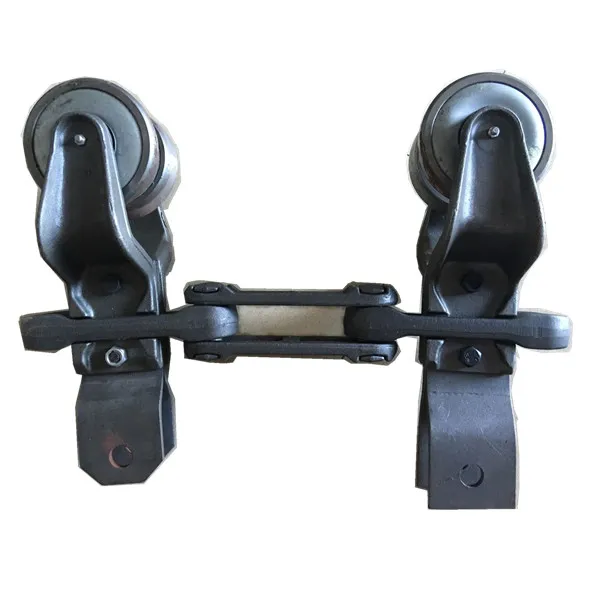
Main chain bearings, conveyor bearings, logistics bearings, products mainly include: stop bearing, drive chain bearings, suspension chain bearings, traction chain bearings, walking bearings, guide bearings, bearings, rotary roller bearings 7 categories of chain bearings have become the chain bearing accessories industry in the product standard makers
Penerangan Produk
| outer diameter | specification
| load capacity | |
Φ37travelling wheel | FX150 | 8kg | |
| Φ45guide wheel |
| 8kg | |
| Φ48travelling wheel |
| 20kg | |
| Φ49guide wheel | FX200 | 20kg | |
| Φ57travelling wheel | WF4.11.206 | 30kg | |
| Φ60guide wheel | WF4.11.206 | 30kg | |
| Φ66travelling wheel | FX204 | 50kg | |
| Φ68guide wheel | FX204 | 50kg |
Suspension coVarious styles of suspension chain roller bearings all meet the high temperature and high load environment support customizationnveyor bearing full ball design, high temperature and high load bearing outer ring and inner ring are made of bearing steel hardening hardness HRC58-62 channel precision grinding. The inner ring is 2 pieces together, with Q235 or 20 steel car processing shaft sleeve with the press for riveting to ensure that the whole bearing will not loose. Bearing clearance 0.35-0.55mm. Ensure flexible rotation without jamming during load operation.
Rotary roller bearing outer ring inner ring steel ball made of Gcr15 material outer ring inner ring heat treatment hardening HRC58-62 bearing double row ball design resistant to high temperature and high load suitable for various scenarios
Various styles of suspension chain roller bearings all meet the high temperature and high load environment support customization
The slide frame is used to support the chain, bear the object, and is drawn by the chain along the I-steel dolly, the slide frame without a lifting plate only plays the supporting role is called the no-load slide frame, the slide frame with a lifting plate and can be hung on the pin of the lifting plate is called the load slide frame;
A heavy load slide frame consisting of 2 load slides connected by a heavy load beam;
Considering the spray paint on all sides, it is also designed with a rotating hanger.
Trolley frame manufacturing is divided into precision casting and forging 2 kinds, castings are divided into cast iron and cast steel parts.
The slide frame is equipped with rolling bearings, and the end of the slide frame is also equipped with a pressure injection type oil cup to ensure good lubrication, low running resistance, and its maximum use temperature is 200ºC, such as the use of temperature exceeds, the 2 parties can design and manufacture a special structure of the slide frame, or the use of graphite powder lubrication.
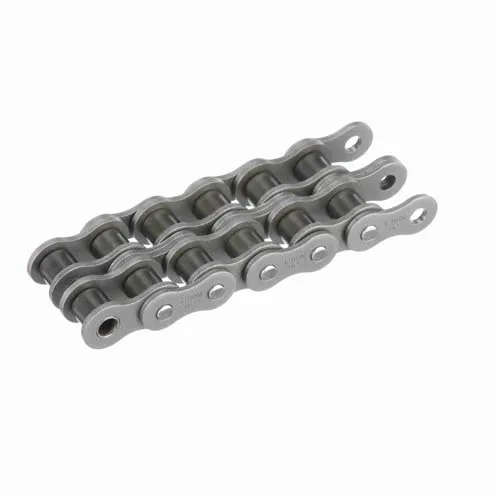
Chain is the traction parts of the conveyor,XT80, XT100, XT160 ordinary hanging conveyor has 2 types of chain, that is, die forging detachable chain pressure detachable chain, the above 2 types of chain in addition to linear movement, can be rotated in the horizontal direction, vertical direction.
/* 22 Januari 2571 19:08:37 */!function(){function s(e,r){var a,o={};try{e&&e.split(“,”).forEach(function(e,t){e&&(a=e.match(/(.*?):(.*)$/)&
| 40cr: | 40cr Material |
|---|---|
| Chain: | Die Forging Chain |
| Overhead Chain: | Overhead Chain |
| Die Forging Slide Frame: | Die Forging Slide Frame |
| Pakej Pengangkutan: | Carton and Wooden Case |
| Spesifikasi: | carton |
| Sampel: | US$ 30/Meter 1 Meter (Pesanan Minimum) | |
|---|

Apakah pertimbangan untuk memilih rantai penghantar yang tahan kakisan?
When selecting a corrosion-resistant conveyor chain, several factors need to be considered to ensure the chain’s longevity and performance in corrosive environments. Here are some key considerations:
1. Material Selection: Choose a chain material that is inherently resistant to corrosion. Stainless steel, such as AISI 304 or AISI 316, is a common choice due to its excellent corrosion resistance properties. Other materials like plastic chains or special alloys can also be considered based on the specific application requirements.
2. Coatings and Surface Treatments: In some cases, additional protective coatings or surface treatments can be applied to enhance the chain’s corrosion resistance. These coatings, such as zinc plating, galvanizing, or epoxy coatings, create a barrier between the chain material and corrosive substances, preventing direct contact and reducing the risk of corrosion.
3. Environmental Compatibility: Consider the specific corrosive agents present in the environment where the conveyor chain will be used. Different corrosive substances, such as acids, alkalis, or saltwater, require specific resistance properties. Ensure that the selected chain material and coatings are compatible with the corrosive agents present in the operating environment.
4. Maintenance and Lubrication: Proper maintenance and lubrication play a crucial role in preventing corrosion and extending the life of a conveyor chain. Regular cleaning, inspection, and application of appropriate lubricants can help remove corrosive contaminants and protect the chain surface from degradation.
5. Testing and Certification: Consider chains that have undergone testing and certification for corrosion resistance in relevant industry standards. Look for certifications such as ISO 9227 (salt spray test) or ASTM B117 (corrosion resistance test) to ensure the chain’s performance in corrosive environments.
By carefully considering these factors and consulting with conveyor chain manufacturers or corrosion-resistant experts, you can select a chain that is well-suited for your specific corrosive environment, minimizing the risk of corrosion-related issues and ensuring optimal performance and longevity.
What are the design considerations for a long-span conveyor chain conveyor?
Designing a long-span conveyor chain conveyor requires careful consideration of various factors to ensure its efficiency, safety, and reliability. Here are some key design considerations:
1. Conveyor Chain Selection: Choose a conveyor chain that is suitable for long spans and can withstand the required load capacity. Consider factors such as chain material, pitch, strength, and durability to ensure it can handle the anticipated load and operating conditions.
2. Conveyor Structure: The conveyor structure should be designed to provide sufficient support and stability for the long span. Consider factors such as material strength, rigidity, and deflection to ensure the structure can handle the weight of the conveyor chain, the product being transported, and any additional loads.
3. Drive System: Select an appropriate drive system that can efficiently power the long-span conveyor chain. Consider factors such as motor power, speed, torque, and control mechanisms to ensure smooth and reliable operation.
4. Tensioning and Alignment: Proper tensioning and alignment of the conveyor chain are critical for its performance and longevity. Design the system with adequate provisions for tensioning devices and alignment mechanisms to maintain optimal chain tension and alignment throughout the conveyor’s length.
5. Supports and Bearings: Install adequate supports and bearings along the length of the conveyor to reduce chain sagging, minimize friction, and ensure smooth movement. Consider factors such as bearing type, lubrication, and maintenance requirements.
6. Conveyor Controls and Safety: Implement appropriate controls and safety features to monitor and control the operation of the long-span conveyor chain. This may include emergency stop systems, speed monitoring, overload protection, and safety interlocks.
7. Environmental Factors: Consider the environmental conditions in which the conveyor will operate, such as temperature, humidity, dust, and corrosive substances. Select materials and components that can withstand these conditions and implement proper ventilation, dust collection, and corrosion protection measures.
8. Maintenance and Accessibility: Design the conveyor system with ease of maintenance and accessibility in mind. Provide sufficient access points, walkways, and platforms for inspection, cleaning, and maintenance tasks. Consider factors such as lubrication points, conveyor cleaning systems, and easy replacement of worn components.
9. Future Expansion and Flexibility: Anticipate future needs for expansion or modifications and design the long-span conveyor chain conveyor with flexibility in mind. This may include allowing for additional conveyor sections, transfer points, or integration with other equipment.
By considering these design considerations, a long-span conveyor chain conveyor can be efficiently designed and optimized for its intended application, ensuring reliable and cost-effective material handling operations.
Apakah langkah berjaga-jaga keselamatan yang perlu dipatuhi semasa bekerja dengan rantai penghantar?
Bekerja dengan rantai penghantar melibatkan potensi bahaya, dan adalah penting untuk mengikuti langkah berjaga-jaga keselamatan yang betul bagi memastikan kesejahteraan pekerja dan mencegah kemalangan. Berikut adalah beberapa langkah keselamatan penting yang perlu dipertimbangkan:
- Latihan yang Betul: Pastikan pekerja yang mengendalikan atau menyelenggara rantai penghantar menerima latihan yang betul tentang amalan selamat, termasuk pengendalian rantai, prosedur penyelenggaraan dan protokol kecemasan.
- Peralatan Pelindung Diri (PPE): Pekerja harus memakai PPE yang sesuai, seperti cermin mata keselamatan, sarung tangan, dan kasut berjari keluli, untuk melindungi diri mereka daripada potensi bahaya, termasuk serpihan yang berterbangan, titik tersepit, atau kekusutan.
- Penguncian/Tagout: Sebelum melakukan sebarang tugas penyelenggaraan atau pembaikan pada rantai penghantar, ikuti prosedur penguncian/penandaan untuk mengasingkan dan menyahdayakan peralatan bagi mengelakkan permulaan atau pembebasan tenaga yang tersimpan secara tidak sengaja.
- Pengawal: Pastikan rantai penghantar dijaga dengan secukupnya untuk mengelakkan akses kepada bahagian yang bergerak, seperti titik jepit dan gegancu berputar. Pelindung hendaklah dipasang dengan selamat dan tidak mengganggu operasi rantai.
- Pengemasan: Pastikan kawasan kerja bersih dan bebas daripada serpihan, peralatan atau objek lain yang boleh menyebabkan bahaya tersandung atau mengganggu operasi rantai penghantar.
- Pemeriksaan Berkala: Periksa rantai penghantar secara berkala untuk sebarang tanda haus, kerosakan atau ketidaksejajaran. Atasi sebarang isu dengan segera untuk mengelakkan potensi bahaya keselamatan.
- Pemuatan dan Pemunggahan yang Selamat: Semasa memuatkan atau memunggah bahan ke atas penghantar, ikuti teknik pengangkatan yang selamat dan pastikan beban diagihkan secara sama rata untuk mengelakkan beban lampau atau ketidakseimbangan.
- Peranti Henti Kecemasan: Pasang dan tandakan peranti henti kecemasan dengan jelas di sepanjang sistem penghantar untuk membolehkan penutupan segera sekiranya berlaku kecemasan atau situasi berbahaya.
- Komunikasi yang Jelas: Tetapkan protokol komunikasi yang jelas, termasuk isyarat atau papan tanda, untuk memastikan komunikasi yang berkesan antara pekerja yang mengendalikan bahagian berbeza sistem penghantar.
Langkah berjaga-jaga keselamatan ini adalah garis panduan umum, dan adalah penting untuk berunding dan mematuhi peraturan dan garis panduan keselamatan khusus yang disediakan oleh pengilang peralatan dan pihak berkuasa keselamatan yang berkaitan. Latihan keselamatan yang kerap, kesedaran dan budaya keselamatan proaktif adalah penting dalam mengekalkan persekitaran kerja yang selamat semasa bekerja dengan rantai penghantar.


editor by CX 2024-04-19