Tuotekuvaus
ISO16949: 2009 Approved Industrial Chain
Miksi valita meidät?
1. HangZhou Xihu (West Lake) Dis.hua Chain Group Co., Ltd established in 1991, we have 5 subsidiaries in china and have 6 subsidiaries abroad;
2. we covering a production area of 200,100 square meters, have more than 1,800 sets of advanced equipment and over 3,100 highly skilled employees, the annual production capacity has exceeded 20,000,000meters;
3. we specialized in producing all kinds of standard chains and special chains, such as A or B series chains, driving chains, conveyor chains, hoisting chains, agricultural chains, sprockets, industrial chains, sprockets, gears, wheels and so on;
4. we have obtained ISO9001, ISO14001, ISO16969, AAA and API certificates.
5. Our partners among world top enterprises, such as JOHNDEERE, NEW HOLLAND, CLAAS, HONDA, KUBOTA, YANMAR, etc.
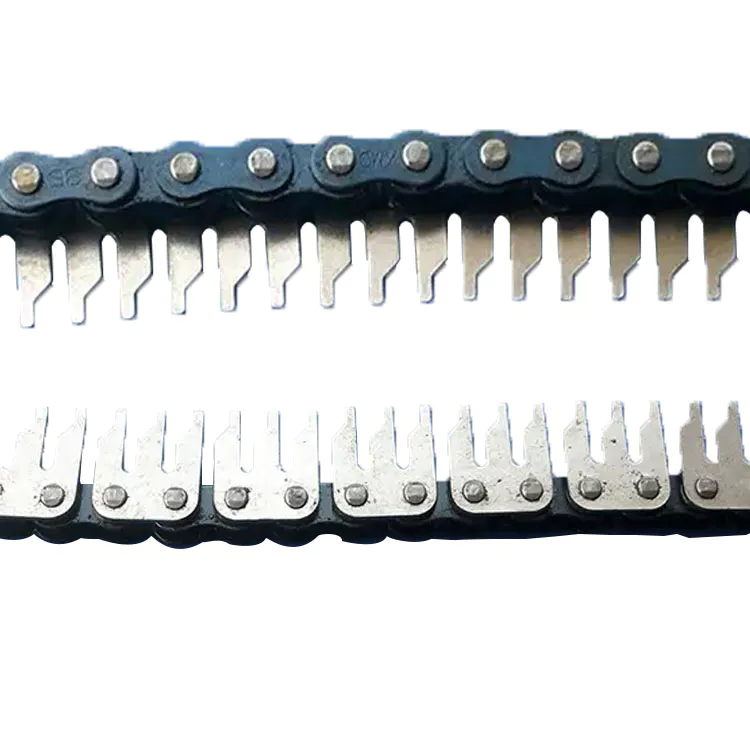
1. Industrial Chain Parts
2. Production flow chart
1. Incoming material
2. Inspection
3. Production of chain board (cold roll steel/punch/heat treatment/shot blasting/cleaning)
4. Production of roller(burr wiping & smear/heat treatment/wiping grinding/cleaning)
5. Production of quill(burr wiping & smear/centerless cylindrical grinding/heat treatment/shining)
6. Production of shaft(cutting/chamfering/heat treatment/ centerless cylindrical grinding/cleaning)
7. Assembling
8. Final inspection
9. Packing
3. Certificate
4. Company Information
HangZhou Xihu (West Lake) Dis.hua Chain Group Co., Ltd perustettiin vuonna 1991, ja sillä on nyt viisi kokonaan omistuksessa olevaa tytäryhtiötä, yksi Zhejiangin maakunnassa ja neljä muuta Hangzhoussa, ZHangZhougin maakunnassa. Se on ammattimainen ketjujen, ketjupyörien, hammaspyörien ja erilaisten voimansiirtotuotteiden valmistaja.
Konsernilla on XIHU (WEST LAKE) DIS.HUA- ja ZIQIANG-tuotemerkit, ja se keskittyy kaikenlaisten vakiorullaketjujen ja erikoisketjujen, kuten kuljetinketjujen, ruostumattomasta teräksestä valmistettujen ketjujen ja maatalousketjujen, valmistukseen. Xihu (West Lake) Dis.hua -tuotemerkki on rekisteröity yli 70 maahan, kuten Amerikassa, Euroopassa ja Japanissa, ja se rakentaa pitkäaikaista yhteistyötä näiden maailman huippuyritysten, kuten JOHNDEERE, NEW HOLLAND, CLAAS, HONDA, KUBOTA ja YANMAR, kanssa.
Xihussa (West Lake) Dis.huan maakuntatason tekninen keskus, akateemikon työasema, Xihun (West Lake) Dis.huan lääkäreiden koeasema ja Xihun (West Lake) Dis.huan ryhmässä on satoja kansallisia ohjelmia. Näiden alustojen ja vahvan teknisen osaamisen avulla yli sadat insinöörit ja teknikot ovat kehittäneet kaikenlaisia erittäin tarkkoja ja lujia tuotteita, toteuttaneet muottiohjelmia autoteollisuuden avainkomponenteille ja toteuttaneet kansallisia teollisuuden elvytysohjelmia.
Ympäristönsuojeluun ja energiansäästöön on kiinnitetty paljon huomiota. Tuote osoittaa hyvin ympäristönsuojelun ja energiansäästön periaatteita. Vuonna 2000 Xihu (West Lake) Dis.hua otti johtoaseman ISO 14001 -ympäristönhallintajärjestelmän sertifikaatin saamisessa ja läpäisi sen jälkeen puhtaan tuotannon ja kierrätystalouden tarkastuksen voittaen "ZHangZhoug Green Enterprise" -tittelin.
"Palvelemme asiakkaitamme aina parhailla tuotteillamme."
| Käyttö: | Kuljetinketju |
|---|---|
| Materiaali: | Seos-/hiiliteräs |
| Pintakäsittely: | Galvanointi |
| Ominaisuus: | Lämmönkestävä |
| Ketjun koko: | 1/2" * 11/128" |
| Rakenne: | Rullaketju |
| Mukauttaminen: | Saatavilla | Mukautettu pyyntö |
|---|
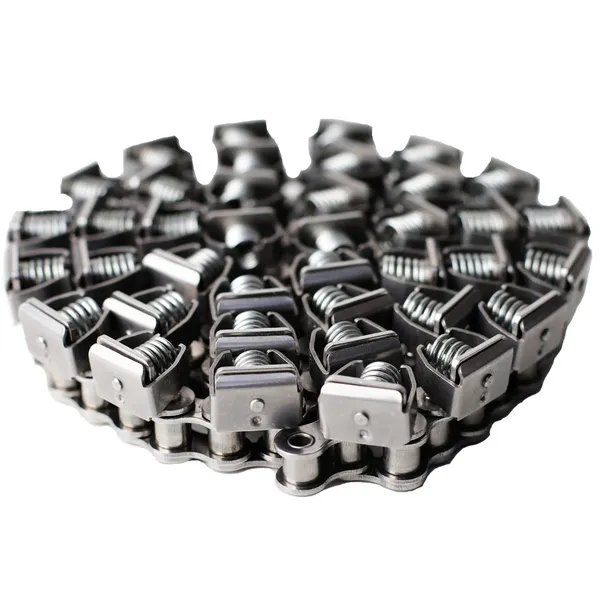
How do you calculate the maximum allowable tension in a conveyor chain?
The maximum allowable tension in a conveyor chain can be calculated using the following steps:
1. Determine the Chain Pitch:
– Measure the distance between the centers of two consecutive chain pins. This measurement is known as the chain pitch and is typically expressed in inches or millimeters.
2. Determine the Chain Speed:
– Determine the speed at which the conveyor chain will be operating. The chain speed is typically expressed in feet per minute or meters per second.
3. Calculate the Chain Pull:
– Determine the total weight or force that needs to be moved by the conveyor chain. This includes the weight of the conveyed material and any additional loads or forces acting on the chain.
4. Calculate the Required Tension:
– Use the following formula to calculate the required tension:
Tension = (Chain Pull × Chain Speed) / (Chain Pitch × Efficiency)
– The efficiency factor accounts for losses due to friction and other factors and is typically expressed as a decimal between 0 and 1.
5. Determine the Maximum Allowable Tension:
– The maximum allowable tension is determined by the manufacturer’s specifications for the conveyor chain. It is important to consult the manufacturer’s documentation or contact them directly to obtain the maximum allowable tension value.
6. Compare the Required Tension and Maximum Allowable Tension:
– Compare the calculated required tension with the maximum allowable tension. The required tension should be less than or equal to the maximum allowable tension to ensure safe and reliable operation of the conveyor chain.
By following these steps and considering the manufacturer’s specifications, you can accurately calculate the maximum allowable tension in a conveyor chain and ensure that it is within the safe operating limits.
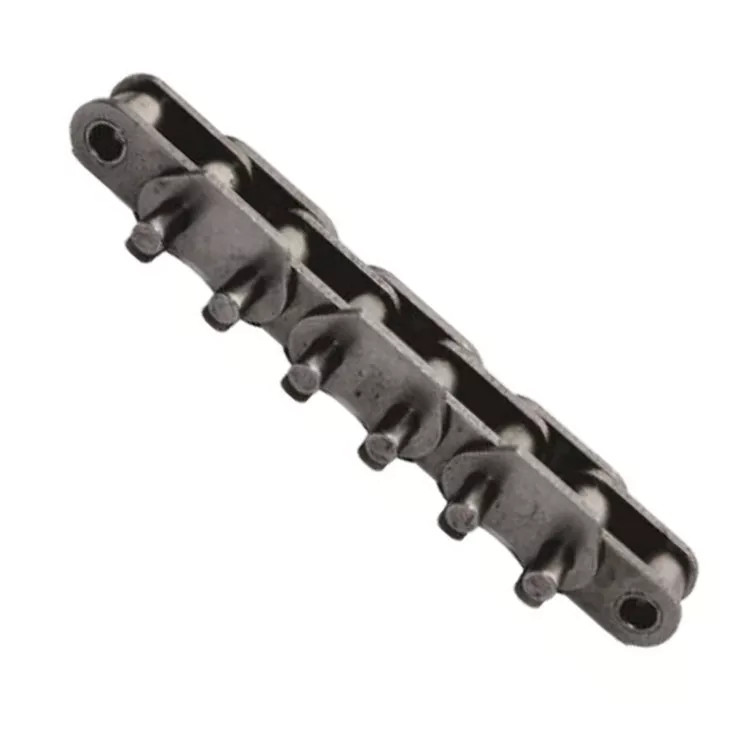
Miten estät kuljetinketjujen korroosion?
Kuljetinketjujen korroosion estäminen on olennaista niiden suorituskyvyn ylläpitämiseksi ja käyttöiän pidentämiseksi. Tässä on joitakin tehokkaita toimenpiteitä korroosion estämiseksi:
1. Materiaalin valinta: Valitse korroosionkestävistä materiaaleista, kuten ruostumattomasta teräksestä, muovista tai erityisesti korroosiota kestävistä pinnoitteista, valmistettuja kuljetinketjuja. Nämä materiaalit tarjoavat paremman suojan ruostetta ja korroosiota vastaan verrattuna tavallisiin teräsketjuihin.
2. Asianmukainen voitelu: Levitä kuljetinketjuun säännöllisesti sopivaa voiteluainetta. Voitelu luo suojakerroksen, joka estää kosteuden ja epäpuhtauksien pääsyn metallipinnalle ja vähentää korroosioriskiä. Valitse voiteluaine, jolla on korroosiosuojausominaisuudet ja joka on yhteensopiva ketjumateriaalin kanssa.
3. Ympäristönsuojelu: Hallitse käyttöympäristöä syövyttäville aineille altistumisen minimoimiseksi. Toteuta toimenpiteitä, kuten kosteuden säätö, asianmukainen ilmanvaihto ja suojaus suoralta kosketukselta veden tai kemikaalien kanssa. Harkitse kansien tai koteloiden käyttöä suojaamaan kuljetinketjua korroosiota kiihdyttäviltä ympäristötekijöiltä.
4. Pintakäsittelyt: Levitä kuljetinketjuun korroosionkestäviä pinnoitteita tai käsittelyjä. Nämä pinnoitteet voivat tarjota lisäsuojakerroksen, joka toimii esteenä kosteutta ja syövyttäviä aineita vastaan. Esimerkkejä pintakäsittelyistä ovat sinkkipinnoitus, galvanointi tai epoksipinnoitteet.
5. Säännölliset tarkastukset ja puhdistus: Tarkista kuljetinketju säännöllisesti korroosion tai vaurioiden varalta. Poista kertynyt lika, roskat tai syövyttävät aineet viipymättä. Ketjun puhdistaminen auttaa estämään korroosiota kiihdyttävien epäpuhtauksien kertymistä.
6. Ennakoiva huolto: Ota käyttöön ennaltaehkäisevä huolto-ohjelma, johon kuuluu kuljetinketjun säännöllinen puhdistus, voitelu ja tarkastus. Tämä ennakoiva lähestymistapa auttaa tunnistamaan ja korjaamaan mahdolliset korroosio-ongelmat varhaisessa vaiheessa estäen lisävaurioita.
7. Asianmukainen säilytys: Kun kuljetinketjuja ei käytetä, säilytä niitä kuivassa ja valvotussa ympäristössä. Suojaa ne kosteudelta, ilmankosteudelta ja syövyttäviltä aineilta. Käytä asianmukaisia säilytysmenetelmiä, kuten ketjujen ripustamista tai säilytystä suljetuissa astioissa.
Noudattamalla näitä ennaltaehkäiseviä toimenpiteitä voit merkittävästi vähentää kuljetinketjujen korroosioriskiä ja varmistaa niiden optimaalisen suorituskyvyn ja pitkän käyttöiän.
Miten ratkaiset yleisiä kuljetinketjujen ongelmia?
Kuljetinketjujen yleisten ongelmien vianmääritys edellyttää ongelman tunnistamista ja asianmukaisten ratkaisutoimien toteuttamista. Tässä on joitakin yleisiä ongelmia ja vianmääritysmenetelmiä:
- Ketjun luistaminen: Jos ketju luistaa tai ei kytkeydy kunnolla rattaisiin, tarkista oikea kireys, kohdistus ja voitelu. Säädä kireyttä tarvittaessa ja varmista, että ketju on oikein linjassa rattaiden kanssa.
- Ketjun juuttuminen: Jos ketju jumiutuu tai juuttuu usein, tarkista kuljetin mahdollisten esteiden tai vieraiden esineiden varalta, jotka saattavat aiheuttaa ongelman. Poista mahdolliset roskat tai tukokset ja varmista, että ketjun reitti on vapaa.
- Liiallinen melu: Jos ketju pitää kovia tai epätavallisia ääniä, tarkista, että voitelu on asianmukaista. Riittämätön voitelu voi aiheuttaa lisääntynyttä kitkaa ja melua. Levitä sopivaa voiteluainetta valmistajan suositusten mukaisesti.
- Ketjun katkeaminen: Jos ketju katkeaa usein, tarkista, onko ketjussa vaurioituneita tai kuluneita osia. Vaihda kaikki rikkoutuneet tai kuluneet lenkit, tapit tai kiinnikkeet. Tarkista myös oikea kireys ja kohdistus, sillä liiallinen kireys tai virheellinen kohdistus voi johtaa ketjun katkeamiseen.
- Ketjun kuluminen: Jos ketjussa on kulumisen merkkejä, kuten venymistä tai korroosiota, harkitse sen vaihtamista. Liiallinen kuluminen voi vaikuttaa ketjun suorituskykyyn ja käyttöikään. Tarkista ja mittaa ketju säännöllisesti kulumisen varalta ja vaihda se tarvittaessa.
On tärkeää noudattaa asianmukaisia huoltokäytäntöjä, mukaan lukien säännölliset tarkastukset, voitelu ja kiristys, kuljetinketjujen yleisten ongelmien ehkäisemiseksi ja ratkaisemiseksi. Tutustu valmistajan ohjeisiin ja hae tarvittaessa ammattiapua.


editor by CX 2023-08-04