Descrição do produto
ISO16949: 2009 Approved Industrial Chain
Why Choose Us?
1. HangZhou Xihu (West Lake) Dis.hua Chain Group Co., Ltd established in 1991, we have 5 subsidiaries in china and have 6 subsidiaries abroad;
2. we covering a production area of 200,100 square meters, have more than 1,800 sets of advanced equipment and over 3,100 highly skilled employees, the annual production capacity has exceeded 20,000,000meters;
3. we specialized in producing all kinds of standard chains and special chains, such as A or B series chains, driving chains, conveyor chains, hoisting chains, agricultural chains, sprockets, industrial chains, sprockets, gears, wheels and so on;
4. we have obtained ISO9001, ISO14001, ISO16969, AAA and API certificates.
5. Our partners among world top enterprises, such as JOHNDEERE, NEW HOLLAND, CLAAS, HONDA, KUBOTA, YANMAR, etc.
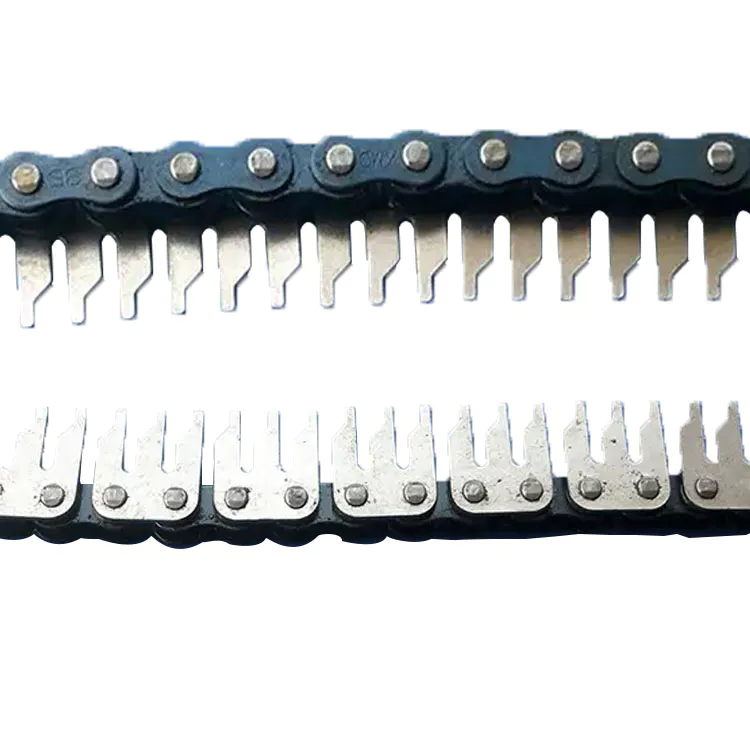
1. Industrial Chain Parts
2. Production flow chart
1. Incoming material
2. Inspection
3. Production of chain board (cold roll steel/punch/heat treatment/shot blasting/cleaning)
4. Production of roller(burr wiping & smear/heat treatment/wiping grinding/cleaning)
5. Production of quill(burr wiping & smear/centerless cylindrical grinding/heat treatment/shining)
6. Production of shaft(cutting/chamfering/heat treatment/ centerless cylindrical grinding/cleaning)
7. Assembling
8. Final inspection
9. Packing
3. Certificate
4. Company Information
A HangZhou Xihu (West Lake) Dis.hua Chain Group Co., Ltd. foi fundada em 1991 e atualmente possui cinco subsidiárias integrais, uma na província de Zhejiang e as outras quatro em Hangzhou, província de Zhejiang. É uma fabricante profissional de correntes, rodas dentadas, engrenagens e diversos produtos de transmissão de potência.
O grupo, proprietário das marcas XIHU (WEST LAKE) DIS.HUA e ZIQIANG, concentra-se na produção de todos os tipos de correntes de rolos padrão e correntes especiais, como correntes transportadoras, correntes de aço inoxidável e correntes agrícolas. Com a marca Xihu (West Lake) Dis.hua registrada em mais de 70 países, incluindo Estados Unidos, Europa e Japão, o grupo mantém parcerias de longo prazo com empresas líderes mundiais, como JOHNDEERE, NEW HOLLAND, CLAAS, HONDA, KUBOTA e YANMAR.
Existe um centro técnico de nível provincial, a estação de trabalho acadêmica Xihu (Lago Oeste) Dis.hua, uma estação experimental para pós-doutorandos Xihu (Lago Oeste) Dis.hua e centenas de programas nacionais estabelecidos no grupo Xihu (Lago Oeste) Dis.hua. Com essas plataformas e forte capacidade técnica, mais de uma centena de engenheiros e técnicos desenvolveram uma variedade de produtos especiais de alta precisão e alta resistência, conduziram programas de moldes para componentes-chave na indústria automotiva e no programa nacional de revitalização industrial.
Grande atenção tem sido dada à proteção ambiental e à economia de energia. O produto demonstra claramente esses princípios. No ano de 2000, a Xihu (Lago Oeste) Dis.hua foi pioneira na obtenção da certificação de gestão ambiental ISO 14001 e, posteriormente, passou pela inspeção de produção limpa e economia de reciclagem, conquistando o título de “Empresa Verde de Zhangzhou”.
“Estamos sempre servindo nossos clientes com nossos melhores produtos.”
| Uso: | Corrente transportadora |
|---|---|
| Material: | Aço liga/carbono |
| Tratamento de superfície: | Galvanoplastia |
| Recurso: | Resistente ao calor |
| Tamanho da corrente: | 1/2"*11/128" |
| Estrutura: | Corrente de rolos |
| Personalização: | Disponível | Solicitação personalizada |
|---|
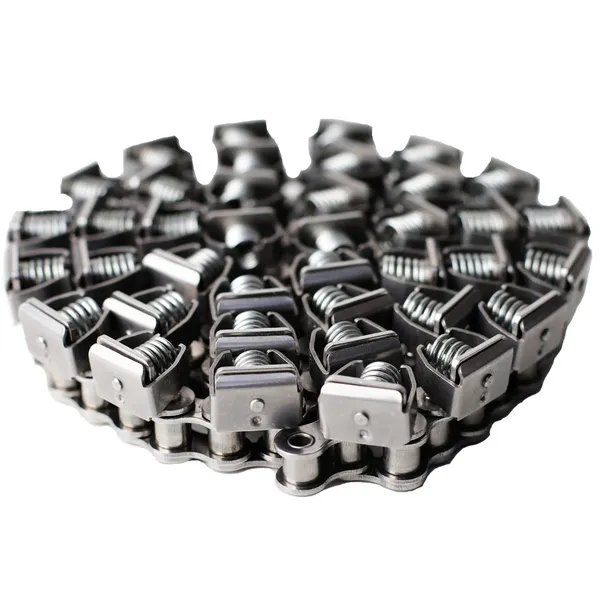
How do you calculate the maximum allowable tension in a conveyor chain?
The maximum allowable tension in a conveyor chain can be calculated using the following steps:
1. Determine the Chain Pitch:
– Measure the distance between the centers of two consecutive chain pins. This measurement is known as the chain pitch and is typically expressed in inches or millimeters.
2. Determine the Chain Speed:
– Determine the speed at which the conveyor chain will be operating. The chain speed is typically expressed in feet per minute or meters per second.
3. Calculate the Chain Pull:
– Determine the total weight or force that needs to be moved by the conveyor chain. This includes the weight of the conveyed material and any additional loads or forces acting on the chain.
4. Calculate the Required Tension:
– Use the following formula to calculate the required tension:
Tension = (Chain Pull × Chain Speed) / (Chain Pitch × Efficiency)
– The efficiency factor accounts for losses due to friction and other factors and is typically expressed as a decimal between 0 and 1.
5. Determine the Maximum Allowable Tension:
– The maximum allowable tension is determined by the manufacturer’s specifications for the conveyor chain. It is important to consult the manufacturer’s documentation or contact them directly to obtain the maximum allowable tension value.
6. Compare the Required Tension and Maximum Allowable Tension:
– Compare the calculated required tension with the maximum allowable tension. The required tension should be less than or equal to the maximum allowable tension to ensure safe and reliable operation of the conveyor chain.
By following these steps and considering the manufacturer’s specifications, you can accurately calculate the maximum allowable tension in a conveyor chain and ensure that it is within the safe operating limits.
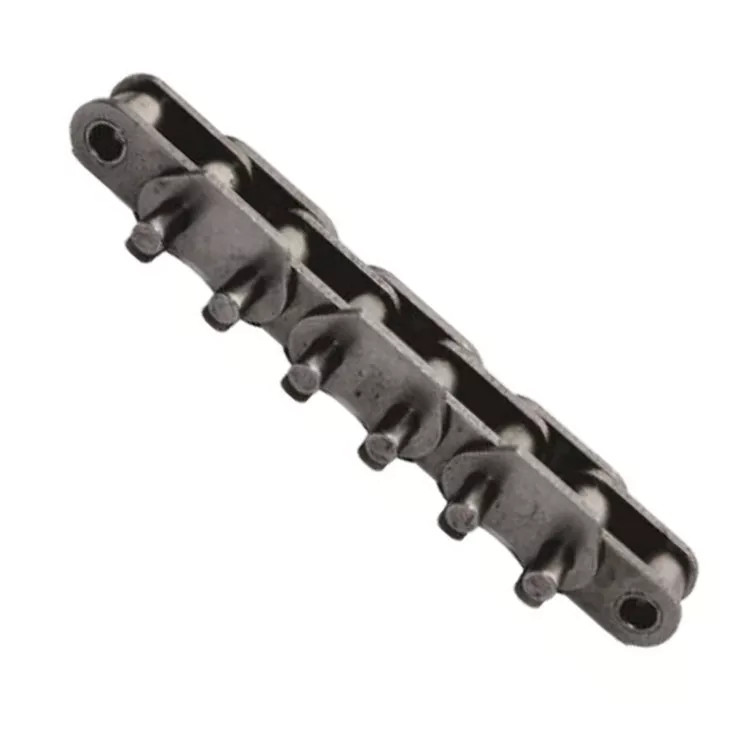
How do you prevent corrosion in conveyor chains?
Preventing corrosion in conveyor chains is essential for maintaining their performance and prolonging their lifespan. Here are some effective measures to prevent corrosion:
1. Material Selection: Choose conveyor chains made from corrosion-resistant materials such as stainless steel, plastic, or coatings specifically designed to resist corrosion. These materials offer better protection against rust and corrosion compared to standard steel chains.
2. Proper Lubrication: Apply a suitable lubricant to the conveyor chain regularly. Lubrication creates a protective barrier that helps prevent moisture and contaminants from reaching the metal surface, reducing the risk of corrosion. Select a lubricant that provides corrosion protection properties and is compatible with the chain material.
3. Environmental Controls: Control the operating environment to minimize exposure to corrosive elements. Implement measures such as humidity control, proper ventilation, and protection from direct contact with water or chemicals. Consider using covers or enclosures to shield the conveyor chain from environmental factors that can accelerate corrosion.
4. Surface Treatments: Apply corrosion-resistant coatings or treatments to the conveyor chain. These coatings can provide an additional protective layer that acts as a barrier against moisture and corrosive substances. Examples of surface treatments include zinc plating, galvanizing, or epoxy coatings.
5. Regular Inspections and Cleaning: Regularly inspect the conveyor chain for signs of corrosion or damage. Remove any accumulated dirt, debris, or corrosive substances promptly. Cleaning the chain helps prevent the buildup of contaminants that can accelerate corrosion.
6. Preventive Maintenance: Implement a preventive maintenance program that includes regular cleaning, lubrication, and inspection of the conveyor chain. This proactive approach helps identify and address any potential corrosion issues early on, preventing further damage.
7. Proper Storage: When not in use, store the conveyor chains in a dry and controlled environment. Protect them from exposure to moisture, humidity, and corrosive substances. Use appropriate storage methods, such as hanging the chains or storing them in sealed containers.
By following these preventive measures, you can significantly reduce the risk of corrosion in conveyor chains, ensuring their optimal performance and longevity.
Como solucionar problemas comuns com correntes transportadoras?
A resolução de problemas comuns em correntes transportadoras envolve a identificação do problema e a tomada de medidas adequadas para solucioná-lo. Aqui estão alguns problemas comuns e suas respectivas abordagens de solução:
- Deslizamento da corrente: Se a corrente estiver deslizando ou não estiver engatando corretamente nas engrenagens, verifique se o tensionamento, o alinhamento e a lubrificação estão adequados. Ajuste o tensionamento, se necessário, e certifique-se de que a corrente esteja alinhada corretamente com as engrenagens.
- Travamento em cadeia: Se a corrente estiver emperrando ou travando com frequência, inspecione a esteira transportadora em busca de obstruções ou objetos estranhos que possam estar causando o problema. Remova quaisquer detritos ou bloqueios e certifique-se de que o caminho da corrente esteja livre.
- Ruído excessivo: Se a corrente estiver fazendo barulhos altos ou incomuns, verifique se a lubrificação está adequada. A lubrificação insuficiente pode causar aumento do atrito e do ruído. Aplique o lubrificante apropriado de acordo com as recomendações do fabricante.
- Quebra de corrente: Se a corrente estiver quebrando com frequência, inspecione-a em busca de componentes danificados ou desgastados. Substitua quaisquer elos, pinos ou fixadores quebrados ou desgastados. Verifique também se a tensão e o alinhamento estão corretos, pois tensão excessiva ou desalinhamento podem levar à quebra da corrente.
- Desgaste da corrente: Se a corrente apresentar sinais de desgaste, como alongamento ou corrosão, considere substituí-la. O desgaste excessivo pode afetar o desempenho e a vida útil da corrente. Inspecione e meça a corrente regularmente para verificar o desgaste e substitua-a quando necessário.
É importante seguir as práticas de manutenção adequadas, incluindo inspeção regular, lubrificação e tensionamento, para prevenir e solucionar problemas comuns em correntes transportadoras. Consulte as diretrizes do fabricante e procure assistência profissional, se necessário.


editor by CX 2023-08-04