製品説明
ISO16949: 2009 Approved Industrial Chain
Why Choose Us?
1. HangZhou Xihu (West Lake) Dis.hua Chain Group Co., Ltd established in 1991, we have 5 subsidiaries in china and have 6 subsidiaries abroad;
2. we covering a production area of 200,100 square meters, have more than 1,800 sets of advanced equipment and over 3,100 highly skilled employees, the annual production capacity has exceeded 20,000,000meters;
3. we specialized in producing all kinds of standard chains and special chains, such as A or B series chains, driving chains, conveyor chains, hoisting chains, agricultural chains, sprockets, industrial chains, sprockets, gears, wheels and so on;
4. we have obtained ISO9001, ISO14001, ISO16969, AAA and API certificates.
5. Our partners among world top enterprises, such as JOHNDEERE, NEW HOLLAND, CLAAS, HONDA, KUBOTA, YANMAR, etc.
1. Industrial Chain Parts
2. Production flow chart
1. Incoming material
2. Inspection
3. Production of chain board (cold roll steel/punch/heat treatment/shot blasting/cleaning)
4. Production of roller(burr wiping & smear/heat treatment/wiping grinding/cleaning)
5. Production of quill(burr wiping & smear/centerless cylindrical grinding/heat treatment/shining)
6. Production of shaft(cutting/chamfering/heat treatment/ centerless cylindrical grinding/cleaning)
7. Assembling
8. Final inspection
9. Packing
3. Certificate
4. Company Information
杭州西湖(西湖)ディス・フア・チェーン・グループ株式会社は1991年に設立され、現在では5つの完全子会社を有し、1つは浙江省に、残りの4つは杭州市にあります。チェーン、スプロケット、歯車、および各種動力伝達製品の専門メーカーです。
同グループは、XIHU (WEST LAKE) DIS.HUA、ZIQIANGブランドを擁し、コンベヤチェーン、ステンレスチェーン、農業用チェーンなど、あらゆる種類の標準ローラーチェーンおよび特殊チェーンの製造に注力しています。Xihu (West Lake) Dis.huaブランドは、アメリカ、ヨーロッパ、日本など70カ国以上で登録されており、JOHNDEERE、NEW HOLLAND、CLAAS、HONDA、KUBOTA、YANMARといった世界トップクラスの企業と長期的な協力関係を築いています。
西湖ディスファグループには、省レベルの技術センター、西湖ディスファ院士研究ステーション、西湖ディスファ博士研究員向け実験ステーション、そして数百もの国家プロジェクトが設置されています。これらのプラットフォームと強力な技術力により、数百名を超えるエンジニアと技術者が、あらゆる種類の特殊高精度・高強度製品を開発し、自動車の主要部品の金型開発や国家産業振興プログラムを実施してきました。
環境保護と省エネルギーに細心の注意が払われてきました。この製品は環境保護と省エネルギーの優れた例を示しています。2000年、西湖ディスファはISO 14001環境管理認証をいち早く取得し、その後、クリーン生産と循環経済の検査に合格し、「杭州グリーン企業」の称号を獲得しました。
「私たちは常にお客様に最高の製品を提供することを目指しています。」
| 使用法: | コンベアチェーン |
|---|---|
| 材料: | 合金鋼/炭素鋼 |
| 表面処理: | Electroplating |
| 特徴: | 耐熱性 |
| チェーンサイズ: | 1/2インチ×11/128インチ |
| 構造: | ローラーチェーン |
| カスタマイズ: | 利用可能 | カスタマイズされたリクエスト |
|---|

How do you calculate the maximum allowable tension in a conveyor chain?
The maximum allowable tension in a conveyor chain can be calculated using the following steps:
1. Determine the Chain Pitch:
– Measure the distance between the centers of two consecutive chain pins. This measurement is known as the chain pitch and is typically expressed in inches or millimeters.
2. Determine the Chain Speed:
– Determine the speed at which the conveyor chain will be operating. The chain speed is typically expressed in feet per minute or meters per second.
3. Calculate the Chain Pull:
– Determine the total weight or force that needs to be moved by the conveyor chain. This includes the weight of the conveyed material and any additional loads or forces acting on the chain.
4. Calculate the Required Tension:
– Use the following formula to calculate the required tension:
Tension = (Chain Pull × Chain Speed) / (Chain Pitch × Efficiency)
– The efficiency factor accounts for losses due to friction and other factors and is typically expressed as a decimal between 0 and 1.
5. Determine the Maximum Allowable Tension:
– The maximum allowable tension is determined by the manufacturer’s specifications for the conveyor chain. It is important to consult the manufacturer’s documentation or contact them directly to obtain the maximum allowable tension value.
6. Compare the Required Tension and Maximum Allowable Tension:
– Compare the calculated required tension with the maximum allowable tension. The required tension should be less than or equal to the maximum allowable tension to ensure safe and reliable operation of the conveyor chain.
By following these steps and considering the manufacturer’s specifications, you can accurately calculate the maximum allowable tension in a conveyor chain and ensure that it is within the safe operating limits.
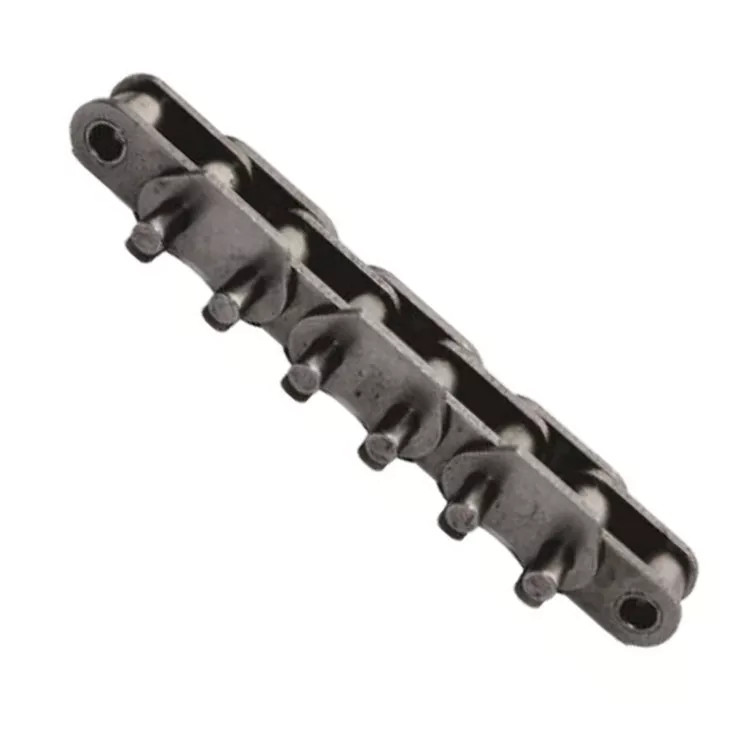
How do you prevent corrosion in conveyor chains?
Preventing corrosion in conveyor chains is essential for maintaining their performance and prolonging their lifespan. Here are some effective measures to prevent corrosion:
1. Material Selection: Choose conveyor chains made from corrosion-resistant materials such as stainless steel, plastic, or coatings specifically designed to resist corrosion. These materials offer better protection against rust and corrosion compared to standard steel chains.
2. Proper Lubrication: Apply a suitable lubricant to the conveyor chain regularly. Lubrication creates a protective barrier that helps prevent moisture and contaminants from reaching the metal surface, reducing the risk of corrosion. Select a lubricant that provides corrosion protection properties and is compatible with the chain material.
3. Environmental Controls: Control the operating environment to minimize exposure to corrosive elements. Implement measures such as humidity control, proper ventilation, and protection from direct contact with water or chemicals. Consider using covers or enclosures to shield the conveyor chain from environmental factors that can accelerate corrosion.
4. Surface Treatments: Apply corrosion-resistant coatings or treatments to the conveyor chain. These coatings can provide an additional protective layer that acts as a barrier against moisture and corrosive substances. Examples of surface treatments include zinc plating, galvanizing, or epoxy coatings.
5. Regular Inspections and Cleaning: Regularly inspect the conveyor chain for signs of corrosion or damage. Remove any accumulated dirt, debris, or corrosive substances promptly. Cleaning the chain helps prevent the buildup of contaminants that can accelerate corrosion.
6. Preventive Maintenance: Implement a preventive maintenance program that includes regular cleaning, lubrication, and inspection of the conveyor chain. This proactive approach helps identify and address any potential corrosion issues early on, preventing further damage.
7. Proper Storage: When not in use, store the conveyor chains in a dry and controlled environment. Protect them from exposure to moisture, humidity, and corrosive substances. Use appropriate storage methods, such as hanging the chains or storing them in sealed containers.
By following these preventive measures, you can significantly reduce the risk of corrosion in conveyor chains, ensuring their optimal performance and longevity.
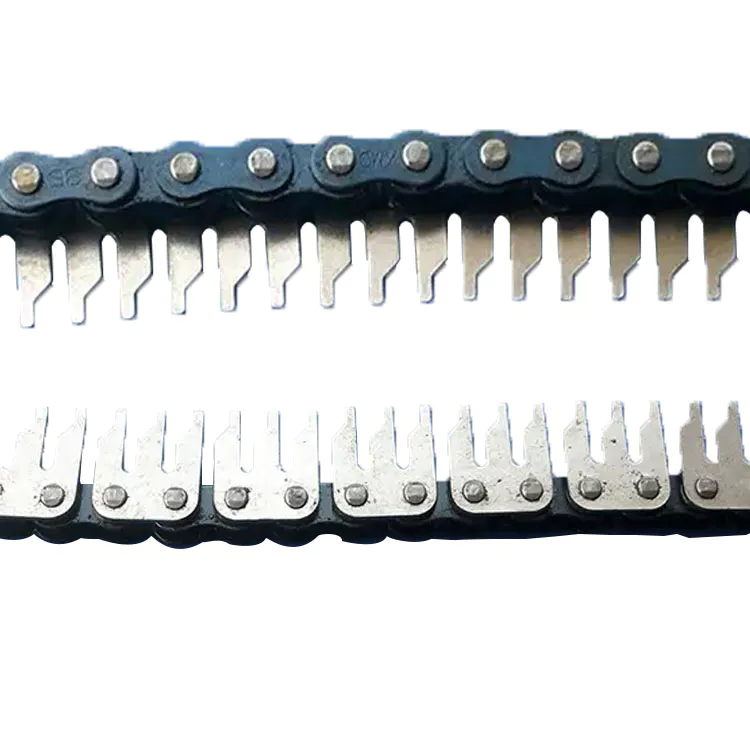
コンベアチェーンによくある問題のトラブルシューティングはどのように行いますか?
コンベアチェーンの一般的な問題のトラブルシューティングには、問題を特定し、適切な手順で解決することが含まれます。以下に、よくある問題とそのトラブルシューティング方法を示します。
- チェーンの滑り: チェーンが滑ったり、スプロケットに正しくかみ合っていない場合は、適切な張力、位置合わせ、潤滑状態を確認してください。必要に応じて張力を調整し、チェーンがスプロケットに正しく位置合わせされていることを確認してください。
- チェーンジャミング: チェーンが頻繁に詰まったり、動かなくなったりする場合は、コンベアに障害物や異物がないか点検してください。異物や詰まりを取り除き、チェーンの経路が塞がれていないことを確認してください。
- 過剰な騒音: チェーンから大きな音や異音がする場合は、潤滑油が適切に塗布されているか確認してください。潤滑油が不足すると、摩擦が増加し、異音の原因となります。メーカーの推奨に従って、適切な潤滑油を塗布してください。
- チェーン破損: チェーンが頻繁に切れる場合は、損傷または摩耗した部品がないか点検してください。破損または摩耗したリンク、ピン、またはアタッチメントは交換してください。また、適切な張力とアライメントも確認してください。張力が強すぎたり、アライメントがずれていると、チェーンが切れる原因となります。
- チェーンの摩耗: チェーンに伸びや腐食などの摩耗の兆候が見られる場合は、交換を検討してください。過度の摩耗はチェーンの性能と寿命に影響を与える可能性があります。定期的にチェーンの摩耗状態を点検・測定し、必要に応じて交換してください。
コンベヤチェーンによくある問題を予防・解決するためには、定期的な点検、潤滑、張力調整など、適切なメンテナンス手順に従うことが重要です。製造元のガイドラインを参照し、必要に応じて専門家の支援を求めてください。


editor by CX 2023-08-04