Opis produktu
ISO16949: 2009 Approved Industrial Chain
Why Choose Us?
1. HangZhou Xihu (West Lake) Dis.hua Chain Group Co., Ltd established in 1991, we have 5 subsidiaries in china and have 6 subsidiaries abroad;
2. we covering a production area of 200,100 square meters, have more than 1,800 sets of advanced equipment and over 3,100 highly skilled employees, the annual production capacity has exceeded 20,000,000meters;
3. we specialized in producing all kinds of standard chains and special chains, such as A or B series chains, driving chains, conveyor chains, hoisting chains, agricultural chains, sprockets, industrial chains, sprockets, gears, wheels and so on;
4. we have obtained ISO9001, ISO14001, ISO16969, AAA and API certificates.
5. Our partners among world top enterprises, such as JOHNDEERE, NEW HOLLAND, CLAAS, HONDA, KUBOTA, YANMAR, etc.
1. Industrial Chain Parts
2. Production flow chart
1. Incoming material
2. Inspection
3. Production of chain board (cold roll steel/punch/heat treatment/shot blasting/cleaning)
4. Production of roller(burr wiping & smear/heat treatment/wiping grinding/cleaning)
5. Production of quill(burr wiping & smear/centerless cylindrical grinding/heat treatment/shining)
6. Production of shaft(cutting/chamfering/heat treatment/ centerless cylindrical grinding/cleaning)
7. Assembling
8. Final inspection
9. Packing
3. Certificate
4. Company Information
HangZhou Xihu (West Lake) Dis.hua Chain Group Co., Ltd was founded in 1 9 9 1, and now it has five wholly owned subsidiaries, one in ZheJiang province, other four in HangZhou, ZHangZhoug province, it is a professional manufacturer of chains, sprockets, tooth gears and various power transmission products.
The group has XIHU (WEST LAKE) DIS.HUA, ZIQIANG brands, is focused on producing all variety of standard roller chains and special chains, such as conveyor chain, stainless steel chain, agricultural chain. With Xihu (West Lake) Dis.hua brand registered in more than 70 countries like America, Europe, Japan, it is building long term cooperation with these world top enterprises, such as JOHNDEERE, NEW HOLLAND, CLAAS, HONDA, KUBOTA, YANMAR.
There is a technical center of province level, Xihu (West Lake) Dis.hua academician working station, experiment station for Xihu (West Lake) Dis.hua post doctors, and national hundreds of program set up in Xihu (West Lake) Dis.hua group. With these platforms and strong technical ability, the more than hundreds of Engineers and technicians have developed all variety of special high precise and high strength products, conducted mold programs for key components in the car and national industry revitalizing program.
Great attention has been paid on environmental protection and energy saving. The product well displays environmental protection and energy saving. In the year of 2 0 0 0, Xihu (West Lake) Dis.hua took the lead in gaining I S O 1 4 0 0 1 environment management certificate and thereafter passed the inspection of clean production and recycling economy, winning the title of “ZHangZhoug Green Enterprise”.
“We are always serving our customers with our best products.”
| Stosowanie: | Conveyor Chain |
|---|---|
| Tworzywo: | Stal stopowa/węglowa |
| Obróbka powierzchni: | Electroplating |
| Funkcja: | Odporny na ciepło |
| Rozmiar łańcucha: | 1/2"*11/128" |
| Struktura: | Łańcuch rolkowy |
| Personalizacja: | Dostępny | Spersonalizowane żądanie |
|---|

How do you calculate the maximum allowable tension in a conveyor chain?
The maximum allowable tension in a conveyor chain can be calculated using the following steps:
1. Determine the Chain Pitch:
– Measure the distance between the centers of two consecutive chain pins. This measurement is known as the chain pitch and is typically expressed in inches or millimeters.
2. Determine the Chain Speed:
– Determine the speed at which the conveyor chain will be operating. The chain speed is typically expressed in feet per minute or meters per second.
3. Calculate the Chain Pull:
– Determine the total weight or force that needs to be moved by the conveyor chain. This includes the weight of the conveyed material and any additional loads or forces acting on the chain.
4. Calculate the Required Tension:
– Use the following formula to calculate the required tension:
Tension = (Chain Pull × Chain Speed) / (Chain Pitch × Efficiency)
– The efficiency factor accounts for losses due to friction and other factors and is typically expressed as a decimal between 0 and 1.
5. Determine the Maximum Allowable Tension:
– The maximum allowable tension is determined by the manufacturer’s specifications for the conveyor chain. It is important to consult the manufacturer’s documentation or contact them directly to obtain the maximum allowable tension value.
6. Compare the Required Tension and Maximum Allowable Tension:
– Compare the calculated required tension with the maximum allowable tension. The required tension should be less than or equal to the maximum allowable tension to ensure safe and reliable operation of the conveyor chain.
By following these steps and considering the manufacturer’s specifications, you can accurately calculate the maximum allowable tension in a conveyor chain and ensure that it is within the safe operating limits.
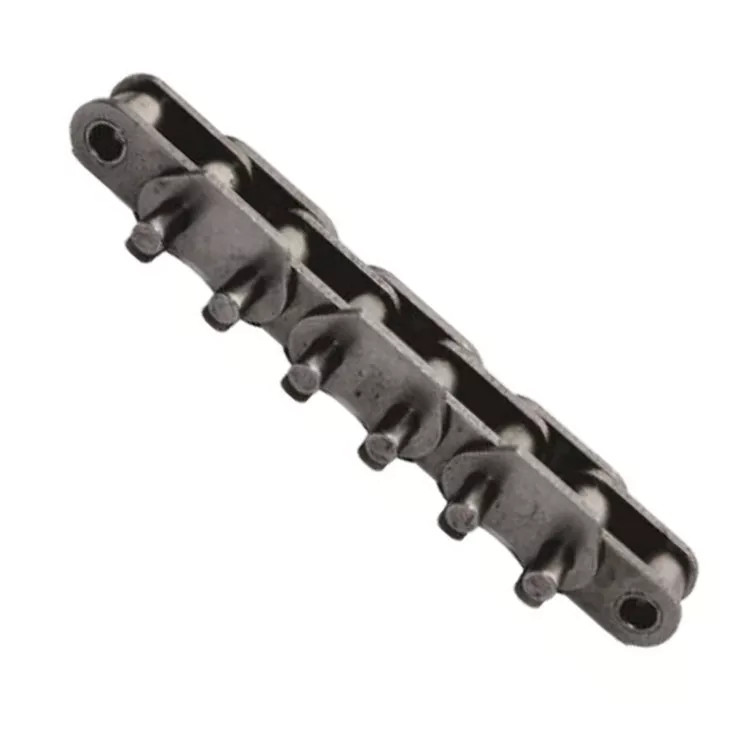
How do you prevent corrosion in conveyor chains?
Preventing corrosion in conveyor chains is essential for maintaining their performance and prolonging their lifespan. Here are some effective measures to prevent corrosion:
1. Material Selection: Choose conveyor chains made from corrosion-resistant materials such as stainless steel, plastic, or coatings specifically designed to resist corrosion. These materials offer better protection against rust and corrosion compared to standard steel chains.
2. Proper Lubrication: Apply a suitable lubricant to the conveyor chain regularly. Lubrication creates a protective barrier that helps prevent moisture and contaminants from reaching the metal surface, reducing the risk of corrosion. Select a lubricant that provides corrosion protection properties and is compatible with the chain material.
3. Environmental Controls: Control the operating environment to minimize exposure to corrosive elements. Implement measures such as humidity control, proper ventilation, and protection from direct contact with water or chemicals. Consider using covers or enclosures to shield the conveyor chain from environmental factors that can accelerate corrosion.
4. Surface Treatments: Apply corrosion-resistant coatings or treatments to the conveyor chain. These coatings can provide an additional protective layer that acts as a barrier against moisture and corrosive substances. Examples of surface treatments include zinc plating, galvanizing, or epoxy coatings.
5. Regular Inspections and Cleaning: Regularly inspect the conveyor chain for signs of corrosion or damage. Remove any accumulated dirt, debris, or corrosive substances promptly. Cleaning the chain helps prevent the buildup of contaminants that can accelerate corrosion.
6. Preventive Maintenance: Implement a preventive maintenance program that includes regular cleaning, lubrication, and inspection of the conveyor chain. This proactive approach helps identify and address any potential corrosion issues early on, preventing further damage.
7. Proper Storage: When not in use, store the conveyor chains in a dry and controlled environment. Protect them from exposure to moisture, humidity, and corrosive substances. Use appropriate storage methods, such as hanging the chains or storing them in sealed containers.
By following these preventive measures, you can significantly reduce the risk of corrosion in conveyor chains, ensuring their optimal performance and longevity.
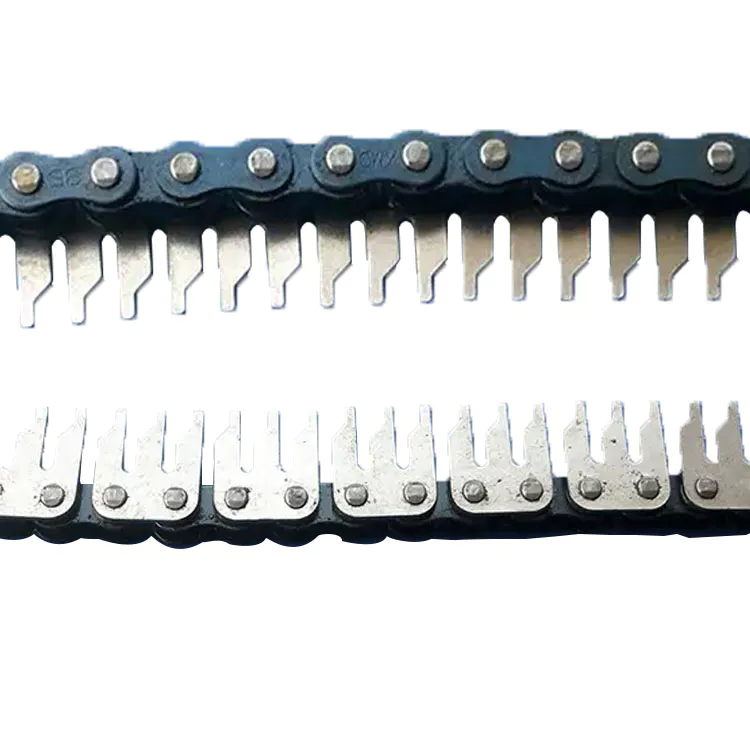
Jak rozwiązywać typowe problemy z łańcuchami przenośnikowymi?
Rozwiązywanie typowych problemów z łańcuchami przenośnikowymi polega na zidentyfikowaniu problemu i podjęciu odpowiednich kroków w celu jego rozwiązania. Oto kilka typowych problemów i sposobów ich rozwiązywania:
- Poślizg łańcucha: Jeśli łańcuch ślizga się lub nie zazębia się prawidłowo z zębatkami, sprawdź jego prawidłowe naprężenie, wyrównanie i smarowanie. W razie potrzeby wyreguluj naprężenie i upewnij się, że łańcuch jest prawidłowo wyrównany z zębatkami.
- Zacinanie się łańcucha: Jeśli łańcuch często się zacina lub blokuje, sprawdź przenośnik pod kątem ewentualnych przeszkód lub ciał obcych, które mogą być przyczyną problemu. Usuń wszelkie zanieczyszczenia lub blokady i upewnij się, że ścieżka łańcucha jest drożna.
- Nadmierny hałas: Jeśli łańcuch wydaje głośne lub nietypowe dźwięki, sprawdź, czy jest odpowiednio nasmarowany. Niedostateczne smarowanie może powodować zwiększone tarcie i hałas. Zastosuj odpowiedni smar zgodnie z zaleceniami producenta.
- Zerwanie łańcucha: Jeśli łańcuch często się zrywa, sprawdź, czy nie ma uszkodzonych lub zużytych elementów. Wymień uszkodzone lub zużyte ogniwa, sworznie lub elementy mocujące. Sprawdź również prawidłowe naprężenie i ustawienie, ponieważ nadmierne naprężenie lub niewspółosiowość może prowadzić do zerwania łańcucha.
- Zużycie łańcucha: Jeśli łańcuch wykazuje oznaki zużycia, takie jak wydłużenie lub korozja, należy rozważyć jego wymianę. Nadmierne zużycie może wpłynąć na wydajność i żywotność łańcucha. Regularnie sprawdzaj i mierz zużycie łańcucha, a w razie potrzeby wymień go.
Aby zapobiegać i rozwiązywać typowe problemy z łańcuchami przenośnikowymi, ważne jest przestrzeganie właściwych praktyk konserwacyjnych, w tym regularnych przeglądów, smarowania i napinania. Zapoznaj się z wytycznymi producenta i w razie potrzeby zwróć się o pomoc do specjalisty.


editor by CX 2023-08-04