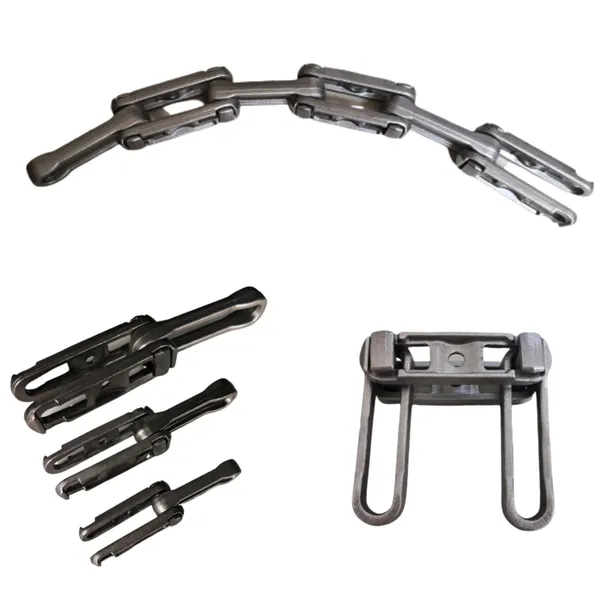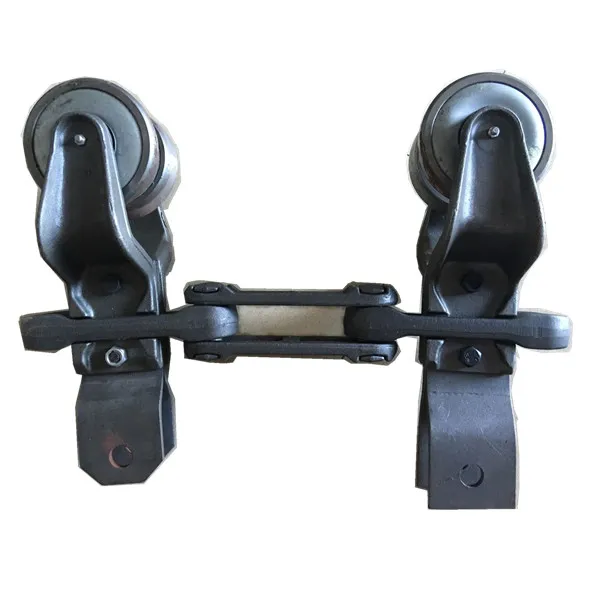
Produktbeschreibung
Produktbeschreibung
UH-5075-S series conveyor chains have excellent extensity and capable of making any turn on both horizontal planes and vertical planes. Based on the actual needs of various process flows, the conveyor has been deliberately designed to run across relatively long routes and abstruction objects to transmit the work pieces along the scheduled route all the way to their destinations. In this way, UH-5075 can integrae all separate production steps into an automatic production line, which has greatly improved efficiency and product quality level and strengthen the management as well.
Features:
Overhead trolley conveyors are used in wide range of applications, including: manufacturing and assembly, warehousing and distribution of the goods.
Overhead chain conveyors system can prove to be cost effective as they reduce the use of carriers and allows large volumes to move rapidly through a process.
Techncial Date
Kasin No. | UH-5075-S Standard chain | Heavy-duty chain
| UH-5075-HV Heavy-duty chain | UH-5075-HA Heavy-duty chain | |||||||||||||
Suspension Spacing (mm) | 150+(150× N) | 150+(150 × N) | 150+(150 × N) | 150+(150 × N) | |||||||||||||
Chain’s Weight (kg/m) | 4.2 | 4.58 | 4.83 | 5.3 | |||||||||||||
Single-span Weight (≤kg) | 35 | 40 | 45 | 50 | |||||||||||||
Chain’s Allowed Pull Force (≤kgf) | 3/8822 0571 -57152031 Fax: 86~/8822 0571 -57152030
Can a conveyor chain be used in cleanroom environments?Yes, conveyor chains can be used in cleanroom environments with proper selection and design considerations. Cleanroom environments require stringent control of airborne particles, such as dust, microbes, and contaminants, to maintain high levels of cleanliness. Here are some factors to consider when using a conveyor chain in a cleanroom: 1. Material Selection: – Choose a conveyor chain made from materials that are compatible with cleanroom requirements. Stainless steel, plastic, or special coatings are commonly used for their clean and non-contaminating properties. – Avoid materials that generate excessive particles or contaminants, such as certain types of lubricants or chain coatings. 2. Design Considerations: – Design the conveyor chain system to minimize particle generation. This includes smooth surfaces, rounded edges, and avoiding areas that can trap or accumulate particles. – Use sealed or enclosed chain designs to prevent the release of lubricants or contaminants. – Consider the integration of additional features, such as covers or guards, to further protect the chain and prevent particle ingress. 3. Cleaning and Maintenance: – Establish a cleaning and maintenance protocol specific to the cleanroom environment. This may include regular cleaning and sanitization procedures to maintain cleanliness standards. – Use cleaning agents and procedures that are approved for cleanroom use and do not introduce contaminants. – Regularly inspect the conveyor chain system for any signs of wear, damage, or contamination. Promptly address any issues to ensure the chain’s reliability and cleanliness. 4. Compliance with Cleanroom Standards: – Ensure that the conveyor chain system meets the cleanliness and particle generation requirements of the specific cleanroom standards or classifications in which it will be used. – Comply with relevant industry guidelines and regulations, such as ISO standards, when selecting and using conveyor chains in cleanroom environments. By considering these factors and implementing proper material selection, design considerations, cleaning protocols, and compliance with cleanroom standards, a conveyor chain can be effectively used in cleanroom environments while maintaining the required cleanliness levels.
Welche Konstruktionsüberlegungen sind bei einem Kettenförderer mit großer Spannweite zu berücksichtigen?Die Konstruktion einer Kettenförderanlage mit großer Spannweite erfordert die sorgfältige Berücksichtigung verschiedener Faktoren, um deren Effizienz, Sicherheit und Zuverlässigkeit zu gewährleisten. Hier einige wichtige Konstruktionsaspekte: 1. Auswahl der Förderkette: Wählen Sie eine Förderkette, die für große Spannweiten geeignet ist und die erforderliche Tragfähigkeit aufweist. Berücksichtigen Sie Faktoren wie Kettenmaterial, Teilung, Festigkeit und Haltbarkeit, um sicherzustellen, dass sie der zu erwartenden Belastung und den Betriebsbedingungen standhält. 2. Förderbandkonstruktion: Die Förderbandkonstruktion muss so ausgelegt sein, dass sie die große Spannweite ausreichend stützt und stabilisiert. Faktoren wie Materialfestigkeit, Steifigkeit und Durchbiegung sind zu berücksichtigen, um sicherzustellen, dass die Konstruktion das Gewicht der Förderkette, des transportierten Produkts und etwaiger Zusatzlasten tragen kann. 3. Antriebssystem: Wählen Sie ein geeignetes Antriebssystem, das die Förderkette mit großer Spannweite effizient antreiben kann. Berücksichtigen Sie Faktoren wie Motorleistung, Drehzahl, Drehmoment und Steuerungsmechanismen, um einen reibungslosen und zuverlässigen Betrieb zu gewährleisten. 4. Spannung und Ausrichtung: Die korrekte Spannung und Ausrichtung der Förderkette sind entscheidend für ihre Leistungsfähigkeit und Lebensdauer. Konstruieren Sie das System mit ausreichenden Spannvorrichtungen und Ausrichtungsmechanismen, um eine optimale Kettenspannung und -ausrichtung über die gesamte Förderlänge zu gewährleisten. 5. Stützen und Lager: Installieren Sie entlang des Förderbandes ausreichende Stützen und Lager, um das Durchhängen der Kette zu reduzieren, die Reibung zu minimieren und einen reibungslosen Lauf zu gewährleisten. Berücksichtigen Sie dabei Faktoren wie Lagertyp, Schmierung und Wartungsaufwand. 6. Förderbandsteuerung und -sicherheit: Implementieren Sie geeignete Steuerungs- und Sicherheitsfunktionen zur Überwachung und Steuerung des Betriebs der Langstrecken-Förderkette. Dies kann Not-Aus-Systeme, Geschwindigkeitsüberwachung, Überlastschutz und Sicherheitsverriegelungen umfassen. 7. Umgebungsfaktoren: Berücksichtigen Sie die Umgebungsbedingungen, unter denen das Förderband betrieben wird, wie z. B. Temperatur, Luftfeuchtigkeit, Staub und korrosive Substanzen. Wählen Sie Materialien und Komponenten, die diesen Bedingungen standhalten, und implementieren Sie geeignete Maßnahmen zur Belüftung, Staubabsaugung und zum Korrosionsschutz. 8. Wartung und Zugänglichkeit: Konstruieren Sie das Fördersystem mit Blick auf einfache Wartung und Zugänglichkeit. Sorgen Sie für ausreichend Zugangspunkte, Laufstege und Plattformen für Inspektions-, Reinigungs- und Wartungsarbeiten. Berücksichtigen Sie Faktoren wie Schmierstellen, Förderbandreinigungssysteme und den einfachen Austausch verschlissener Komponenten. 9. Zukünftige Erweiterung und Flexibilität: Berücksichtigen Sie zukünftige Erweiterungs- oder Modifikationsbedürfnisse und konstruieren Sie die Langspann-Kettenförderanlage flexibel. Dies kann die Integration zusätzlicher Förderabschnitte, Übergabepunkte oder anderer Anlagen umfassen. Durch die Berücksichtigung dieser Konstruktionsüberlegungen kann ein Langspann-Kettenförderer effizient konstruiert und für seinen vorgesehenen Einsatz optimiert werden, wodurch ein zuverlässiger und kostengünstiger Materialtransport gewährleistet wird.
What are the cost considerations when purchasing a conveyor chain?When purchasing a conveyor chain, there are several cost considerations that need to be taken into account to ensure an optimal investment and operational efficiency. 1. Initial Cost: The initial cost of the conveyor chain includes the cost of the chain itself, as well as any additional components such as sprockets, attachments, and connecting links. It is important to compare prices from different suppliers and evaluate the overall value for the money. 2. Maintenance and Repair Costs: Consider the long-term maintenance and repair costs associated with the conveyor chain. Some chains may require more frequent lubrication or replacement of components, which can add to the overall operating expenses. 3. Service Life: The service life of the conveyor chain is an essential factor in determining its cost-effectiveness. Chains with longer service life may have a higher initial cost but can result in lower replacement and downtime costs in the long run. 4. Energy Efficiency: Energy consumption is an ongoing cost to consider. Conveyor chains that offer lower friction and efficient power transmission can contribute to energy savings and reduce operating expenses. 5. Maintenance Ease: Consider the ease of maintenance when selecting a conveyor chain. Chains that are easier to clean, inspect, and maintain can reduce labor costs and increase operational efficiency. 6. Compatibility and Integration: Ensure that the selected conveyor chain is compatible with the existing conveyor system or equipment. Retrofitting or modifying the system to accommodate a specific chain may incur additional costs. 7. Supplier Support and Warranty: Evaluate the level of technical support provided by the supplier and the warranty coverage offered for the conveyor chain. This can impact the overall cost of ownership and provide peace of mind in case of any unforeseen issues. It is important to consider these factors holistically and make a cost-benefit analysis based on the specific requirements of the application. Choosing a conveyor chain that aligns with the budget, performance needs, and long-term cost considerations will help optimize the investment and ensure efficient material handling operations.
|